Artwork
Mosaïque
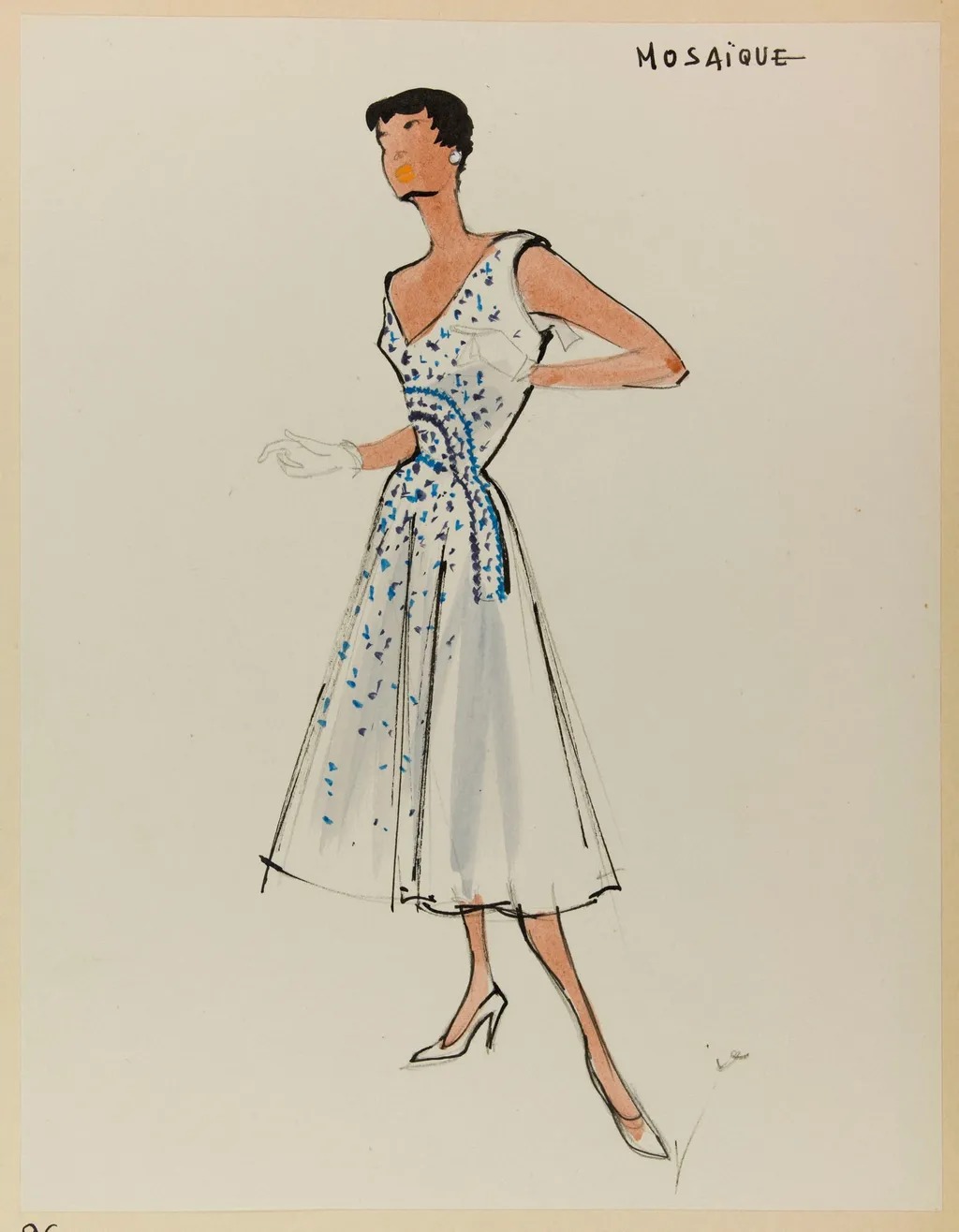
Mosaïque is a drawing by Marie-Louise Carven. It dates from 1953 and is held in the collection of the Palais Galliera - Musée de la Mode de la Ville de Paris.
About this work
Overview
Though not a garment itself, the drawing functions as a design study, likely intended to convey movement and proportion for potential production.
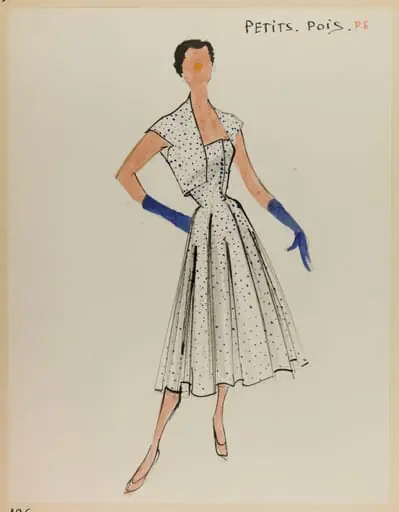
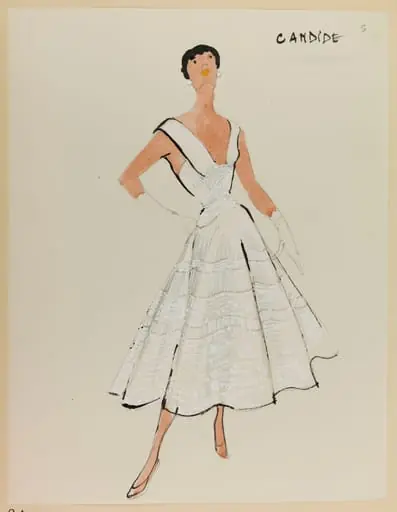
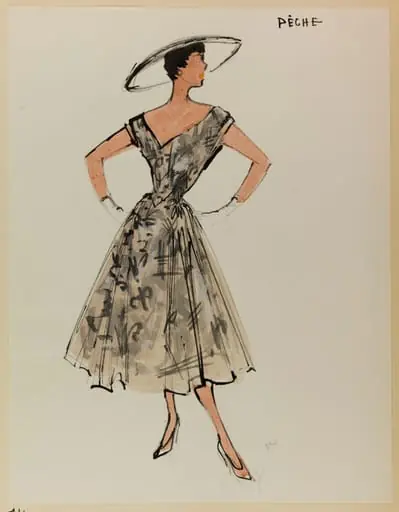
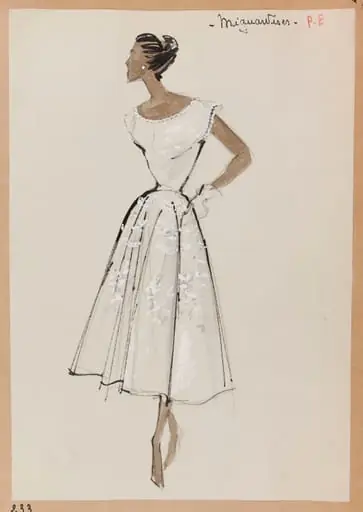
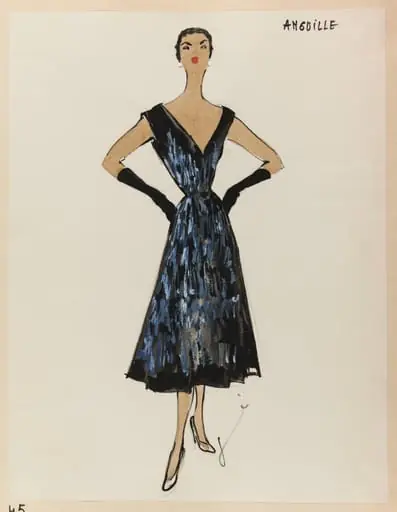
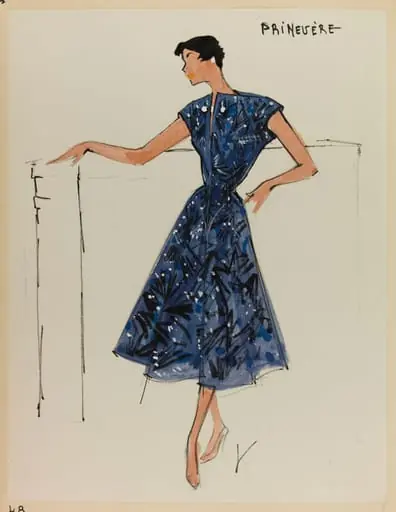
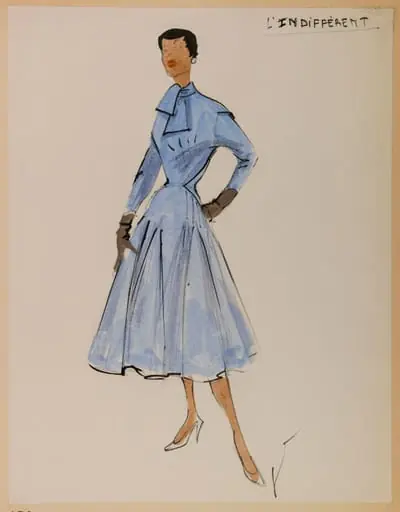
Created around 1953 by French designer Marie-Louise Carven, this ink sketch titled *Mosaïque* captures a woman in a flowing dress with a deep V-neck and a pattern of scattered blue dots. Executed in a loose, spontaneous style, it reflects Carven’s focus on lightweight silhouettes and feminine elegance. Though not a garment itself, the drawing functions as a design study, likely intended to convey movement and proportion for potential production.
Subject & Meaning
The figure in the sketch stands with relaxed posture—one hand on the hip, the other hanging naturally—suggesting ease and everyday grace. The dress, with its flared skirt and dotted pattern, evokes a sense of lightness and rhythm. The title *Mosaïque* implies the dress’s textile design, where small, repeated elements form a cohesive whole, mirroring Carven’s interest in subtle, decorative details over overt ornamentation.
Technique & Style
Rendered in swift, minimal lines, the drawing prioritizes form and motion over precision. The background is left largely blank, allowing the dress’s pattern and the figure’s outline to dominate. Shading is implied through line weight rather than tone, and the black heels anchor the composition without distraction. This approach aligns with fashion illustration traditions that favor suggestion over detail to communicate silhouette and mood.
History & Provenance
The sketch entered the collection of the Museum of Ethnography as part of a broader effort to document mid-century fashion as cultural artifact. While Carven’s couture house was established in 1945 and she pioneered ready-to-wear for women, this particular drawing remains a private design record, not a finished garment. Its preservation reflects growing institutional interest in fashion as a visual art form.
Context
In the early 1950s, Parisian fashion was transitioning from haute couture to accessible ready-to-wear. Carven, known for designing for smaller frames and using delicate fabrics like gingham and lace, positioned her work between luxury and practicality. This sketch embodies that ethos—elegant yet unpretentious, intended for real bodies in daily life, not just runway displays.
Legacy
Though Carven’s name is more widely recognized for her clothing lines than her drawings, *Mosaïque* illustrates how fashion designers used sketching to explore ideas before production. The work contributes to understanding the creative process behind mid-century French fashion, revealing how simplicity and rhythm were central to her aesthetic, influencing later generations focused on wearable, refined design.
Artist & collection
Artist
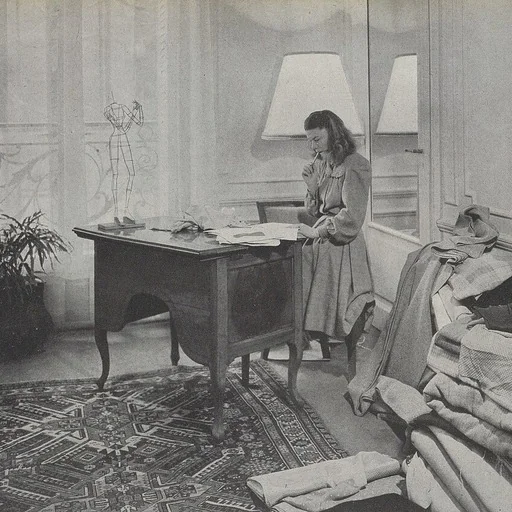
Marie-Louise Carven (31 August 1909 – 8 June 2015), born Carmen de Tommaso, was a French fashion designer who founded the house of Carven in 1945.
Museum
Palais Galliera - Musée de la Mode de la Ville de Paris
Continue through works from the same source collection.
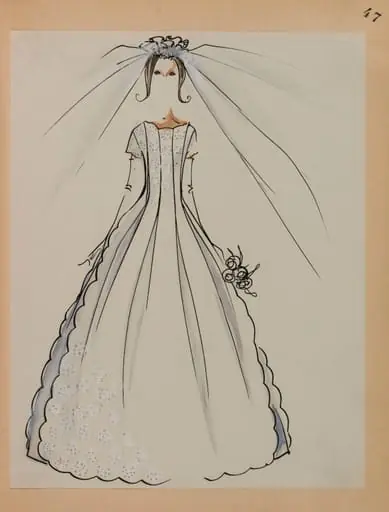 Robe de mariée festonnée et son voile
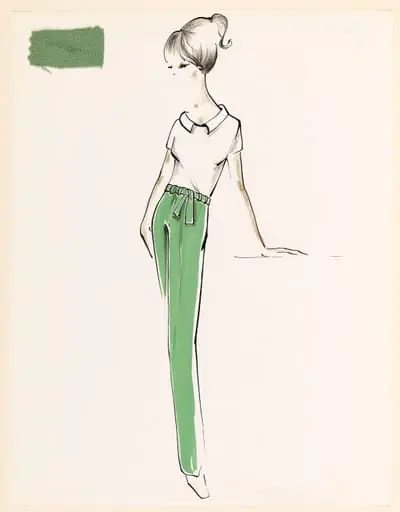 Haut blanc à manches courtes et pantalon vert à ceinture nouée
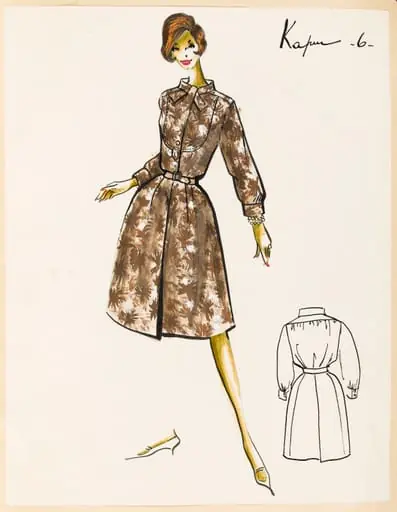 Kapur
Kapur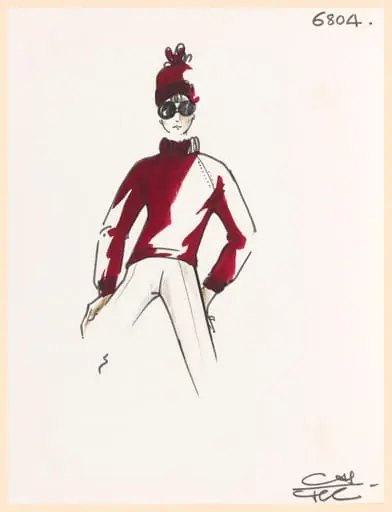 Pull-over à manches longues pourpre, bonnet assorti, pantalon et lunettes de soleil
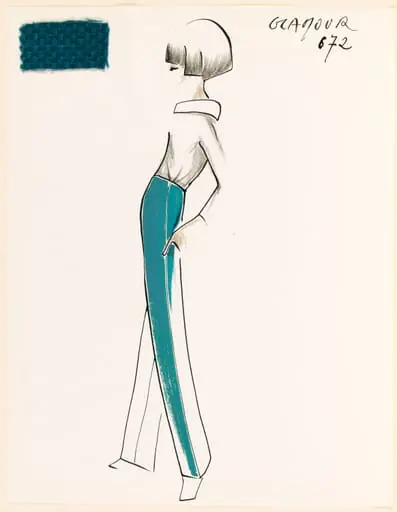 GLAMOUR
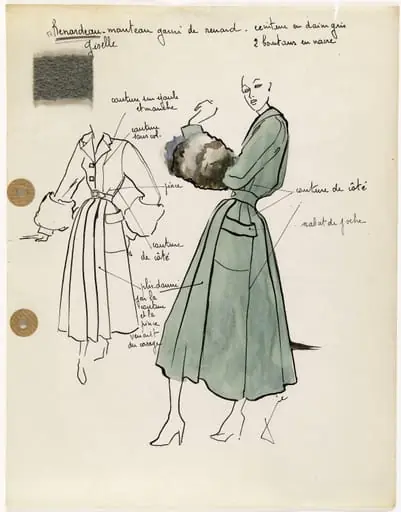 'Renardeau'
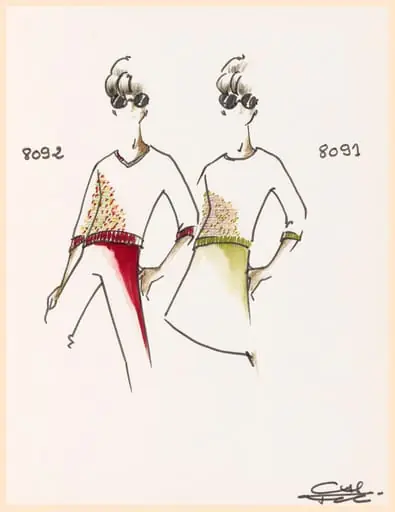 Pull-over à manches trois quarts et à encolure V à motifs multicolores, pantalon cerise et lunettes de soleil
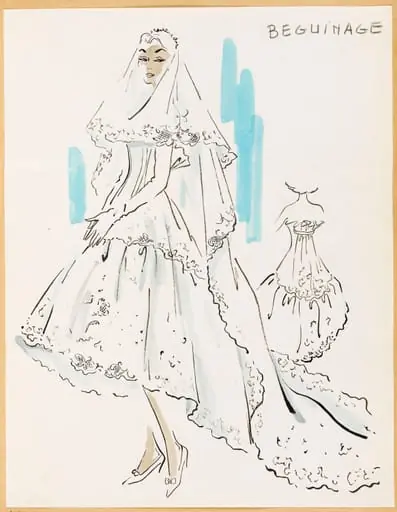 Béguinage