Artwork
Confettis
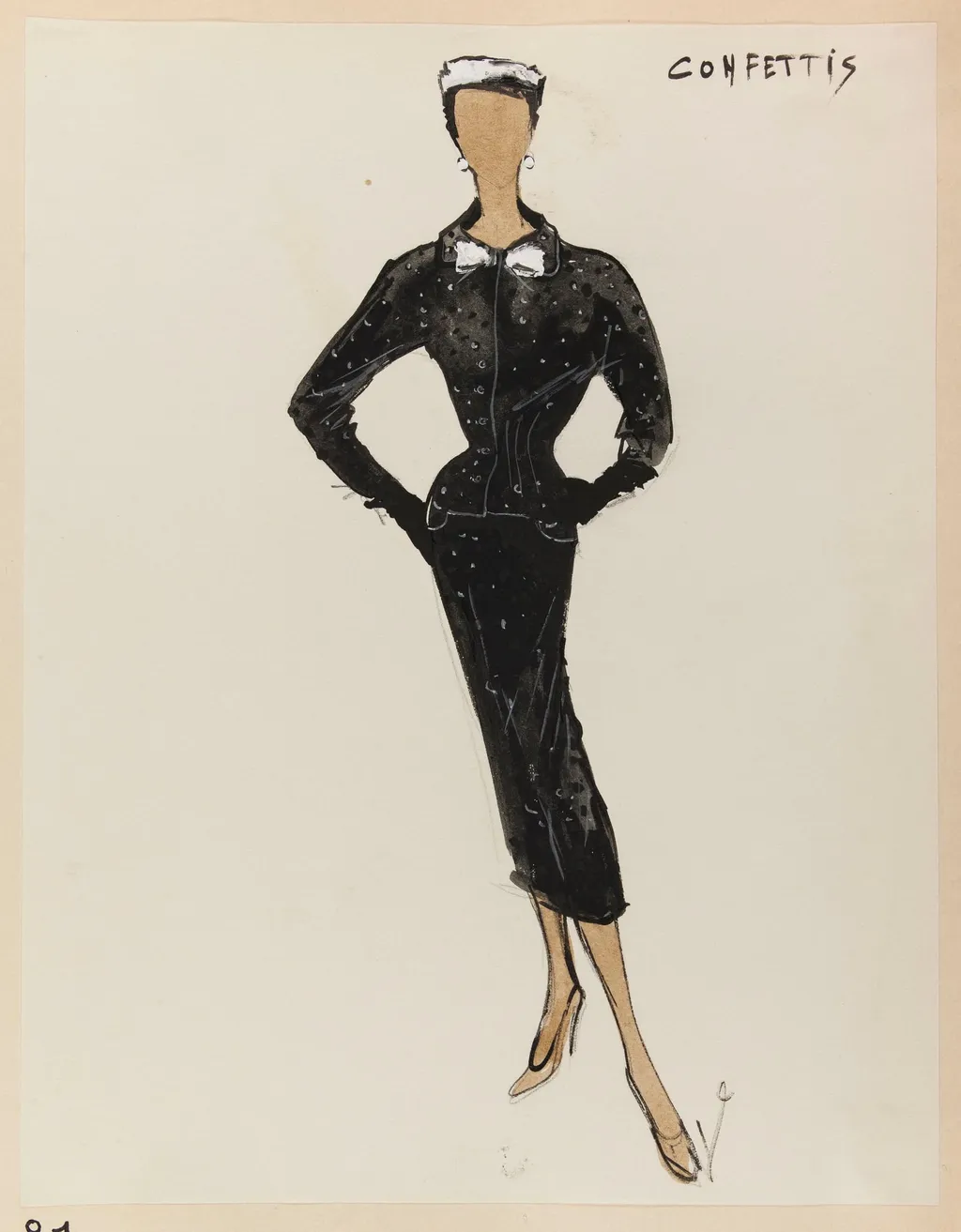
Confettis is a drawing by Carven. It dates from 1952 and is held in the collection of the Palais Galliera - Musée de la Mode de la Ville de Paris.
About this work
Overview
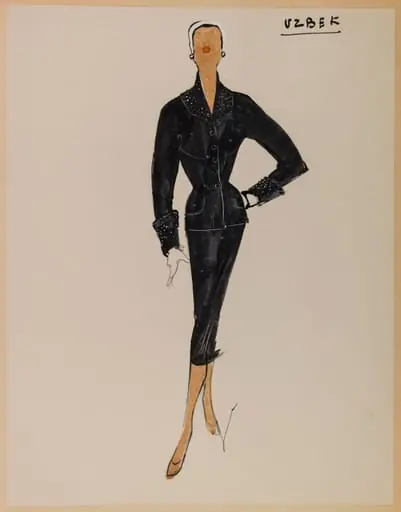
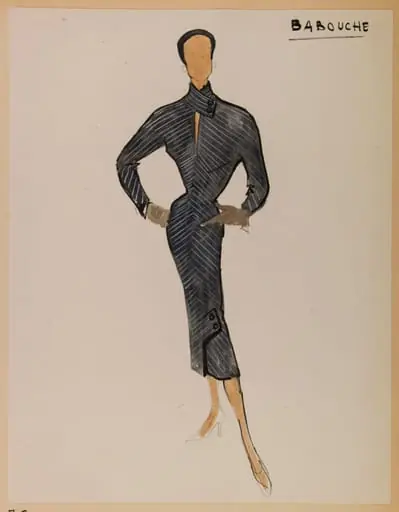
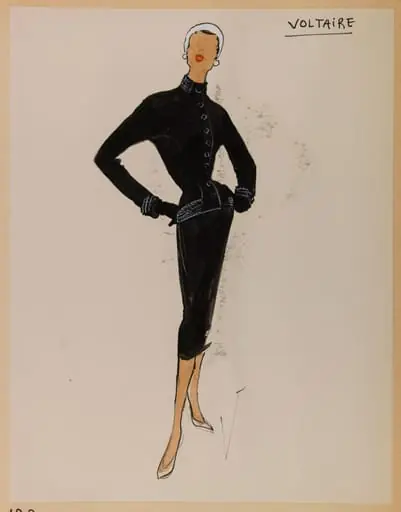
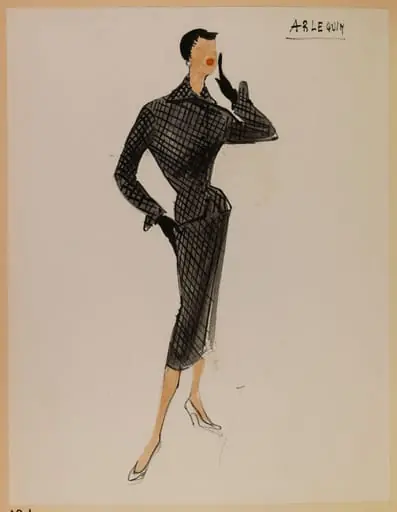
Created around 1952, Confettis is a drawn image by the designer Carven, depicting a woman in formal attire. The work is part of the collection at the Museum of Ethnography, where it is preserved as a record of mid-century fashion illustration. Unlike a finished garment, it functions as a stylized representation, capturing the silhouette and details of a specific ensemble from that era.
Subject & Meaning
The figure is portrayed with poised posture, hands on hips, suggesting confidence and self-possession. Her attire—black dress with white polka dots, white hat, bow collar, and circular earrings—reflects a refined, feminine aesthetic common in postwar European fashion. The image does not depict a specific person but rather embodies an idealized archetype of urban womanhood in the early 1950s.
Technique & Style
The shiny texture of the dress is implied through smooth, uninterrupted lines and the contrast of white dots against black.
Executed as a line drawing, the work uses precise contours and minimal shading to define form. The shiny texture of the dress is implied through smooth, uninterrupted lines and the contrast of white dots against black. The hat and accessories are rendered with delicate detail, emphasizing symmetry and elegance. The light beige background provides neutral contrast, directing focus entirely to the figure and her clothing.
History & Provenance
The drawing was produced during Carven’s active years as a fashion designer in Paris, likely as part of a portfolio or editorial presentation. It entered the Museum of Ethnography’s collection as an artifact of material culture, valued for its documentation of everyday fashion rather than its artistic novelty. Its preservation reflects institutional interest in clothing as social history.
Context
In the early 1950s, Paris remained a center of haute couture, and designers like Carven catered to a clientele seeking polished, wearable elegance. This illustration aligns with trends favoring structured silhouettes, subtle embellishment, and coordinated accessories. Such drawings circulated in fashion houses and magazines, serving as both promotional tools and records of design intent.
Legacy
Confettis endures as a quiet example of how fashion illustration preserved the aesthetics of its time. It contributes to scholarly understanding of mid-century women’s dress, particularly in how design details communicated social identity. While not widely known outside museum circles, it remains a reference point for researchers studying postwar fashion representation.
Artist & collection
Artist
These delicate ink-on-paper drawings capture the quiet poetry of everyday things: pinecones, reeds, apples.
Museum
Palais Galliera - Musée de la Mode de la Ville de Paris
Continue through works from the same source collection.