Artwork
Palets d'or
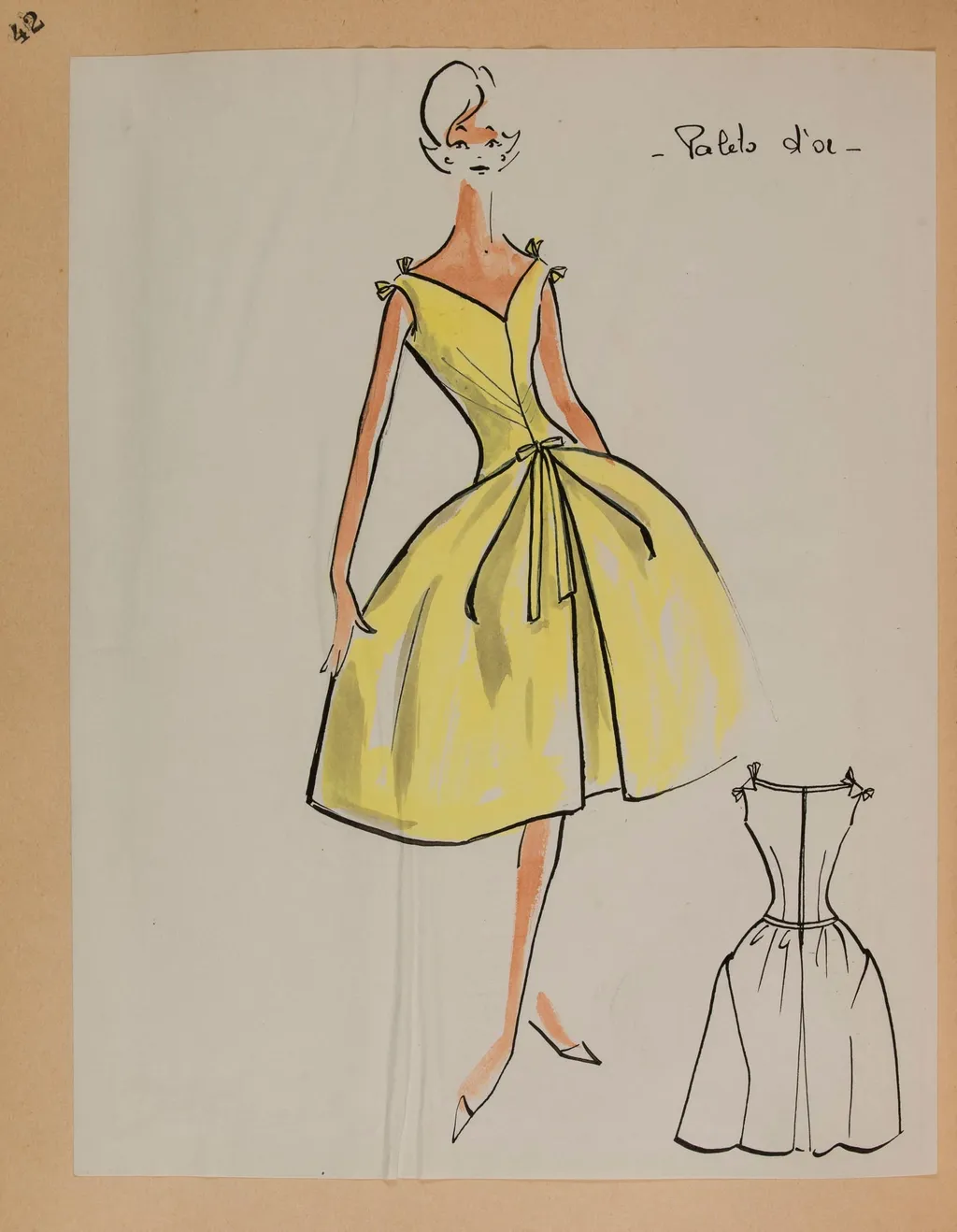
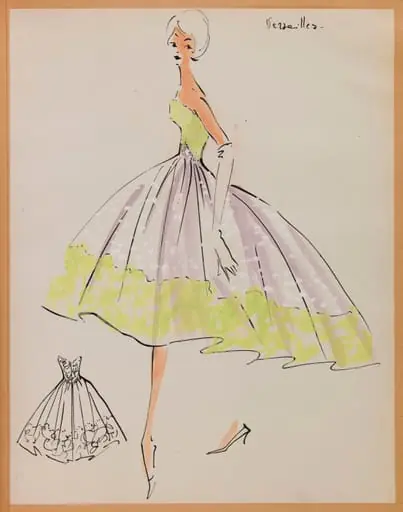
Palets d'or is a drawing by Carven. It dates from 1958 and is held in the collection of the Palais Galliera - Musée de la Mode de la Ville de Paris.
About this work
Overview
Unlike formal fashion plates, the drawing feels immediate, as if conceived during a moment of inspiration rather than polished for presentation.
Created around 1958 by French designer Carven, this sketch is part of the Museum of Ethnography’s collection. Rendered in ink or pencil, it captures a dress design with the spontaneity of a preliminary idea. The label 'Palets d’or'—French for 'golden palettes'—refers to the dress’s vivid yellow hue. Unlike formal fashion plates, the drawing feels immediate, as if conceived during a moment of inspiration rather than polished for presentation.
Subject & Meaning
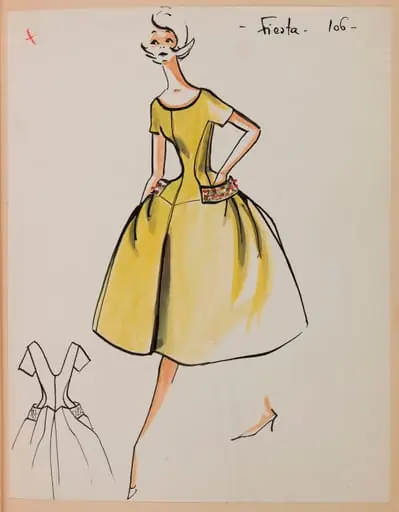
The sketch depicts a woman wearing a bright yellow dress with a deep V-neck and a full, gathered skirt cinched at the waist. The garment’s flared silhouette suggests movement and lightness, aligning with postwar ideals of feminine ease. The accompanying outline on the right isolates the dress’s form, emphasizing structure over texture. The title evokes warmth and radiance, linking the dress’s color to natural or luminous qualities rather than luxury.
Technique & Style
The drawing employs loose, rapid lines that prioritize gesture over precision. Fabric folds are suggested with minimal strokes, and the figure’s features are reduced to essential contours. The flat silhouette beside the figure functions as a technical annotation, clarifying the garment’s shape without decorative detail. This approach reflects a designer’s working method—focused on form and function, not finished presentation.
History & Provenance
The sketch entered the Museum of Ethnography’s holdings as part of a broader collection documenting 20th-century fashion as cultural artifact. Its origin lies in Carven’s atelier, where such sketches served as internal references for tailors and clients. Unlike haute couture presentations, this piece was never intended for public display, making its preservation a testament to the value placed on design process over final product.
Context
In late 1950s France, fashion was shifting toward livelier silhouettes and accessible elegance. Carven, known for playful yet refined designs, responded to this trend with garments that balanced structure and ease. This sketch reflects a broader movement in postwar design: clothing that celebrated movement and color without overt opulence, aligning with a more democratic vision of style.
Legacy
Though not a finished garment, this sketch preserves the iterative nature of fashion design. It reveals how ideas were tested and refined before production, offering insight into Carven’s creative process. Its inclusion in an ethnographic museum underscores the significance of design documentation as cultural evidence, bridging artisanal practice and historical record.
Artist & collection
Artist
These delicate ink-on-paper drawings capture the quiet poetry of everyday things: pinecones, reeds, apples.
Museum
Palais Galliera - Musée de la Mode de la Ville de Paris
Continue through works from the same source collection.