Artwork
Pantalon marron avec applications sur le bas de la jambe
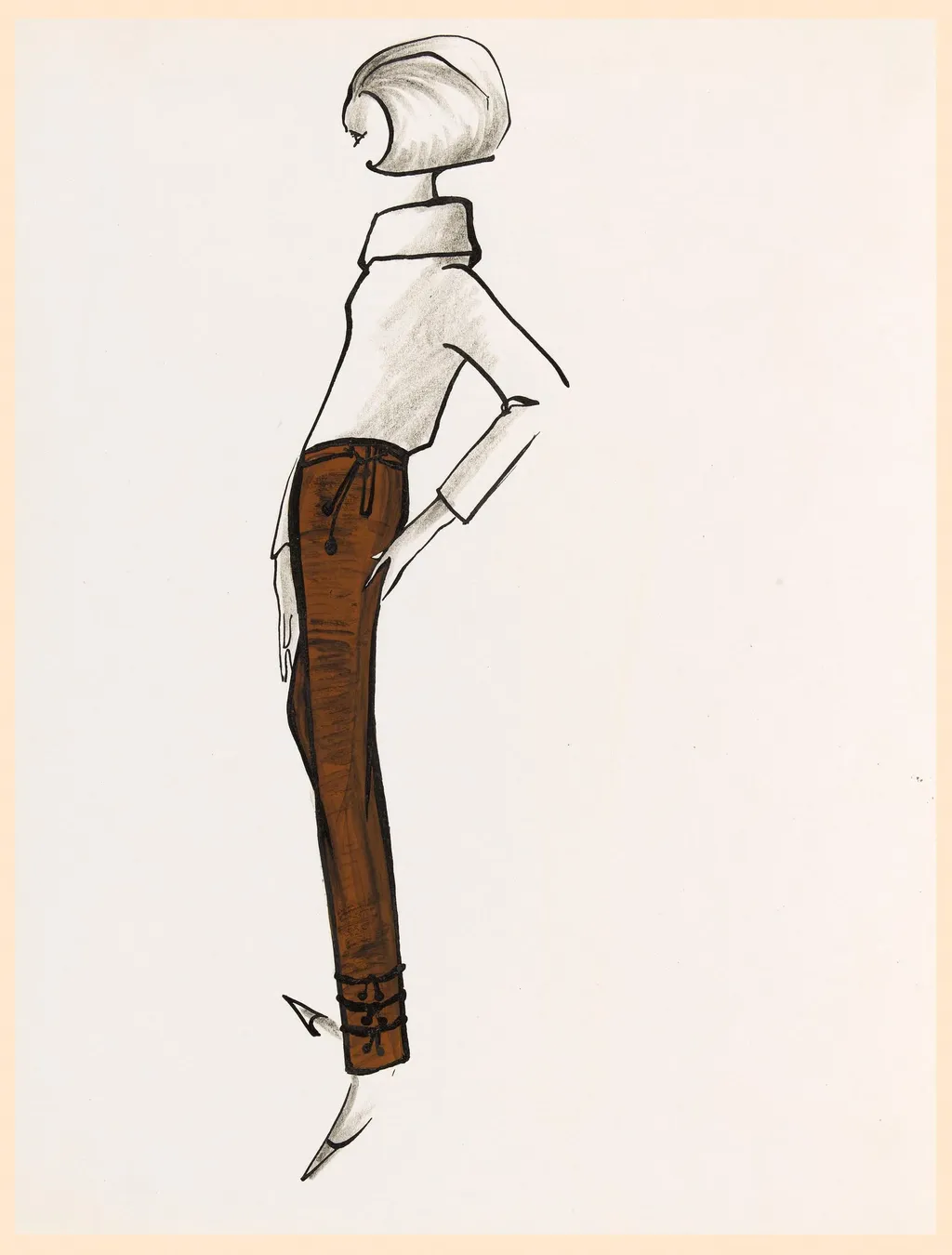
Pantalon marron avec applications sur le bas de la jambe is a drawing by Carven. It dates from 1963 and is held in the collection of the Palais Galliera - Musée de la Mode de la Ville de Paris.
About this work
Overview
This drawing, attributed to Carven around 1963, depicts a figure from behind wearing brown trousers with reinforced straps at the lower legs.
This drawing, attributed to Carven around 1963, depicts a figure from behind wearing brown trousers with reinforced straps at the lower legs. Executed in ink, the work emphasizes structural detail over full form, using contrasting line weights to distinguish garment elements. The figure’s upper body is rendered lightly, allowing focus on the lower limbs and their functional adaptations. It resides in the collection of the Museum of Ethnography as a study of utilitarian dress.
Subject & Meaning
The figure wears clothing suggesting occupational use—likely labor or military attire—where leg straps serve a practical purpose, possibly securing fabric or supporting equipment. The absence of facial features and minimal upper-body detail shifts attention to the garment’s design, implying an interest in how clothing adapts to physical activity. The sketch reflects an observational approach to everyday wear rather than fashion expression.
Technique & Style
The artist employs rapid, dark ink lines to define the trousers and straps, creating a sense of solidity. The rest of the figure is sketched with faint, loose strokes, producing a visual hierarchy. Cross-hatching and varying pressure suggest texture and shadow without full modeling. This method prioritizes clarity of form over realism, aligning with design documentation practices of the period.
History & Provenance
The drawing entered the Museum of Ethnography’s collection as part of a broader archive of 20th-century garment studies. While its exact origin within Carven’s practice is undocumented, its stylistic consistency with other design sketches from the early 1960s supports its dating. It was likely produced as a preparatory study, not a finished fashion illustration, and preserved for its ethnographic value.
Context
In the early 1960s, fashion designers increasingly turned to functional attire for inspiration, especially workwear and military uniforms. This sketch reflects that trend, capturing a hybrid form where utility meets tailoring. Similar garments appeared in European labor contexts and colonial service dress, suggesting the designer may have been documenting regional or occupational attire rather than creating haute couture.
Legacy
The drawing contributes to a growing archive of design studies that treat clothing as cultural artifact. Its preservation in an ethnographic museum, rather than a fashion institution, signals its role in understanding how form responds to physical need. It remains a quiet example of how designers observed and translated everyday wear into structured visual records.
Artist & collection
Artist
These delicate ink-on-paper drawings capture the quiet poetry of everyday things: pinecones, reeds, apples.
Museum
Palais Galliera - Musée de la Mode de la Ville de Paris
Continue through works from the same source collection.
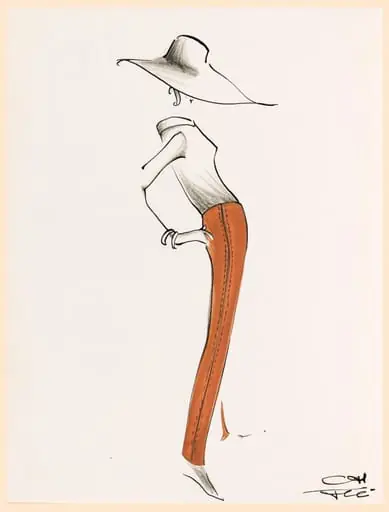 Pantalon marron avec surpiqûres le long de la jambe
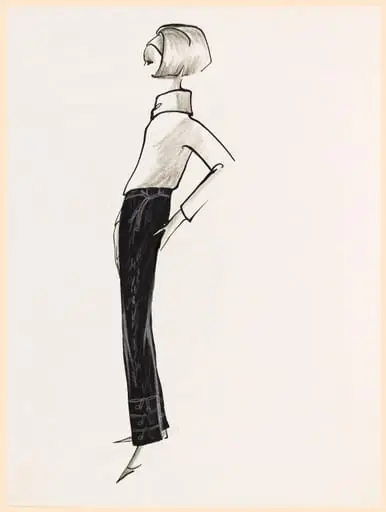 Pantalon noir avec applications sur le bas de la jambe
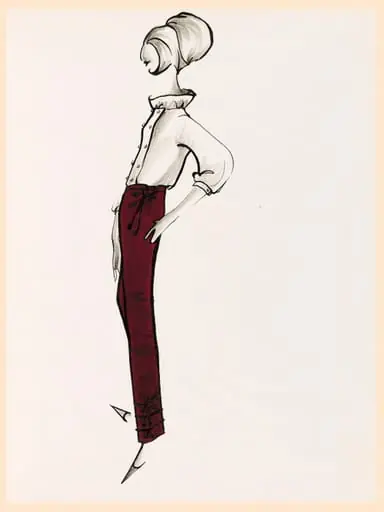 Pantalon bordeaux avec applications en bas de la jambe
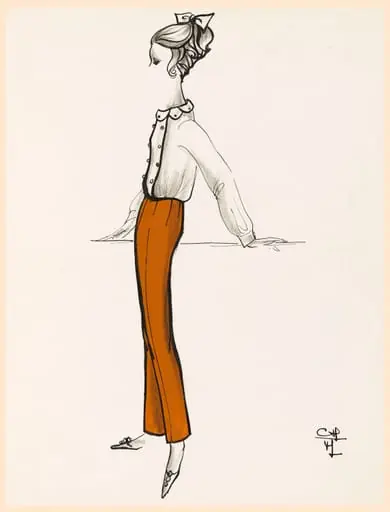 Pantalon marron
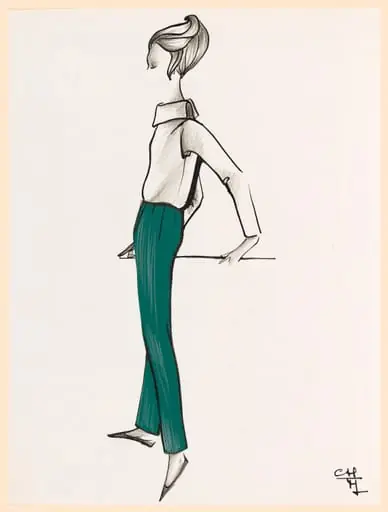 Pantalon vert sapin
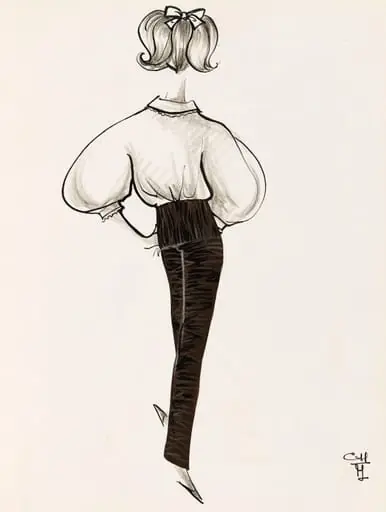 Pantalon marron à large ceinture
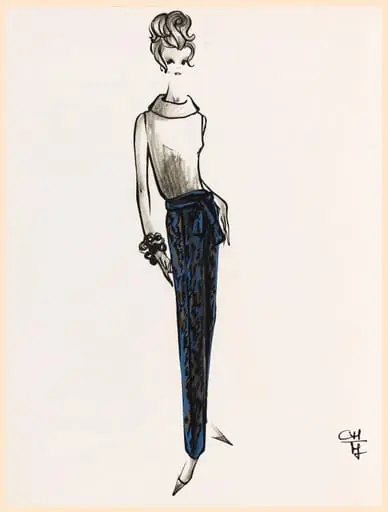 Pantalon bleu et marron
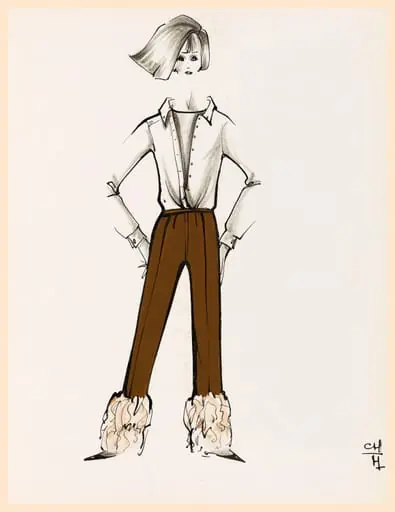 Pantalon marron avec fourrure blanche au bas de la jambe
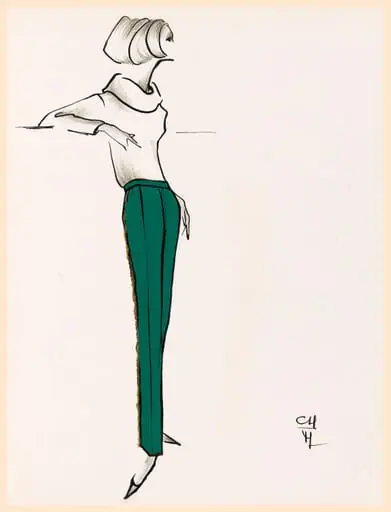 Pantalon vert sapin à pli
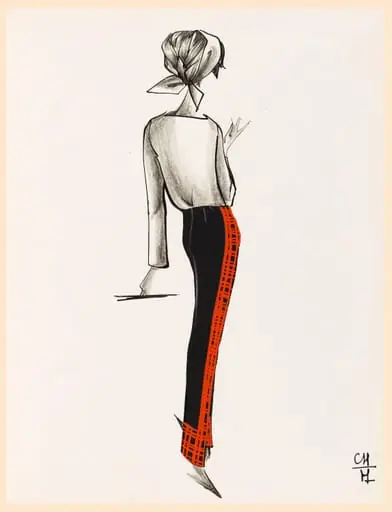 Pantalon noir à motif rouge sur le côté et le bas de la jambe
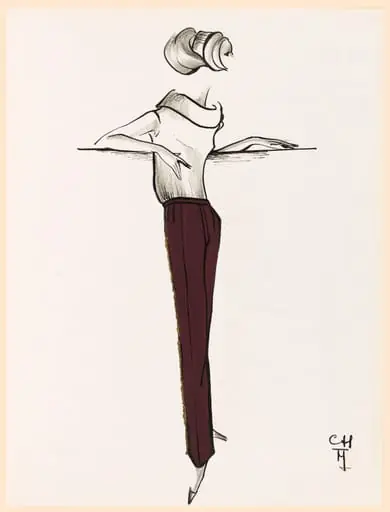 Pantalon bordeaux à pli