Artwork
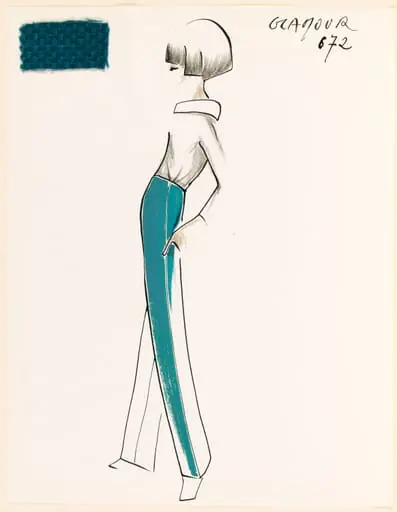
Pantalon vert sapin à pli
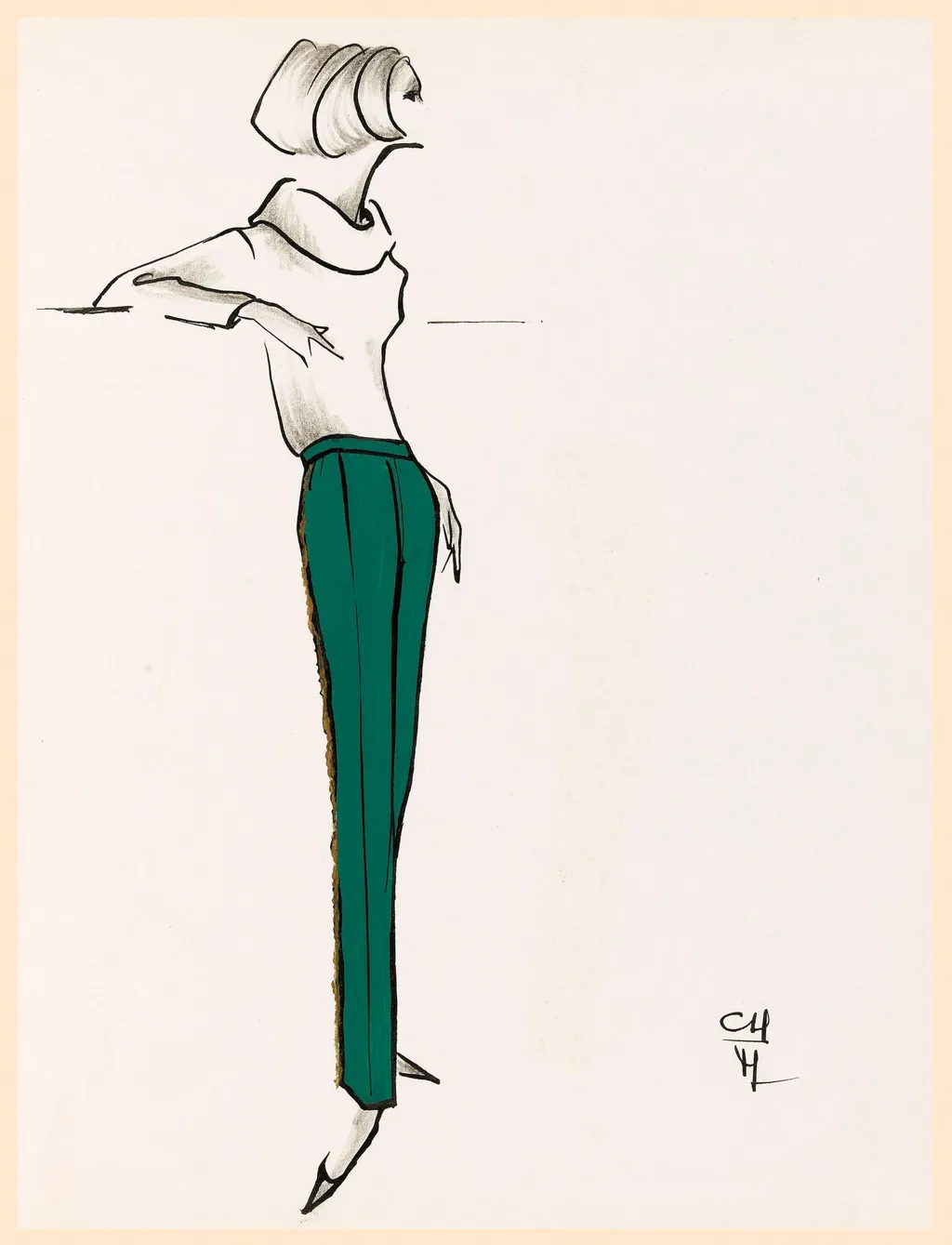
Pantalon vert sapin à pli is a drawing by Marie-Louise Carven. It dates from 1963 and is held in the collection of the Palais Galliera - Musée de la Mode de la Ville de Paris.
About this work
Overview
It belongs to the Museum of Ethnography’s collection and represents Carven’s commitment to wearable, understated elegance tailored to the modern woman.
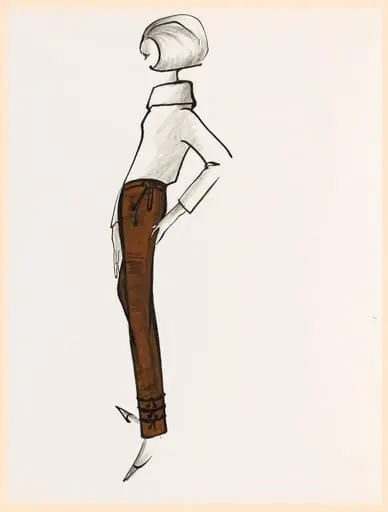
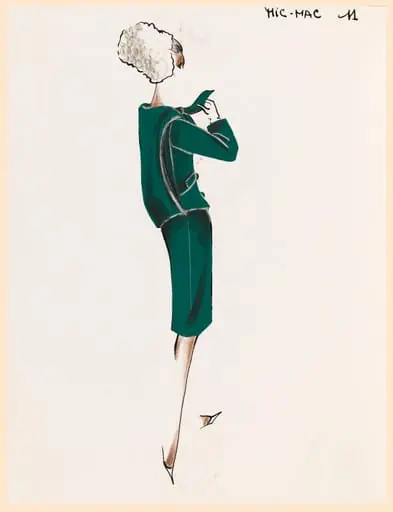
Created around 1963 by French designer Marie-Louise Carven, this sketch depicts a pair of dark green, pleated trousers designed for ease and movement. Executed in a loose, rapid hand, the drawing emphasizes form over detail, capturing the fluid drape of the fabric. It belongs to the Museum of Ethnography’s collection and represents Carven’s commitment to wearable, understated elegance tailored to the modern woman.
Subject & Meaning
The figure in the sketch stands in a relaxed, sideways pose, arms at the sides, suggesting natural posture and comfort. The trousers, rendered with minimal lines, convey volume and softness, reflecting Carven’s focus on garments that accommodate the body without constriction. The simplicity of the top and the absence of ornamentation underscore a philosophy of quiet functionality over ornament.
Technique & Style
The drawing employs swift, fluid lines to suggest the fall of fabric and the structure of pleats. Shading is implied through sparse cross-hatching, avoiding heavy detail to preserve a sense of spontaneity. The contrast between the dark green pants and the unmarked background directs focus to the garment’s silhouette, a hallmark of Carven’s design presentations, which prioritized clarity over theatricality.
History & Provenance
Marie-Louise Carven founded her fashion house in 1945 and was among the first French couturiers to embrace prêt-à-porter. This sketch, likely a design study, entered the Museum of Ethnography’s holdings as part of a broader effort to document postwar European fashion innovation. Its preservation reflects recognition of Carven’s role in democratizing stylish, well-constructed clothing for everyday wear.
Context
In the early 1960s, fashion was shifting toward casual silhouettes and accessible design. Carven’s trousers, with their loose fit and muted color, aligned with this trend while maintaining a refined aesthetic. Her work stood apart from the more structured styles of contemporaries, offering an alternative rooted in comfort and quiet individuality, particularly appealing to women seeking practical elegance.
Legacy
Carven’s integration of comfort and style influenced later generations of designers who prioritized wearable form. Her early adoption of ready-to-wear and innovations like the push-up bra positioned her as a pragmatic innovator. This sketch endures as a quiet testament to her belief that clothing should serve the body, not dominate it — a principle still resonant in contemporary design.
Artist & collection
Artist
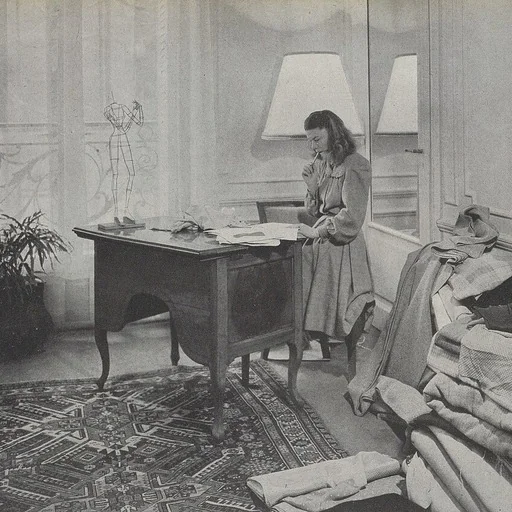
Marie-Louise Carven (31 August 1909 – 8 June 2015), born Carmen de Tommaso, was a French fashion designer who founded the house of Carven in 1945.
Museum
Palais Galliera - Musée de la Mode de la Ville de Paris
Continue through works from the same source collection.
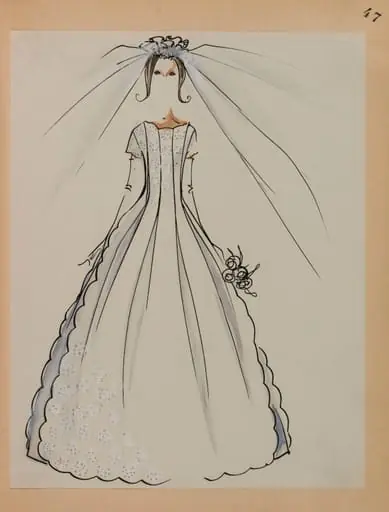 Robe de mariée festonnée et son voile
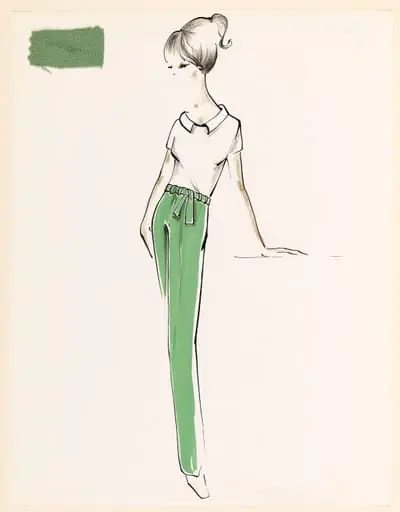 Haut blanc à manches courtes et pantalon vert à ceinture nouée
 Kapur
Kapur Pull-over à manches longues pourpre, bonnet assorti, pantalon et lunettes de soleil
 GLAMOUR
 'Renardeau'
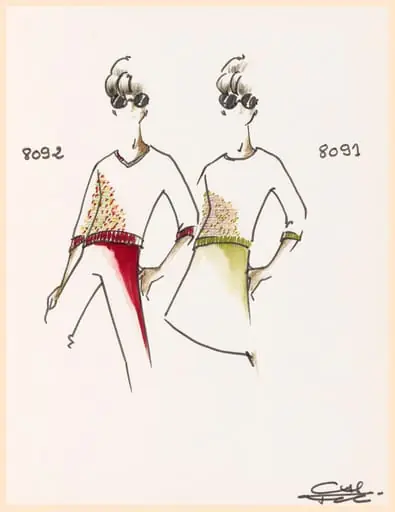 Pull-over à manches trois quarts et à encolure V à motifs multicolores, pantalon cerise et lunettes de soleil
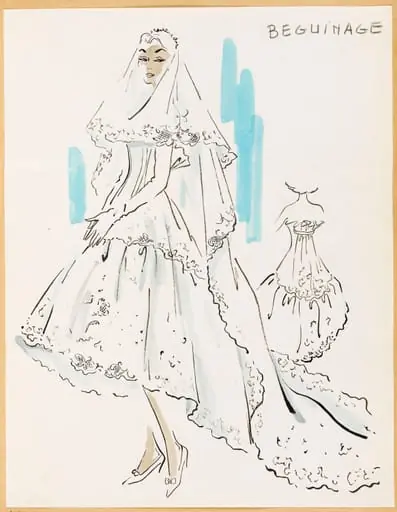 Béguinage