Artwork
Paso-doble
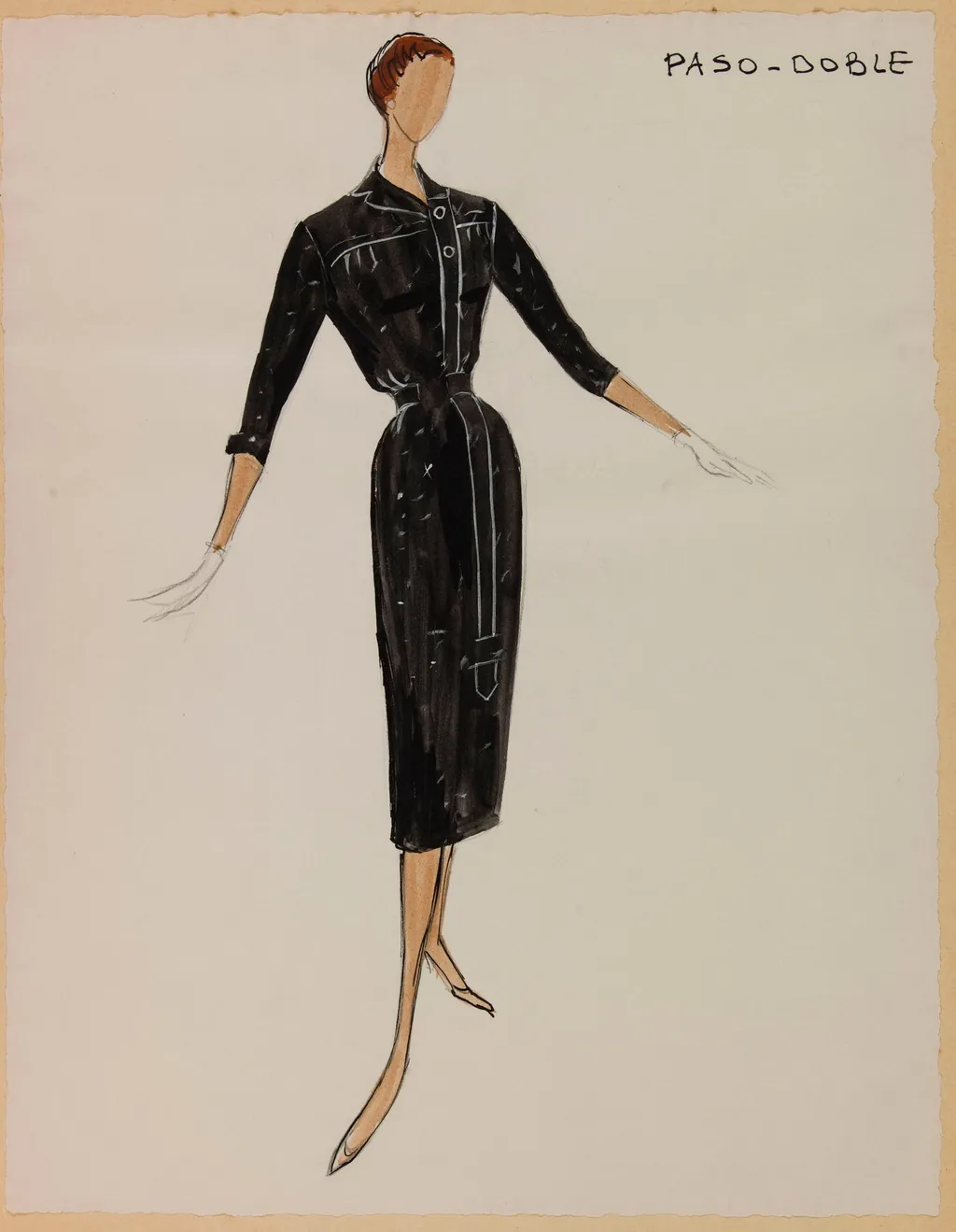
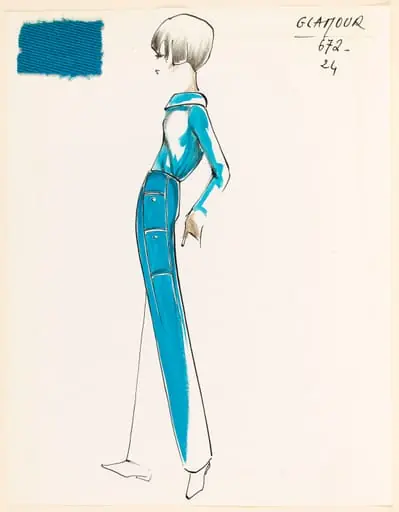
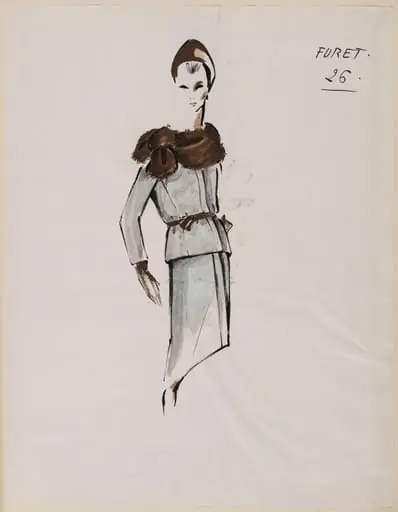
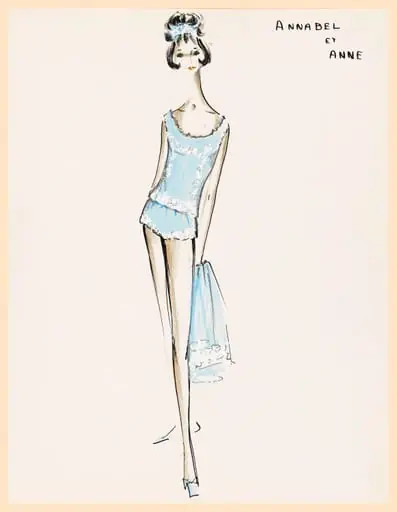
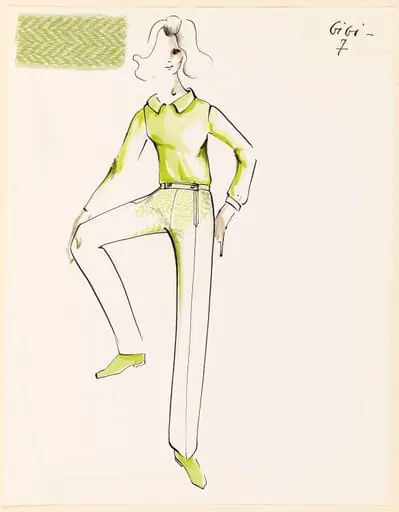
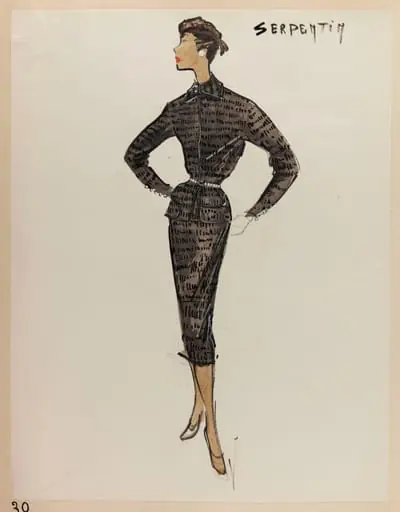
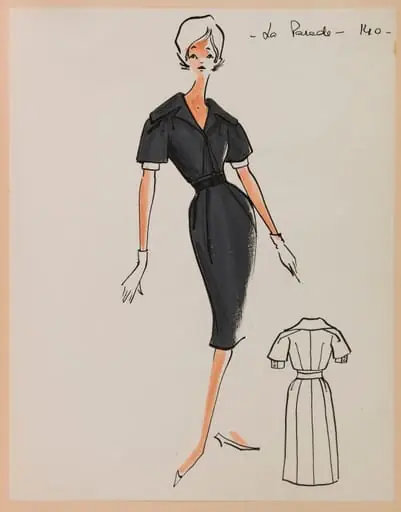
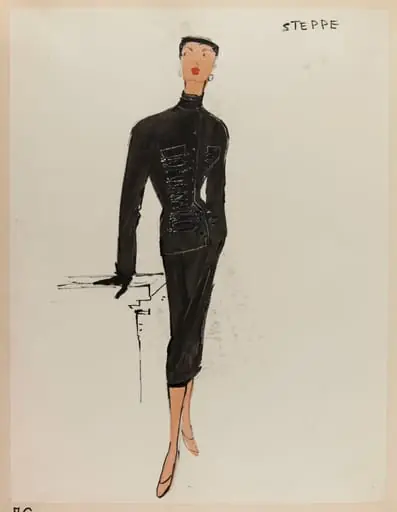
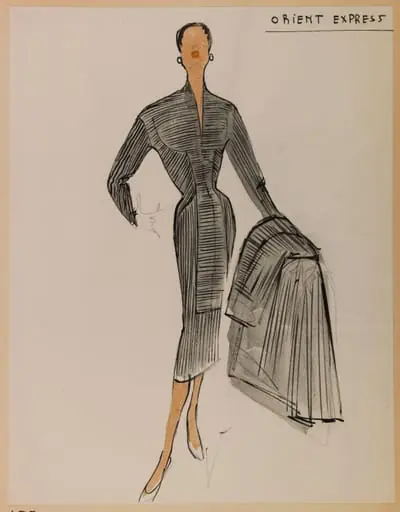
Paso-doble is a drawing by Carven. It dates from 1956 and is held in the collection of the Palais Galliera - Musée de la Mode de la Ville de Paris.
About this work
Overview
It resides in the collection of the Museum of Ethnography, where it is presented as a study in fashion and movement.
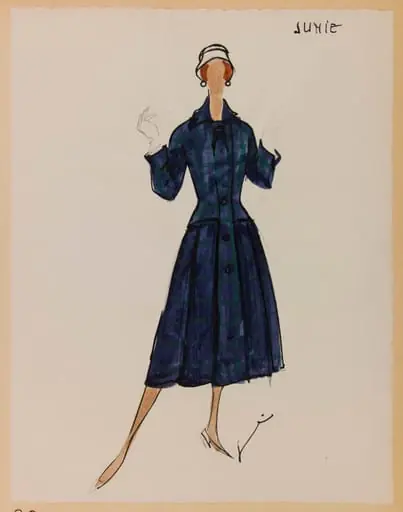
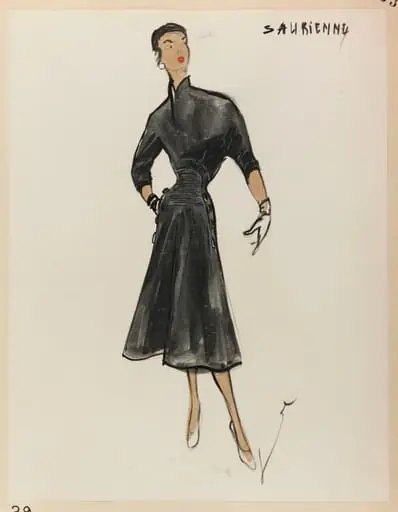
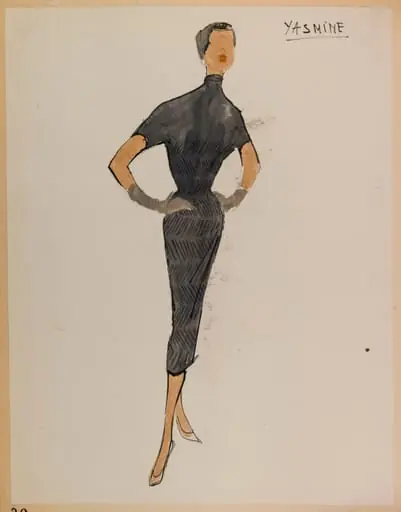
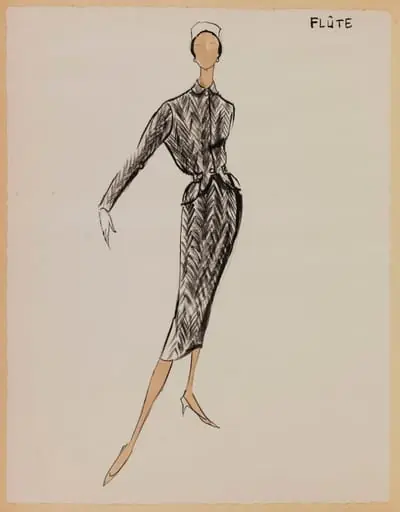
Created around 1956 by the designer Carven, this ink sketch captures a poised woman in formal attire. Executed with minimal yet precise lines, the drawing contrasts solid black forms against a pale ground. It resides in the collection of the Museum of Ethnography, where it is presented as a study in fashion and movement. The title references the Spanish dance, suggesting a connection between costume and choreography.
Subject & Meaning
The figure is depicted in a streamlined black ensemble typical of mid-century women’s fashion: a tailored jacket with defined lapels and a narrow skirt. Her posture is still, yet the implied motion of the object in her right hand—possibly a fan or cigarette holder—hints at performative grace. The work evokes the elegance of urban social rituals, linking attire to the rhythm of dance without literal representation.
Technique & Style
The drawing employs bold, unmodulated black shapes and clean contours, avoiding shading or texture. This reduction to essential lines emphasizes silhouette over detail, reflecting a design sensibility rooted in fashion illustration. The absence of background elements focuses attention on the figure’s form, aligning with mid-century modernist aesthetics that valued clarity and restraint.
History & Provenance
The sketch entered the Museum of Ethnography’s collection as part of a broader archive of Carven’s design work. While its exact origin within the designer’s studio is undocumented, its preservation suggests recognition of its value as a cultural artifact. It reflects Carven’s practice of translating fashion into visual narratives, bridging haute couture and everyday performance.
Context
In the 1950s, fashion design increasingly drew from cultural motifs, including dance and folk traditions. The paso doble, associated with Spanish bullfighting rituals, symbolized drama and discipline. Carven’s sketch, though abstracted, taps into this cultural resonance, positioning clothing as an extension of bodily expression in a postwar era keen on refined, theatrical femininity.
Legacy
The sketch endures as a quiet testament to the intersection of fashion and movement in mid-century design. It does not seek spectacle but rather captures a moment of poised stillness charged with implied motion. Its inclusion in an ethnographic museum underscores its role as a cultural document, illustrating how clothing encodes social ritual beyond the runway.
Artist & collection
Artist
These delicate ink-on-paper drawings capture the quiet poetry of everyday things: pinecones, reeds, apples.
Museum
Palais Galliera - Musée de la Mode de la Ville de Paris
Continue through works from the same source collection.