Artwork
Serpentin
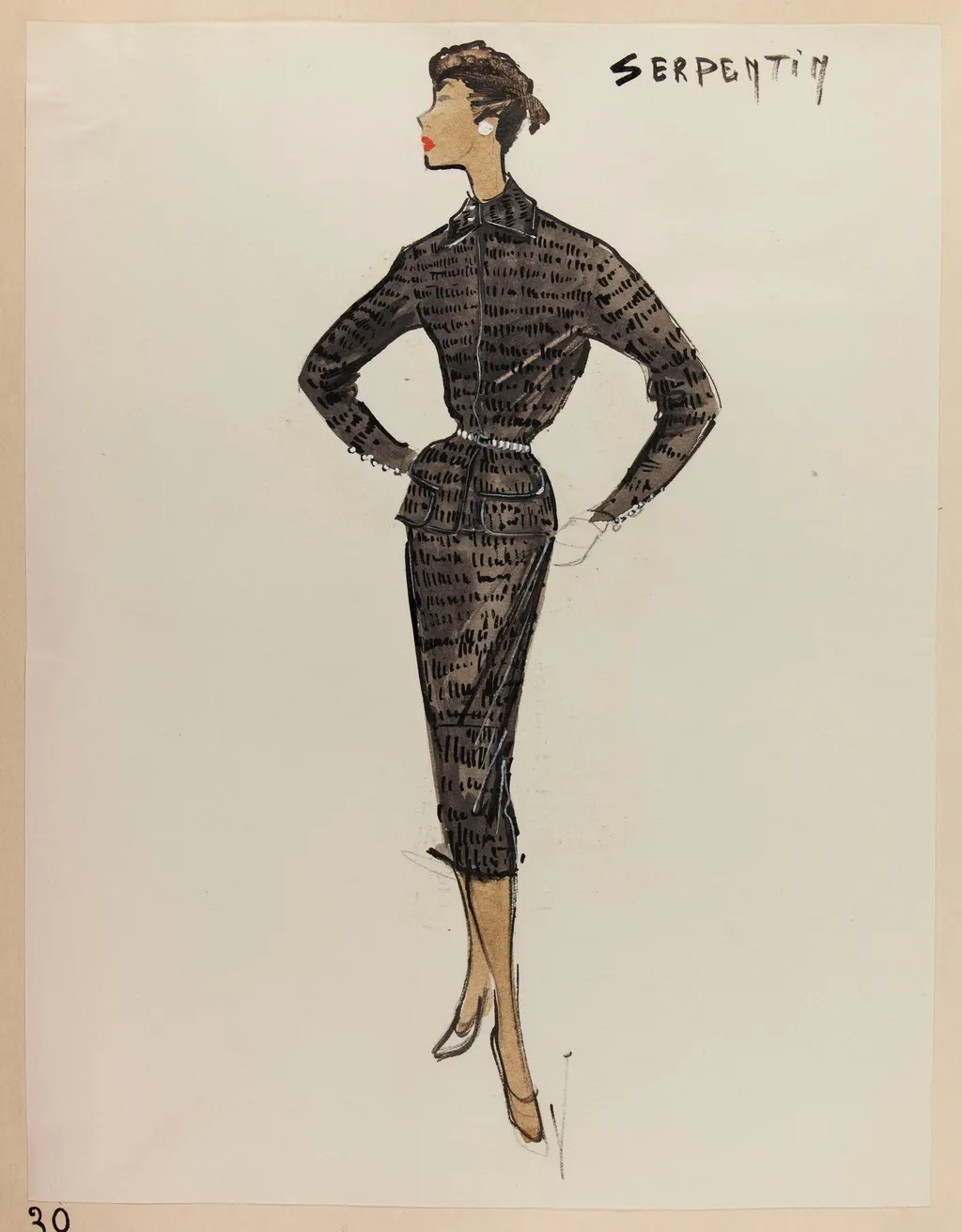
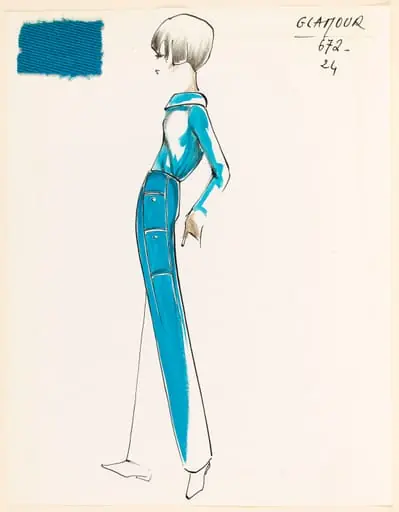
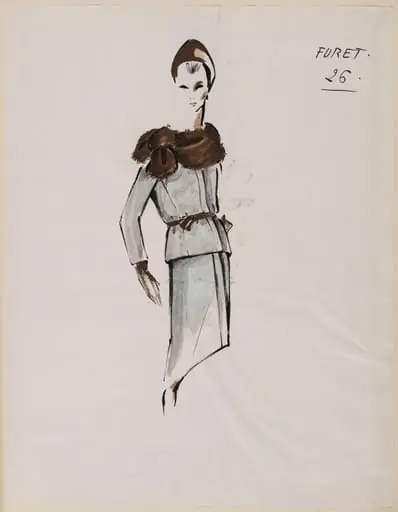
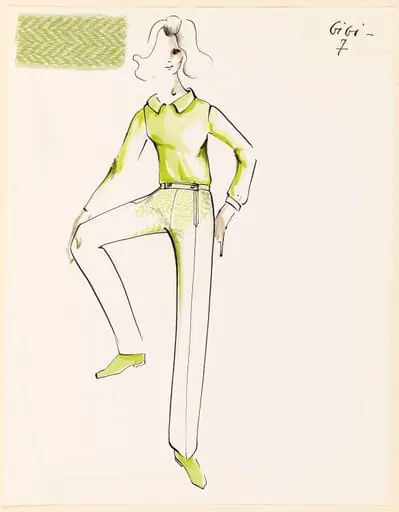
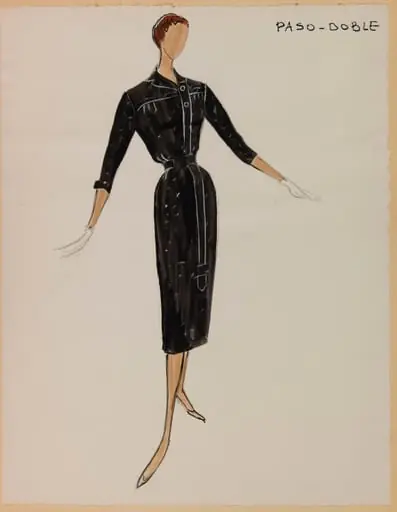
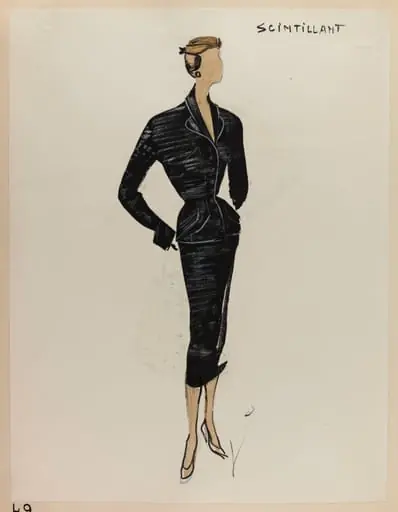
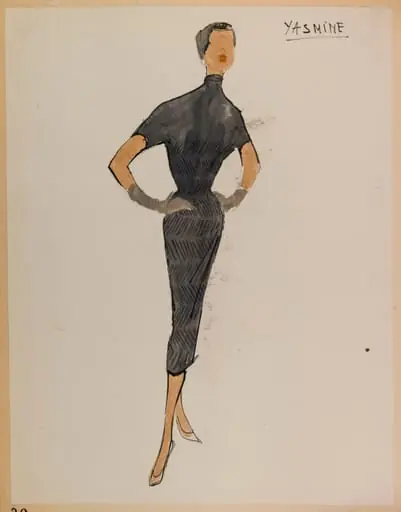
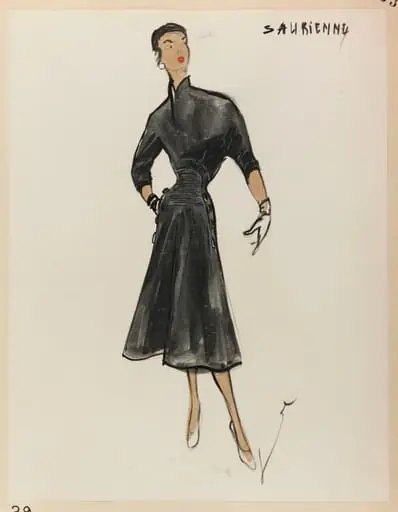
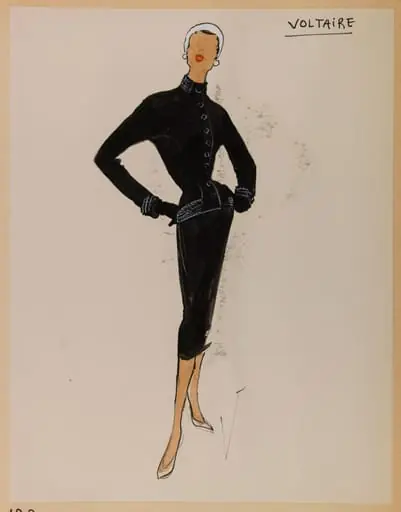
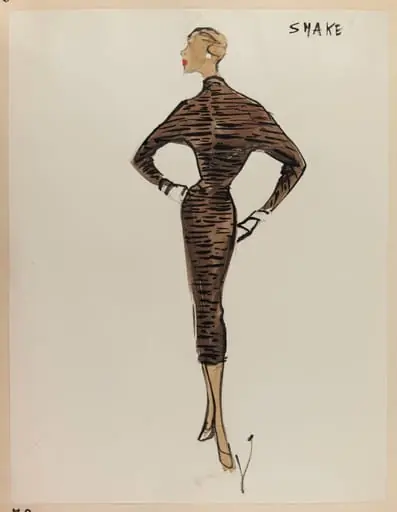
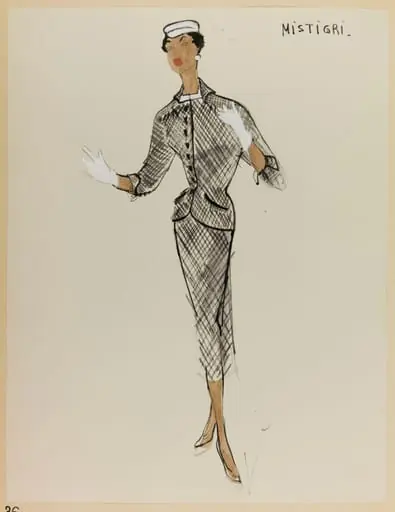
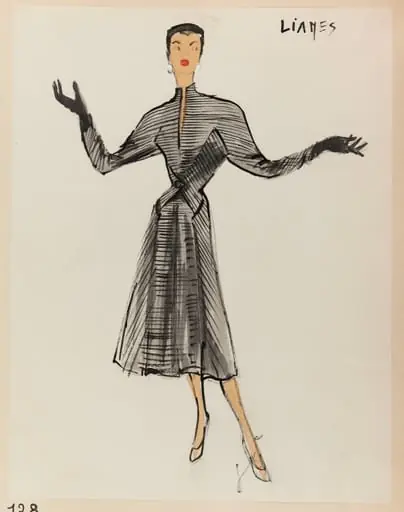
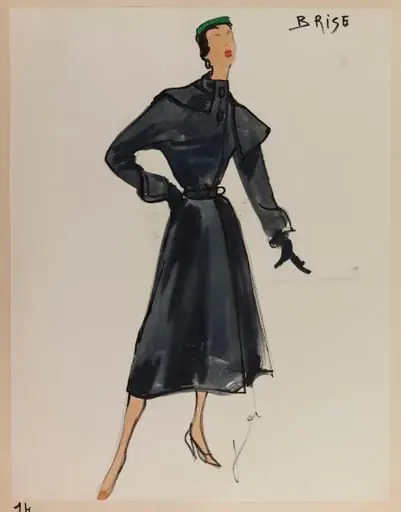
Serpentin is a drawing by Carven. It dates from 1952 and is held in the collection of the Palais Galliera - Musée de la Mode de la Ville de Paris.
About this work
Overview
The work captures a seated female figure in a restrained, everyday posture, rendered with minimal yet deliberate linework.
Serpentin, dated around 1952, is a pencil sketch by the French designer Carven. It resides in the collection of the Museum of Ethnography. The work captures a seated female figure in a restrained, everyday posture, rendered with minimal yet deliberate linework. Unlike finished fashion illustrations, this piece emphasizes immediacy and observation, suggesting it may have served as a preparatory study for a garment design.
Subject & Meaning
The figure is depicted in modest, functional attire: a dark, textured jacket paired with a skirt featuring visible pockets, low-heeled shoes, and neatly pinned-back hair. The absence of ornamentation and the practicality of the clothing point to a focus on wearable, unpretentious design. The title 'Serpentin' may reference a fabric texture or a stylistic motif, possibly alluding to a sinuous line or pattern in the garment’s construction.
Technique & Style
Carven employed swift, fluid pencil strokes to define form and fabric, avoiding heavy shading or detail. The lines suggest volume and movement rather than precise rendering, conveying the drape of cloth and the weight of the figure’s posture. This approach reflects a designer’s habit of capturing essence over finish, prioritizing the silhouette and structure of clothing over individualized features.
History & Provenance
The sketch entered the Museum of Ethnography’s collection as part of a broader acquisition of mid-20th-century fashion documentation. Its origin as a personal working drawing is evident in its unpolished quality. While no record of its initial commission survives, its preservation suggests it was recognized early as representative of Carven’s design philosophy and the era’s emphasis on practical elegance.
Context
Created in the early 1950s, Serpentin aligns with postwar European fashion’s shift toward simplicity and functionality. Designers like Carven moved away from wartime austerity toward refined, livable clothing for modern women. This sketch reflects that ethos—emphasizing comfort, durability, and understated style over theatricality, resonating with the growing middle-class demand for adaptable wardrobes.
Legacy
Serpentin remains a quiet testament to Carven’s design process, illustrating how fashion was conceived through direct observation rather than idealized fantasy. Its presence in an ethnographic museum underscores its value as cultural artifact—evidence of how everyday clothing embodied social norms and evolving gender roles in postwar France.
Artist & collection
Artist
These delicate ink-on-paper drawings capture the quiet poetry of everyday things: pinecones, reeds, apples.
Museum
Palais Galliera - Musée de la Mode de la Ville de Paris
Continue through works from the same source collection.