Artwork
Pistache
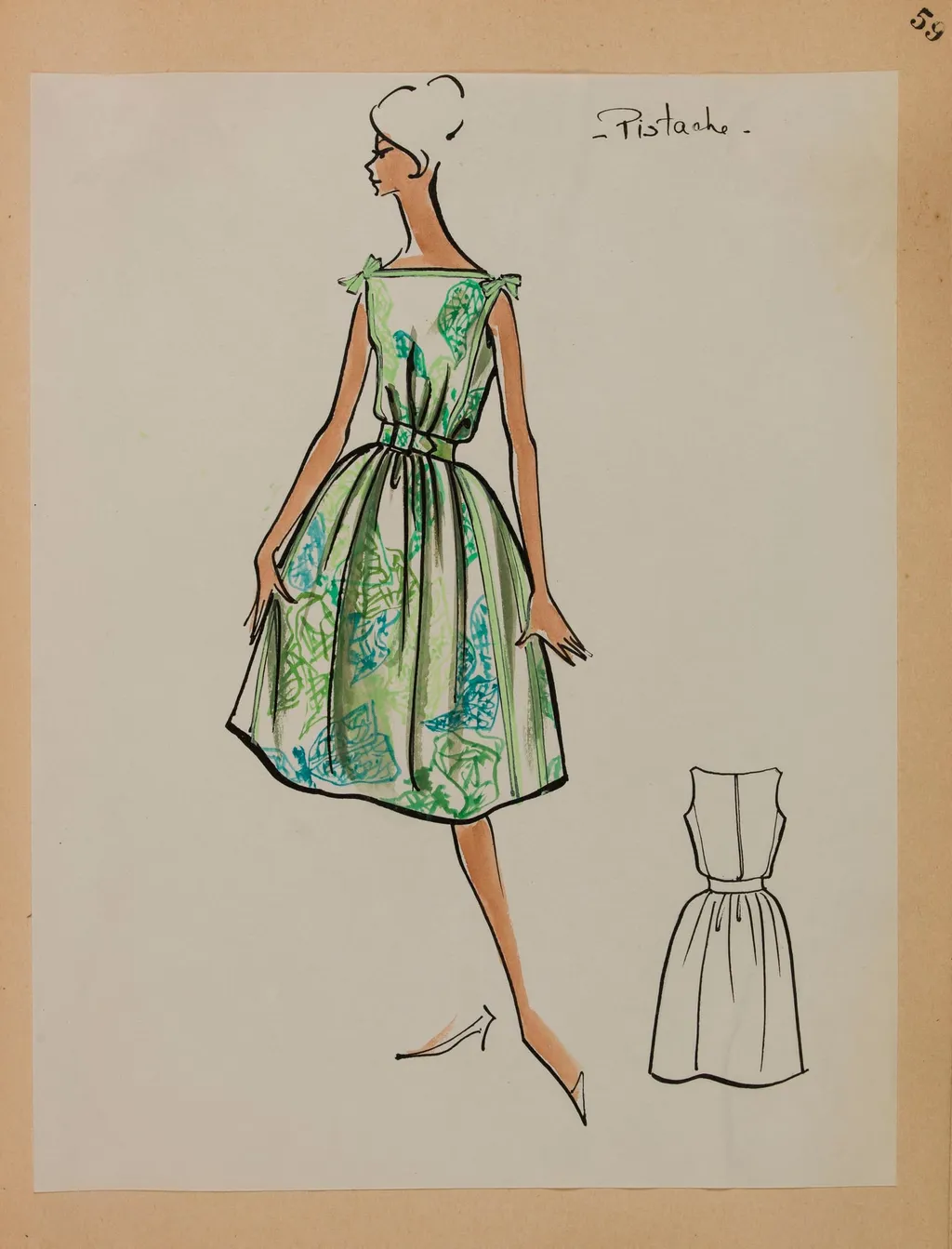
Pistache is a drawing by Carven. It dates from 1958 and is held in the collection of the Palais Galliera - Musée de la Mode de la Ville de Paris.
About this work
Overview
Pistache is a fashion sketch created around 1958 by the designer Carven. Executed in pencil, it documents a specific garment design intended for production. The drawing resides in the collection of the Museum of Ethnography, where it serves as a record of mid-century textile and silhouette trends. Its inclusion in an ethnographic context highlights the cultural significance of everyday dress.
Subject & Meaning
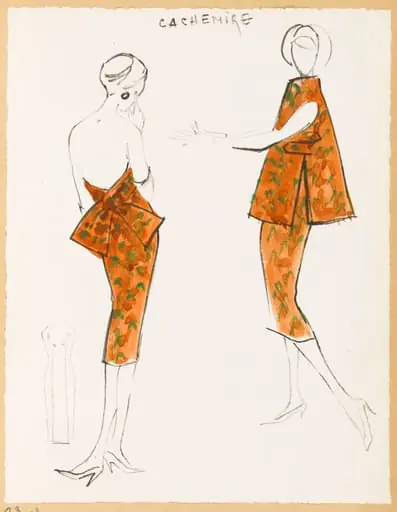
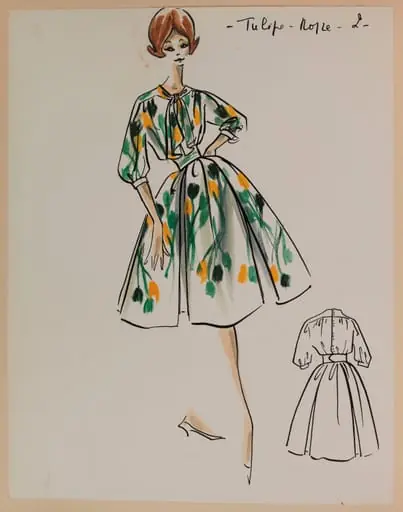
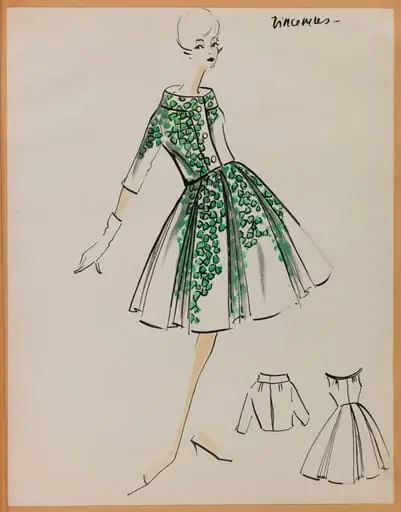
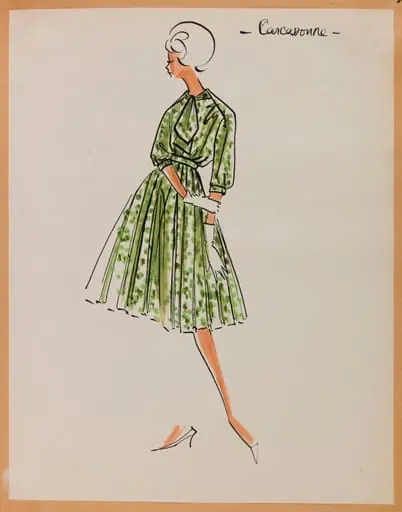
The drawing depicts a woman wearing a knee-length dress with a fitted bodice and flared skirt, fastened at the waist with a belt.
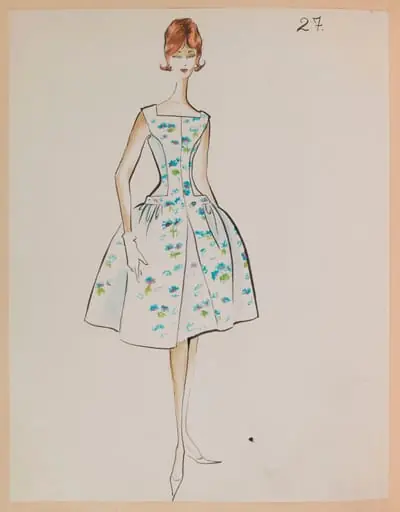
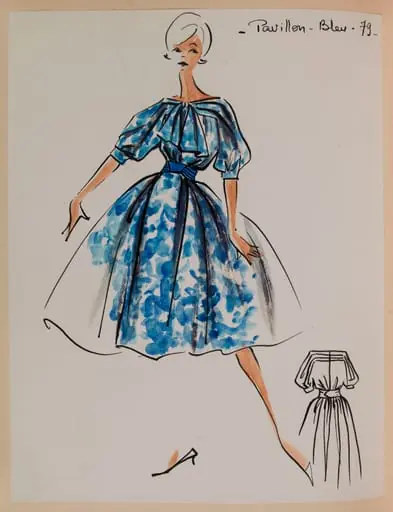
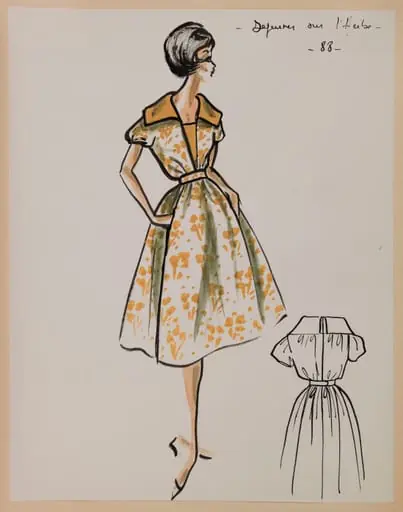
The drawing depicts a woman wearing a knee-length dress with a fitted bodice and flared skirt, fastened at the waist with a belt. The fabric is patterned with small green leaf motifs, suggesting a naturalistic, seasonal aesthetic. The name 'Pistache'—likely a production code—implies the garment was part of a seasonal collection, possibly referencing the color or texture of the pistachio nut. The figure’s modest posture and practical footwear reflect mid-century ideals of functional elegance.
Technique & Style
Carven rendered the design using precise pencil lines, with cross-hatching employed to suggest volume and shadow on the dress’s folds. The figure is simplified, prioritizing clarity of construction over anatomical detail. A separate flat pattern outline accompanies the figure, indicating the sketch’s dual purpose: aesthetic presentation and technical guidance for tailoring. The clean, uncluttered composition reflects industrial design principles common in mid-century fashion drafting.
History & Provenance
Created circa 1958, Pistache entered the Museum of Ethnography’s collection as part of a broader effort to preserve garments and their design processes as cultural artifacts. The sketch’s survival suggests it was retained by the house of Carven for archival purposes before being donated. Its presence in an ethnographic institution, rather than a fashion museum, underscores its value as a document of everyday material culture rather than haute couture.
Context
In the late 1950s, French fashion houses like Carven emphasized wearable, well-constructed garments for middle-class women. The pistachio-green leaf pattern aligns with postwar trends favoring organic motifs and subdued palettes. This sketch reflects a shift away from overt glamour toward practicality and quiet refinement. The inclusion of a flat pattern reveals how design and production were closely linked, distinguishing this work from purely illustrative fashion drawings.
Legacy
Pistache endures as a representative example of mid-century French ready-to-wear design. Its preservation in an ethnographic context affirms the importance of utilitarian fashion in cultural history. The drawing’s technical precision and restrained aesthetics continue to inform studies of design methodology, offering insight into how clothing was conceived, documented, and produced during a period of expanding consumer markets.
Artist & collection
Artist
These delicate ink-on-paper drawings capture the quiet poetry of everyday things: pinecones, reeds, apples.

Museum
Palais Galliera - Musée de la Mode de la Ville de Paris
Continue through works from the same source collection.