Artwork
Pavillon bleu
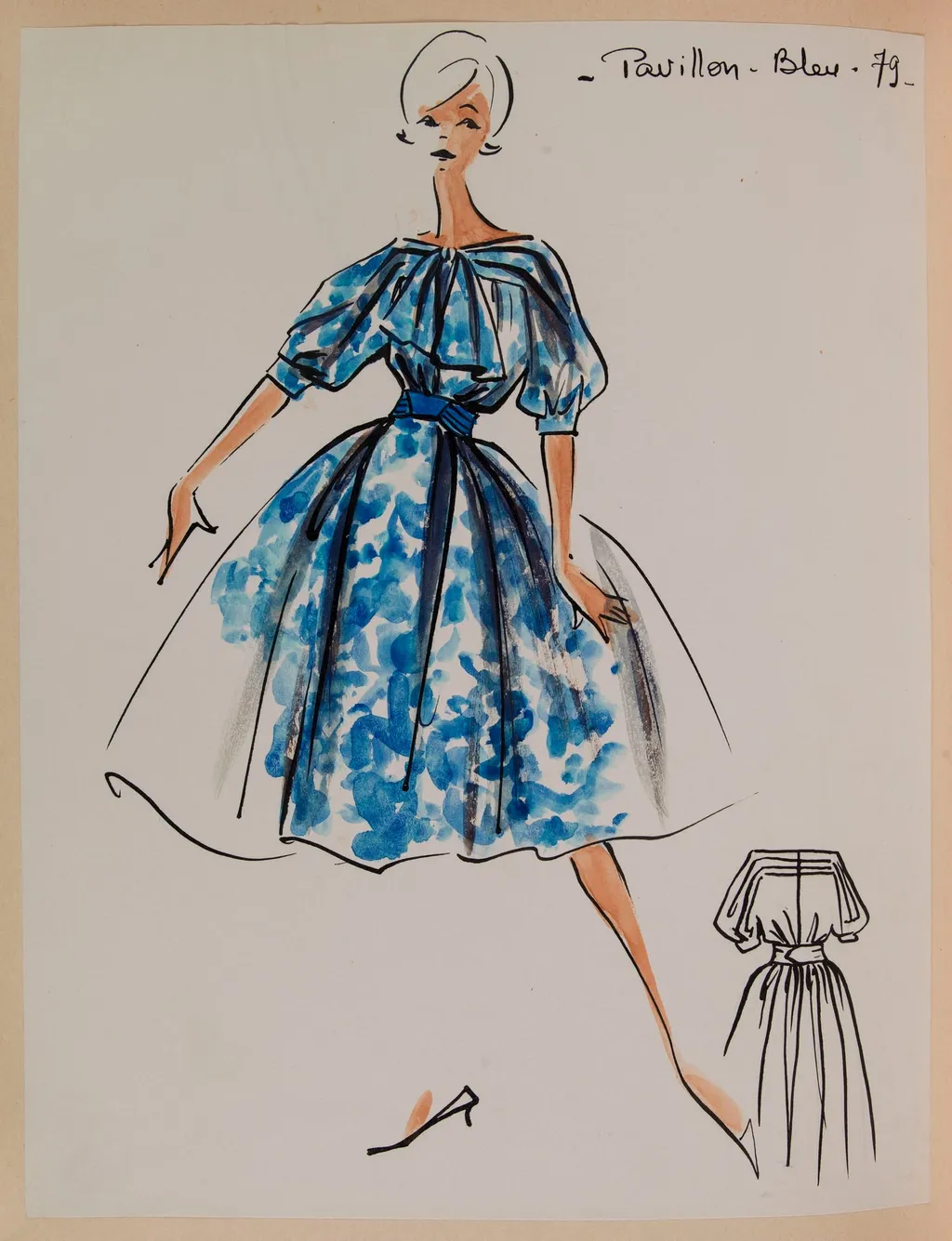
Pavillon bleu is a drawing by Marie-Louise Carven. It dates from 1958 and is held in the collection of the Palais Galliera - Musée de la Mode de la Ville de Paris.
About this work
Overview
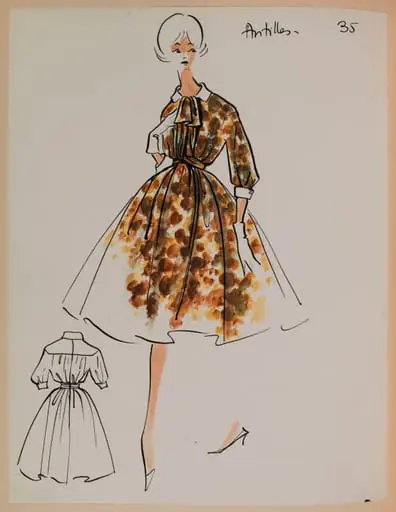
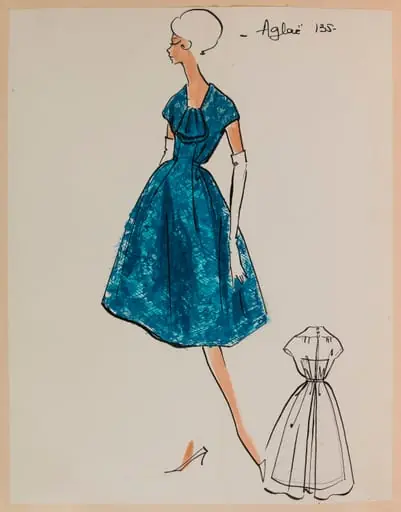
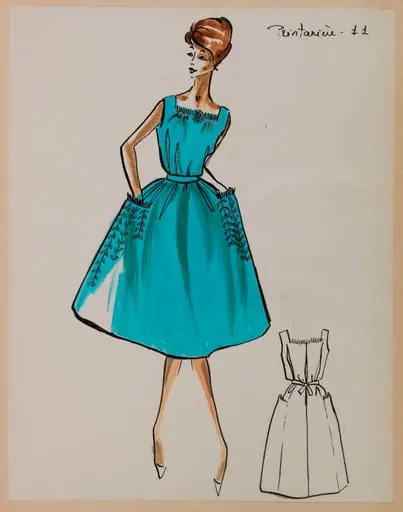
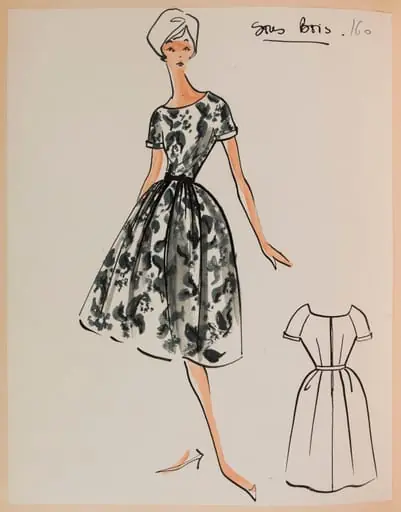
Created around 1958, *Pavillon bleu* is a watercolor fashion illustration by Marie-Louise Carven, founder of the Parisian fashion house Carven.
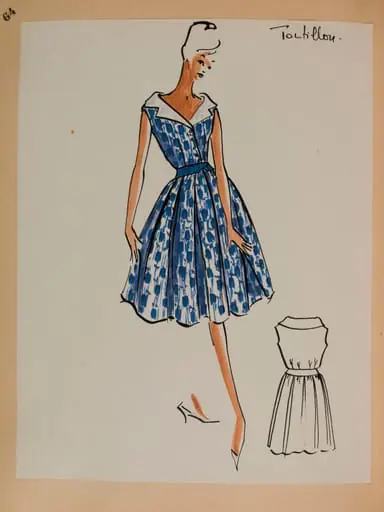
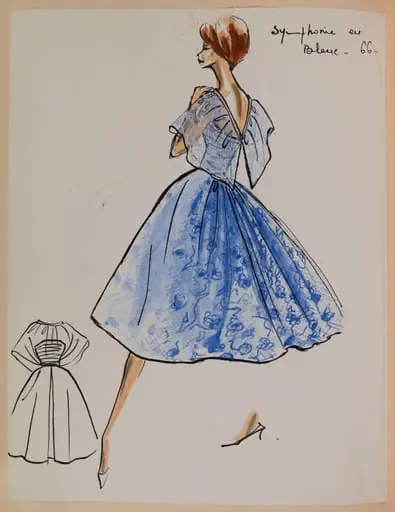
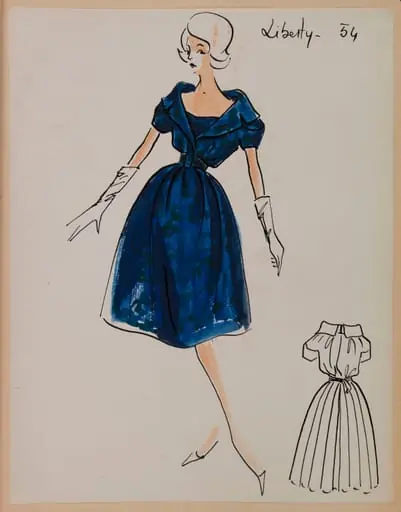
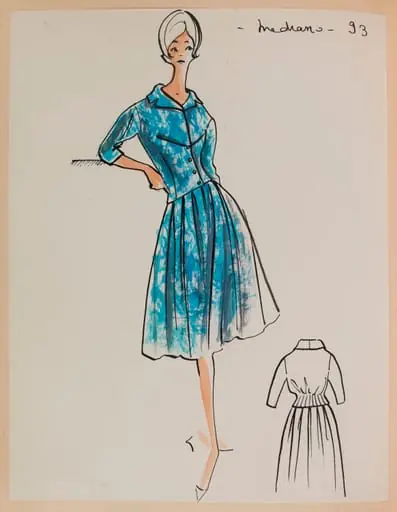
Created around 1958, *Pavillon bleu* is a watercolor fashion illustration by Marie-Louise Carven, founder of the Parisian fashion house Carven. The piece depicts a woman in a blue floral dress with a matching belt and high heels, rendered in soft, delicate brushwork. It serves as a design study, capturing both the garment’s form and the wearer’s poised posture. The illustration reflects Carven’s focus on feminine, wearable elegance tailored for smaller frames.
Subject & Meaning
The figure, shown from the waist up with one hand on her hip and the other extended, conveys a sense of casual confidence. Her short white hair suggests an older, refined woman, challenging norms that associated fashion with youth. The blue dress, adorned with a floral pattern, evokes lightness and charm, aligning with Carven’s aesthetic of understated femininity. The illustration prioritizes dignity and ease over spectacle, reflecting a quiet rebellion against overly ornate couture.
Technique & Style
Executed in watercolor on a light beige background, the illustration employs translucent washes to suggest fabric texture and subtle shadows. The lines are precise yet fluid, emphasizing the dress’s drape and the belt’s defined shape. A small supplementary sketch of the dress’s back reveals Carven’s attention to construction details. The style is illustrative rather than photographic, blending artistic sensitivity with functional design intent.
History & Provenance
The work originates from Carven’s personal archive, created during her active years as a designer in the 1950s. It entered the collection of the Museum of Ethnography as part of a broader acquisition of mid-century fashion materials. Though not a finished garment, the illustration documents the designer’s process and her role in shaping accessible, modern femininity. Its preservation underscores its value as a record of design thinking rather than mere aesthetics.
Context
In the late 1950s, Carven was pioneering prêt-à-porter in French fashion, making high-quality design accessible beyond elite clients. Her work contrasted with the rigid structures of haute couture, favoring lightweight fabrics and relaxed silhouettes. *Pavillon bleu* reflects this shift, embodying a postwar desire for practicality and grace. The illustration also aligns with broader cultural trends that began to celebrate mature women as valid subjects of fashion.
Legacy
Though Carven’s contributions are often overshadowed by contemporaries, her innovations in ready-to-wear and body-conscious design laid groundwork for modern fashion accessibility. *Pavillon bleu* stands as a quiet testament to her philosophy: elegance need not be grandiose. The illustration remains a reference point for scholars studying how fashion illustration documented evolving ideals of womanhood and age in mid-century Europe.
Artist & collection
Artist
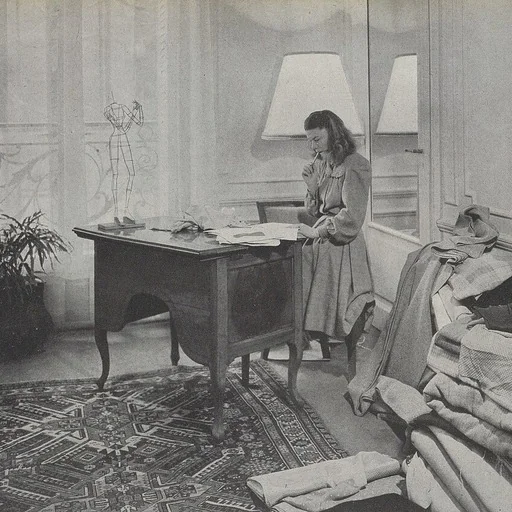
Marie-Louise Carven (31 August 1909 – 8 June 2015), born Carmen de Tommaso, was a French fashion designer who founded the house of Carven in 1945.

Museum
Palais Galliera - Musée de la Mode de la Ville de Paris
Continue through works from the same source collection.
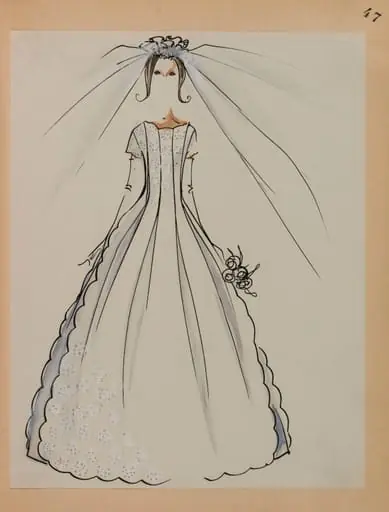 Robe de mariée festonnée et son voile
 Haut blanc à manches courtes et pantalon vert à ceinture nouée
 Kapur
Kapur Pull-over à manches longues pourpre, bonnet assorti, pantalon et lunettes de soleil
 GLAMOUR
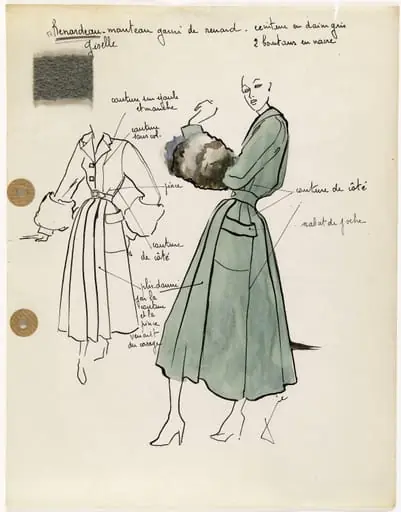 'Renardeau'
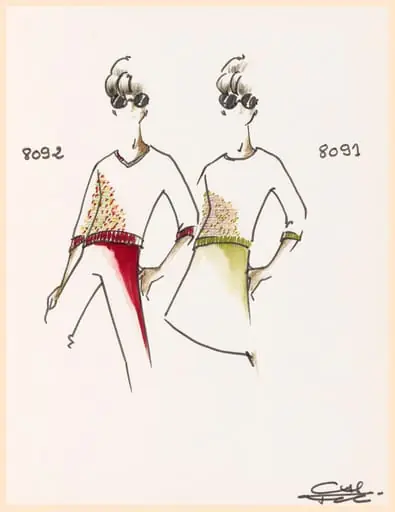 Pull-over à manches trois quarts et à encolure V à motifs multicolores, pantalon cerise et lunettes de soleil
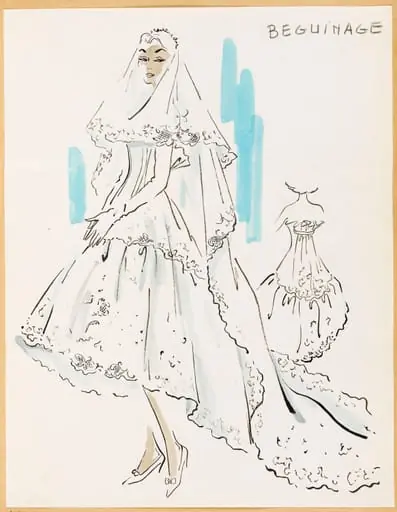 Béguinage