Artwork
Pivoine
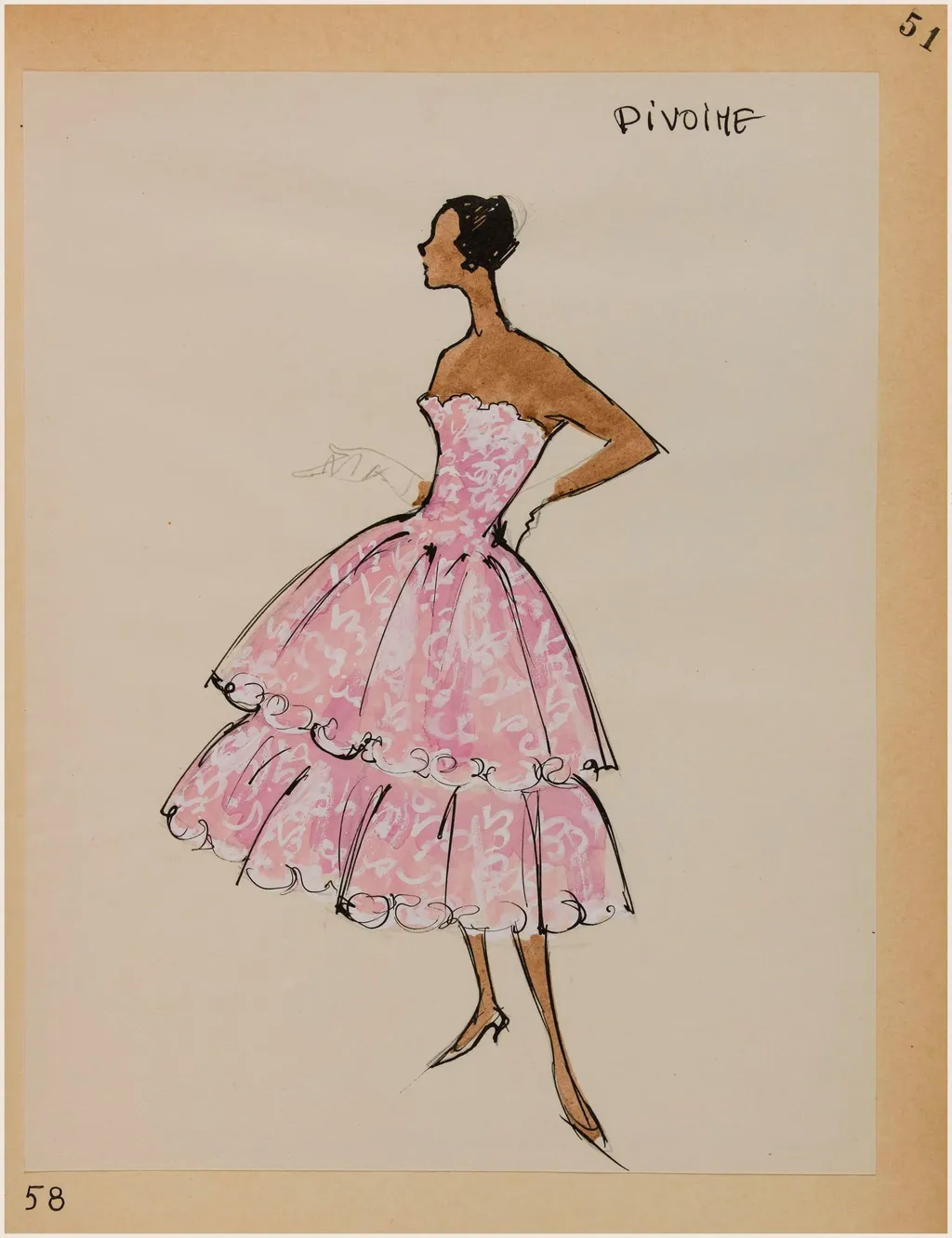
Pivoine is a drawing by Carven. It dates from 1956 and is held in the collection of the Palais Galliera - Musée de la Mode de la Ville de Paris.
About this work
Overview
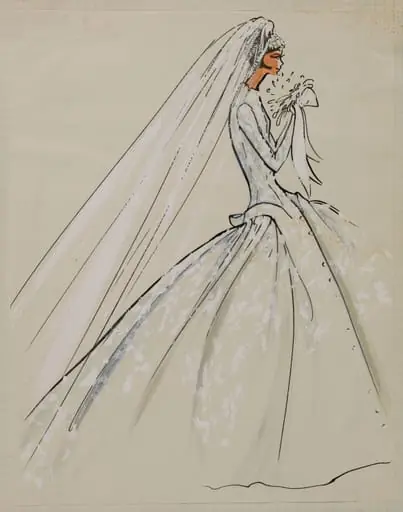
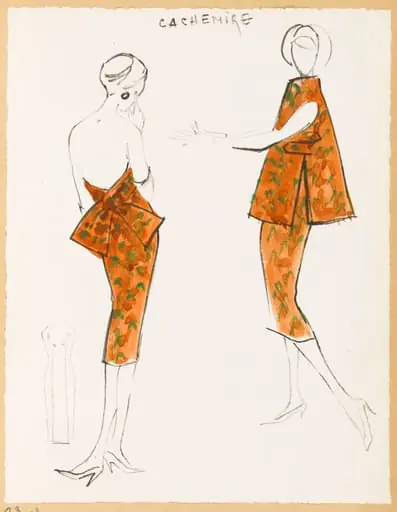
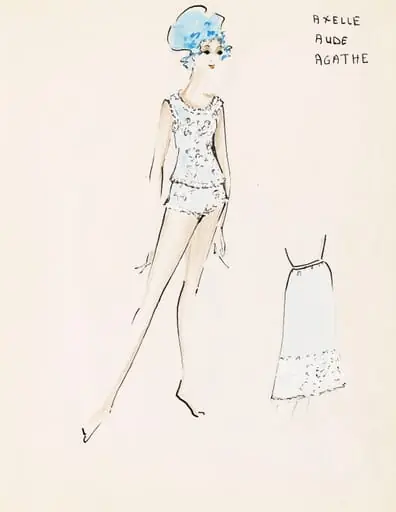
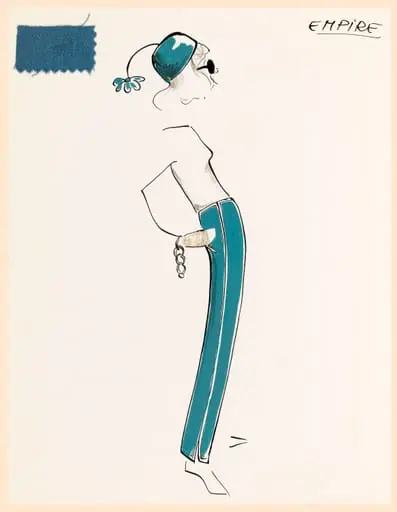
Pivoine is a 1956 ink drawing by the French fashion designer Carven, depicting a stylized female figure in formal attire. The work is part of the collection at the Museum of Ethnography, where it is preserved as an example of mid-20th-century fashion illustration. Though not a painting or sculpture, it reflects the designer’s engagement with visual representation beyond garment construction.
Subject & Meaning
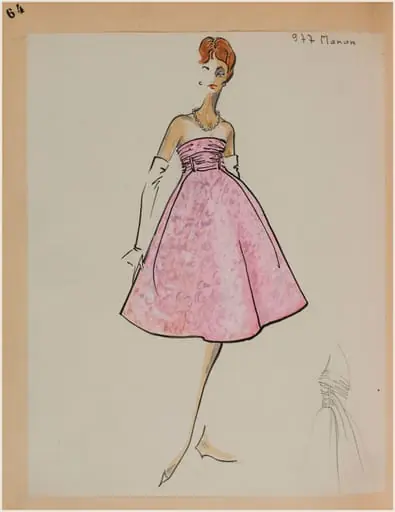
The figure is a woman dressed in a strapless pink gown with a full, florally patterned skirt, standing with hands on hips and one leg extended. Her poised stance and elegant attire suggest a sense of refined confidence. The absence of facial detail shifts focus to silhouette and dress, emphasizing fashion as a form of bodily expression rather than individual identity.
Technique & Style
Executed in fine ink lines on light beige paper, the drawing uses precise contours and minimal shading to define form. The floral pattern on the skirt is rendered with delicate repetition, while the updo and high heels are suggested with economical strokes. The style is illustrative, aligning with fashion sketches of the period, prioritizing clarity and grace over realism.
History & Provenance
Created in 1956 during Carven’s active design years, the drawing likely served as a reference or presentation piece for a collection. It entered the Museum of Ethnography’s holdings through acquisition or donation, possibly as part of a broader effort to document fashion as cultural artifact. Its preservation reflects institutional interest in design as ethnographic material.
Context
In the mid-1950s, Parisian fashion houses increasingly used illustration to communicate aesthetic ideals beyond runway shows. Carven, known for feminine, wearable designs, employed such drawings to convey mood and silhouette. This piece aligns with contemporaneous work by designers who treated fashion as both art and cultural expression, bridging haute couture and visual culture.
Legacy
Pivoine remains a quiet testament to Carven’s role in shaping postwar French fashion aesthetics. While not widely exhibited, its presence in an ethnographic museum underscores how fashion drawings are valued as cultural records. It contributes to scholarly understanding of how designers visually articulated identity, elegance, and gender norms in mid-century Europe.
Artist & collection
Artist
These delicate ink-on-paper drawings capture the quiet poetry of everyday things: pinecones, reeds, apples.
Museum
Palais Galliera - Musée de la Mode de la Ville de Paris
Continue through works from the same source collection.