Artwork
Romantique
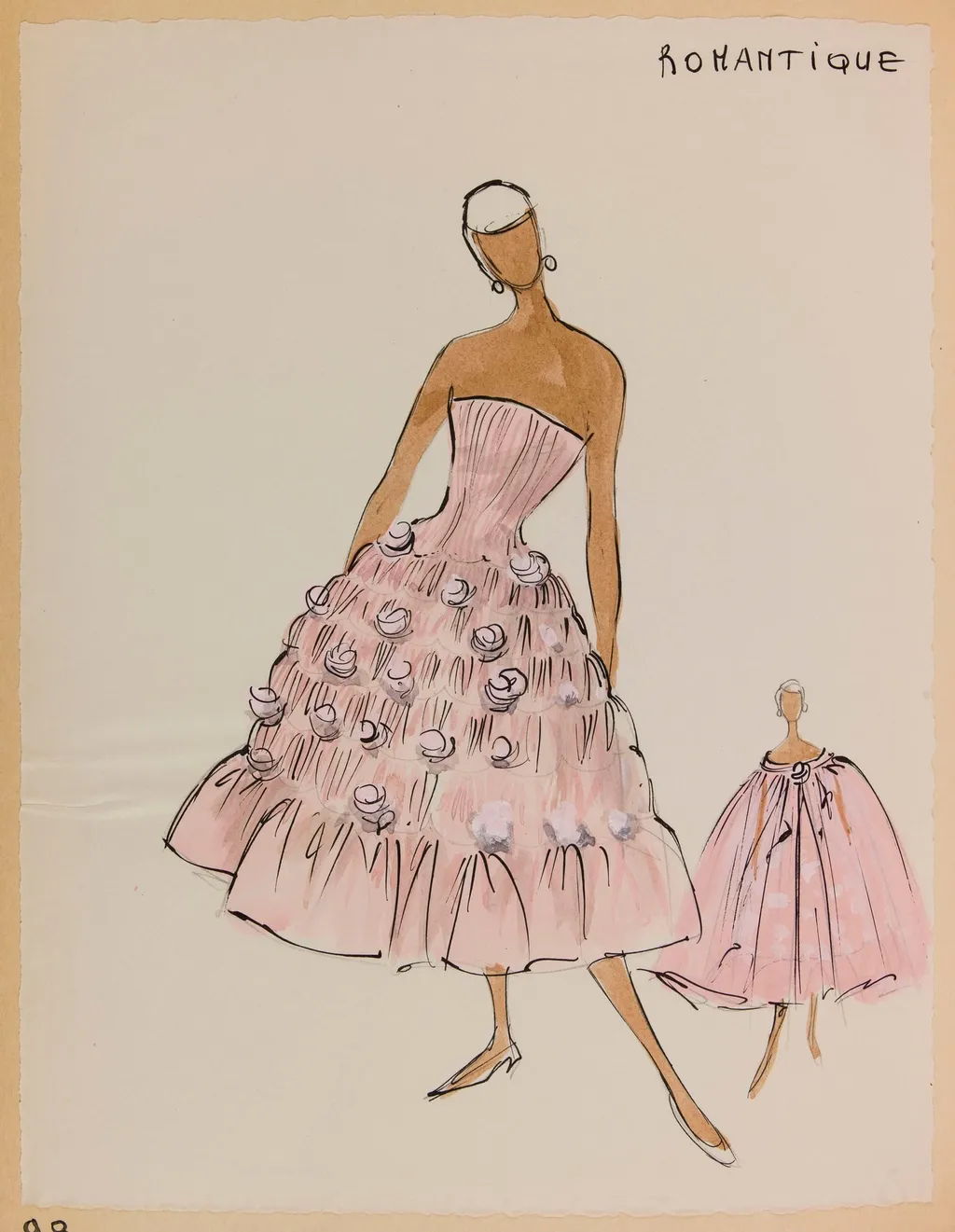
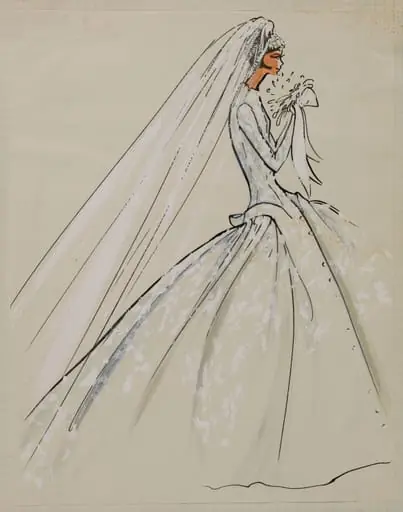
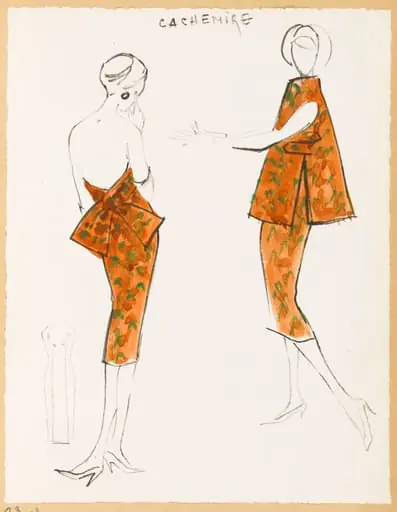
Romantique is a drawing by Carven. It dates from 1956 and is held in the collection of the Palais Galliera - Musée de la Mode de la Ville de Paris.
About this work
Overview
Romantique, created around 1956 by the French designer Carven, is a painted image that blends fashion illustration with fine art.
Romantique, created around 1956 by the French designer Carven, is a painted image that blends fashion illustration with fine art. It resides in the collection of the Museum of Ethnography. The work presents a stylized female figure in a moment of poised motion, reflecting mid-century aesthetic sensibilities. Though classified as an image, its execution suggests a deliberate engagement with textile design and bodily gesture, characteristic of Carven’s broader creative output.
Subject & Meaning
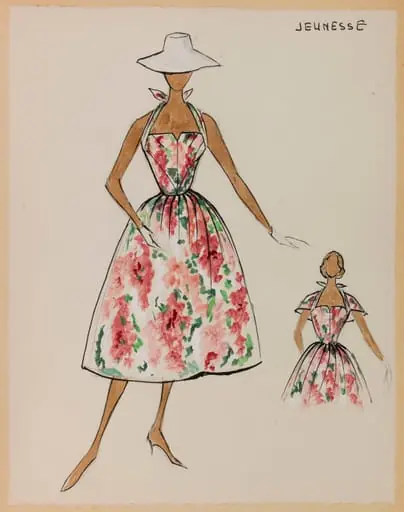
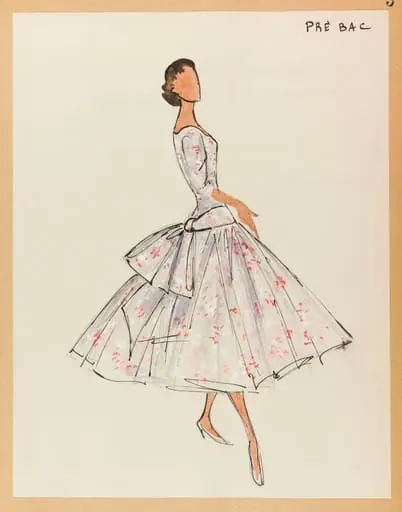
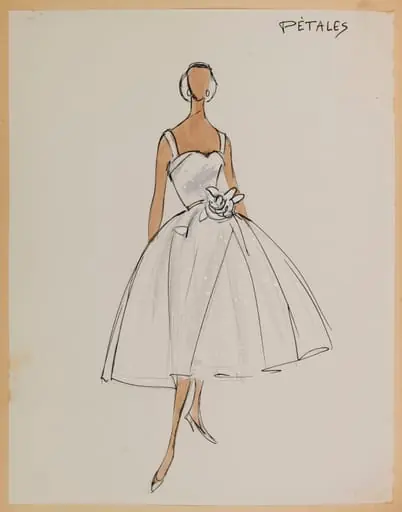
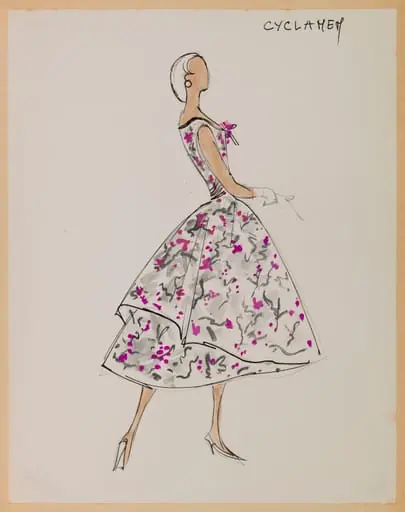
The subject is a woman dressed in a strapless, pink gown with a flared skirt just above the knee, adorned with scattered floral motifs. Her posture—left leg extended, right hand resting on the hip—conveys a sense of casual elegance rather than formal rigidity. The imagery evokes an idealized femininity rooted in postwar European fashion, where grace and movement were central to the portrayal of modern womanhood. The flowers suggest natural beauty, not as ornamentation but as an extension of the figure’s presence.
Technique & Style
The painting employs soft, muted tones to frame the pastel pink of the dress, creating a harmonious tonal field. Brushwork is smooth and controlled, emphasizing the flow of fabric and the curve of the body. Floral patterns are rendered with delicate precision, suggesting hand-drawn textile design rather than printed repetition. The background lacks detail, focusing attention entirely on the figure and her attire, a technique common in fashion illustrations of the period.
History & Provenance
The work was produced during Carven’s active years as a couturier, when she frequently collaborated with illustrators to translate her designs into visual narratives. It entered the Museum of Ethnography’s collection in the late 20th century, likely as part of an effort to document fashion as cultural artifact. Its preservation reflects institutional interest in the intersection of haute couture and visual art, rather than its status as a standalone painting.
Context
Created in the mid-1950s, Romantique emerged during a period when French fashion houses emphasized romanticized femininity after the austerity of wartime. Carven’s designs often merged simplicity with poetic detail, appealing to a clientele seeking both modernity and charm. This image aligns with contemporaneous fashion illustrations in magazines and catalogs, where clothing was portrayed not just as garment but as embodiment of mood and identity.
Legacy
Romantique remains a quiet example of how fashion design was visually articulated beyond the runway. It contributes to scholarly understanding of mid-century French design culture, particularly the role of illustration in communicating aesthetic values. While not widely exhibited, its presence in an ethnographic museum underscores its significance as a cultural document rather than a celebrated artwork.
Artist & collection
Artist
These delicate ink-on-paper drawings capture the quiet poetry of everyday things: pinecones, reeds, apples.
Museum
Palais Galliera - Musée de la Mode de la Ville de Paris
Continue through works from the same source collection.