Artwork
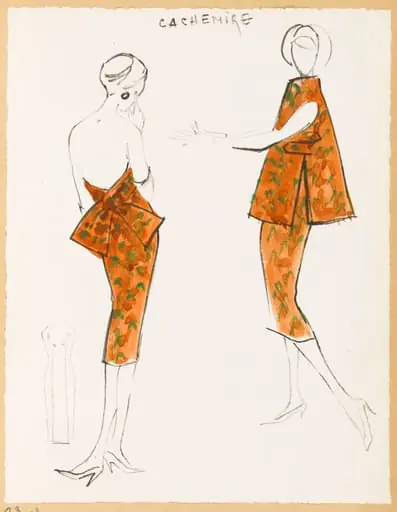
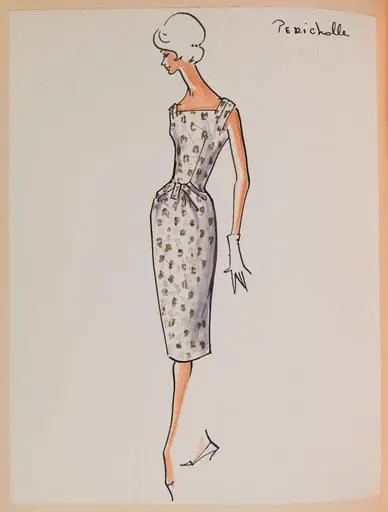
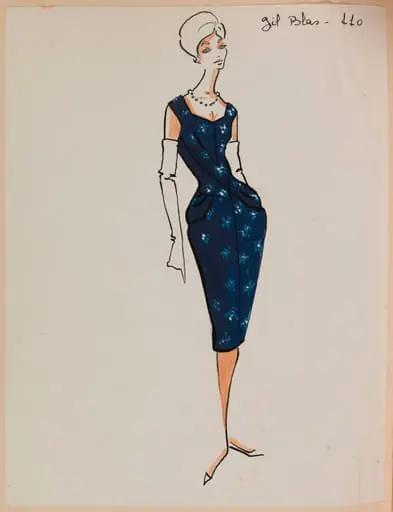
Robe ajustée à bretelles à motif bleu et ceinture sous la poitrine
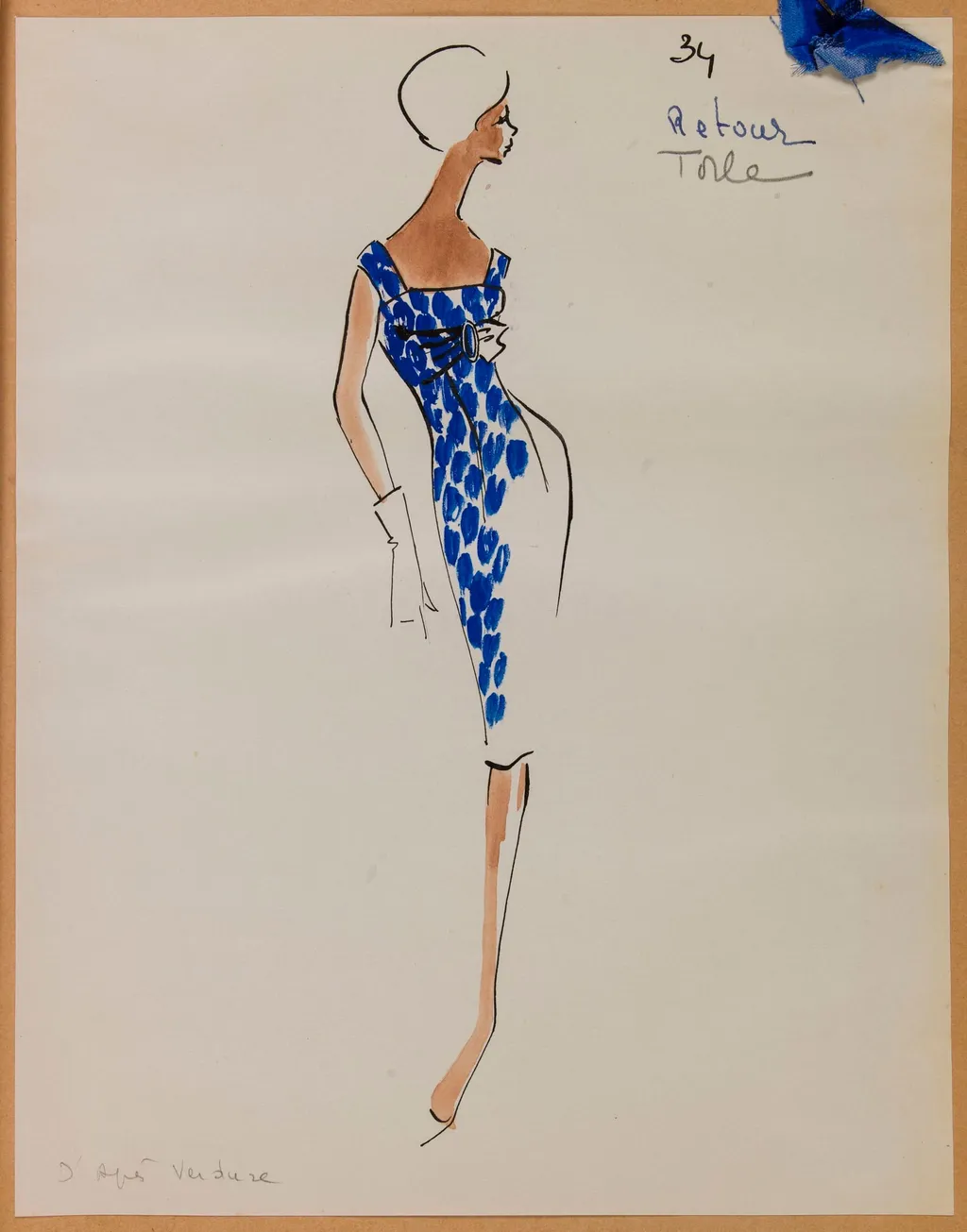
Robe ajustée à bretelles à motif bleu et ceinture sous la poitrine is a drawing by Carven. It dates from 1957 and is held in the collection of the Palais Galliera - Musée de la Mode de la Ville de Paris.
About this work
Overview
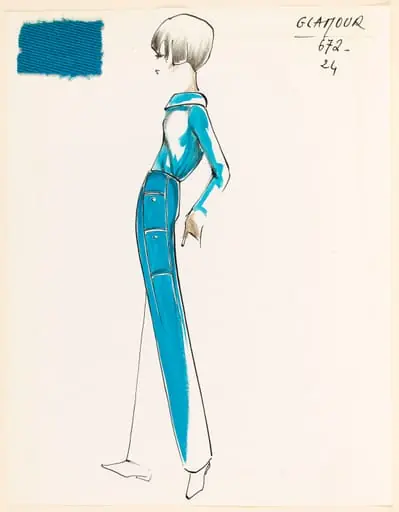
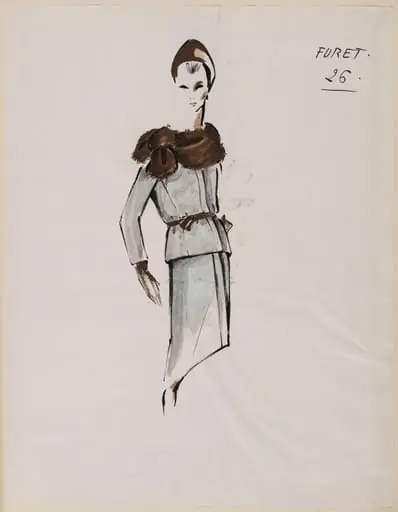
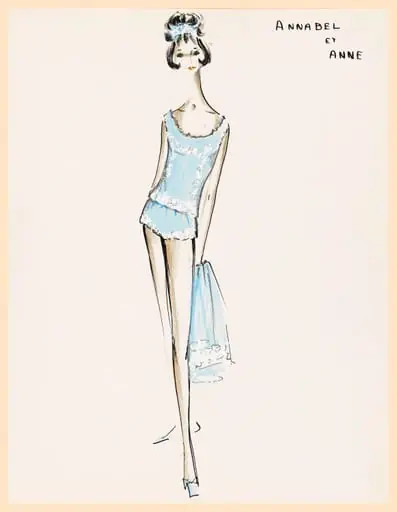
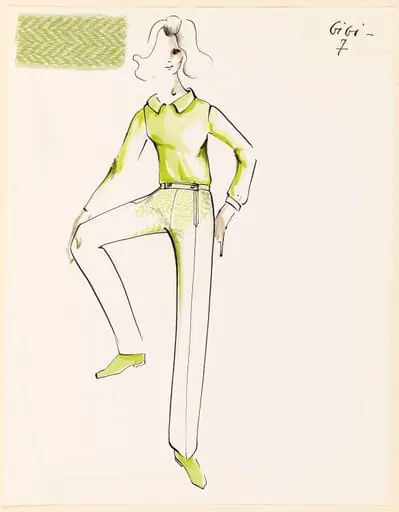
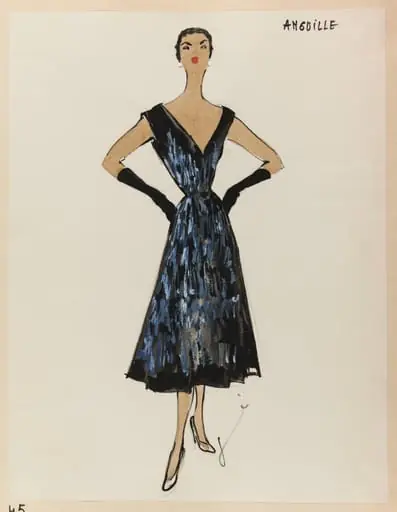
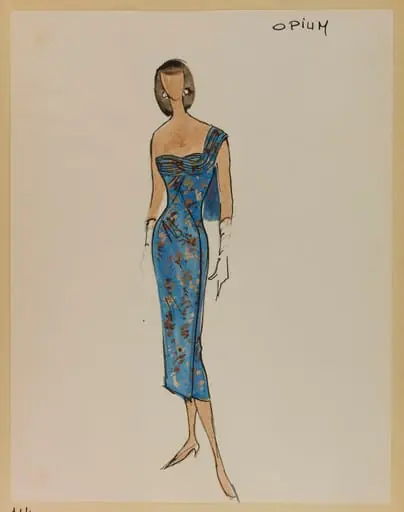
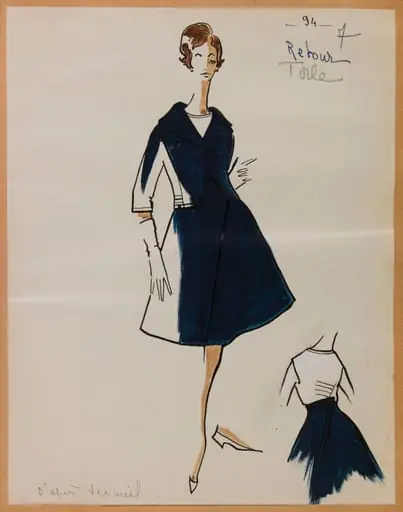
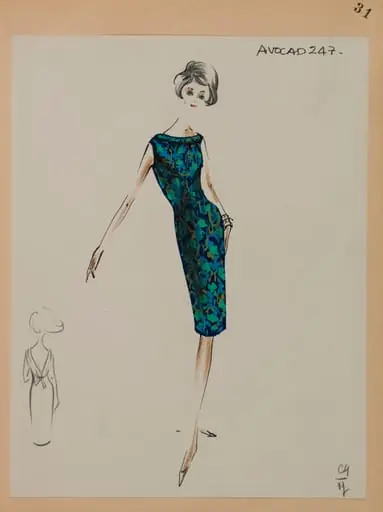
This ink drawing, dated around 1957, depicts a woman wearing a sleeveless dress with thin straps and a narrow belt positioned just below the bust. Executed in fluid, unshaded lines, the sketch captures a relaxed, natural stance. It was produced by the French fashion house Carven and is now part of the Museum of Ethnography’s collection, where it serves as a record of mid-century design practice.
Subject & Meaning
The figure stands with one leg lightly bent, suggesting ease and movement rather than rigid formality. The dress, adorned with a bold, leaf-like pattern, reflects a mid-century preference for organic motifs in textile design. The belt’s placement emphasizes the waist while allowing the skirt to fall loosely, indicating a design intent toward comfort and understated elegance.
Technique & Style
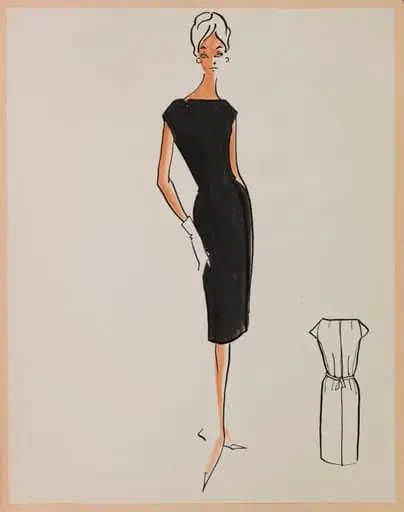
Rendered with swift, confident strokes, the drawing avoids shading or detail, focusing instead on contour and posture. The lines are clean and continuous, conveying the garment’s structure without embellishment. This economical style is typical of fashion sketches used internally for design development, prioritizing clarity and speed over finish.
History & Provenance
Created by Carven’s design team in the late 1950s, the sketch likely served as a preliminary study for a garment later produced in fabric. It entered the Museum of Ethnography’s holdings as part of a broader collection documenting 20th-century fashion as cultural artifact, reflecting how design ideas transitioned from paper to wearable form.
Context
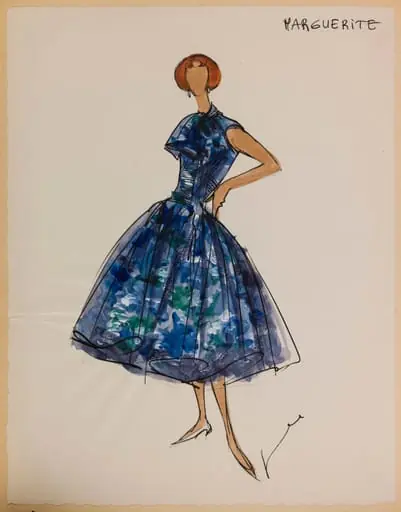
In postwar France, fashion houses like Carven emphasized wearable, feminine silhouettes that balanced structure with ease. This sketch aligns with trends favoring light fabrics, natural patterns, and low-waisted belts—a reaction against wartime austerity. Such drawings were essential tools in translating aesthetic ideas into commercial garments for a growing middle-class market.
Legacy
Though not a finished garment, the sketch preserves the design ethos of Carven’s mid-century output: simplicity, attention to proportion, and integration of nature-inspired motifs. It remains a quiet testament to the role of sketching in fashion’s creative process, illustrating how ideas were refined before reaching the atelier.
Artist & collection
Artist
These delicate ink-on-paper drawings capture the quiet poetry of everyday things: pinecones, reeds, apples.

Museum
Palais Galliera - Musée de la Mode de la Ville de Paris
Continue through works from the same source collection.