Artwork
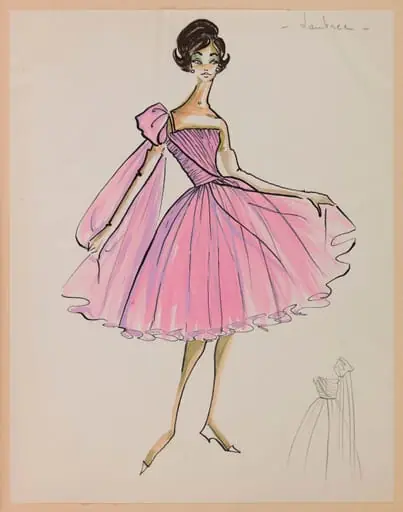
Robe rose à gros noeud sur la poitrine
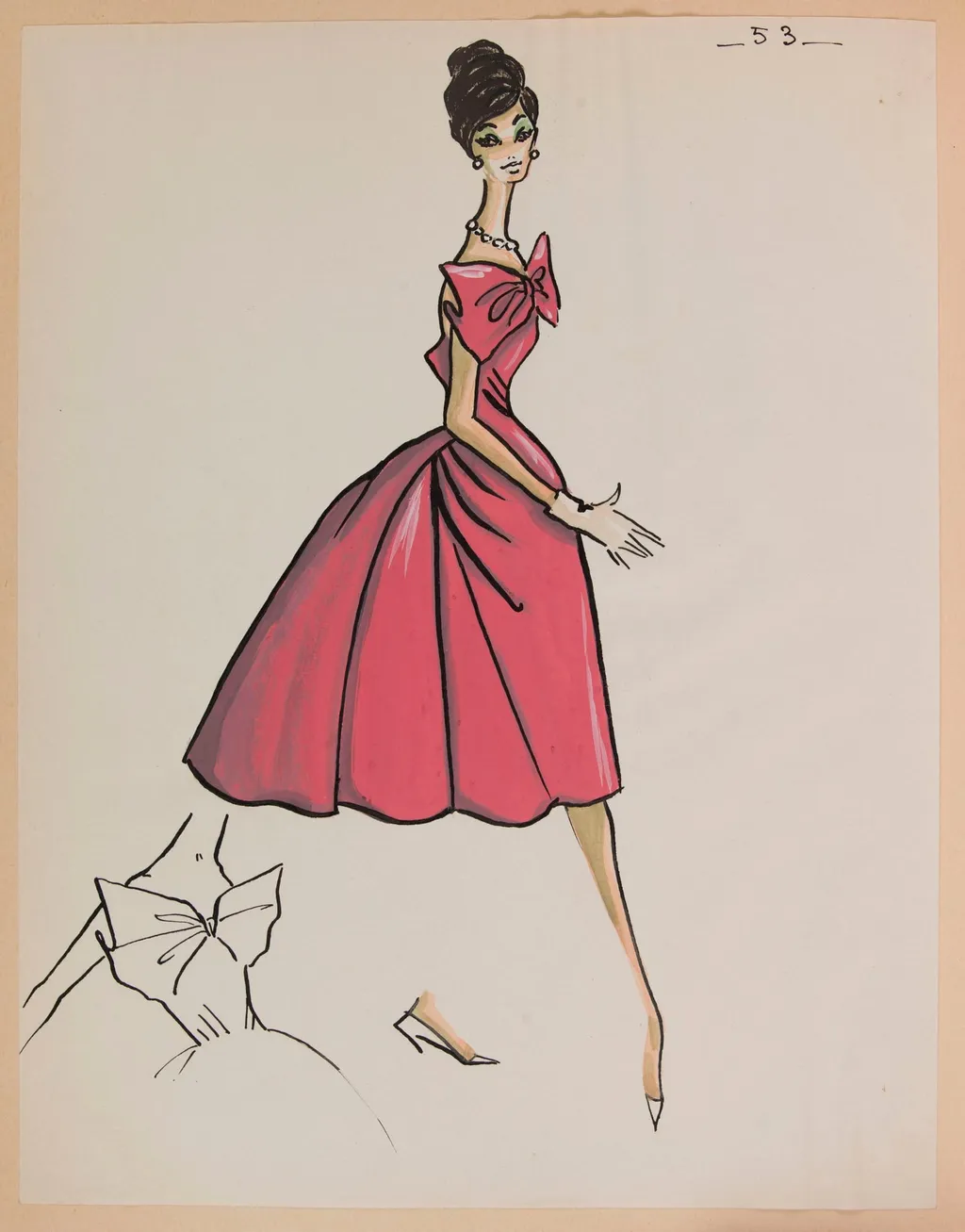
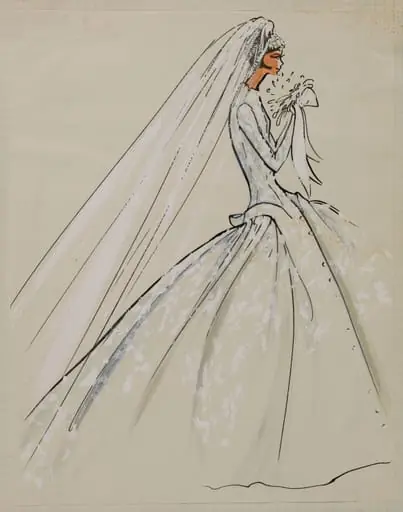
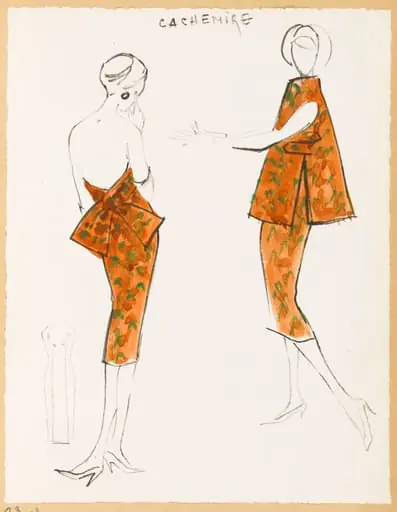
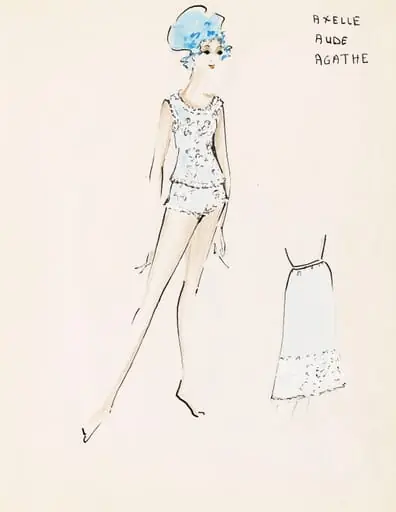
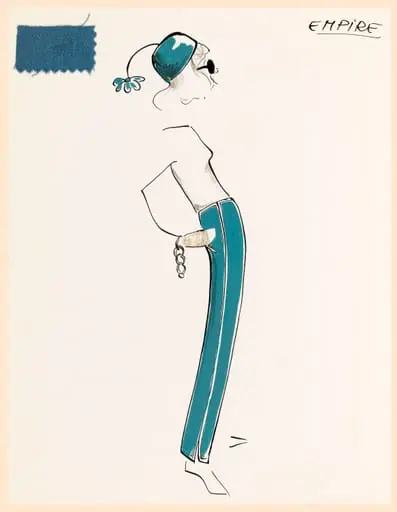
Robe rose à gros noeud sur la poitrine is a drawing by Carven. It dates from 1959 and is held in the collection of the Palais Galliera - Musée de la Mode de la Ville de Paris.
About this work
Overview
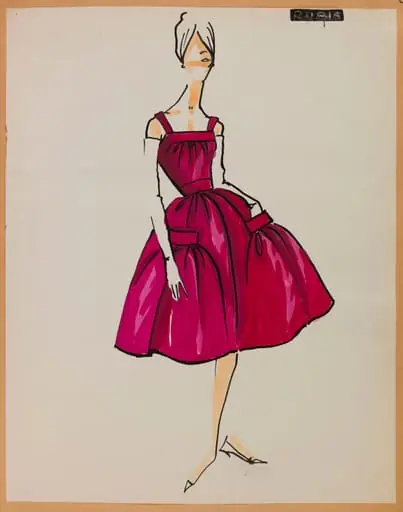
Created around 1959 by the French fashion house Carven, this ink-and-watercolor drawing depicts a woman in a vivid pink dress with a large central bow.
Created around 1959 by the French fashion house Carven, this ink-and-watercolor drawing depicts a woman in a vivid pink dress with a large central bow. The work is part of the Museum of Ethnography’s collection and functions as a fashion study rather than a finished garment. Its minimalist background and focused composition highlight the design’s structure and silhouette, reflecting the studio’s practice of documenting couture through precise illustration.
Subject & Meaning
The figure stands with poised confidence, one hand resting on her hip, suggesting self-assurance and elegance. The dress, with its exaggerated bow and flared skirt, embodies mid-century ideals of feminine formality and playful sophistication. The drawing does not depict a specific person but rather an archetype of postwar Parisian style—refined, deliberate, and visually assertive through silhouette alone.
Technique & Style
Executed in clean, linear ink with flat areas of watercolor, the drawing emphasizes clarity over texture. The bow is rendered with careful attention to fabric folds, evidenced by a smaller study at the lower left. The absence of shading or background detail directs focus to the garment’s geometry. This restrained aesthetic aligns with fashion illustration traditions of the period, prioritizing structural accuracy and visual immediacy.
History & Provenance
The work originated in Carven’s design studio during the late 1950s, likely used internally to communicate garment details to tailors or clients. It entered the Museum of Ethnography’s collection as part of a broader acquisition of fashion documentation, reflecting the institution’s interest in material culture beyond traditional ethnographic artifacts. Its preservation underscores its value as a record of design process rather than retail output.
Context
In postwar France, fashion houses like Carven relied on illustrators to translate designs before production. This drawing reflects a time when couture was deeply tied to hand-drawn presentation, before photography dominated the industry. The emphasis on silhouette and detail mirrors the era’s focus on craftsmanship and the body as a canvas for structured elegance, distinct from mass-market trends.
Legacy
As a surviving example of mid-century fashion illustration, the work contributes to the historical record of how design ideas were communicated before digital tools. It remains a quiet testament to the precision and artistry embedded in couture documentation, offering insight into the quiet labor behind garments that defined an era’s aesthetic without seeking public acclaim.
Artist & collection
Artist
These delicate ink-on-paper drawings capture the quiet poetry of everyday things: pinecones, reeds, apples.
Museum
Palais Galliera - Musée de la Mode de la Ville de Paris
Continue through works from the same source collection.