Artwork
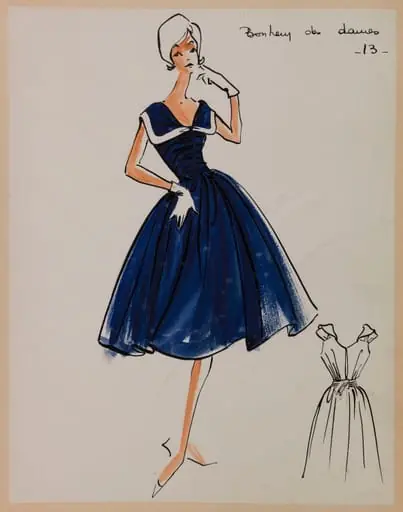
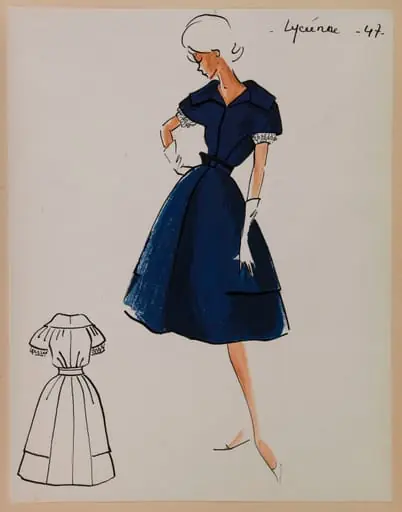
Robe bleu marine à larges plis sur la jupe
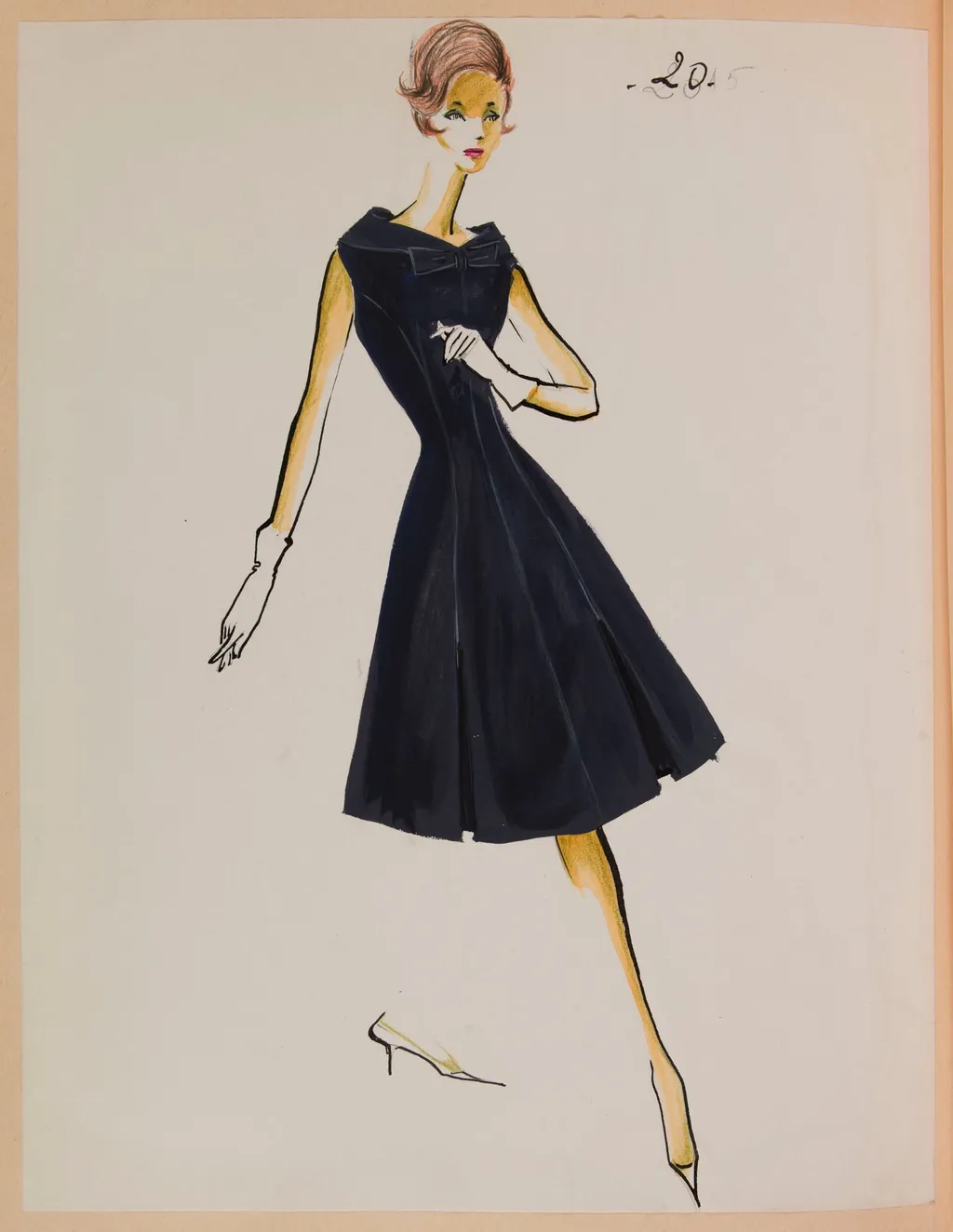
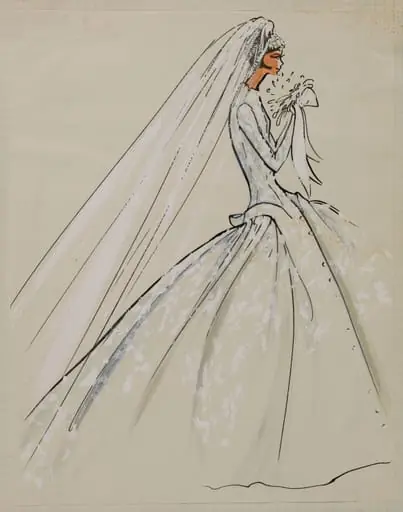
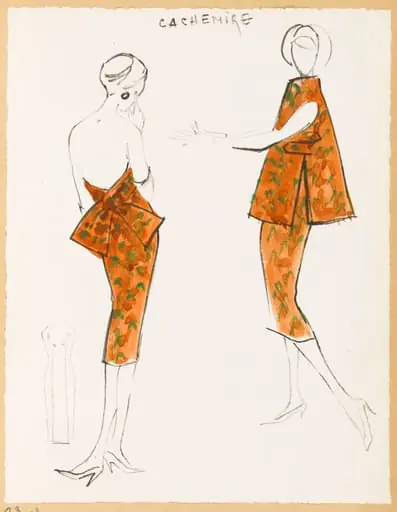
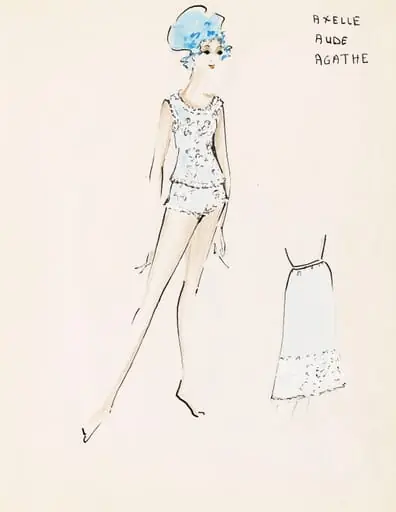
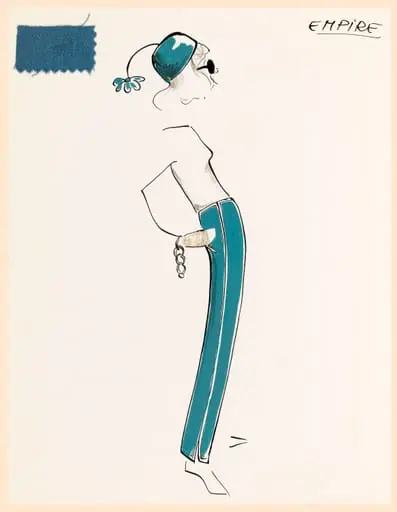
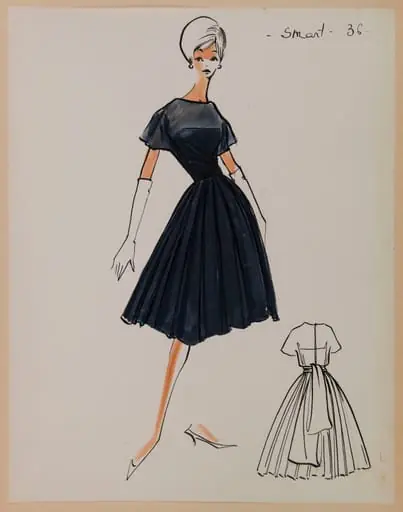
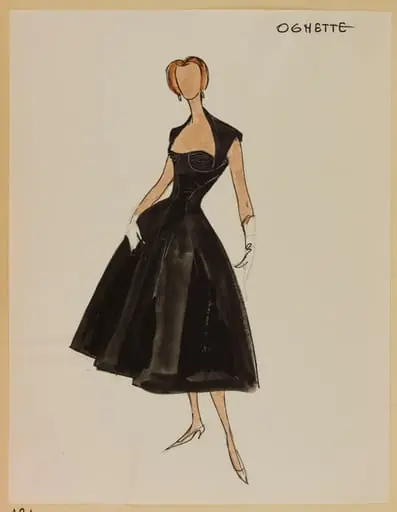
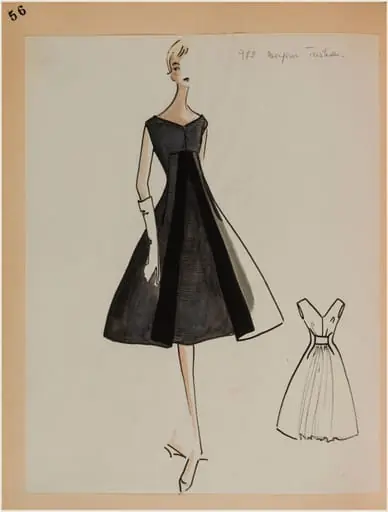
Robe bleu marine à larges plis sur la jupe is a drawing by Carven. It dates from 1959 and is held in the collection of the Palais Galliera - Musée de la Mode de la Ville de Paris. This ink-and-wash drawing, dated around 1959, depicts a woman’s dress in isolation, without a face or setting.
About this work
Overview
The work belongs to the collection of the Museum of Ethnography, where it functions as a record of mid-century fashion design.
This ink-and-wash drawing, dated around 1959, depicts a woman’s dress in isolation, without a face or setting. Created by the French fashion house Carven, it emphasizes the structure and movement of a navy-blue skirt with broad pleats. The figure is rendered minimally, serving only to showcase the garment’s form. The work belongs to the collection of the Museum of Ethnography, where it functions as a record of mid-century fashion design.
Subject & Meaning
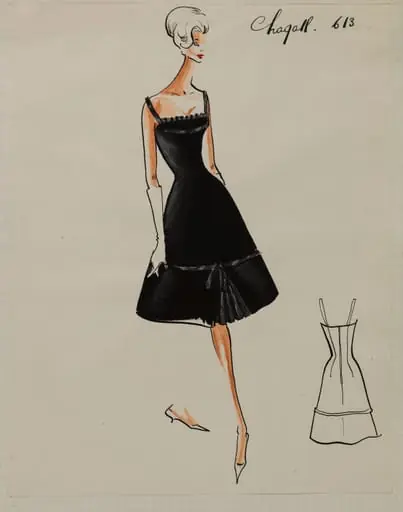
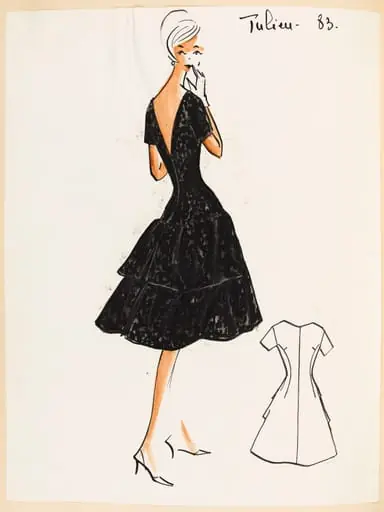
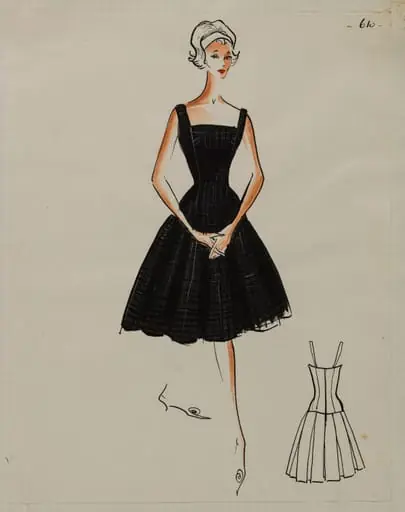
The drawing isolates a simple black dress with a fitted bodice, short sleeves, and a full skirt, highlighting the contrast between tailored upper and voluminous lower sections. A small bow at the neckline adds subtle detail, while pointed shoes suggest a refined silhouette. By omitting facial features and background, the artist directs attention solely to the dress as an object of design, reflecting a focus on form over identity.
Technique & Style
The artist employs clean, unbroken lines and flat, unmodulated color to define the dress’s contours. Shading is absent, and textures are implied through the rhythm of pleats rather than detailed rendering. This stylized approach prioritizes clarity and silhouette, aligning with fashion illustration traditions that treat clothing as autonomous subject matter. The economy of line underscores precision and intentionality.
History & Provenance
Produced by Carven’s design studio circa 1959, the drawing likely served as a technical or promotional study for a garment in their collection. It entered the Museum of Ethnography’s holdings as part of a broader effort to document fashion as cultural artifact. Its preservation reflects institutional interest in mid-century French design practices beyond haute couture runways.
Context
In the late 1950s, fashion illustration increasingly shifted toward abstraction, emphasizing garment structure over narrative or personality. Carven, known for wearable elegance, used such drawings to communicate design intent to clients and manufacturers. This piece aligns with contemporaneous efforts in Paris to elevate fashion design as a discipline worthy of archival study, distinct from fine art or portraiture.
Legacy
The drawing remains a representative example of how fashion houses documented their work in an era before digital rendering. Its presence in an ethnographic museum signals a broader recognition of clothing as material culture. It continues to inform studies on mid-century design aesthetics and the role of illustration in fashion’s production cycle.
Artist & collection
Artist
These delicate ink-on-paper drawings capture the quiet poetry of everyday things: pinecones, reeds, apples.
Museum
Palais Galliera - Musée de la Mode de la Ville de Paris
Continue through works from the same source collection.