Artwork
Roitelet
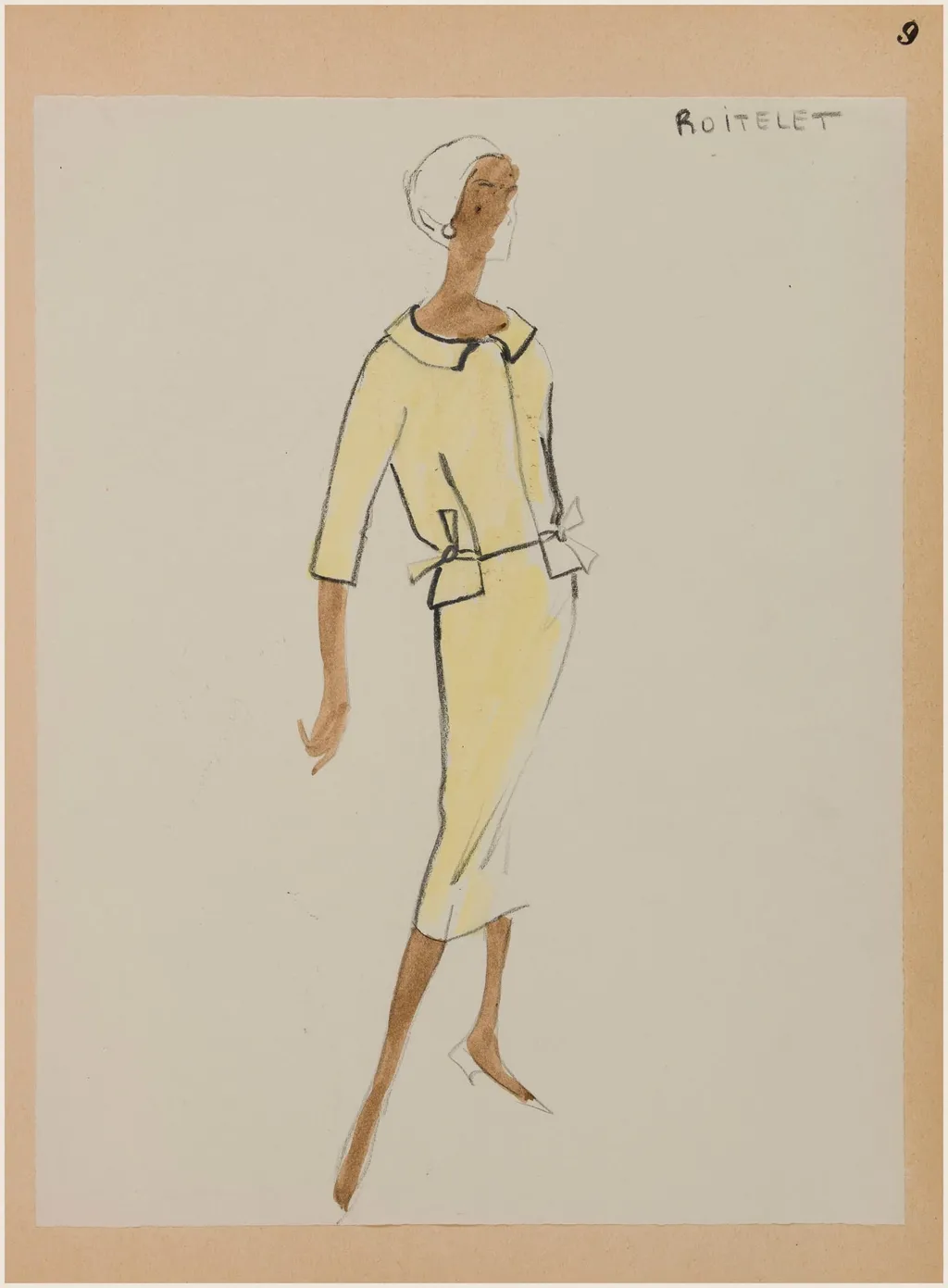
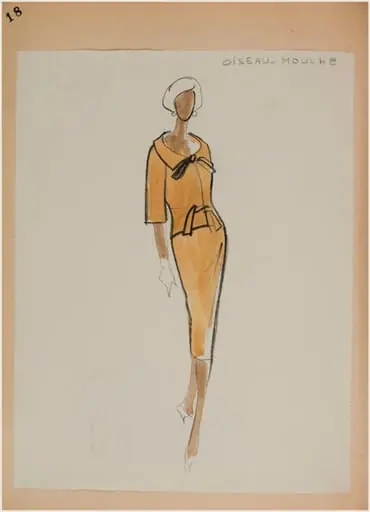
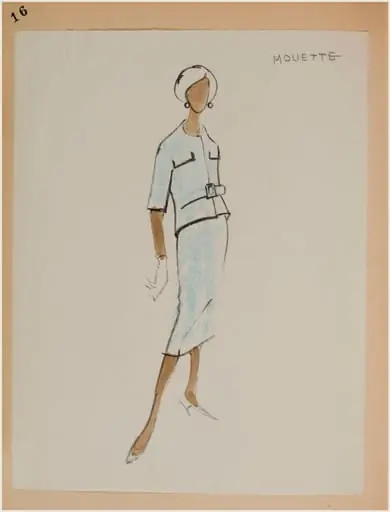
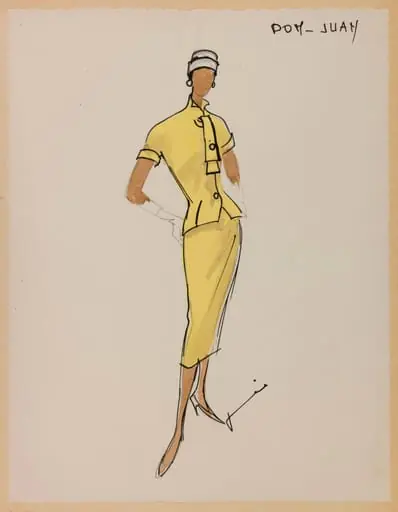
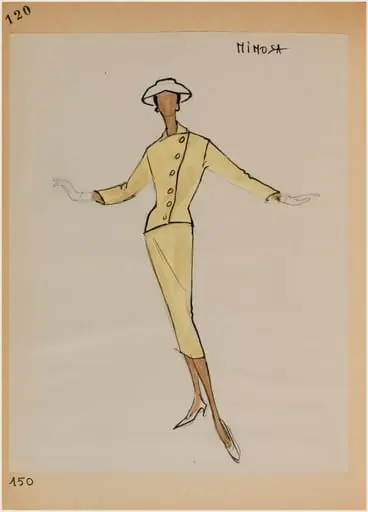
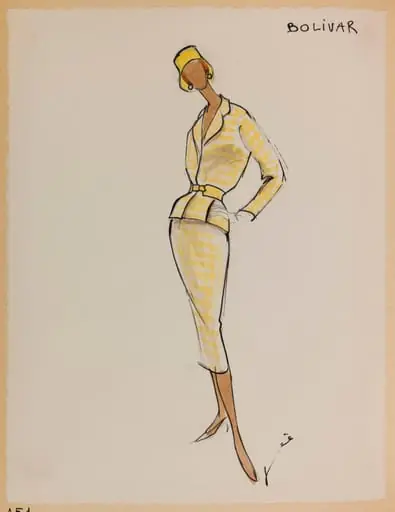
Roitelet is a drawing by Carven. It dates from 1958 and is held in the collection of the Palais Galliera - Musée de la Mode de la Ville de Paris.
About this work
Overview
Roitelet is a pencil sketch attributed to the French designer Carven, dated around 1958. It resides in the collection of the Museum of Ethnography. The work is not a polished illustration but a spontaneous, fluid study, suggesting it was made as a preparatory or observational exercise. Its modest scale and informal execution distinguish it from commercial fashion renderings of the period.
Subject & Meaning
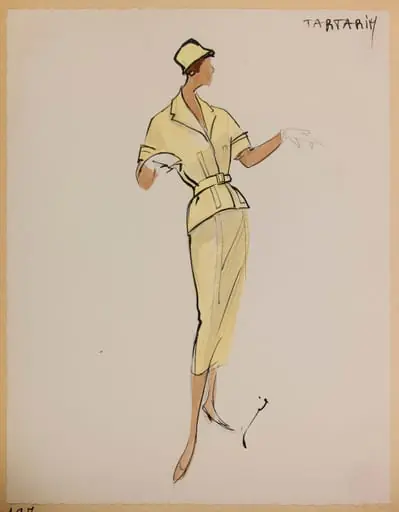
The figure depicts a woman in motion, stepping forward barefoot in a simple yellow dress with black edging and a white collar.
The figure depicts a woman in motion, stepping forward barefoot in a simple yellow dress with black edging and a white collar. A narrow bow at the waist adds subtle structure to the loose form. Her restrained posture and unadorned attire suggest an everyday moment, possibly drawn from life. The title 'Roitelet'—a French term for a small bird—offers no clear narrative link, leaving its significance ambiguous.
Technique & Style
Executed in swift, light pencil strokes, the drawing captures movement through minimal lines rather than detail. Contours are suggestive, not defined, and shading is absent. The artist prioritizes gesture over precision, emphasizing rhythm and balance. This approach aligns with sketchbook practices common among designers observing movement and form in real time, rather than creating finished presentations.
History & Provenance
The work entered the Museum of Ethnography’s collection without documented provenance prior to its acquisition. No exhibition history or correspondence linking it to specific projects by Carven has been preserved. Its presence in an ethnographic institution, rather than a fashion archive, suggests it was valued for its anthropological insight into postwar French domestic life or design practice.
Context
In late 1950s France, fashion designers often sketched informally to capture fleeting gestures or textile drape. Carven, known for elegant yet accessible womenswear, may have used such studies to refine silhouettes. The barefoot figure and unpretentious attire reflect a cultural shift toward casualness in daily dress, contrasting with the more formal styles of earlier decades.
Legacy
Roitelet survives as a quiet testament to the observational habits of mid-century designers. It offers no grand statement but reveals the quiet discipline behind fashion’s creation. Its preservation in an ethnographic context underscores how everyday visual practices can illuminate broader social patterns, even when their original intent remains unclear.
Artist & collection
Artist
These delicate ink-on-paper drawings capture the quiet poetry of everyday things: pinecones, reeds, apples.
Museum
Palais Galliera - Musée de la Mode de la Ville de Paris
Continue through works from the same source collection.