Artwork
Oiseau-mouche
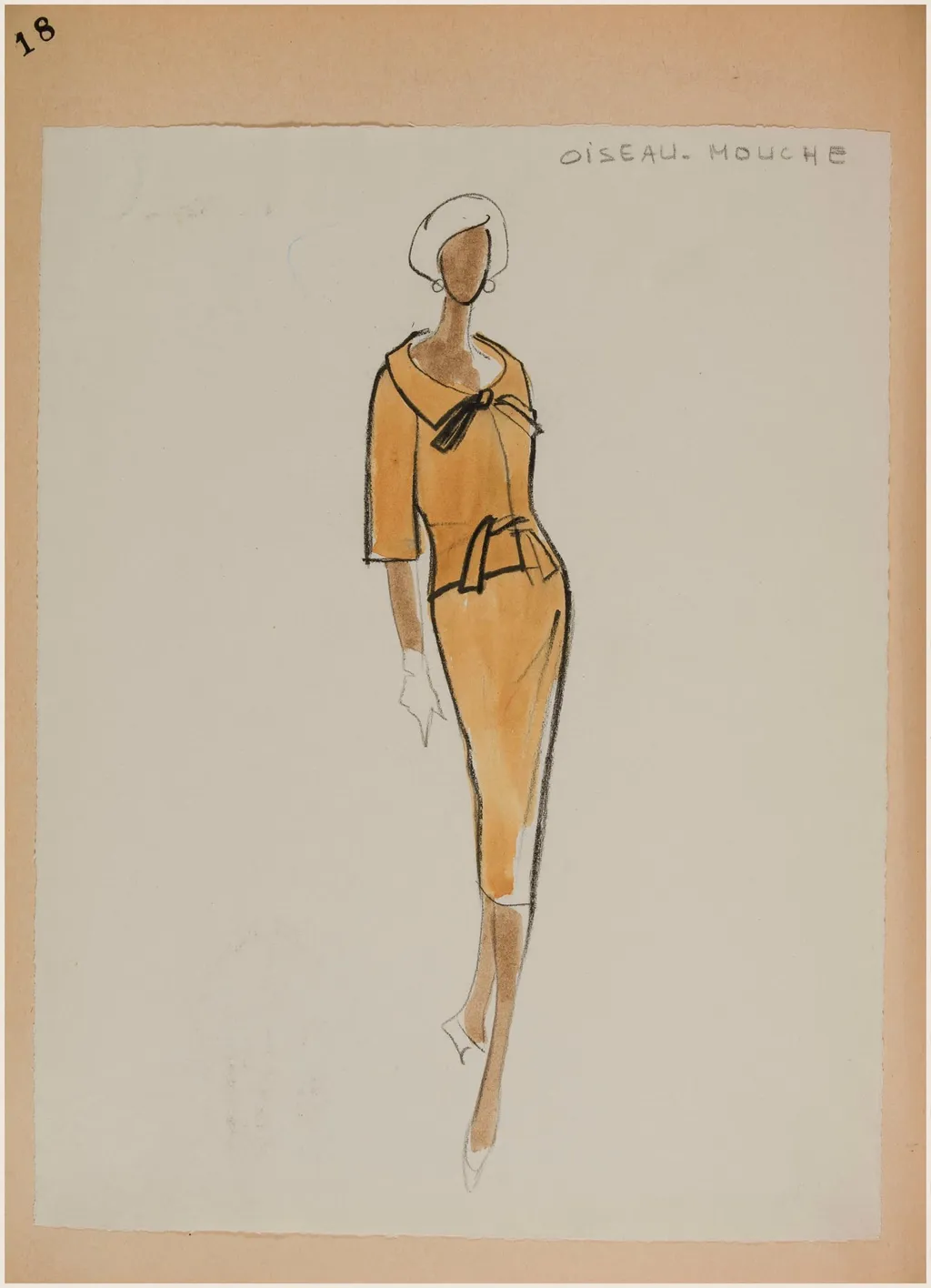
Oiseau-mouche is a drawing by Carven. It dates from 1958 and is held in the collection of the Palais Galliera - Musée de la Mode de la Ville de Paris.
About this work
Overview
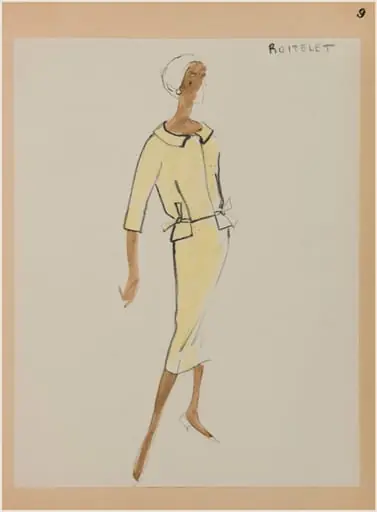
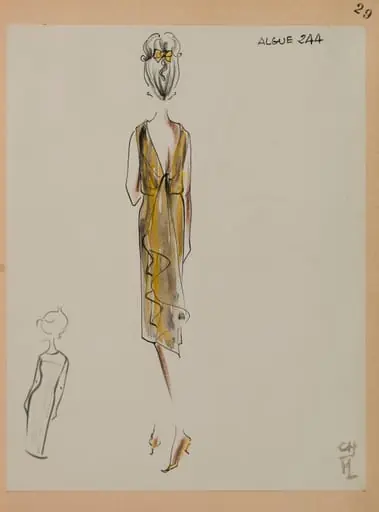
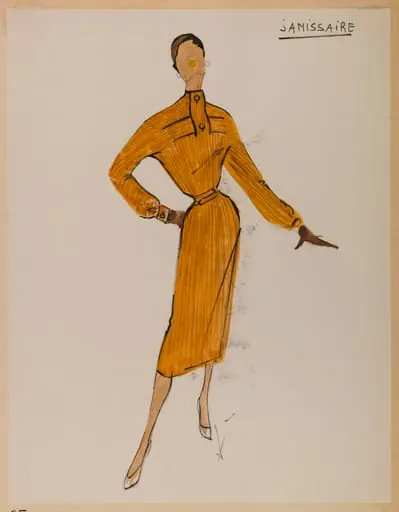
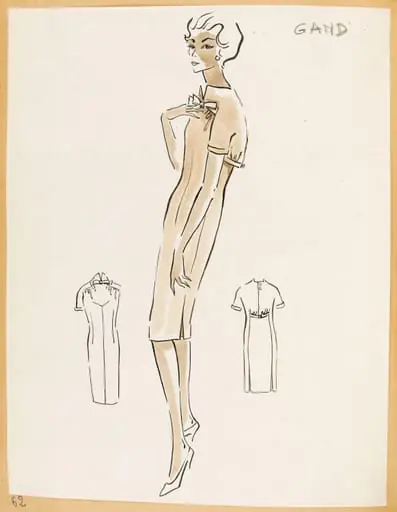
Created around 1958 by the designer Carven, this ink sketch captures a woman in a minimalist outfit. Executed with fluid, unrefined lines, the drawing emphasizes form over detail. It resides in the collection of the Museum of Ethnography, where it is preserved as a record of mid-century fashion illustration rather than a finished garment.
Subject & Meaning
The figure wears a fitted, short-sleeved dress in warm orange-brown, with a small bow at the neckline and a skirt ending above the knee. A tiny hat and a white clutch complete the ensemble. The title, Oiseau-mouche—French for 'hummingbird'—suggests an association with lightness and delicacy, possibly reflecting the garment’s airy silhouette or the brisk energy of its rendering.
Technique & Style
The drawing employs loose, rapid ink strokes that prioritize movement and silhouette over precision. Shadows and texture are implied through sparse line work, not shading or cross-hatching. This approach reveals an interest in capturing the essence of a garment’s drape and proportion, characteristic of fashion sketches intended as quick design notes rather than polished presentations.
History & Provenance
The sketch entered the Museum of Ethnography’s holdings as part of a collection documenting 20th-century fashion design. Its origin as a working drawing by Carven’s studio is inferred from its informal style and lack of labeling. No record of prior ownership or exhibition exists prior to its acquisition by the museum.
Context
In the late 1950s, Parisian fashion houses often produced such sketches to communicate design ideas internally or to clients. Carven, known for wearable, feminine styles, used this method to explore proportions and silhouettes. The hummingbird reference aligns with contemporary trends that evoked nature to describe light, agile clothing.
Legacy
This sketch remains a modest but representative example of fashion illustration from a period when designers prioritized fluidity and function. It reflects a moment when haute couture sketches served as both creative tools and cultural artifacts, preserving the aesthetic values of postwar French fashion without grandeur or spectacle.
Artist & collection
Artist
These delicate ink-on-paper drawings capture the quiet poetry of everyday things: pinecones, reeds, apples.
Museum
Palais Galliera - Musée de la Mode de la Ville de Paris
Continue through works from the same source collection.