Artwork
Rosée
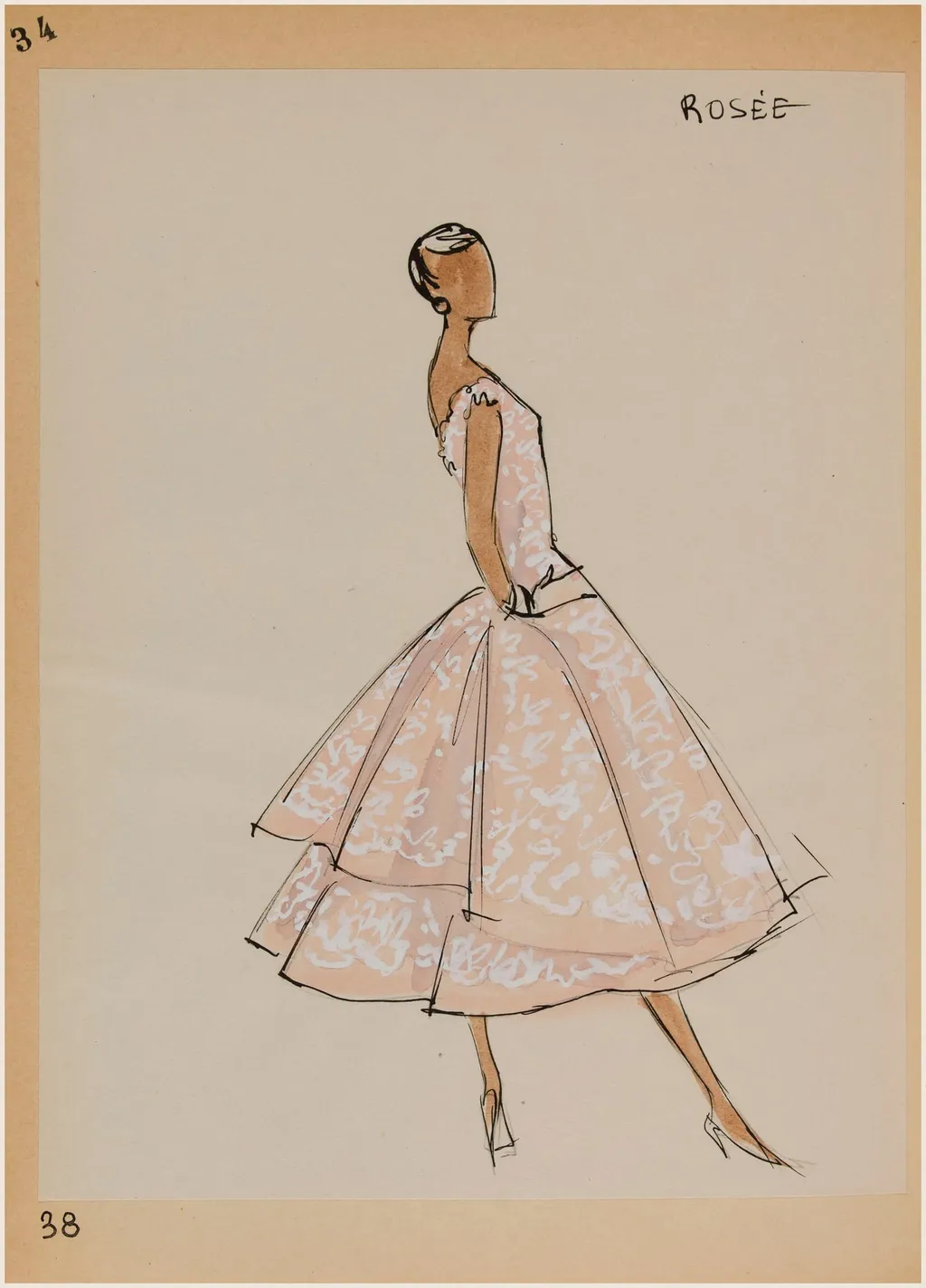
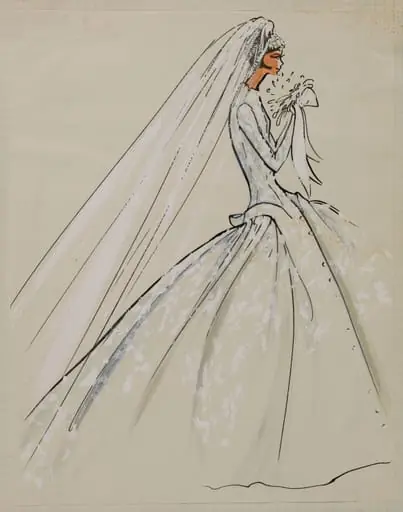
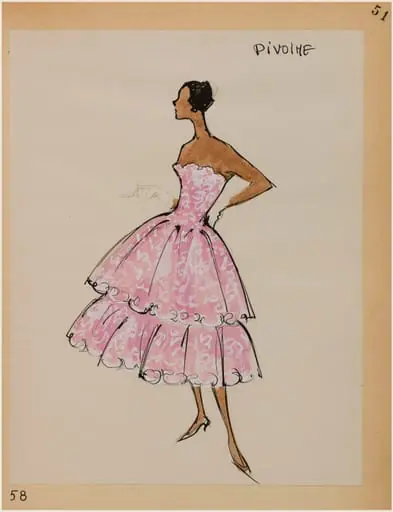
Rosée is a drawing by Carven. It dates from 1956 and is held in the collection of the Palais Galliera - Musée de la Mode de la Ville de Paris.
About this work
Overview
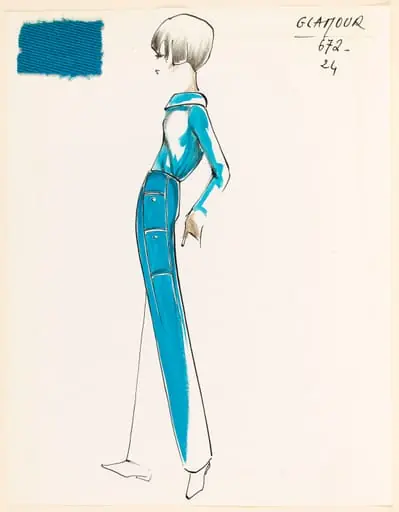
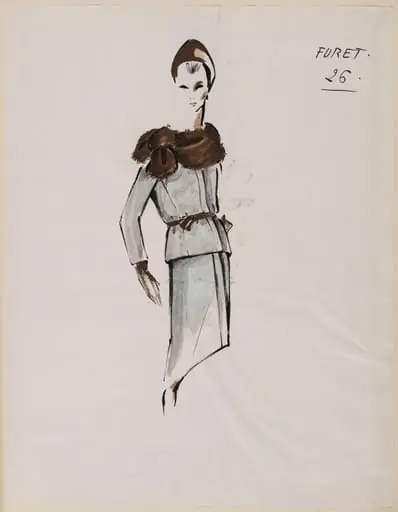
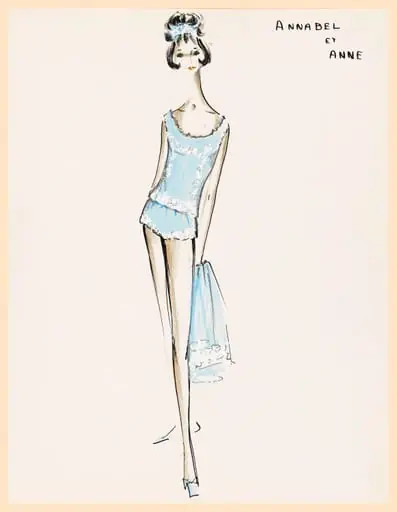
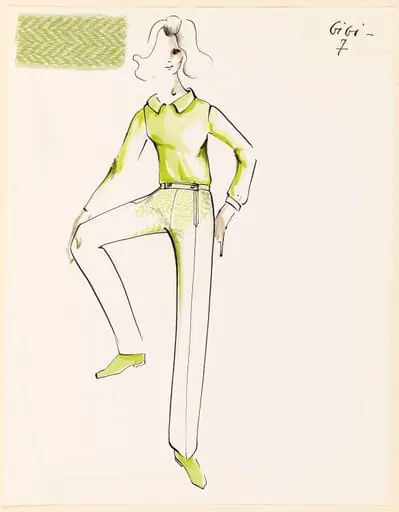
Rosée, executed in 1956 by the French fashion house Carven, is a modestly scaled image preserved in the collection of the Museum of Ethnography. The composition presents a solitary female figure dressed in a pink garment with scattered white detailing, set against an unadorned beige backdrop. The work’s restrained palette and simplified setting invite close visual inspection.
Subject & Meaning
The central figure is a woman whose face remains hidden, her hair pulled back, and whose arms rest at her sides. The emphasis lies on the garment itself—a full‑skirted dress with a fitted bodice—suggesting an interest in the form and movement of clothing rather than narrative content. The anonymity of the sitter and the quiet pose encourage contemplation of fashion as visual language.
Technique & Style
Rendered in a flat, monochrome manner, the image employs a limited pink‑white palette that accentuates the dress’s light, possibly silk or chiffon, texture. The solid beige field functions as a neutral plane, eliminating spatial cues and reinforcing a sketch‑like quality. The treatment of line and color reflects mid‑century modernist tendencies toward abstraction and reduction.
History & Provenance
Created during Carven’s post‑war period of expanding ready‑to‑wear designs, Rosée entered the Museum of Ethnography’s holdings at an unspecified date, where it remains part of the institution’s broader documentation of fashion artifacts. Its presence in an ethnographic context underscores the garment’s cultural relevance as a representation of mid‑20th‑century French dress.
Artist & collection
Artist
These delicate ink-on-paper drawings capture the quiet poetry of everyday things: pinecones, reeds, apples.
Museum
Palais Galliera - Musée de la Mode de la Ville de Paris
Continue through works from the same source collection.