Artwork
Rosière
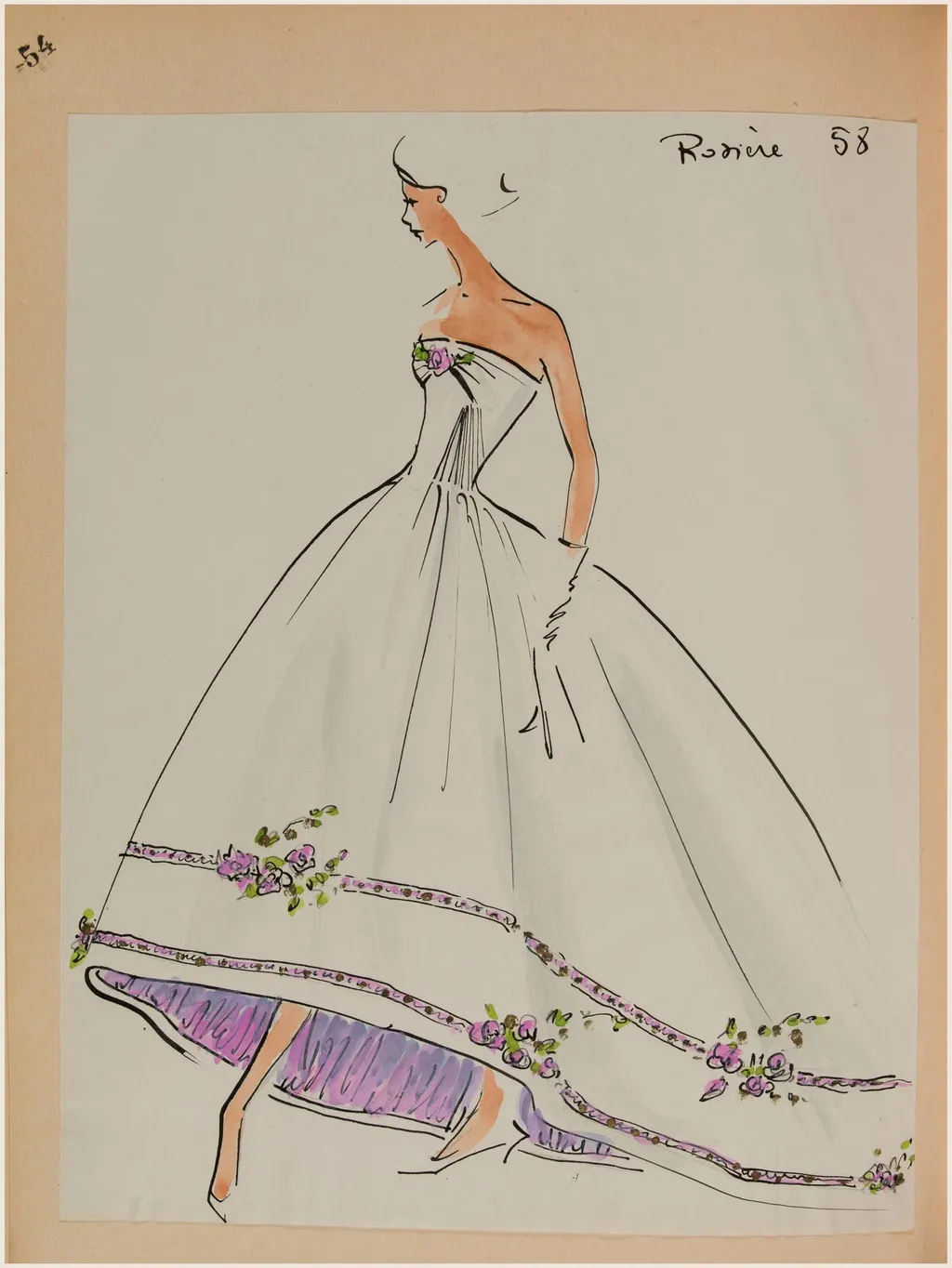
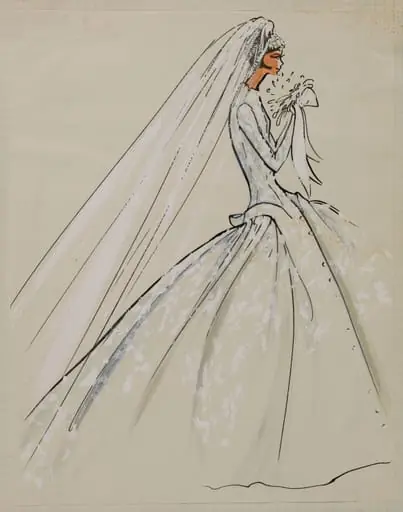
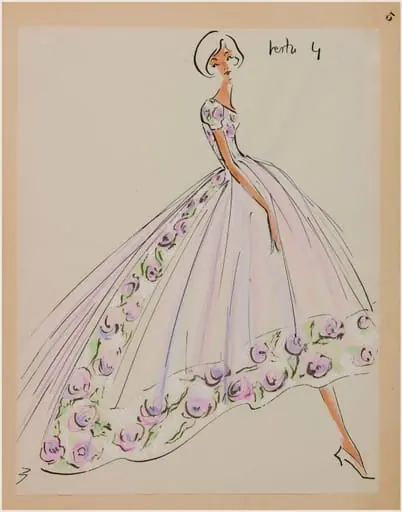
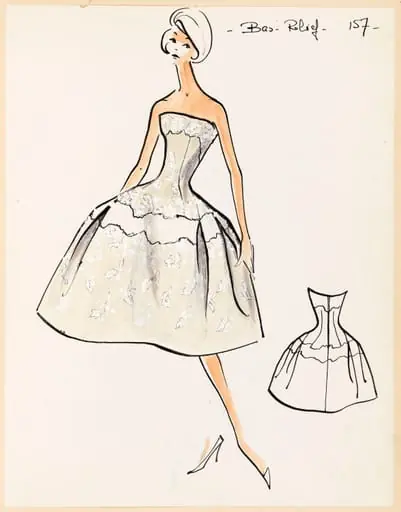
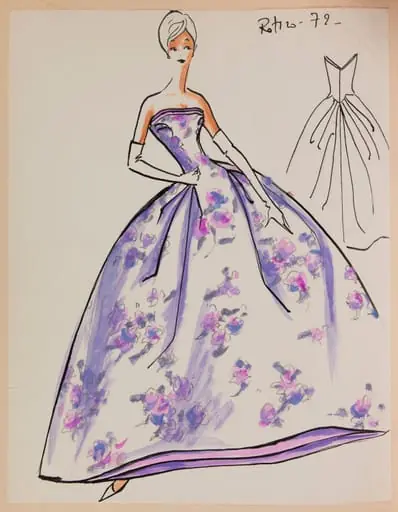
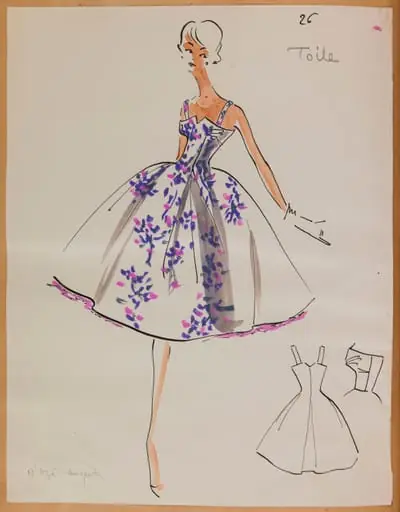
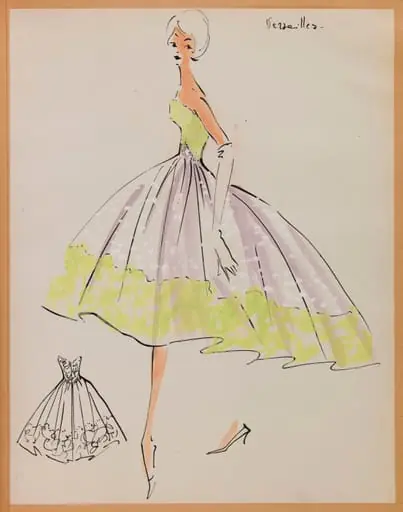
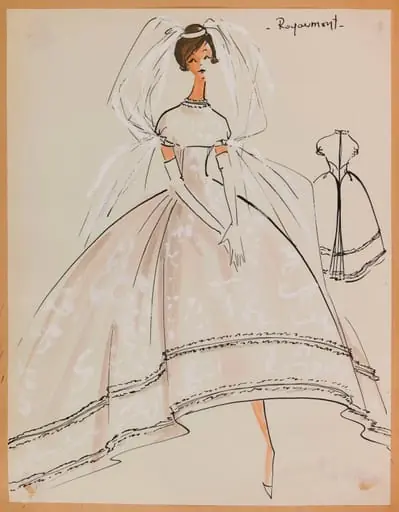
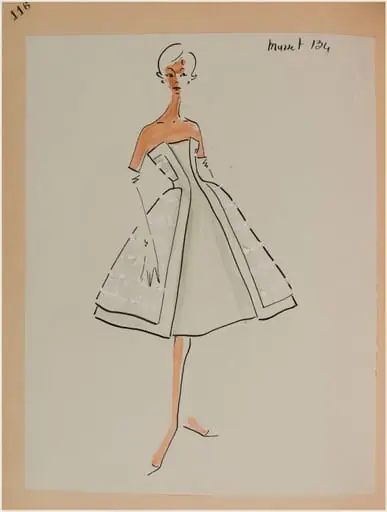
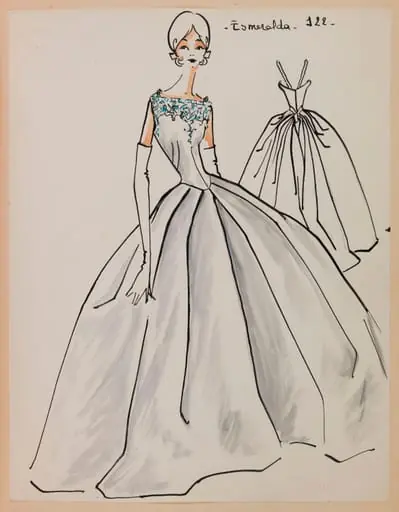
Rosière is a drawing by Carven. It dates from 1958 and is held in the collection of the Palais Galliera - Musée de la Mode de la Ville de Paris.
About this work
Overview
The work is held in the collection of the Museum of Ethnography, where it is presented as a study in textile design and silhouette rather than a portrait.
Rosière is a pastel drawing attributed to the French fashion designer Carven, dated around 1958. It depicts a woman in profile, facing left, wearing a strapless white gown with an elongated train. The figure’s face is obscured, emphasizing form over identity. The work is held in the collection of the Museum of Ethnography, where it is presented as a study in textile design and silhouette rather than a portrait.
Subject & Meaning
The subject is a stylized female figure dressed in an elaborate gown, but her anonymity suggests the focus is on the garment, not the wearer. Decorative elements—purple flowers and green leaves—integrate botanical motifs into the dress, blurring the boundary between fashion and natural ornamentation. The absence of facial features invites interpretation of the attire as a cultural or symbolic object, possibly reflecting postwar ideals of elegance and restraint.
Technique & Style
Executed in soft pastels, the drawing employs clean, unbroken lines and minimal shading to define form. The palette is muted, with white dominating and accents of lavender and sage providing subtle contrast. The technique favors clarity and grace over detail, aligning with mid-century fashion illustration practices that prioritized silhouette and movement. The result is a restrained aesthetic that highlights the structure of the dress without distraction.
History & Provenance
The drawing entered the Museum of Ethnography’s collection in the late 20th century, likely as part of a broader acquisition of fashion-related materials. Its origin as a design study by Carven is documented in internal archives, though no exhibition history or prior ownership is publicly detailed. It remains one of few surviving works from this period attributed to the designer outside of commercial fashion plates.
Context
Created in the late 1950s, Rosière reflects the era’s emphasis on refined femininity in haute couture. Carven, known for elegant, wearable designs, often incorporated floral and organic motifs into her collections. This drawing may have served as a sketch for a gown or as a conceptual piece exploring the relationship between nature and fashion, aligning with broader postwar artistic interests in decorative abstraction.
Legacy
Rosière endures as a quiet example of fashion drawing as an art form, distinct from commercial advertising. Its preservation in an ethnographic museum underscores its value as a cultural artifact, illustrating how clothing design can embody aesthetic and symbolic concerns beyond utility. While not widely reproduced, it contributes to scholarly understanding of mid-century French fashion practice.
Artist & collection
Artist
These delicate ink-on-paper drawings capture the quiet poetry of everyday things: pinecones, reeds, apples.
Museum
Palais Galliera - Musée de la Mode de la Ville de Paris
Continue through works from the same source collection.