Artwork
Sablon
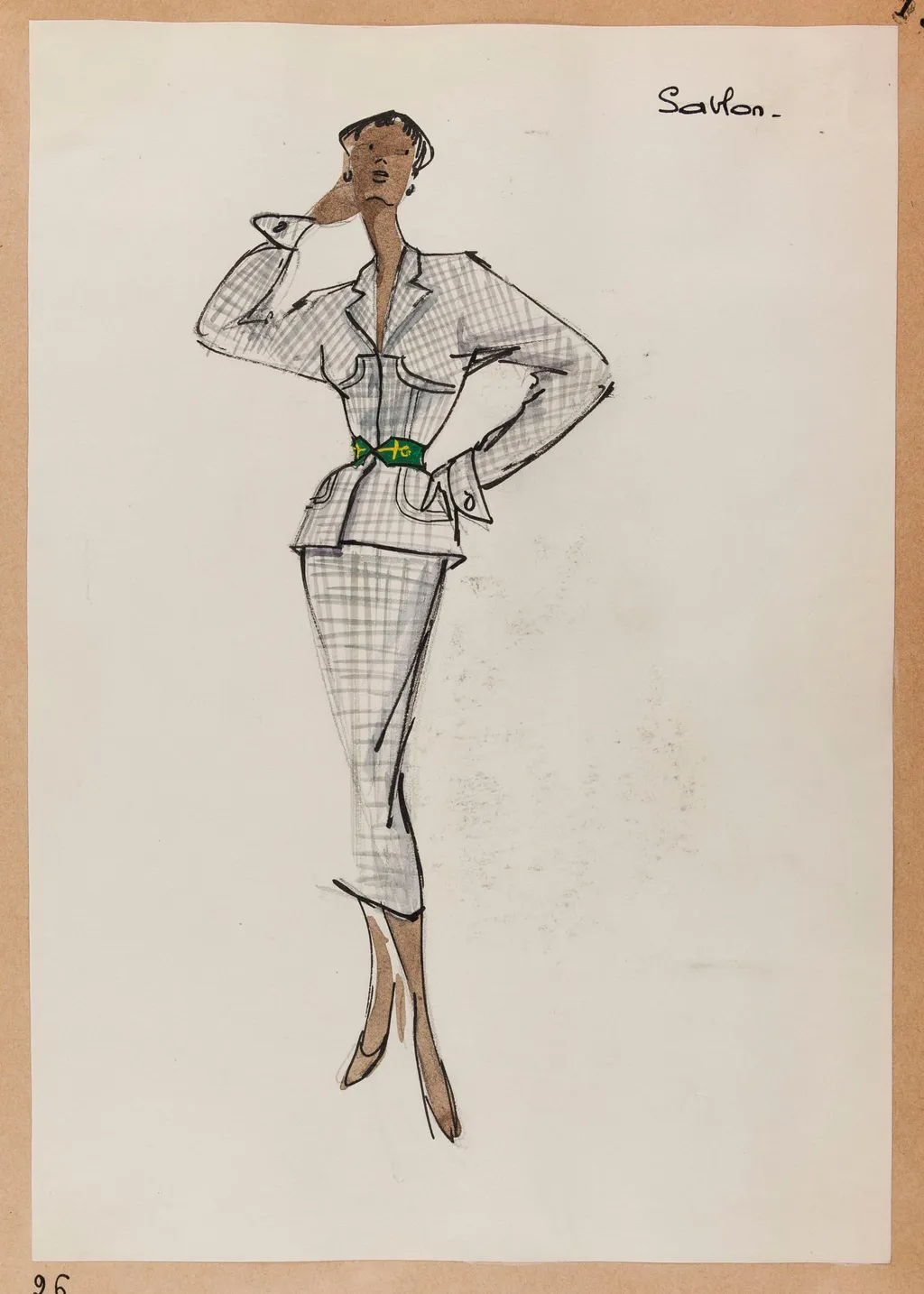
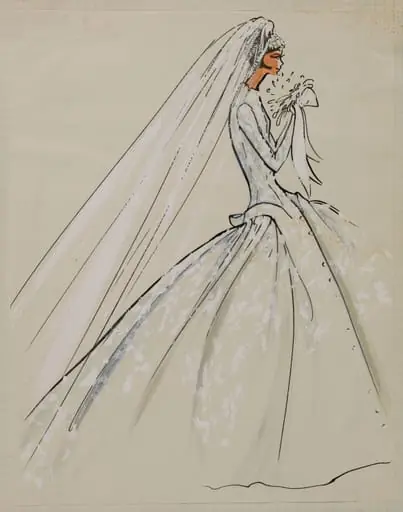
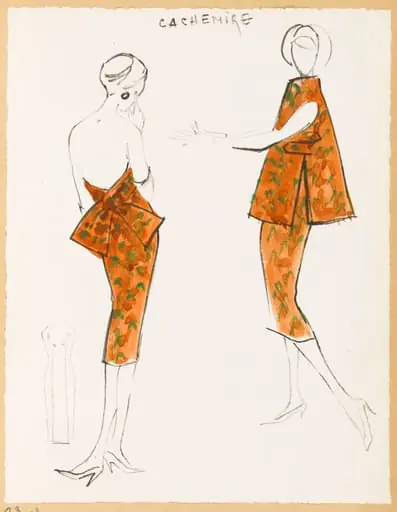
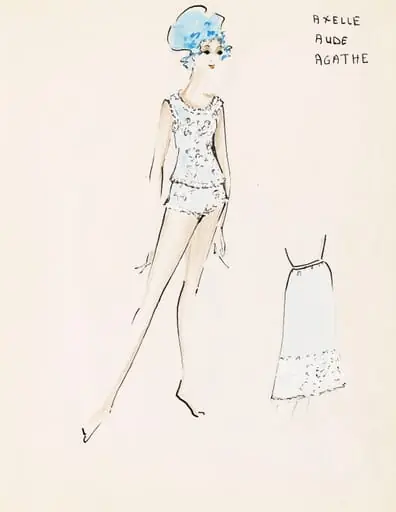
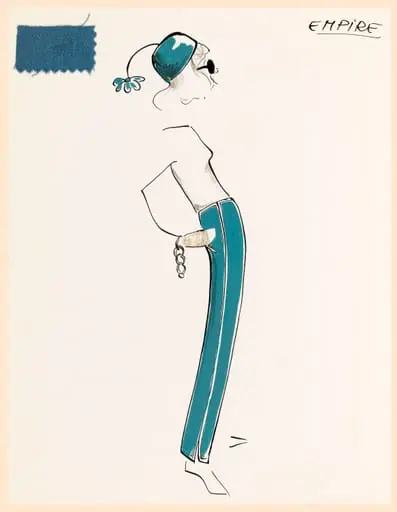
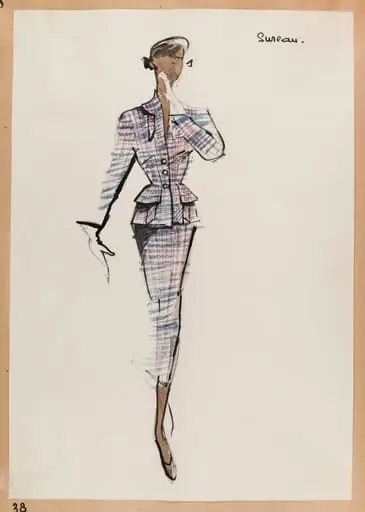
Sablon is a drawing by Carven. It dates from 1951 and is held in the collection of the Palais Galliera - Musée de la Mode de la Ville de Paris.
About this work
Overview
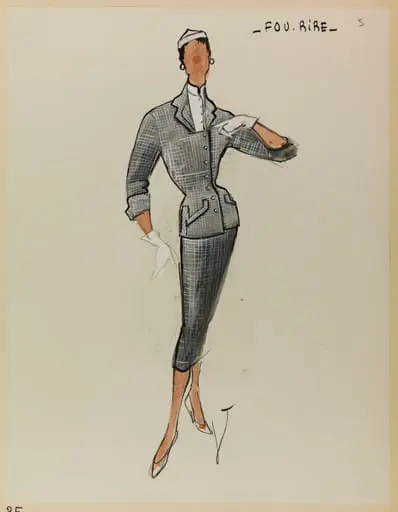
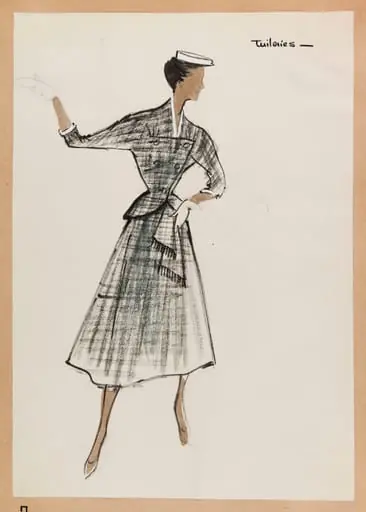
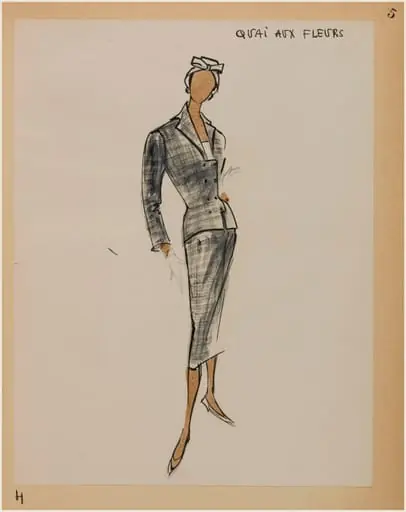
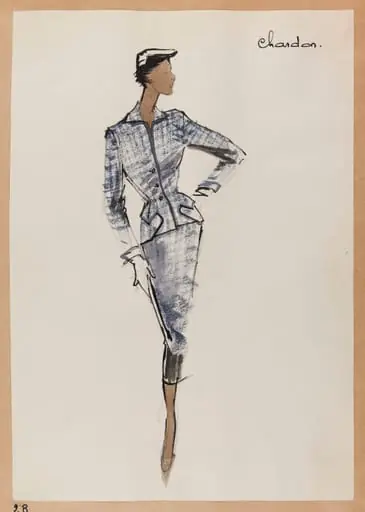
Created around 1951 by the designer Carven, this ink drawing captures a woman in a moment of quiet self-adjustment. Rendered in fine black lines with delicate cross-hatching, the work emphasizes form and texture over color. It is part of the Museum of Ethnography’s collection, where it is preserved as a record of mid-century fashion sensibility rather than as fine art in the traditional sense.
Subject & Meaning
The figure is depicted in a poised, introspective gesture—hand near the face—as if adjusting a hairpin or veil.
The figure is depicted in a poised, introspective gesture—hand near the face—as if adjusting a hairpin or veil. Her tailored plaid jacket and pencil skirt reflect the structured elegance of early 1950s women’s fashion. The pose suggests self-awareness and composure, aligning with the era’s ideals of refined femininity. The drawing does not narrate a story but rather isolates a moment of personal adornment.
Technique & Style
The image is executed in precise ink lines with subtle tonal variation achieved through controlled cross-hatching. Shading is minimal, used only to suggest the fall of fabric or the curve of the body. The absence of color focuses attention on silhouette and texture, echoing the precision of fashion illustrations produced for magazines and ateliers of the time.
History & Provenance
The drawing entered the Museum of Ethnography’s holdings as part of a broader collection documenting 20th-century dress culture. Its origin as a design study or promotional sketch by Carven’s studio is likely, though no documentation confirms its original purpose. It was acquired in the latter half of the 20th century as an artifact of postwar European fashion practice.
Context
In the early 1950s, Paris remained a center of haute couture, and designers like Carven emphasized tailored silhouettes for the modern woman. This drawing reflects the industry’s shift toward documenting wearable elegance through illustration. Similar sketches were used internally by ateliers or shared with clients, serving as both design tools and cultural records of aesthetic values.
Legacy
Though not widely exhibited, the drawing contributes to scholarly understanding of how fashion was visualized outside of mass media. It represents a quiet, artisanal approach to design documentation, contrasting with later commercial advertising. Its preservation in an ethnographic context underscores its value as a material trace of everyday style in postwar Europe.
Artist & collection
Artist
These delicate ink-on-paper drawings capture the quiet poetry of everyday things: pinecones, reeds, apples.
Museum
Palais Galliera - Musée de la Mode de la Ville de Paris
Continue through works from the same source collection.