Artwork
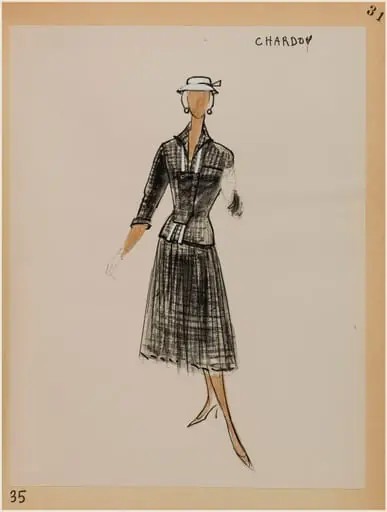
Chardon
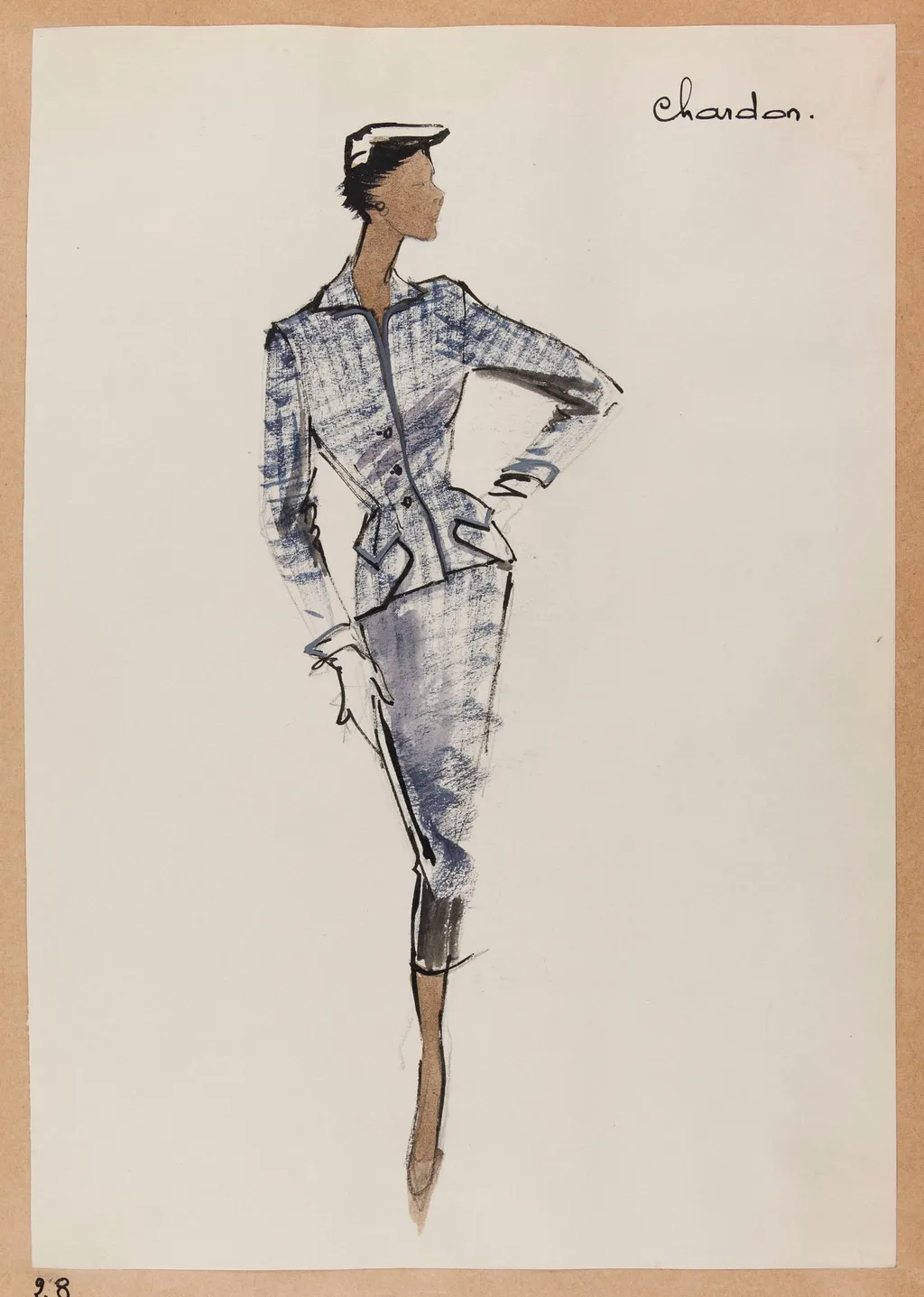
Chardon is a drawing by Marie-Louise Carven. It dates from 1951 and is held in the collection of the Palais Galliera - Musée de la Mode de la Ville de Paris.
About this work
Overview
The drawing belongs to the Museum of Ethnography’s collection and exemplifies Carven’s approach to design: elegant, restrained, and attuned to the female form.
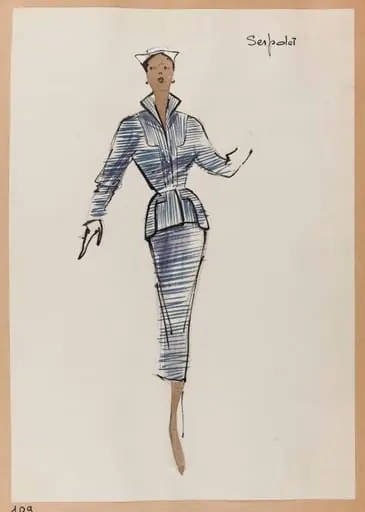
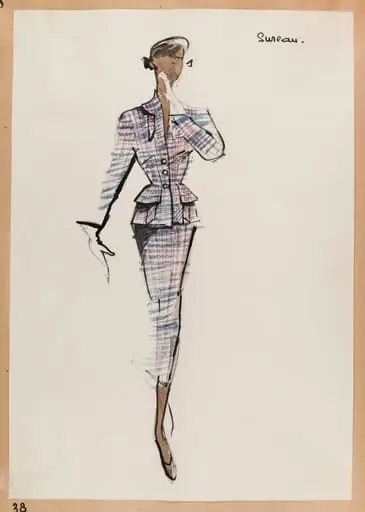
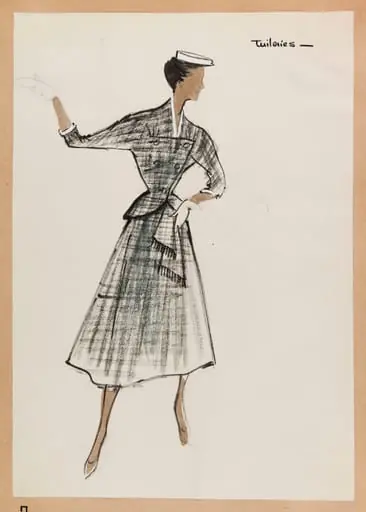
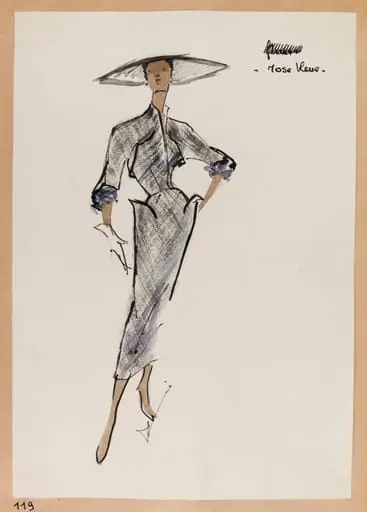
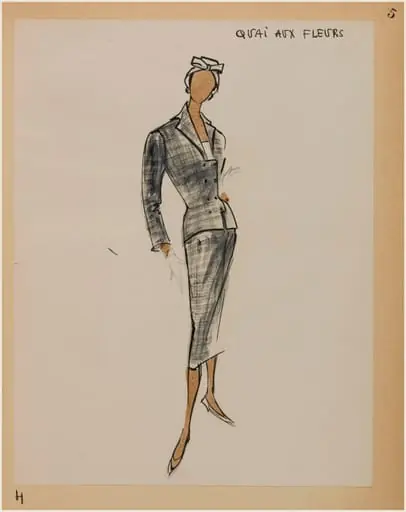
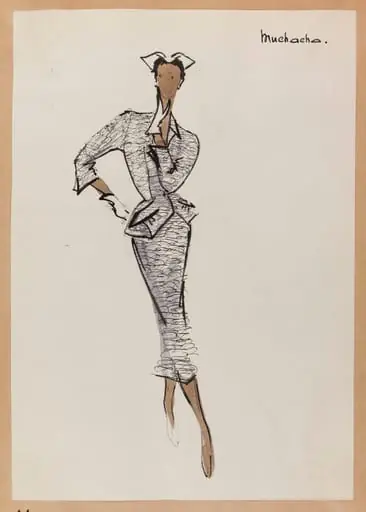
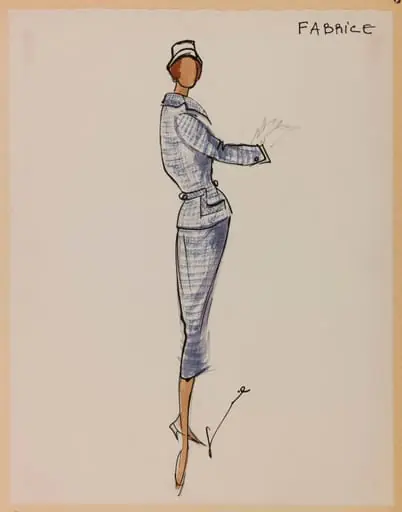
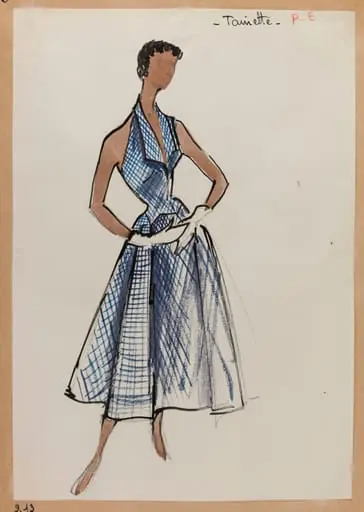
Chardon is a fashion illustration created around 1951 by French designer Marie-Louise Carven. Executed in ink and watercolor on paper, it depicts a woman in a tailored ensemble of blue and white, rendered with precise, uncluttered lines. The drawing belongs to the Museum of Ethnography’s collection and exemplifies Carven’s approach to design: elegant, restrained, and attuned to the female form. It serves as both a design study and a reflection of mid-century French fashion sensibilities.
Subject & Meaning
The figure in Chardon stands in a poised, natural stance—hand on hip, arm gently bent—conveying quiet confidence rather than theatricality. Her outfit, featuring a peplum jacket and pencil skirt, aligns with 1950s ideals of feminine structure and proportion. The absence of ornamentation and the monochromatic palette emphasize silhouette over decoration, suggesting a design philosophy rooted in understated sophistication and wearable grace.
Technique & Style
Carven employed minimal shading and clean, flowing lines to define form, avoiding heavy detail in favor of clarity. The use of blue and white watercolor creates a soft contrast against the white paper, enhancing the drawing’s airiness. This restrained technique reflects her broader design ethos—lightweight fabrics, delicate textures, and an emphasis on movement. The illustration functions as both artistic expression and technical blueprint for garment construction.
History & Provenance
Created shortly after Carven founded her fashion house in 1945, Chardon dates from the early years of her expansion into prêt-à-porter. The drawing was likely used internally to communicate design intent to ateliers or clients. It entered the Museum of Ethnography’s collection as part of a broader effort to document fashion as cultural artifact, preserving the work of designers who shaped postwar French style beyond haute couture.
Context
In the early 1950s, Parisian fashion was redefining itself after wartime austerity. Carven distinguished herself by focusing on smaller frames and accessible silhouettes, countering the bulkier trends of the era. Her embrace of lightweight materials and practical elegance resonated with a new generation of women. Chardon embodies this shift—neither extravagant nor conventional, but thoughtfully calibrated for everyday life.
Legacy
Chardon stands as a quiet testament to Carven’s role in democratizing fashion. Her innovations in ready-to-wear and her attention to proportion influenced later designers who prioritized wearability without sacrificing refinement. Though not widely publicized, such drawings preserved the integrity of her vision and remain valuable records of how design thinking evolved in mid-century France.
Artist & collection
Artist
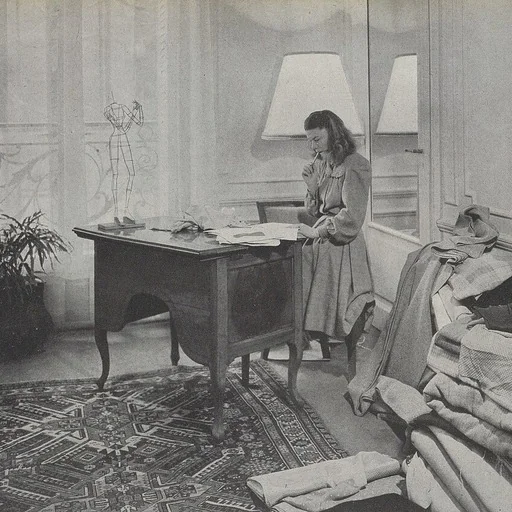
Marie-Louise Carven (31 August 1909 – 8 June 2015), born Carmen de Tommaso, was a French fashion designer who founded the house of Carven in 1945.
Museum
Palais Galliera - Musée de la Mode de la Ville de Paris
Continue through works from the same source collection.
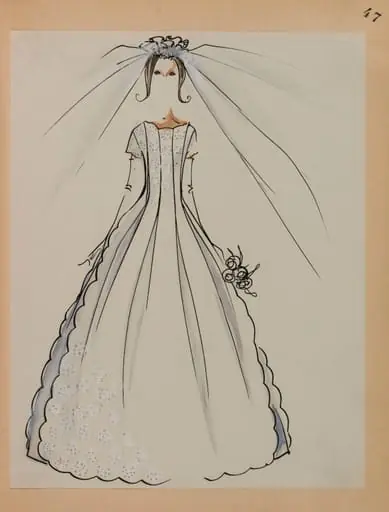 Robe de mariée festonnée et son voile
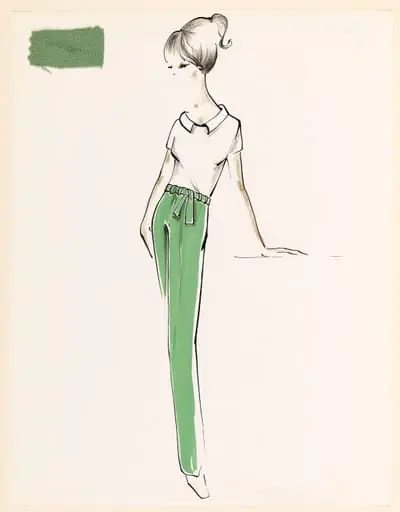 Haut blanc à manches courtes et pantalon vert à ceinture nouée
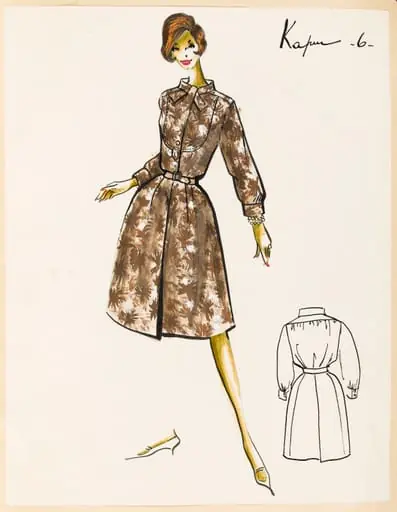 Kapur
Kapur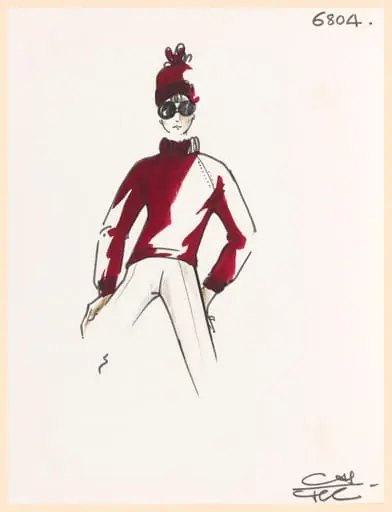 Pull-over à manches longues pourpre, bonnet assorti, pantalon et lunettes de soleil
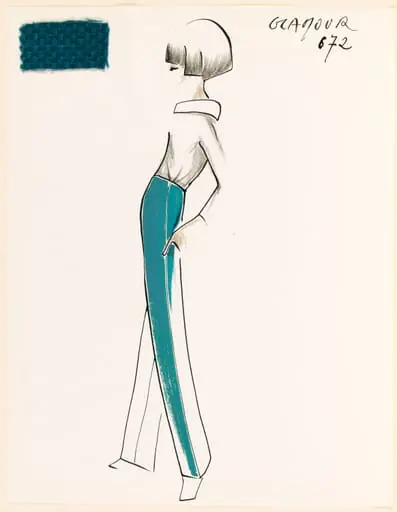 GLAMOUR
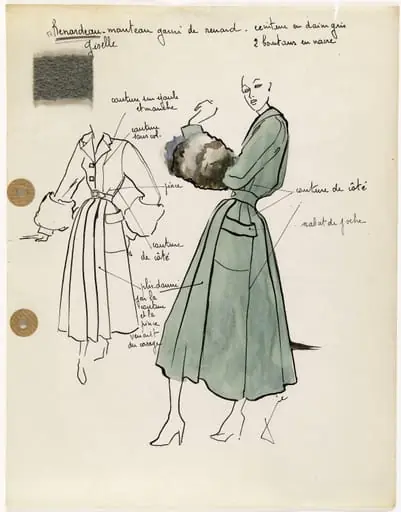 'Renardeau'
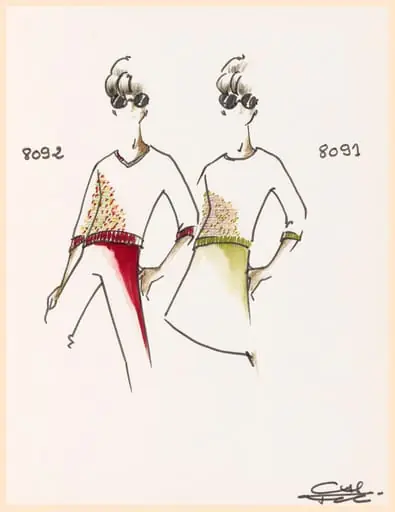 Pull-over à manches trois quarts et à encolure V à motifs multicolores, pantalon cerise et lunettes de soleil
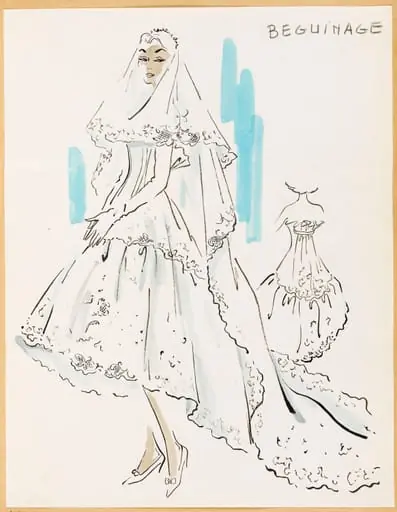 Béguinage