Artwork
Sabord
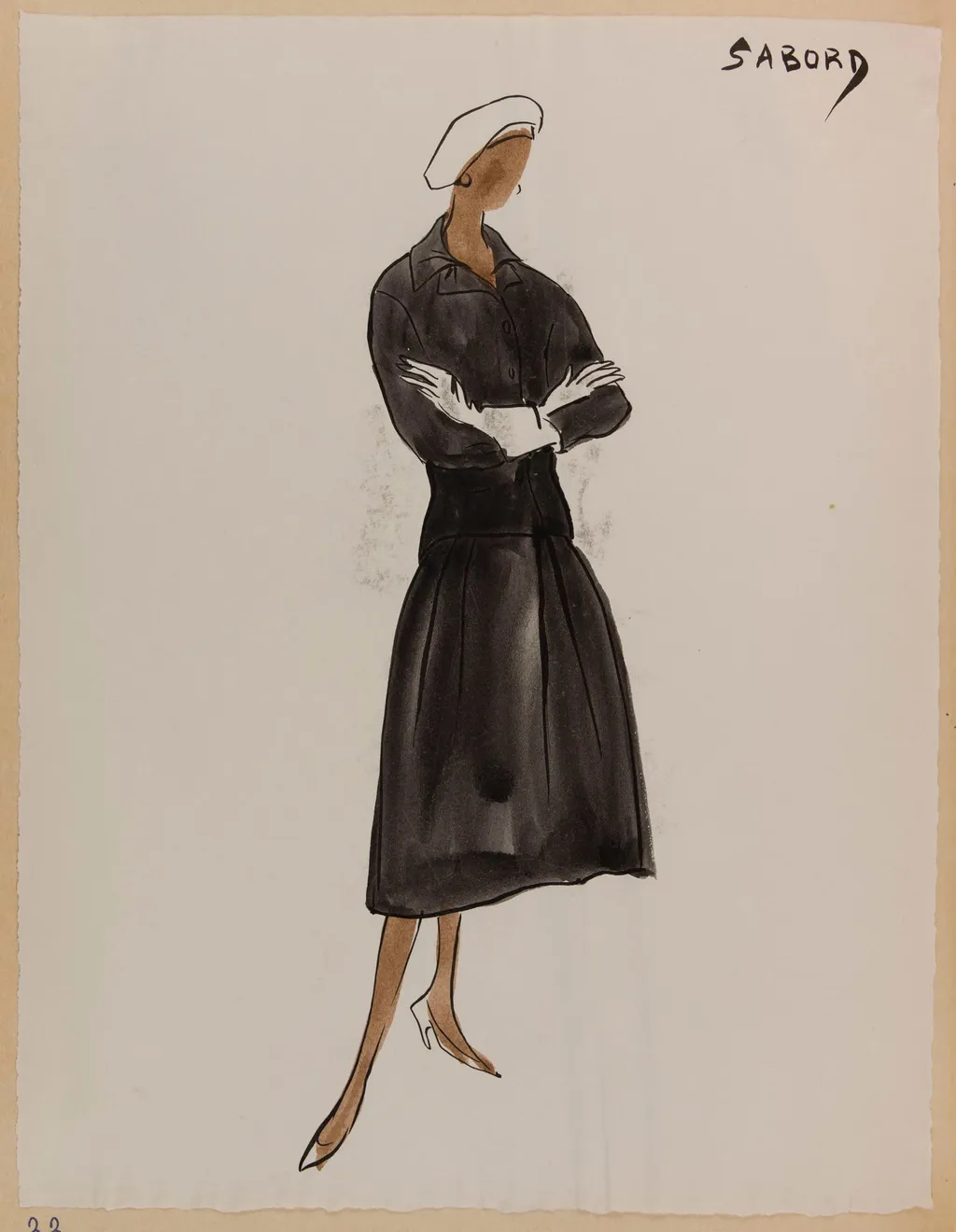
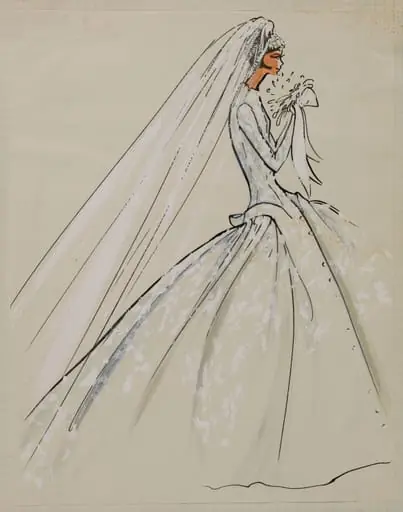
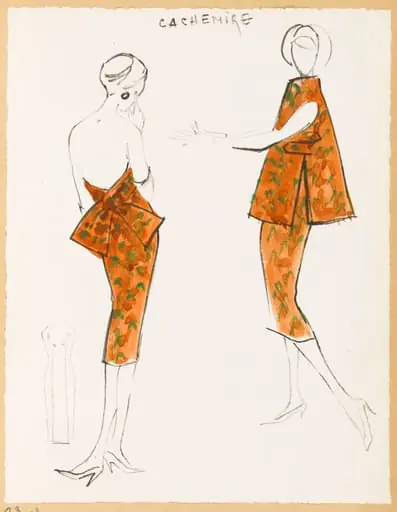
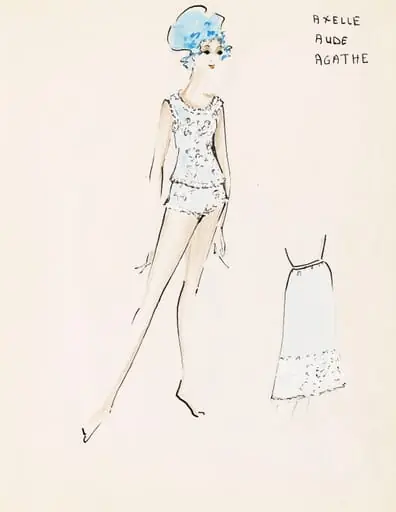
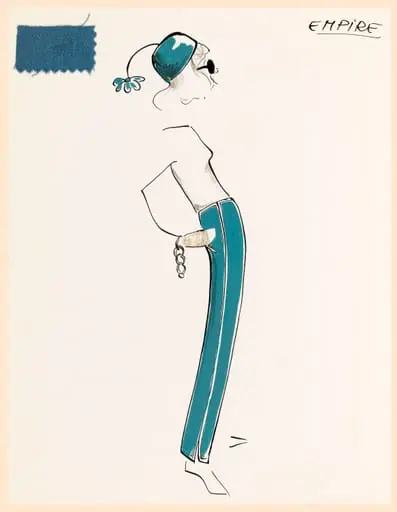
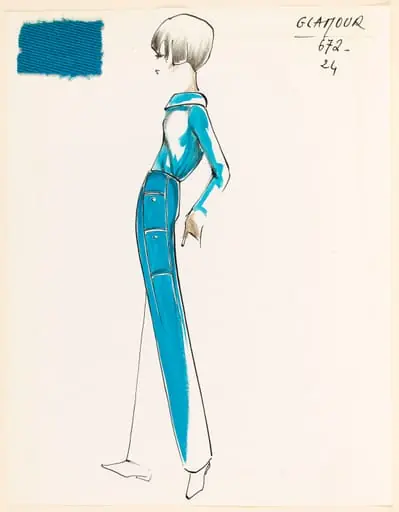
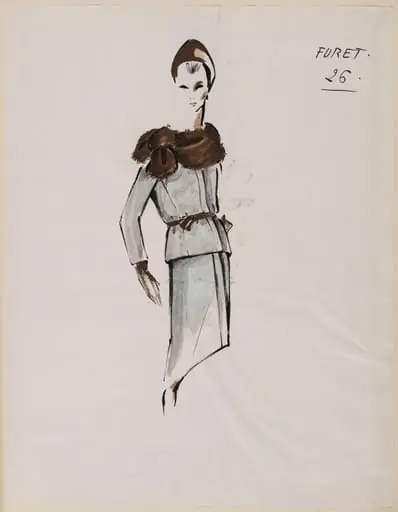
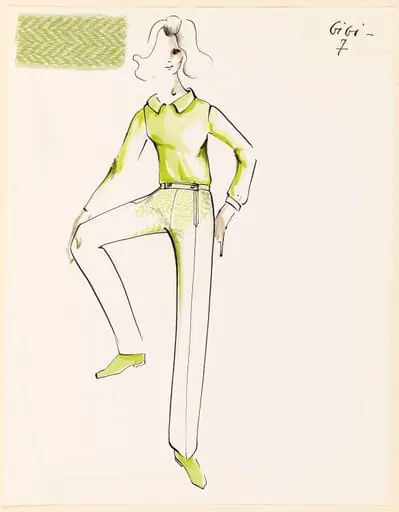
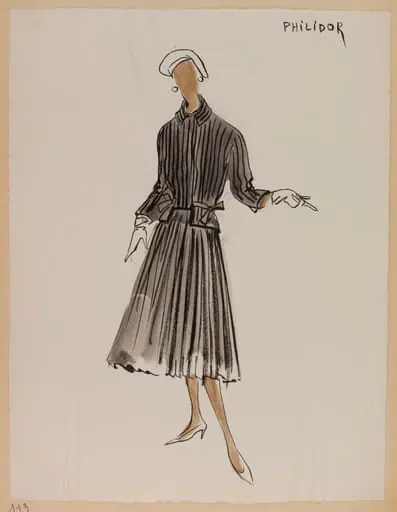
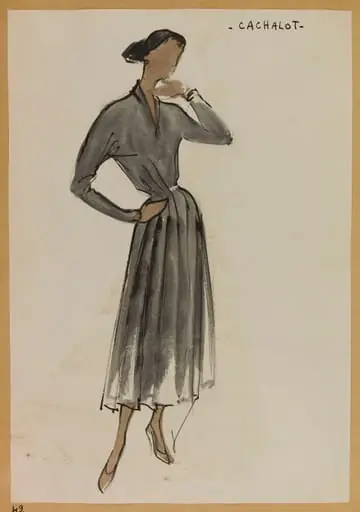
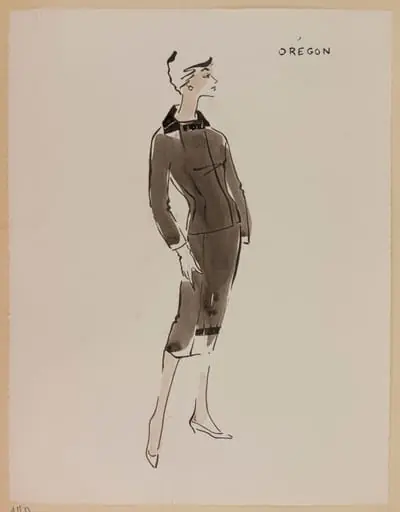
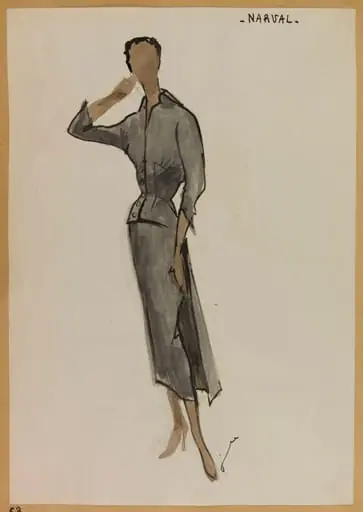
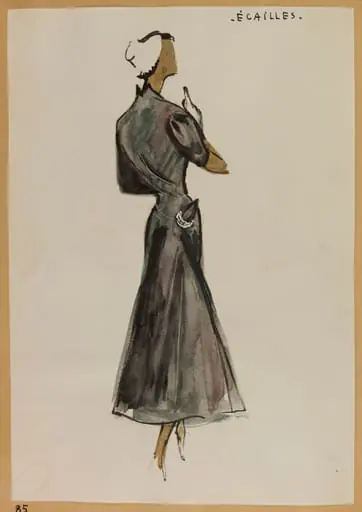
Sabord is a drawing by Carven. It dates from 1956 and is held in the collection of the Palais Galliera - Musée de la Mode de la Ville de Paris.
About this work
Overview
Its simplicity directs attention to the subject’s attire and posture, reflecting the artist’s engagement with everyday dress and quiet domestic presence.
Created around 1956 by the fashion designer Carven, Sabord is a pencil drawing on paper, currently held in the collection of the Museum of Ethnography. The work presents a solitary female figure rendered in minimal yet assured linework, with no contextual elements beyond a neutral background. Its simplicity directs attention to the subject’s attire and posture, reflecting the artist’s engagement with everyday dress and quiet domestic presence.
Subject & Meaning
The figure is depicted with arms crossed, wearing a dark dress, coat, headscarf, and low-heeled shoes—clothing typical of mid-century civilian wear in Europe. The pose suggests introspection or stillness, avoiding theatricality. The title, inscribed in the corner, may refer to the model or serve as a personal identifier. The work does not overtly narrate but instead documents a moment of ordinary life, aligning with Carven’s interest in the realism of women’s daily attire.
Technique & Style
Carven employed loose, fluid pencil strokes to define the figure’s form, avoiding heavy shading. Subtle tonal variations suggest fabric folds and the weight of clothing, while the absence of detail in the face and background emphasizes the garment’s structure. The drawing’s economy of line reflects a draftsperson’s familiarity with textile drape and silhouette, consistent with the artist’s professional background in fashion design.
History & Provenance
The drawing entered the Museum of Ethnography’s collection in the late 20th century, likely as part of a broader acquisition of materials related to mid-century European fashion and domestic life. Its origin as a personal sketch by Carven, rather than a commercial illustration, suggests it was retained as a study or memento. No earlier exhibition history is documented, and its path from studio to museum remains largely unrecorded.
Context
In the 1950s, Carven was known for designing understated, wearable clothing for women, often inspired by French everyday life. This drawing aligns with that ethos—focusing on modest, functional dress rather than haute couture spectacle. It reflects a broader cultural interest in documenting ordinary appearance during a period of postwar reconstruction, when fashion was increasingly tied to identity and routine.
Legacy
Sabord stands as a quiet testament to Carven’s observational practice beyond fashion houses. While not widely exhibited, it contributes to scholarly understanding of how designers engaged with real bodies and clothing outside commercial contexts. The drawing’s preservation in an ethnographic museum underscores its value as a cultural artifact of mid-century domestic life, rather than as a work of fine art alone.
Artist & collection
Artist
These delicate ink-on-paper drawings capture the quiet poetry of everyday things: pinecones, reeds, apples.
Museum
Palais Galliera - Musée de la Mode de la Ville de Paris
Continue through works from the same source collection.