Artwork
Serin
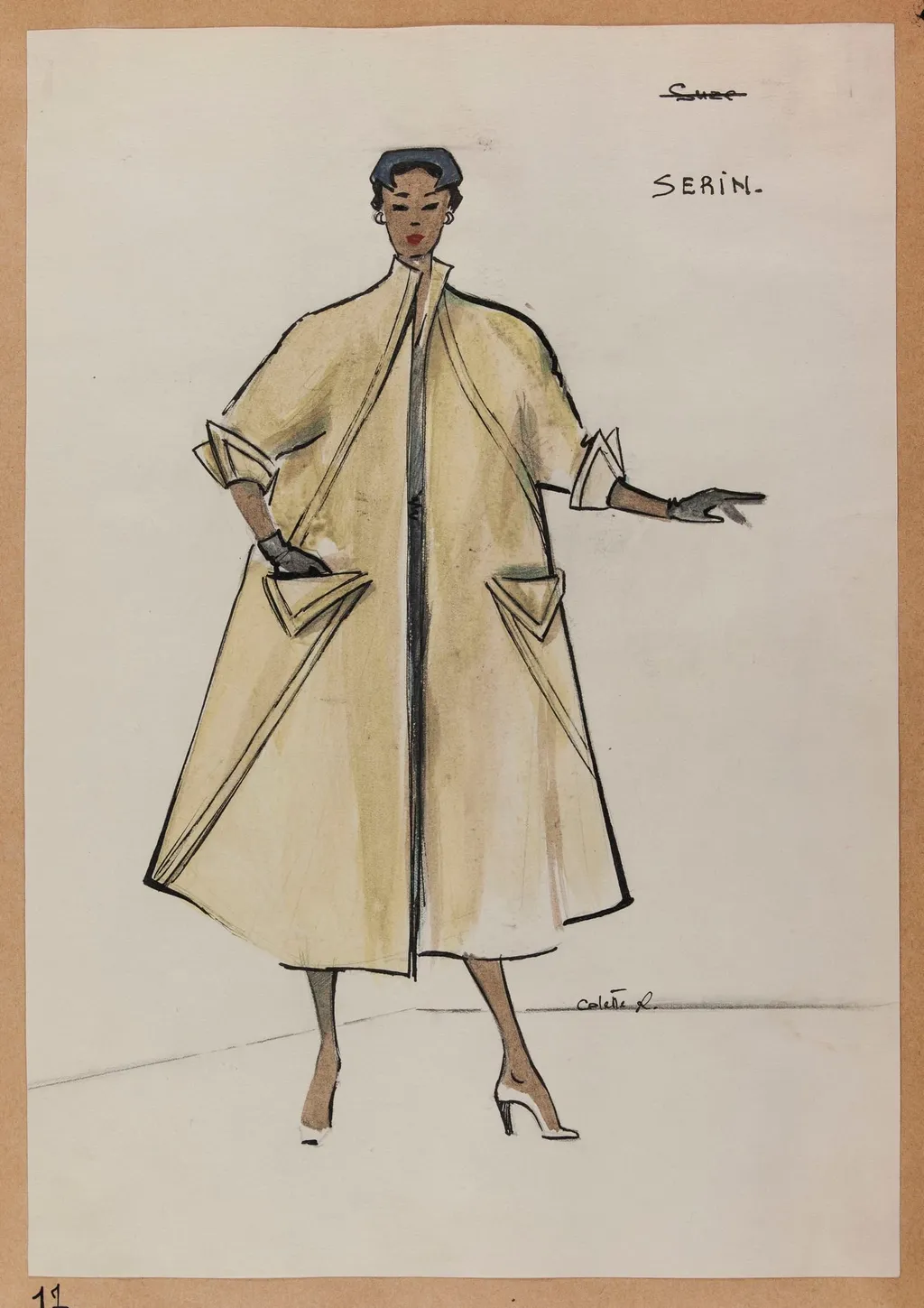
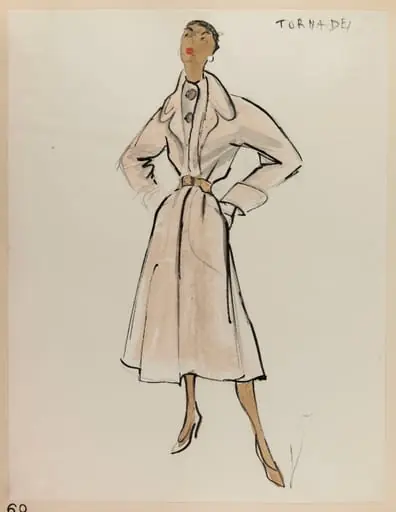
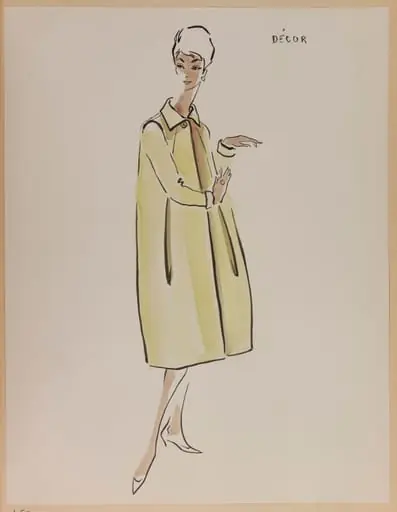
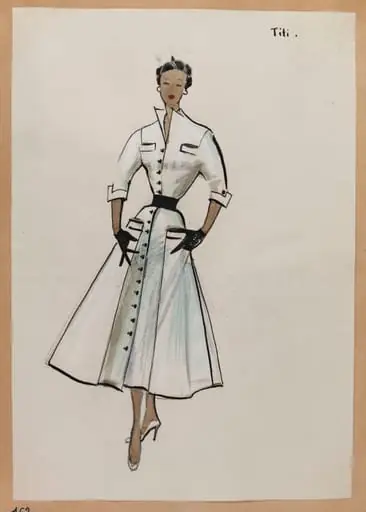
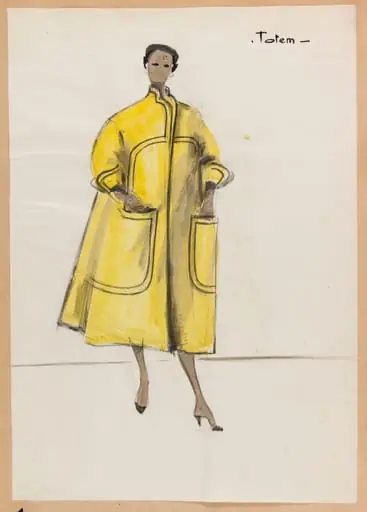
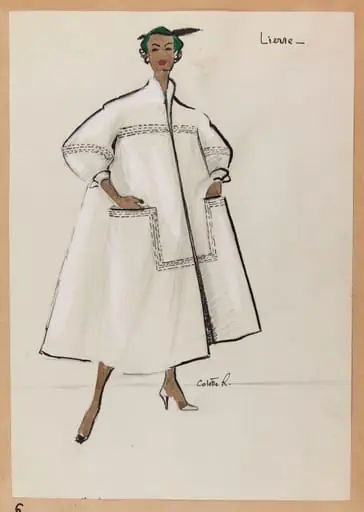
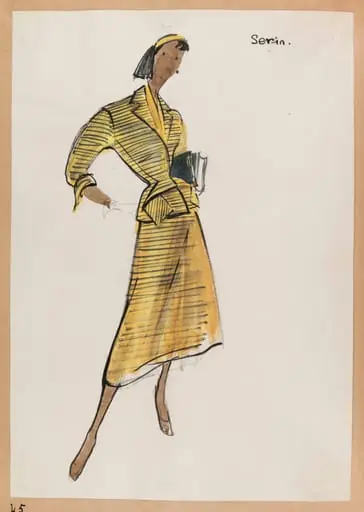
Serin is a drawing by Carven. It dates from 1951 and is held in the collection of the Palais Galliera - Musée de la Mode de la Ville de Paris.
About this work
Overview
The piece is part of the collection at the Museum of Ethnography, where it is preserved as an example of mid-century design documentation.
Serin is a pencil drawing dated around 1951, attributed to the designer Carven. Executed in loose, assured lines, it functions as a fashion study rather than a finished artwork. The piece is part of the collection at the Museum of Ethnography, where it is preserved as an example of mid-century design documentation. Its informal quality suggests it was made during the creative process, possibly to capture a silhouette or garment detail.
Subject & Meaning
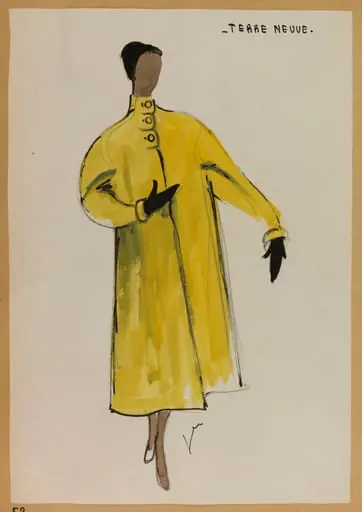
The figure depicts a woman wearing a long, light-colored coat with exaggerated pockets and a high collar, flaring slightly at the hem. She is dressed in black gloves, a small hat, and pointed shoes, suggesting a stylized urban persona. The name 'Serin' inscribed at the top may refer to the garment’s intended wearer or a model. The drawing conveys an idealized, functional elegance, reflecting postwar fashion’s emphasis on structure and practicality.
Technique & Style
Carven employed minimal, confident pencil strokes to define form without shading or detail. The focus is on contour and silhouette, with little emphasis on facial features or background. The drawing’s spontaneity and economy of line align with fashion sketching practices of the era, prioritizing garment structure over realism. This approach reveals the designer’s intent to communicate shape and movement rather than narrative or emotion.
History & Provenance
The drawing entered the Museum of Ethnography’s collection as part of a broader archive of fashion-related materials. Its origin lies within Carven’s design studio, where such sketches served as working documents. While little is documented about its creation, its preservation indicates recognition of its value as a record of mid-century design methodology rather than as a standalone artwork.
Context
Created in the early 1950s, Serin reflects the postwar shift toward tailored, wearable fashion in Europe. Designers like Carven emphasized clean lines and functional details, responding to both material constraints and changing social roles for women. Fashion sketches like this were essential tools in ateliers, bridging concept and production. The drawing’s simplicity mirrors the era’s aesthetic values: restrained, purposeful, and grounded in craftsmanship.
Legacy
Serin remains a representative example of how fashion designers documented their ideas before mass production. Though not widely exhibited, it contributes to scholarly understanding of mid-century design processes. Its presence in an ethnographic museum underscores the cultural significance of everyday objects and the labor behind them. The drawing continues to inform studies on the intersection of fashion, gender, and material culture.
Artist & collection
Artist
These delicate ink-on-paper drawings capture the quiet poetry of everyday things: pinecones, reeds, apples.
Museum
Palais Galliera - Musée de la Mode de la Ville de Paris
Continue through works from the same source collection.