Artwork
Terre Neuve
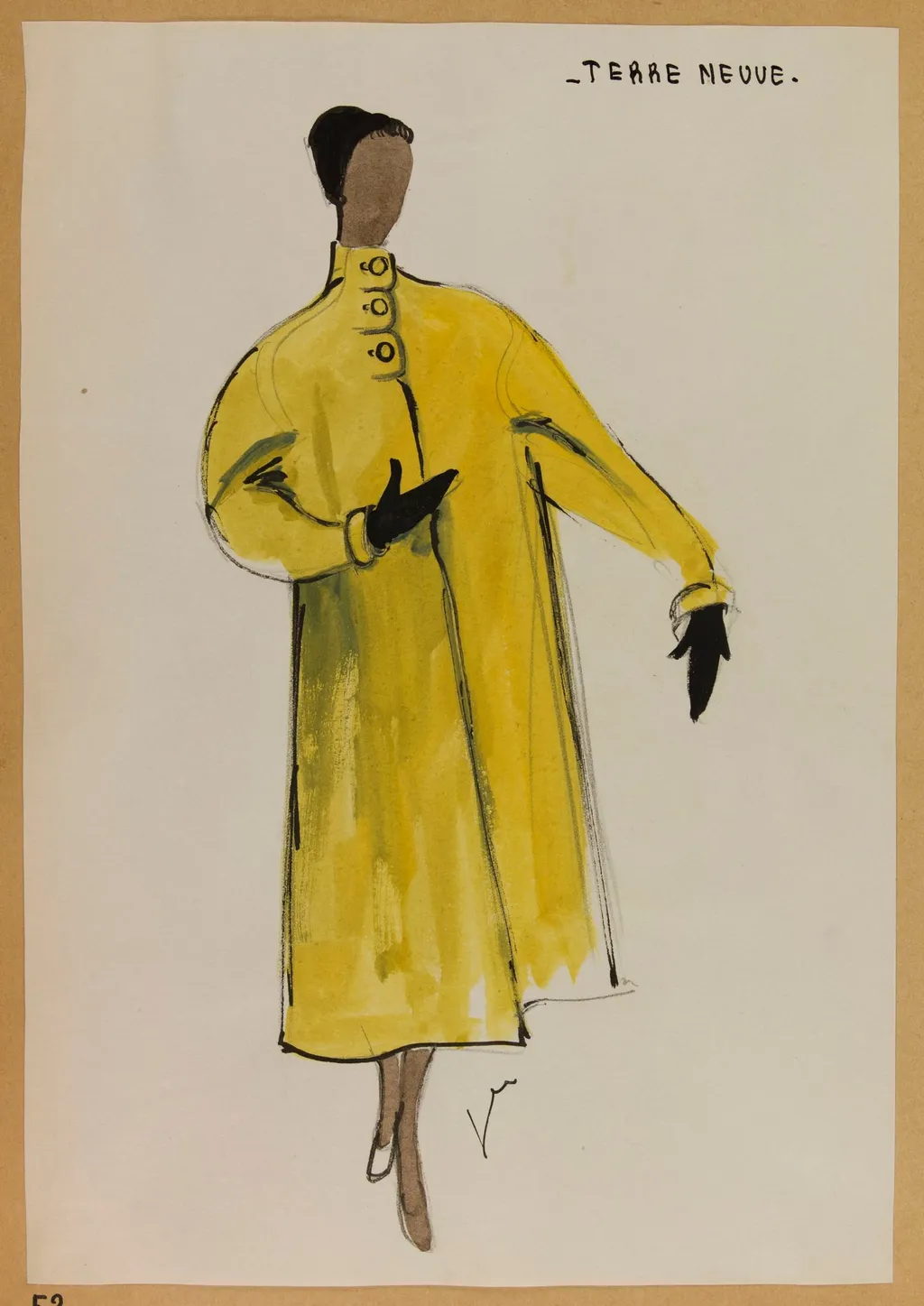
Terre Neuve is a drawing by Carven. It dates from 1952 and is held in the collection of the Palais Galliera - Musée de la Mode de la Ville de Paris.
About this work
Overview
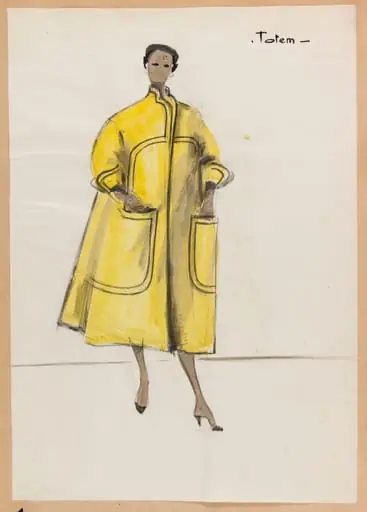
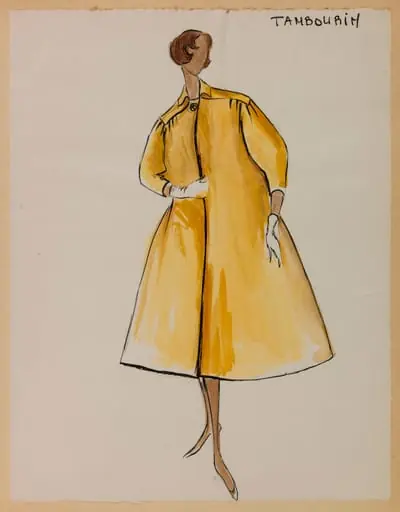
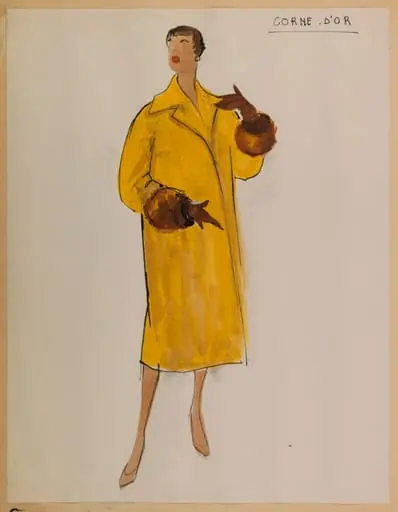
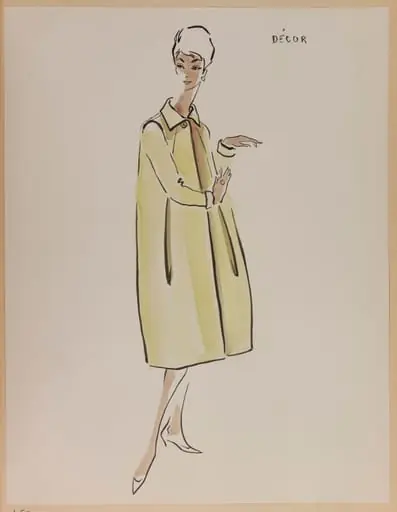
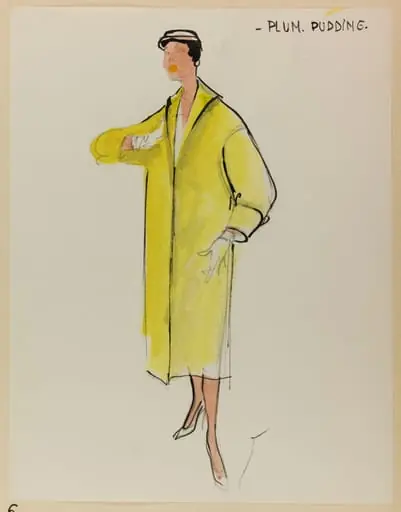
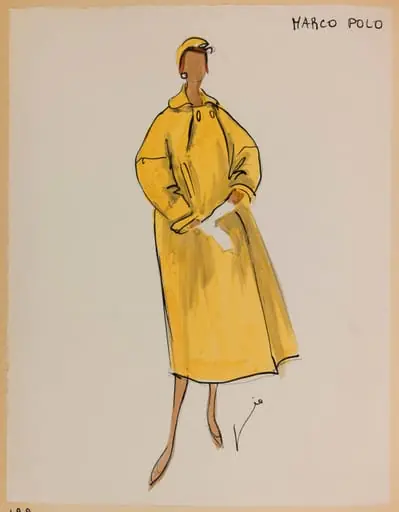
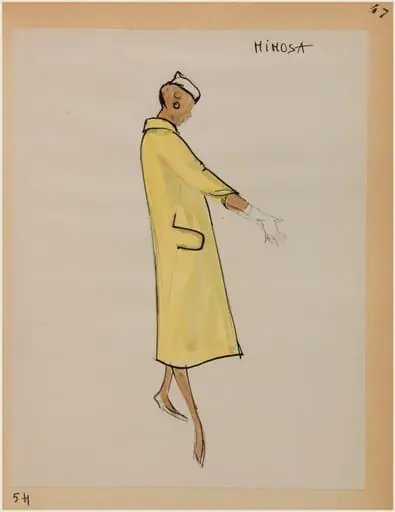
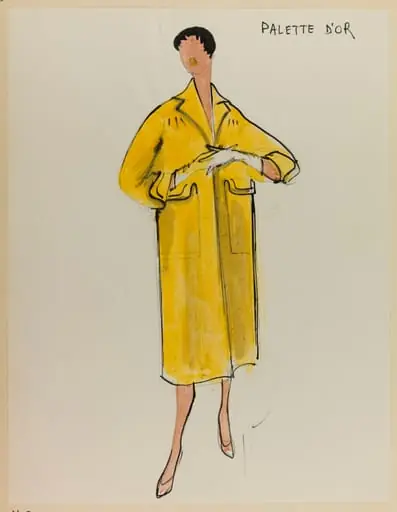
Terre Neuve, executed in 1952, is a watercolor illustration attributed to the French fashion house Carven. The work is part of the collection of the Museum of Ethnography and is presented as a digital image. It depicts a solitary female figure in a striking yellow coat, set against a uniform beige backdrop, emphasizing the garment’s form and colour.
Subject & Meaning
The composition centers on a woman in a long, high‑collared yellow coat that reaches her knees, complemented by black gloves and heels. Her face is omitted, and her posture suggests movement, conveying a sense of poised travel or transition. The contrast between the vivid coat and the muted background highlights the garment as the primary focus of the illustration.
Technique & Style
Rendered in watercolor, the image employs flat washes of colour to define the coat’s bright hue and the neutral background. The brushwork remains smooth and controlled, typical of mid‑century fashion illustration, where clarity of line and colour serve to showcase design details rather than atmospheric depth.
History & Provenance
Created in the early 1950s, the piece reflects Carven’s post‑war emphasis on accessible elegance. It entered the Museum of Ethnography’s holdings at an unspecified date, where it is catalogued as an example of mid‑twentieth‑century fashion visual culture, illustrating the intersection of commercial design and fine art media.
Artist & collection
Artist
These delicate ink-on-paper drawings capture the quiet poetry of everyday things: pinecones, reeds, apples.
Museum
Palais Galliera - Musée de la Mode de la Ville de Paris
Continue through works from the same source collection.