Artwork
'Soldat de plomb'
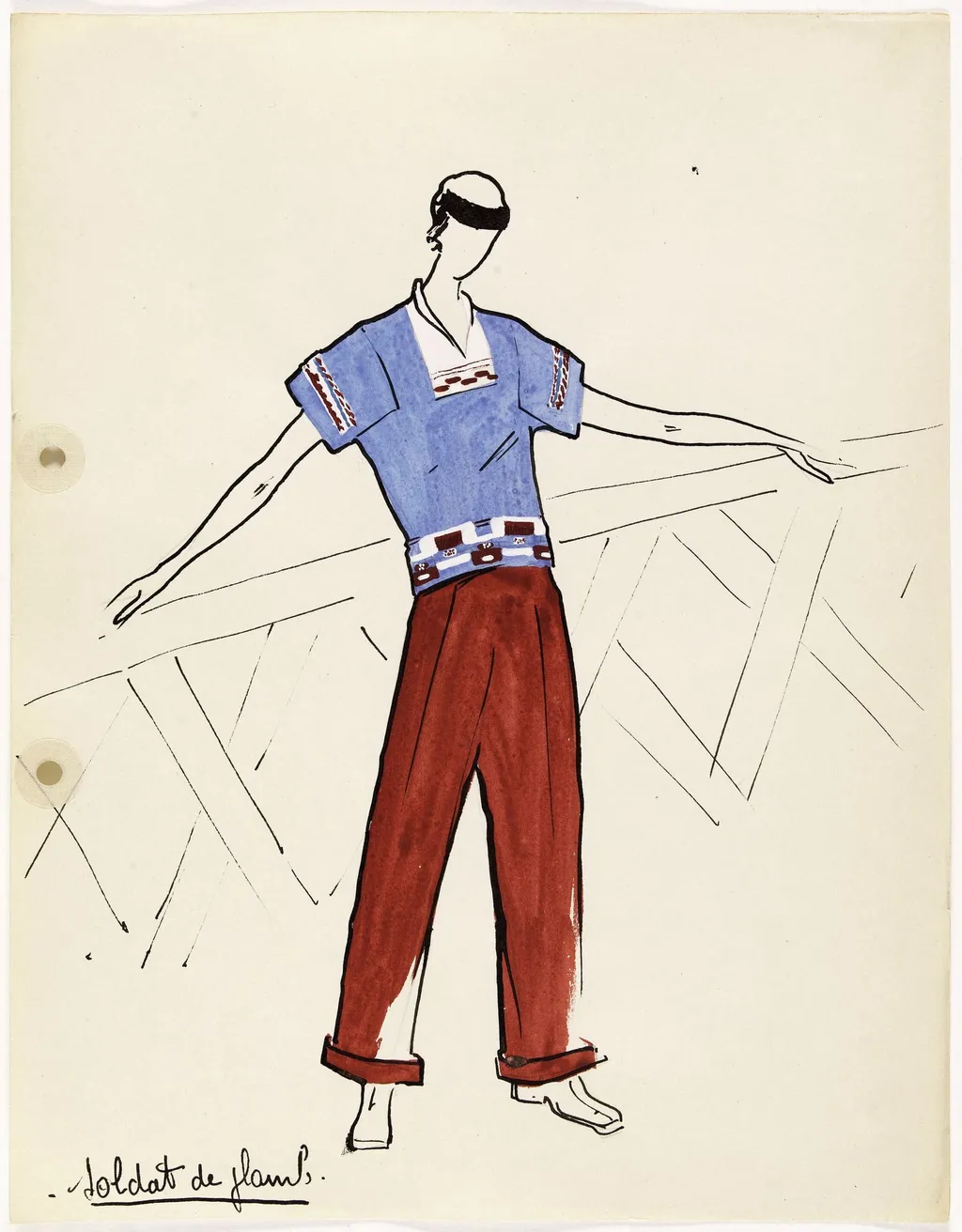
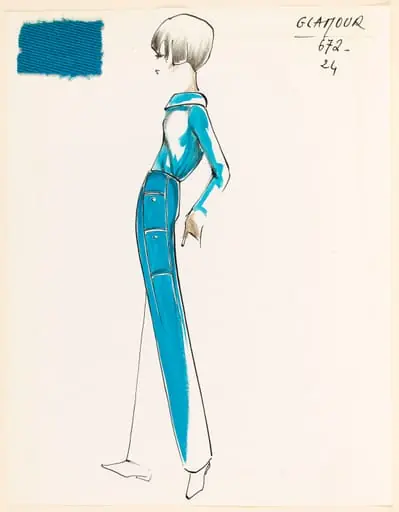
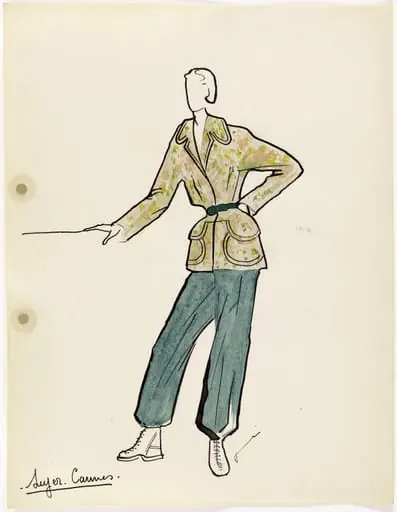
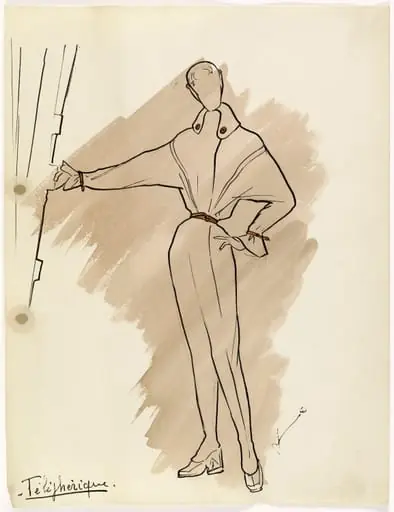
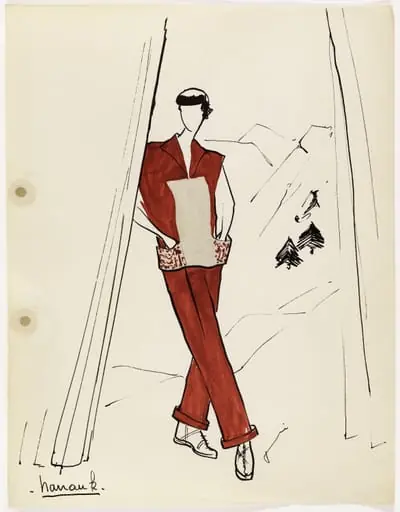
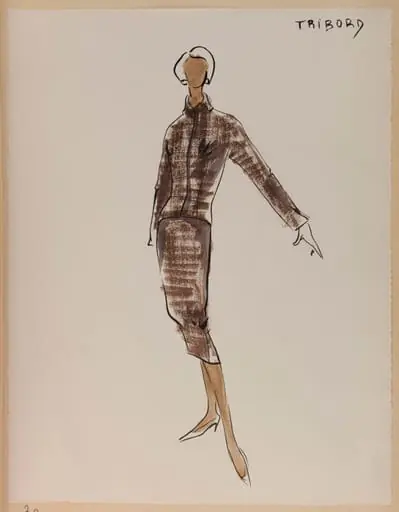
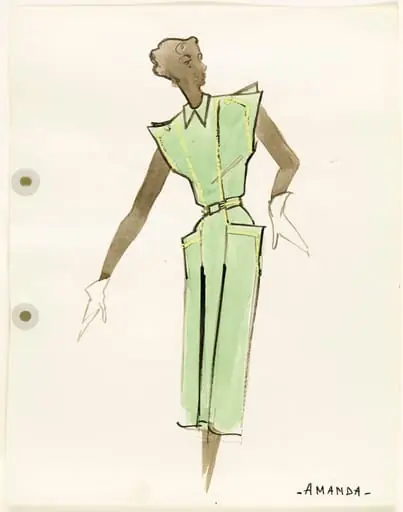
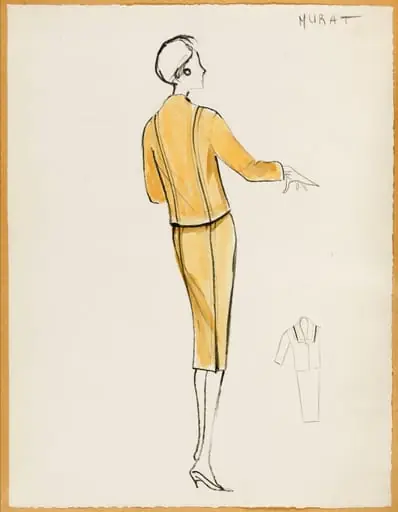
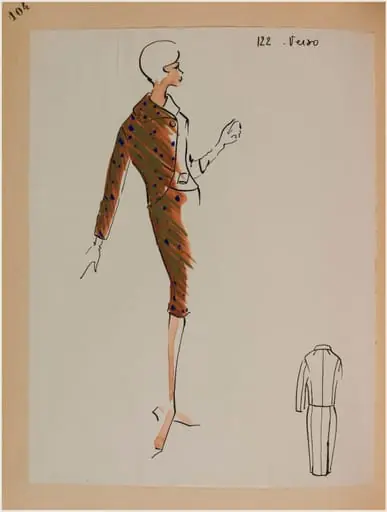
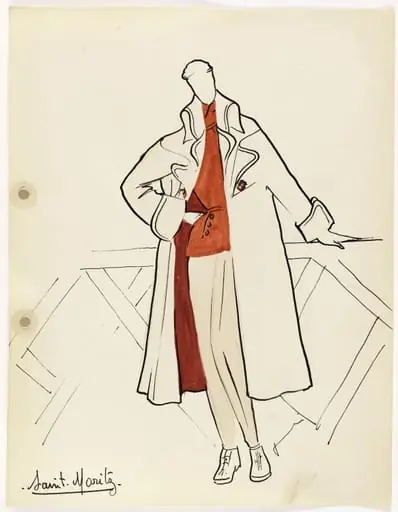
'Soldat de plomb' is a drawing by Carven. It dates from 1949 and is held in the collection of the Palais Galliera - Musée de la Mode de la Ville de Paris.
About this work
Overview
Its restrained palette and unadorned background emphasize form over context, aligning with Carven’s broader interest in simplified human representation.
Created around 1949, 'Soldat de plomb' is a drawing by the artist Carven, currently held in the collection of the Museum of Ethnography. Rendered in ink and wash, the work presents a solitary figure in a minimalist style. The composition avoids narrative detail, focusing instead on posture and silhouette. Its restrained palette and unadorned background emphasize form over context, aligning with Carven’s broader interest in simplified human representation.
Subject & Meaning
The figure, dressed in a blue shirt and brown trousers, stands with arms outstretched, face obscured. The pose suggests a gesture of surrender, observation, or ritual, though no explicit narrative is provided. The title, meaning 'lead soldier,' may imply anonymity or mass identity, reinforcing the figure’s lack of individual features. The absence of facial detail invites interpretation without anchoring the image to a specific story or historical moment.
Technique & Style
Carven employed bold, confident lines and a limited color scheme—predominantly blue, brown, and beige—to construct the figure with economical precision. The drawing avoids shading or texture, relying on contour and negative space to define form. This approach reflects a deliberate reduction of detail, characteristic of Carven’s expressive abstraction, where emotional resonance arises from simplicity rather than elaboration.
History & Provenance
The work entered the Museum of Ethnography’s collection in the mid-20th century, likely acquired during a period when the institution expanded its holdings of modern graphic works with ethnographic resonance. Its origin as a personal sketch or study is unconfirmed, but its inclusion suggests curatorial interest in how contemporary art engaged with themes of identity and anonymity, aligning with broader postwar artistic inquiries.
Context
Created in the late 1940s, the piece emerges amid European artistic movements that favored abstraction and emotional economy after the trauma of war. Carven’s focus on the anonymous figure resonates with contemporaneous explorations of the individual within collective societies. The work’s stripped-down aesthetic parallels developments in mid-century graphic design and outsider art, where clarity and symbolic power replaced ornamental detail.
Legacy
Though not widely exhibited, 'Soldat de plomb' remains a representative example of Carven’s distinctive visual language. Its presence in an ethnographic museum underscores its perceived connection to universal human gestures rather than specific cultural narratives. The drawing continues to be referenced in studies of postwar line drawing, valued for its quiet intensity and refusal of literalism.
Artist & collection
Artist
These delicate ink-on-paper drawings capture the quiet poetry of everyday things: pinecones, reeds, apples.
Museum
Palais Galliera - Musée de la Mode de la Ville de Paris
Continue through works from the same source collection.