Artwork
Tailleur
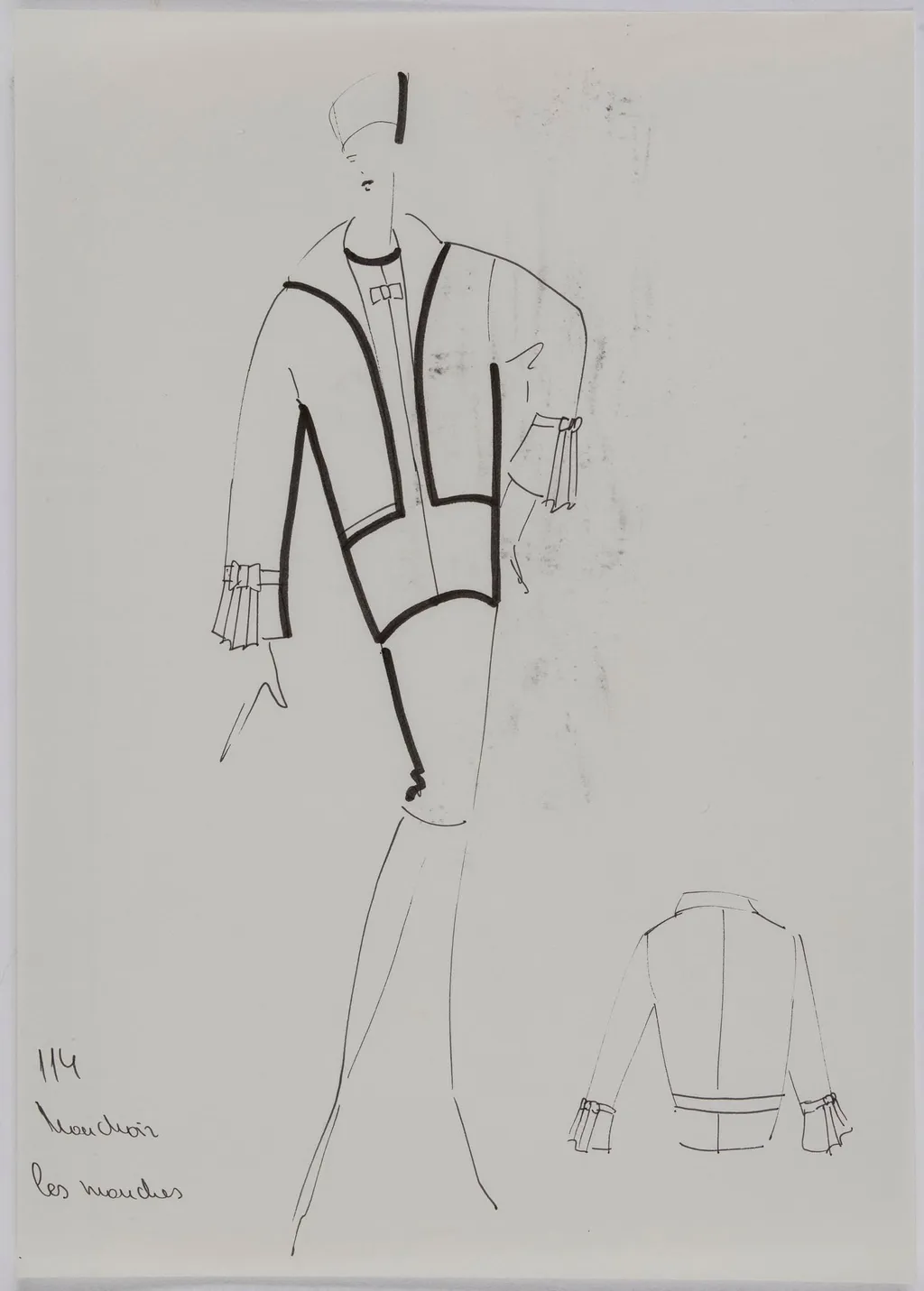
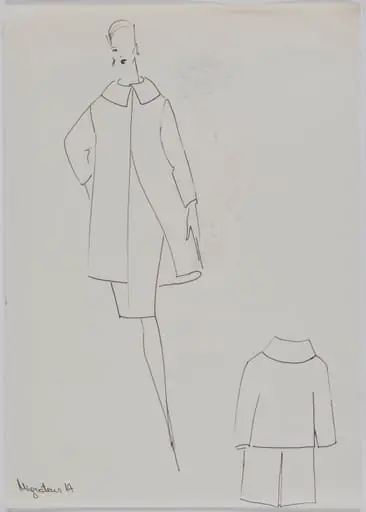
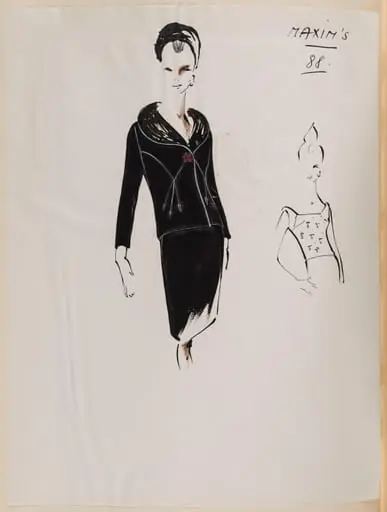
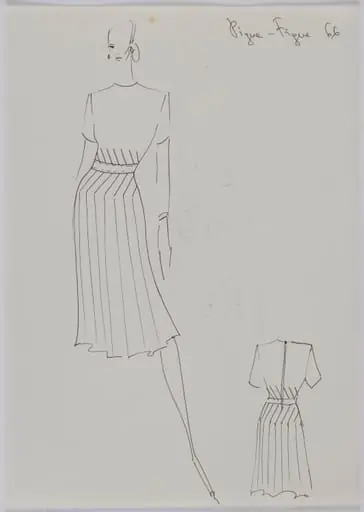
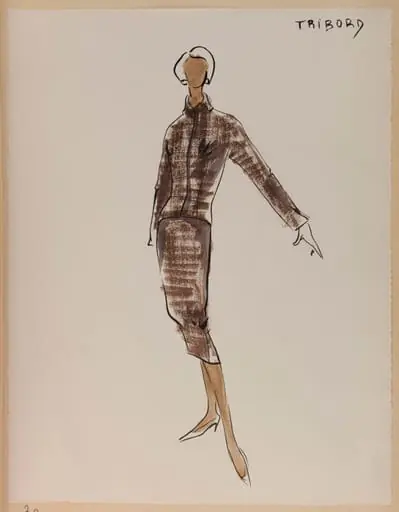
Tailleur is a drawing by Carven. It dates from 1960 and is held in the collection of the Palais Galliera - Musée de la Mode de la Ville de Paris.
About this work
Overview
The absence of color or shading emphasizes line and form, characteristic of design drafts used in fashion development.
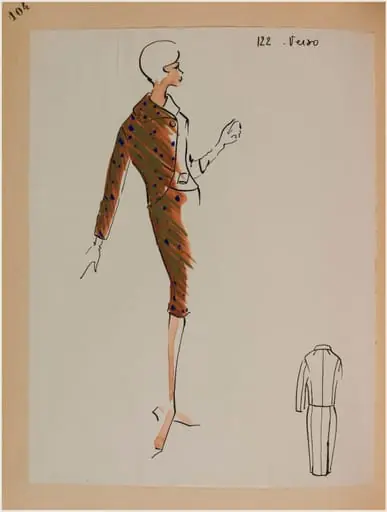
Created around 1960 by the French fashion house Carven, this ink sketch depicts a tailored suit ensemble. Executed in monochrome on plain paper, it captures the silhouette of a jacket with broad lapels, folded cuffs, and a bow tie, accompanied by a simplified rear view of the garment. The absence of color or shading emphasizes line and form, characteristic of design drafts used in fashion development.
Subject & Meaning
The figure represents a refined, mid-century masculine or androgynous suit, reflecting postwar elegance in French fashion. The inclusion of gloves and the bow tie suggests formality, while the dual views—front and back—indicate a functional purpose: aiding pattern-making or client presentation. The handwritten note 'les mouches' may reference decorative elements, stylistic quirks, or an internal codename, though its exact intent remains ambiguous.
Technique & Style
Rendered in precise, unshaded black ink, the drawing relies on clean contours and minimal detail to convey structure. The rear view is sketched with swift, economical strokes, contrasting with the more defined front. This method prioritizes clarity over ornamentation, typical of technical fashion illustrations meant for production teams. The paper’s plainness underscores its utilitarian origin rather than artistic display.
History & Provenance
The sketch is held in the collection of the Museum of Ethnography, suggesting its value as a cultural artifact rather than a fine art piece. Its preservation implies recognition of Carven’s role in shaping postwar French dress. While the exact provenance prior to museum acquisition is undocumented, its presence in an ethnographic context highlights its significance in documenting everyday fashion practices of the era.
Context
In the 1960s, French fashion houses like Carven produced numerous such sketches to communicate designs to ateliers and clients. This drawing reflects a period when tailoring remained central to women’s and men’s wardrobes, even as ready-to-wear began to rise. The inclusion of French terminology points to the domestic, insider nature of these drafts—tools of trade, not public advertisements.
Legacy
As a preserved design draft, this work offers insight into the quiet mechanics of fashion creation—how ideas moved from mind to fabric. Though not widely exhibited, its retention in an ethnographic institution affirms its role in understanding the material culture of 20th-century dressmaking. It stands as a quiet testament to the craftsmanship behind garments now seen only in finished form.
Artist & collection
Artist
These delicate ink-on-paper drawings capture the quiet poetry of everyday things: pinecones, reeds, apples.
Museum
Palais Galliera - Musée de la Mode de la Ville de Paris
Continue through works from the same source collection.