Artwork
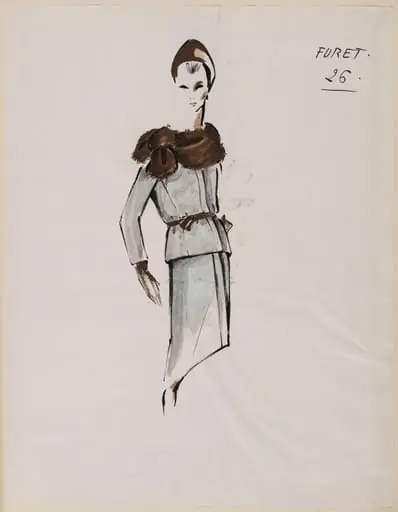
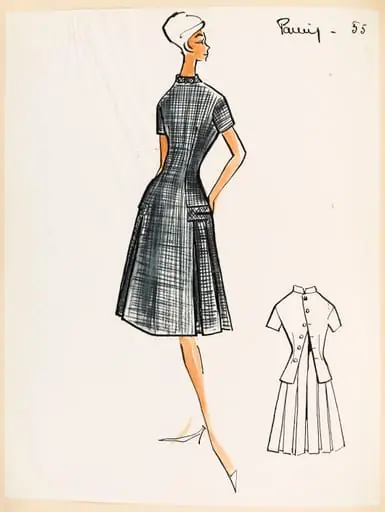
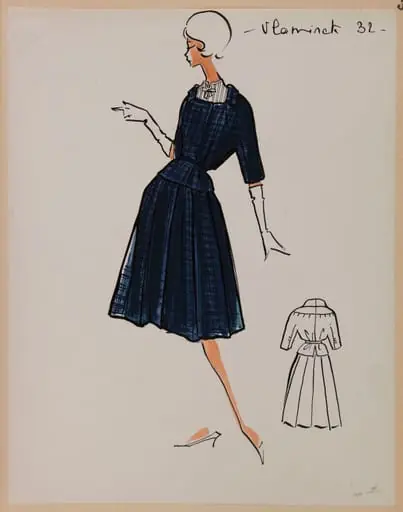
Tailleur bleu gris à longue veste cintrée et jupe plissée
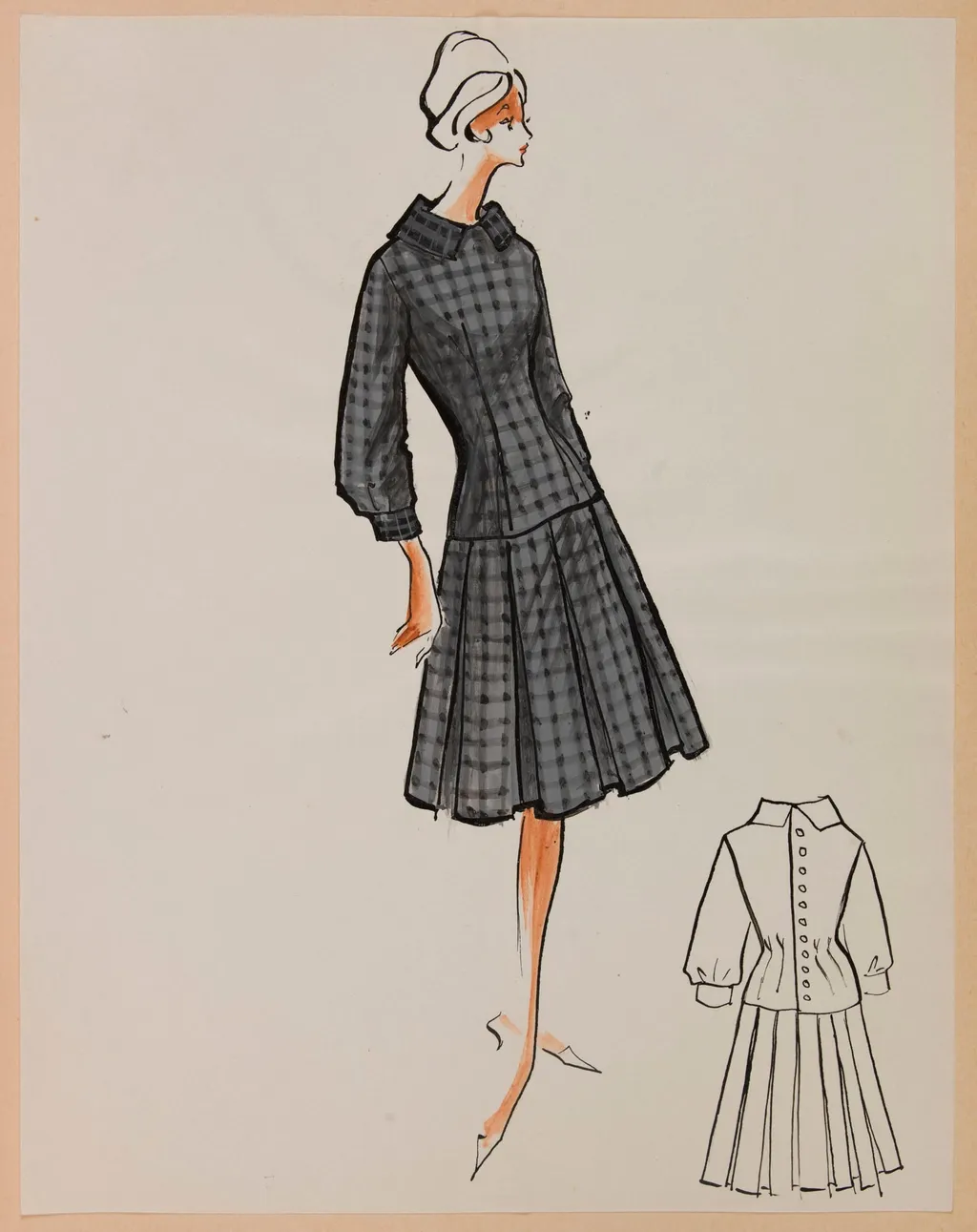
Tailleur bleu gris à longue veste cintrée et jupe plissée is a drawing by Carven. It dates from 1959 and is held in the collection of the Palais Galliera - Musée de la Mode de la Ville de Paris.
About this work
Overview
Created around 1959, the image titled “Tailleur bleu gris à longue veste cintrée et jupe plissée” depicts a woman in a dark gray, plaid ensemble. The work is attributed to the French fashion house Carven and is part of the collection of the Museum of Ethnography. It is presented as a single‑panel drawing, rendered in a medium that reproduces the original illustration as an image.
Subject & Meaning
The composition centers on a female figure dressed in a long, fitted jacket with a high collar and three front buttons, paired with a pleated skirt that flares outward. Her hair is styled in a tidy bun, and she rests one hand on her hip, conveying a poised, contemporary elegance. A secondary, smaller view shows the back of the outfit, emphasizing the garment’s silhouette and tailoring.
Technique & Style
The drawing employs loose yet assured lines that capture the texture of the fabric and the structure of the suit. The artist focuses on the contrast between the crispness of the jacket’s waist and the soft drape of the pleated skirt, using minimal shading to suggest depth while maintaining a clear, graphic quality typical of mid‑century fashion illustration.
History & Provenance
Attributed to Carven, a leading French fashion label of the post‑war era, the work dates to the late 1950s, a period when the brand was known for refined tailoring and modern silhouettes. The piece entered the Museum of Ethnography’s holdings, where it contributes to the institution’s broader documentation of clothing as cultural artifact.
Context
The illustration reflects the aesthetic of late‑1950s Parisian fashion, where structured tailoring and modest yet sophisticated color palettes were prevalent.
The illustration reflects the aesthetic of late‑1950s Parisian fashion, where structured tailoring and modest yet sophisticated color palettes were prevalent. The use of a plaid pattern in muted blue‑gray tones aligns with the era’s move toward understated elegance, while the emphasis on a fitted waist and pleated skirt illustrates the transition toward the more fluid silhouettes that would dominate the 1960s.
Artist & collection
Artist
These delicate ink-on-paper drawings capture the quiet poetry of everyday things: pinecones, reeds, apples.
Museum
Palais Galliera - Musée de la Mode de la Ville de Paris
Continue through works from the same source collection.