Artwork
Utrillo
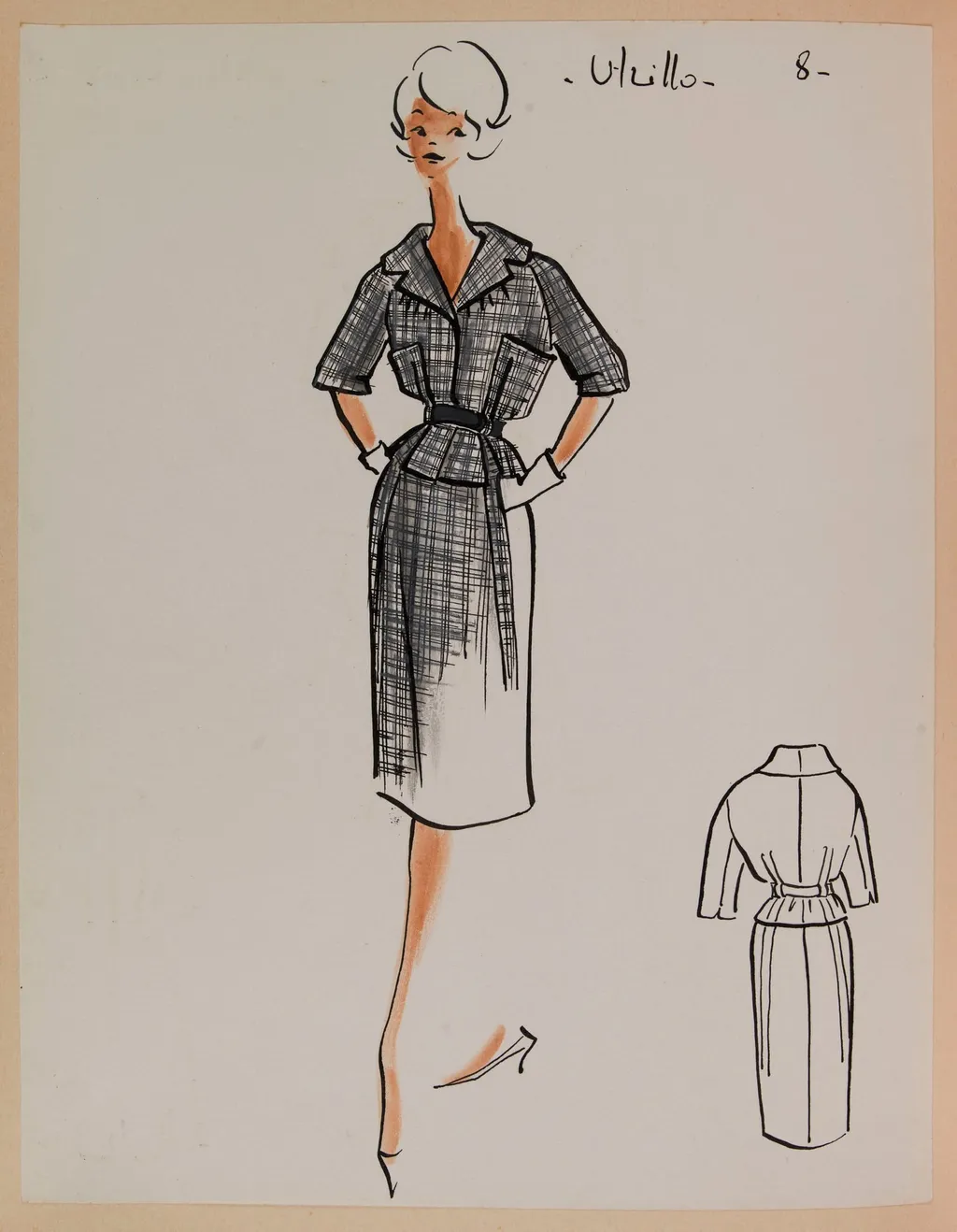
Utrillo is a drawing by Carven. It dates from 1958 and is held in the collection of the Palais Galliera - Musée de la Mode de la Ville de Paris.
About this work
Overview
The work is part of the Museum of Ethnography’s collection, where it functions as a record of mid-century fashion design rather than a fine art piece.
This drawing, dated around 1958, is attributed to the French fashion house Carven. Executed in ink or pencil, it captures a woman’s silhouette in a minimalist yet precise manner. The work is part of the Museum of Ethnography’s collection, where it functions as a record of mid-century fashion design rather than a fine art piece. Its modest scale and functional intent reflect its origin in textile and garment development.
Subject & Meaning
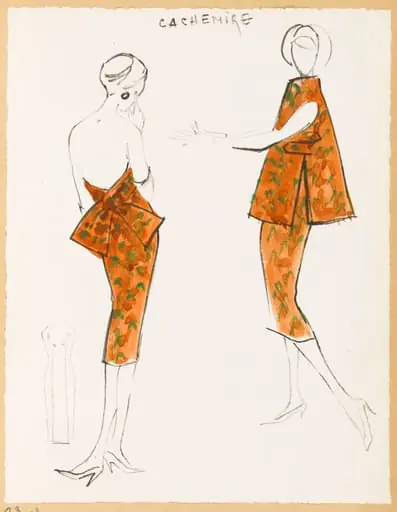
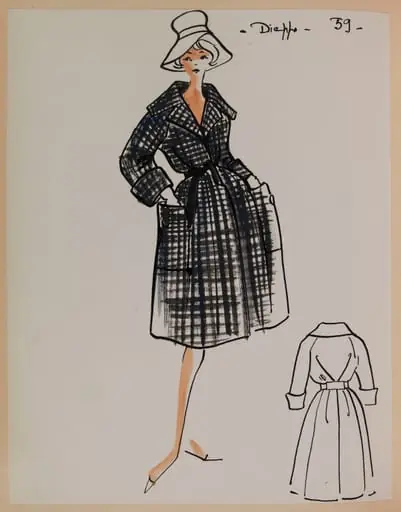
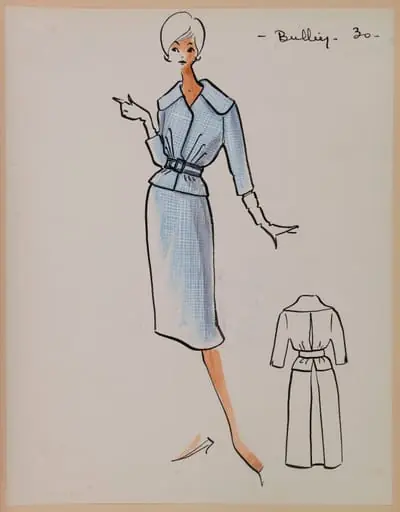
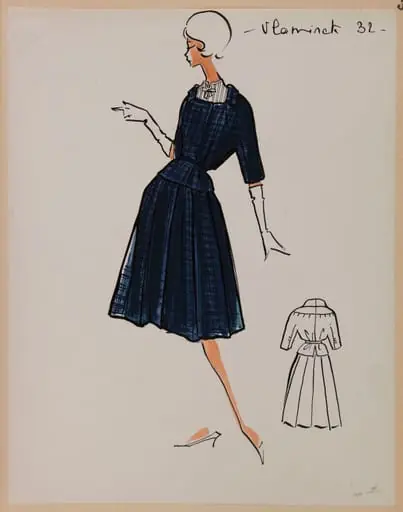
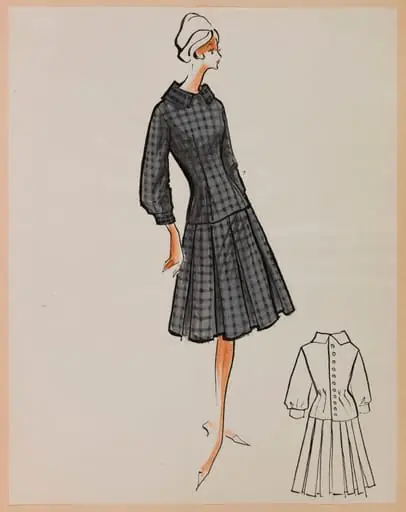
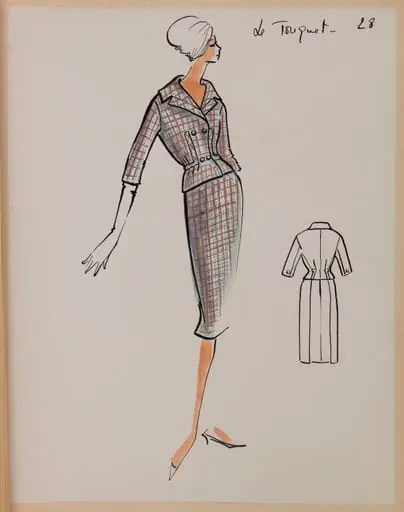
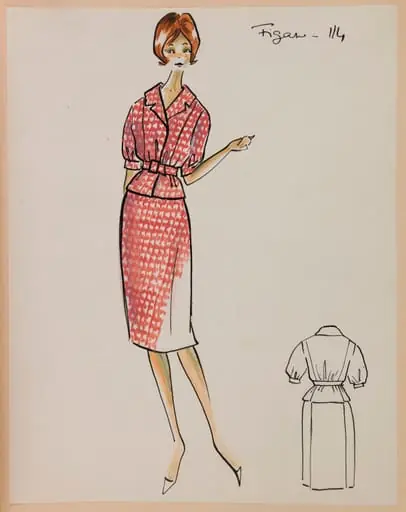
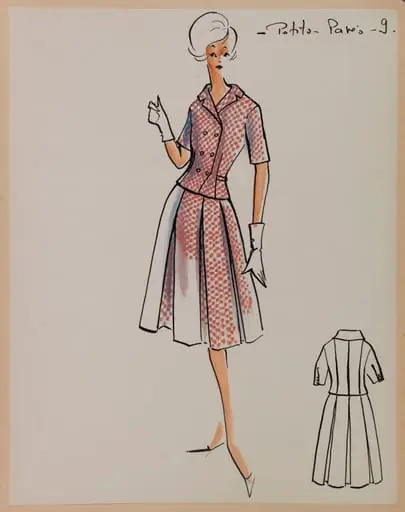
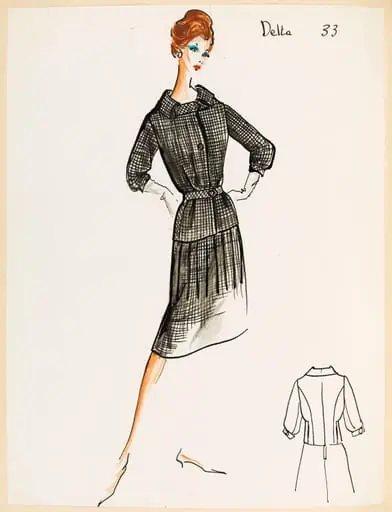
The figure depicts a woman wearing a tailored short jacket and a matching plaid skirt, fastened at the waist with a belt. The pose is neutral, emphasizing the garment’s structure over narrative or emotion. The inclusion of a rear view of the jacket suggests an intent to document construction details, likely for production or presentation purposes. The drawing serves as a technical reference, conveying how clothing was intended to fit and move on the body.
Technique & Style
The artist employed swift, assured lines to suggest fabric texture and form. Loose, fluid strokes define the skirt’s plaid pattern and the jacket’s folds, while the figure’s outline remains clean and contained. The back view of the jacket is rendered with subtle economy, indicating attention to seam placement and fit. The signature 'Carven' in the corner confirms authorship and situates the work within the brand’s design archive.
History & Provenance
Created during Carven’s active years in postwar Paris, the drawing likely originated in the house’s atelier as part of a design portfolio. It entered the Museum of Ethnography’s collection as an artifact of everyday fashion practice, reflecting how clothing design was documented before digital tools. Its preservation underscores the institution’s interest in material culture beyond ceremonial or traditional dress.
Context
In the late 1950s, Parisian fashion houses relied on hand-drawn sketches to communicate designs to tailors and manufacturers. This piece aligns with the era’s emphasis on structured, feminine silhouettes. Unlike haute couture presentations, such drawings were utilitarian—meant for internal use rather than public display. Its presence in an ethnographic museum highlights the cultural significance of mass-produced fashion as a social artifact.
Legacy
Though not widely exhibited, the drawing contributes to the historical record of mid-century French fashion design. It illustrates how design houses like Carven translated aesthetic ideals into wearable forms through precise visual documentation. Today, such sketches are valued for their insight into the labor and decision-making behind clothing production, offering a quiet counterpoint to the glamour often associated with fashion history.
Artist & collection
Artist
These delicate ink-on-paper drawings capture the quiet poetry of everyday things: pinecones, reeds, apples.
Museum
Palais Galliera - Musée de la Mode de la Ville de Paris
Continue through works from the same source collection.