Artwork
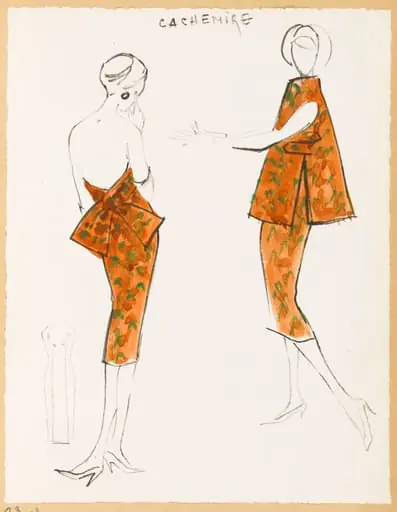
Tailleur rouille
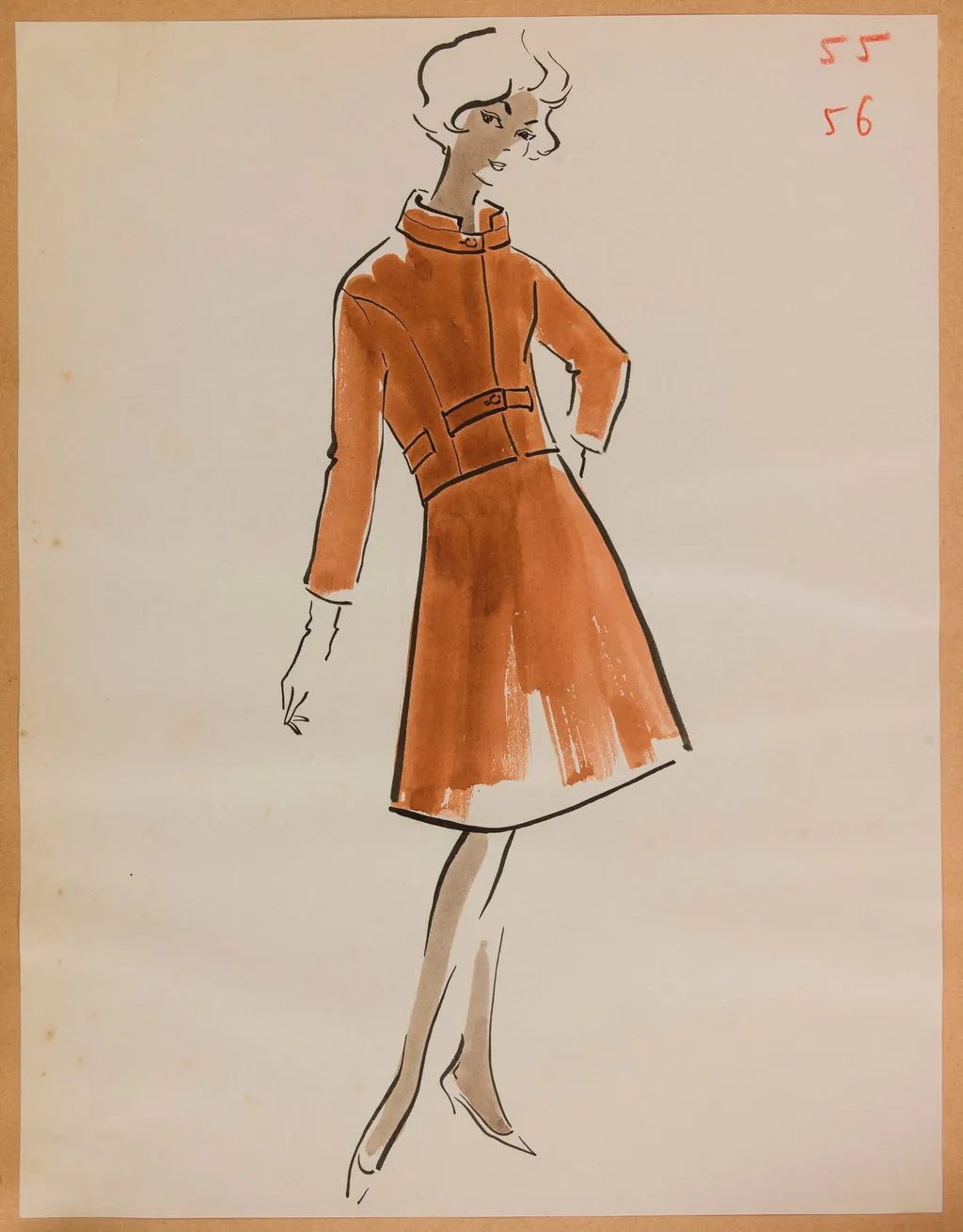
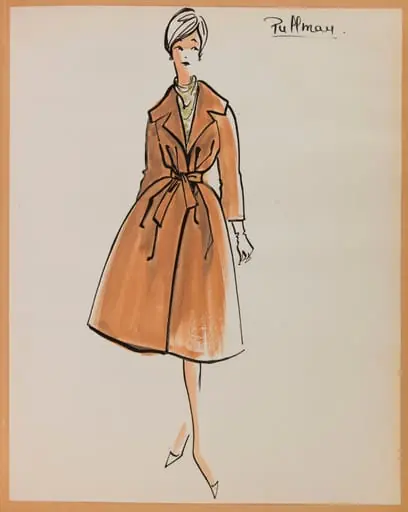
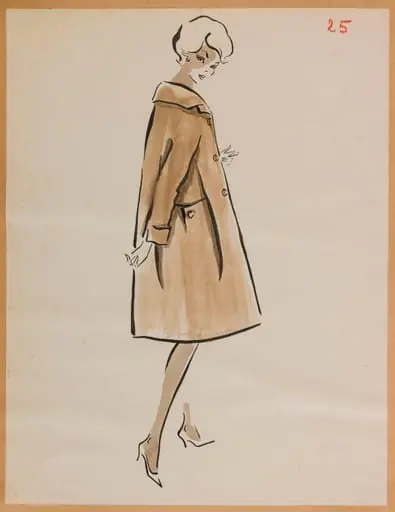
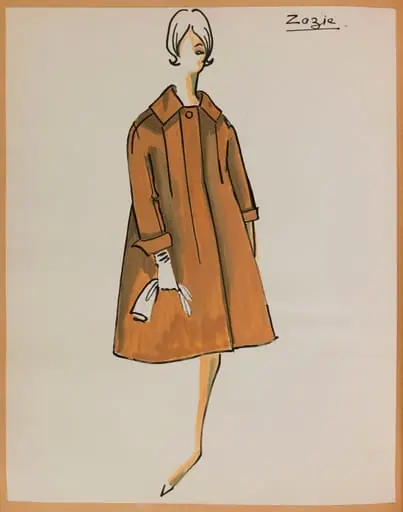
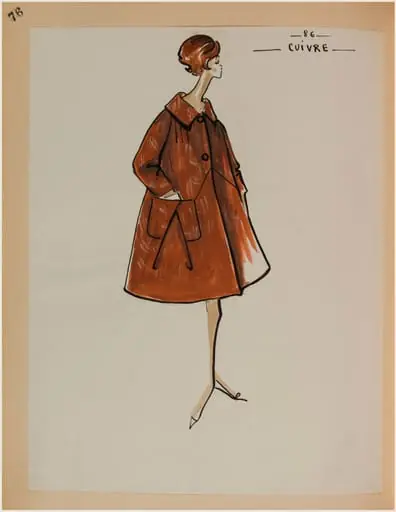
Tailleur rouille is a drawing by Carven. It dates from 1957 and is held in the collection of the Palais Galliera - Musée de la Mode de la Ville de Paris.
About this work
Overview
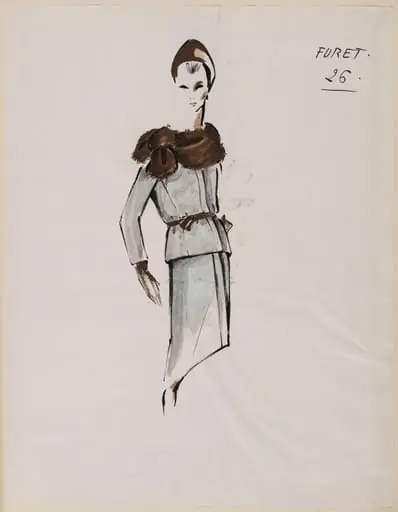
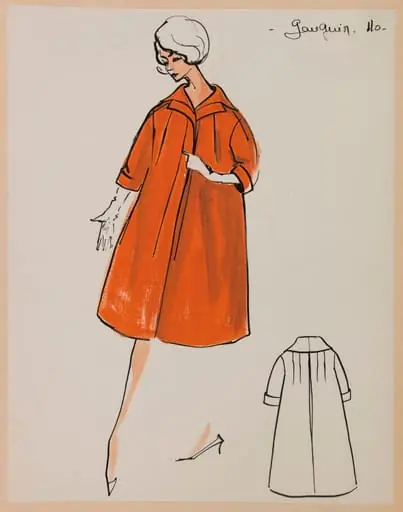
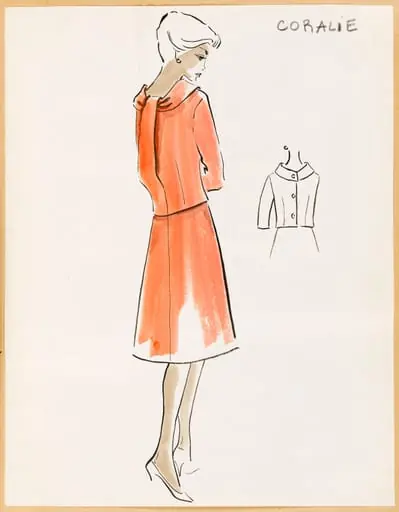
Tailleur rouille is a fashion sketch dated around 1957, attributed to the French designer Carven.
Tailleur rouille is a fashion sketch dated around 1957, attributed to the French designer Carven. Executed in ink and wash, it captures a tailored ensemble in muted brown tones. The drawing resides in the collection of the Museum of Ethnography, where it functions as a record of mid-century design practice rather than a finished garment. Its informal, rapid execution suggests it was a working study, not a polished presentation piece.
Subject & Meaning
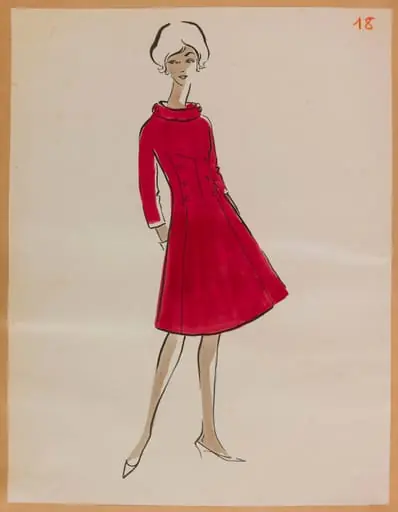
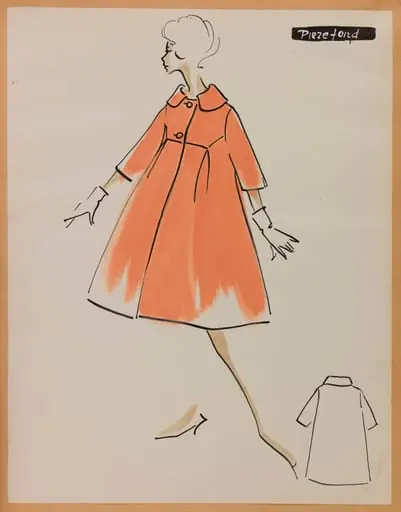
The figure depicts a woman in a modest, structured outfit: a fitted jacket with two buttons and a defined waistline, paired with a knee-length flared skirt. Her posture—one hand on the hip—conveys quiet confidence. The simplicity of the attire reflects postwar ideals of practical elegance, emphasizing clean lines over ornamentation. The sketch implies an intended wearer who values functionality without sacrificing refinement.
Technique & Style
The drawing employs bold, confident black outlines to define form, with flat, unmodulated washes of brown ink suggesting fabric texture. There is no shading or depth; volume is implied through contour alone. The brushwork is swift and economical, revealing the artist’s hand in real time. This approach aligns with fashion illustration practices of the period, where speed and clarity were prioritized over finish.
History & Provenance
Created circa 1957, the sketch entered the Museum of Ethnography’s collection as part of a broader acquisition of design materials documenting 20th-century dress. Its origin within Carven’s studio is documented through archival records, though no evidence links it to a specific production line. It remains unaltered since its acquisition, preserving its original state as a design artifact.
Context
In the late 1950s, Parisian fashion houses relied on sketches like this to communicate ideas to tailors and clients. Tailleur rouille reflects the era’s shift toward streamlined silhouettes and accessible elegance, moving away from the volume of earlier decades. Such drawings were essential tools in the collaborative process between designer, atelier, and wearer, bridging concept and craft.
Legacy
Though not a finished garment, Tailleur rouille endures as a representative example of how fashion was conceived in its formative stages. It illustrates the quiet discipline of mid-century design, where restraint and precision defined aesthetic values. Today, it contributes to scholarly understanding of how clothing ideas were visualized and translated into wearable form.
Artist & collection
Artist
These delicate ink-on-paper drawings capture the quiet poetry of everyday things: pinecones, reeds, apples.
Museum
Palais Galliera - Musée de la Mode de la Ville de Paris
Continue through works from the same source collection.