Artwork
Pullman
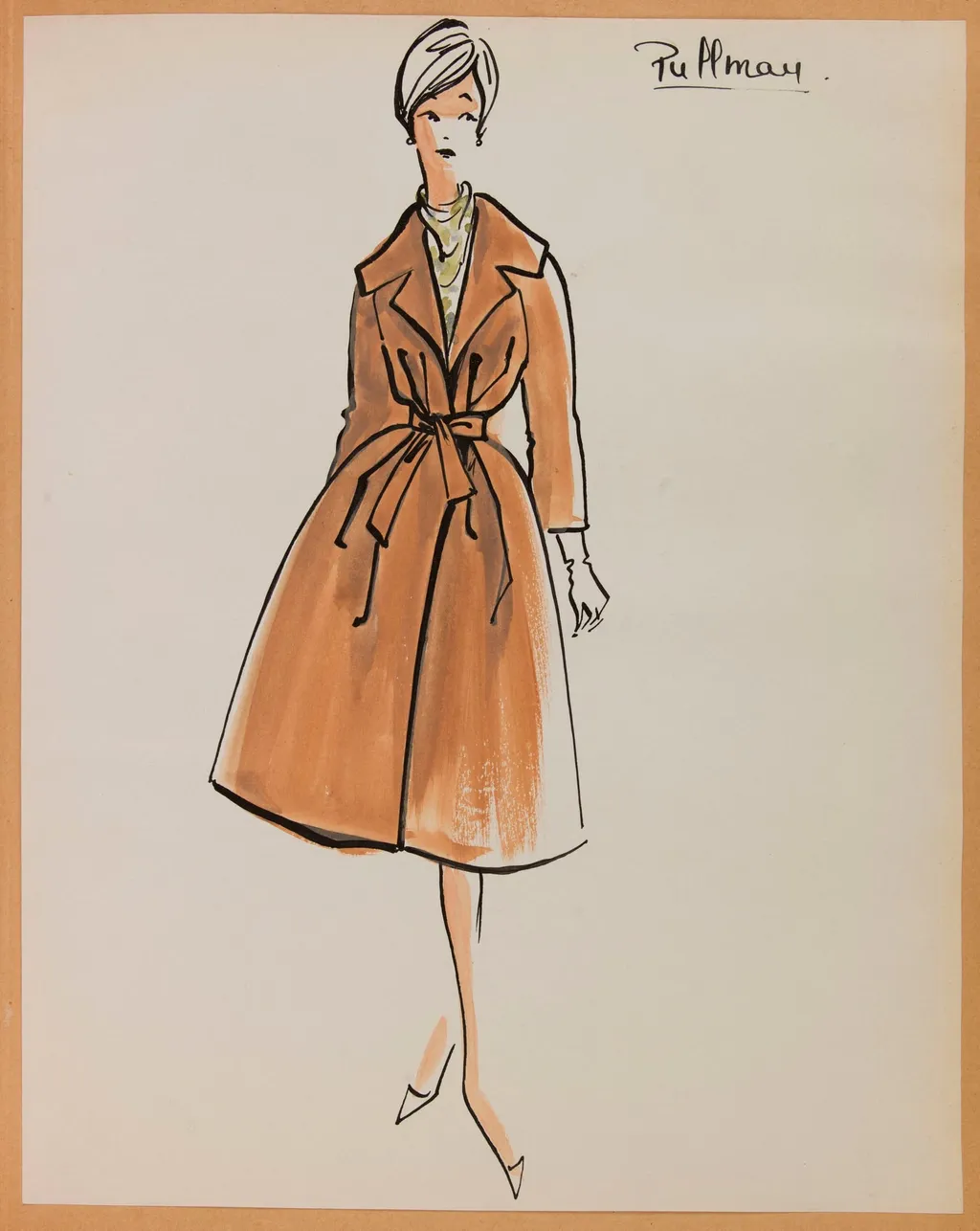
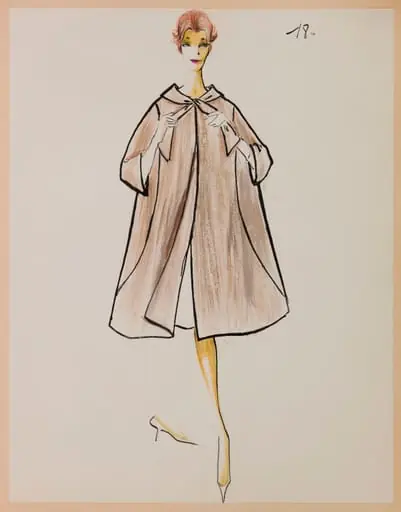
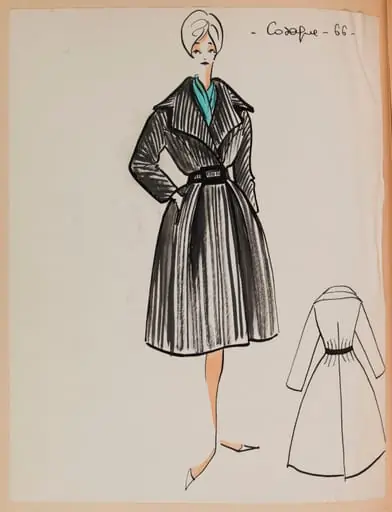
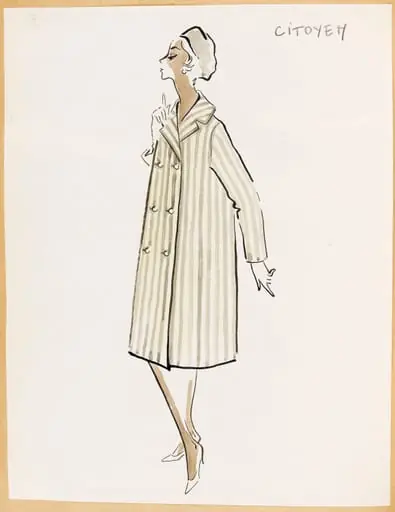
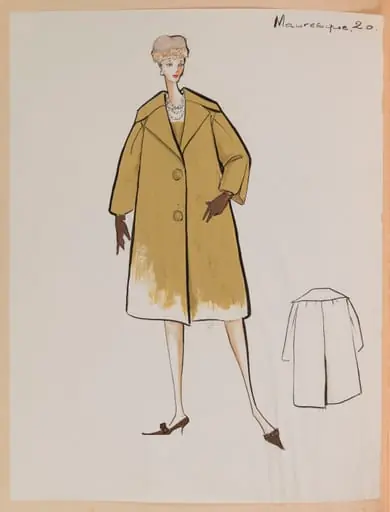
Pullman is a drawing by Carven. It dates from 1958 and is held in the collection of the Palais Galliera - Musée de la Mode de la Ville de Paris.
About this work
Overview
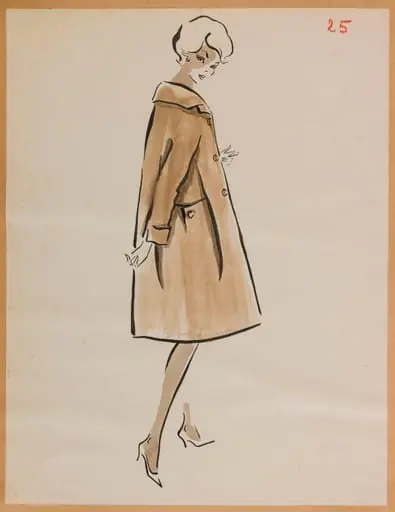
Though labeled 'Pullman'—possibly referencing a train or location—the drawing itself is a study of a woman’s attire.
Created around 1958, this ink sketch is attributed to the French designer Carven. It is part of the collection at the Museum of Ethnography. Though labeled 'Pullman'—possibly referencing a train or location—the drawing itself is a study of a woman’s attire. The signature 'Pullman' in the upper right is misleading; the artist’s identity is clearly Carven. The work reflects the rapid, observational nature of fashion sketching during the mid-20th century.
Subject & Meaning
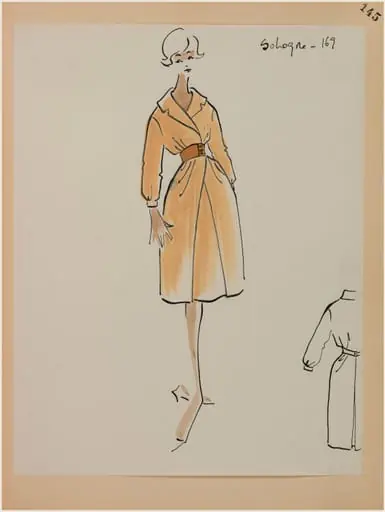
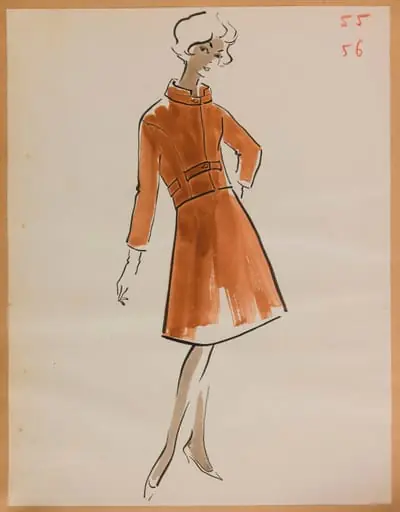
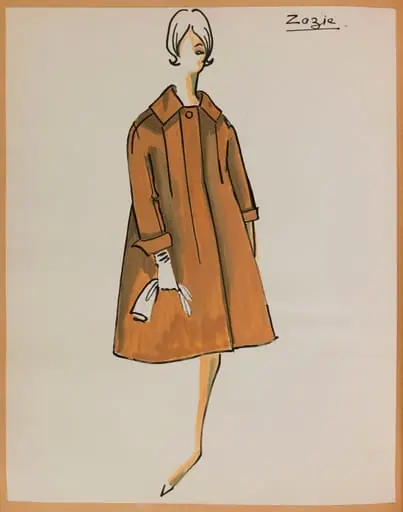
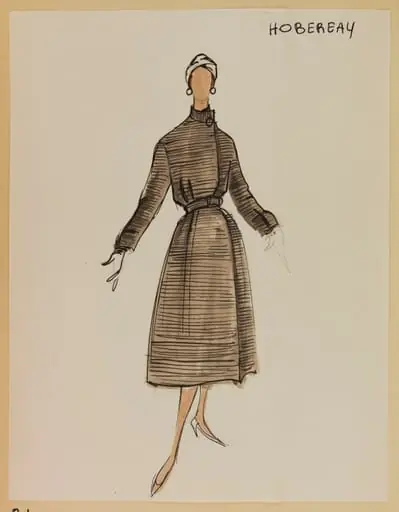
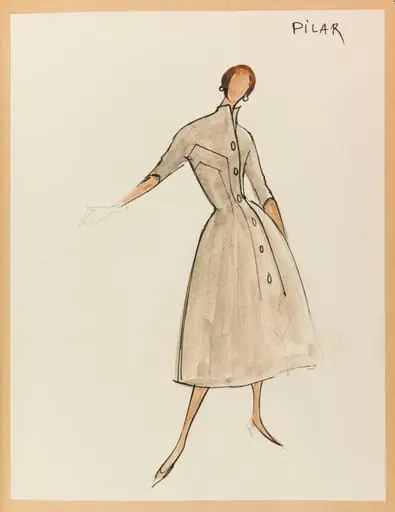
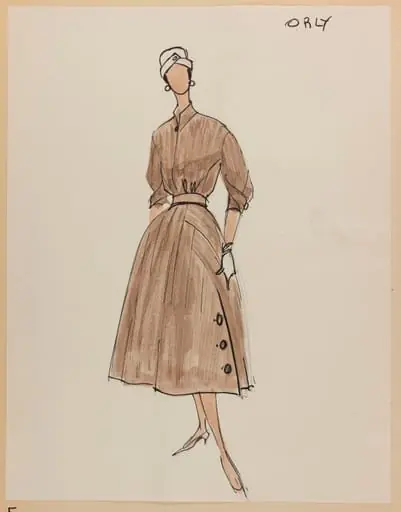
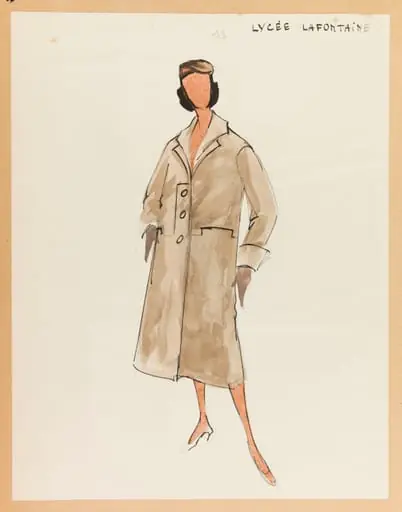
The figure depicts a woman dressed in a long brown coat with a wide collar and flared hem, fastened at the waist by a belt. She wears a hat and low-heeled shoes, suggesting a practical, everyday ensemble. The absence of facial detail and minimal background shifts focus entirely to the silhouette and structure of the clothing. The sketch implies a moment of transit or urban movement, possibly inspired by travel or public transport culture of the era.
Technique & Style
Executed with swift, fluid lines, the drawing captures form through economical strokes and light shading to suggest fabric weight and folds. The brushwork is confident, avoiding overworking the surface, which gives the image a sense of immediacy. The loose handling reflects its function as a preparatory study rather than a finished illustration. The artist’s hand remains visible, emphasizing spontaneity and direct observation over polished detail.
History & Provenance
The sketch entered the Museum of Ethnography’s collection as part of a broader acquisition of fashion-related materials from mid-century designers. Its attribution to Carven was confirmed through archival comparisons with known design notebooks. The mislabeling as 'Pullman' appears to be an early cataloging error, possibly derived from a note on the verso or a misremembered title. It has remained in the museum’s holdings since the 1960s.
Context
In the late 1950s, fashion houses like Carven relied on quick sketches to communicate designs to tailors and clients. This drawing aligns with the industry’s shift toward mobility and accessibility in style, reflecting postwar urban life. The emphasis on practical, wearable clothing—rather than haute couture extravagance—mirrors broader societal trends toward functional elegance in women’s fashion during this period.
Legacy
Though not widely published, the sketch exemplifies the quiet, working process behind mid-century French fashion design. It preserves the tactile, hand-drawn tradition before digital tools became dominant. Its presence in an ethnographic museum underscores how clothing studies bridge art, culture, and daily practice. The work continues to inform researchers examining the evolution of wearable design in postwar Europe.
Artist & collection
Artist
These delicate ink-on-paper drawings capture the quiet poetry of everyday things: pinecones, reeds, apples.
Museum
Palais Galliera - Musée de la Mode de la Ville de Paris
Continue through works from the same source collection.