Artwork
'Tambourin'
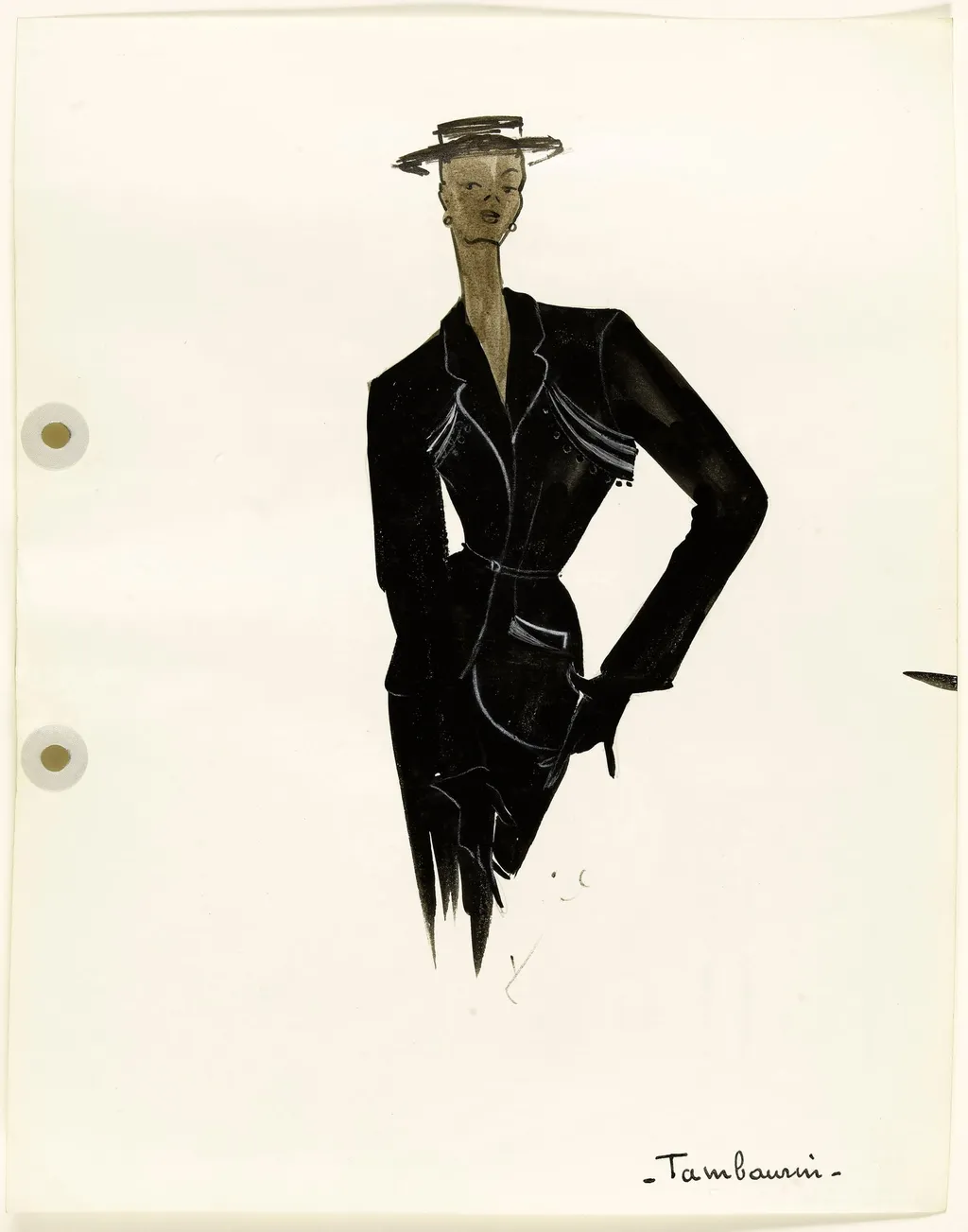
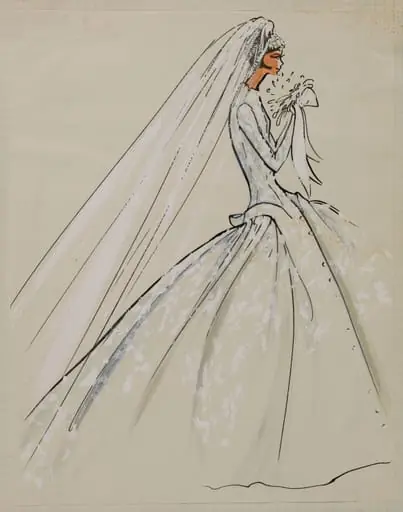
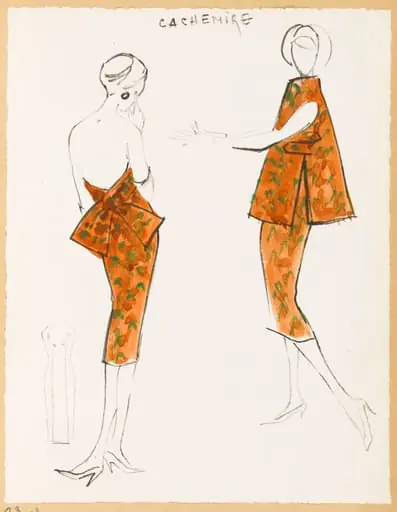
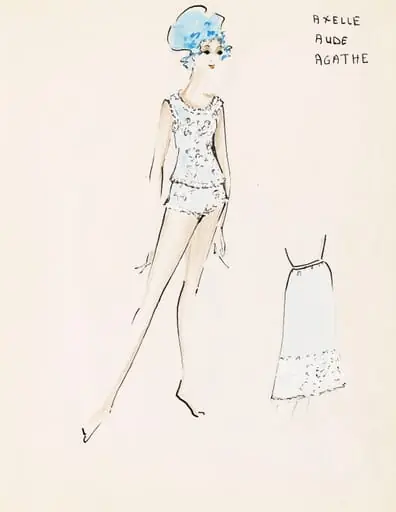
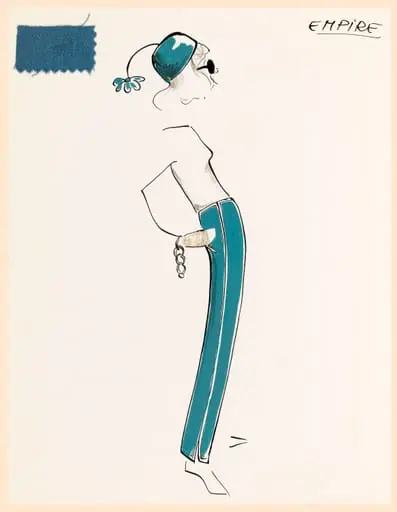
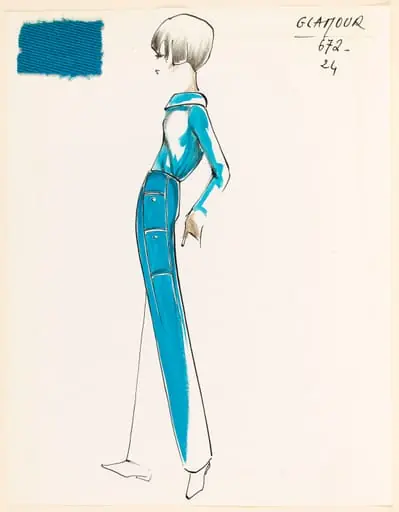
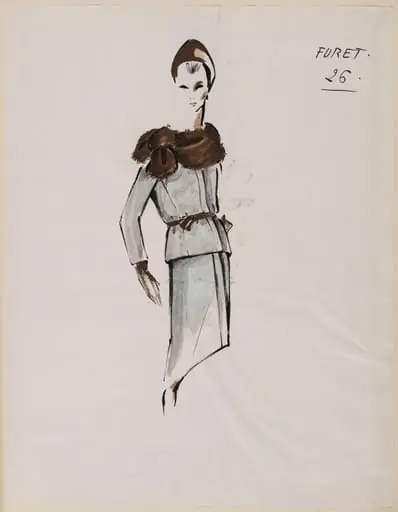
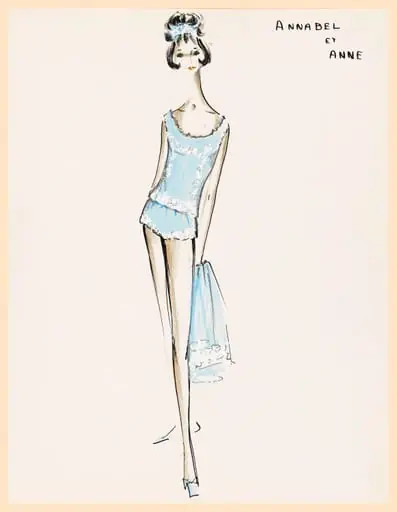
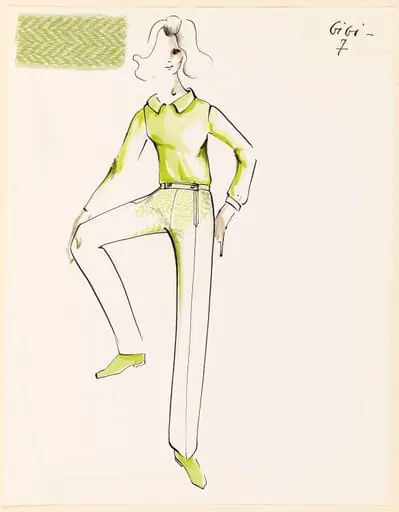
'Tambourin' is a drawing by Carven. It dates from 1951 and is held in the collection of the Palais Galliera - Musée de la Mode de la Ville de Paris.
About this work
Overview
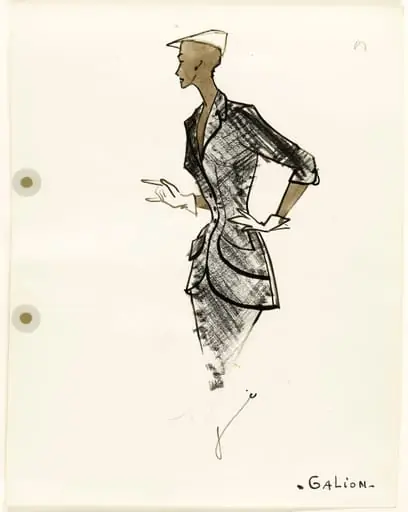
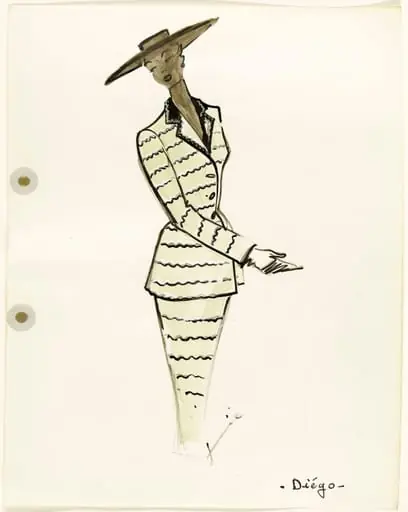
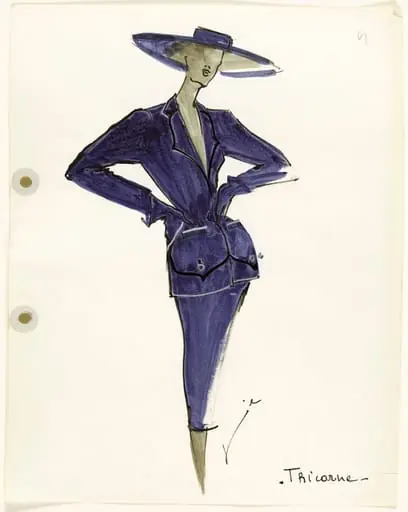
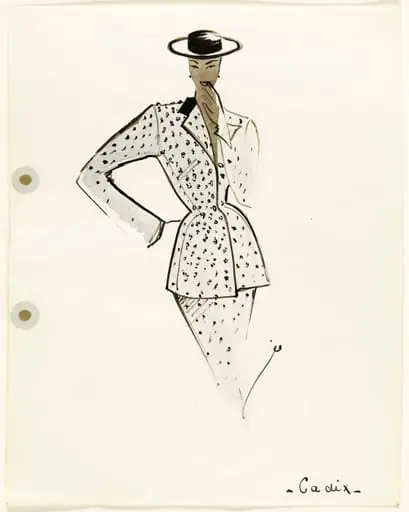
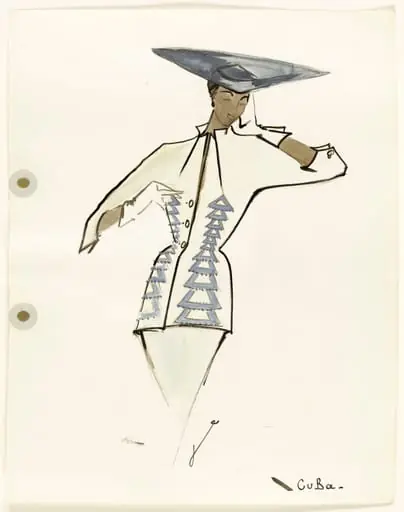
Tambourin is a 1951 ink drawing by the French designer Carven, held in the collection of the Museum of Ethnography. Executed in monochrome, the work captures a woman in a tailored black coat with a broad belt and large hat. The figure stands still, yet the fluidity of the skirt suggests motion. Only ink and paper are used, emphasizing line and silhouette over detail.
Subject & Meaning
The figure appears as a stylized representation of mid-century urban femininity, dressed in an elegant, minimalist ensemble. The hand in the pocket and the hat’s shadow imply quiet confidence or introspection. The absence of facial features shifts focus to posture and garment, treating clothing as an expression of identity rather than mere adornment.
Technique & Style
The drawing employs swift, confident ink strokes to define form, with no shading or color. The coat’s clean contours contrast with the loose, gestural rendering of the skirt, creating a tension between structure and movement. The plain background isolates the figure, heightening the impact of each line and reinforcing the graphic quality of the composition.
History & Provenance
Created in 1951, the work emerged during Carven’s active years as a fashion designer in Paris. It was likely made as a study or promotional sketch, reflecting the designer’s interest in capturing movement and silhouette. The piece entered the Museum of Ethnography’s collection as part of a broader effort to document fashion as cultural artifact.
Context
In postwar Paris, fashion illustration served both commercial and artistic functions. Carven’s drawings, including Tambourin, aligned with a trend toward abstraction in fashion representation, where garments were rendered with economy of line to emphasize form over realism. This approach mirrored broader modernist tendencies in visual culture.
Legacy
Tambourin exemplifies how fashion design was documented as a visual language beyond textiles. Though not widely exhibited, the drawing contributes to scholarly understanding of mid-century French design practices. Its preservation in an ethnographic museum underscores the recognition of fashion as a cultural expression worthy of archival attention.
Artist & collection
Artist
These delicate ink-on-paper drawings capture the quiet poetry of everyday things: pinecones, reeds, apples.
Museum
Palais Galliera - Musée de la Mode de la Ville de Paris
Continue through works from the same source collection.