Artwork
Tanis
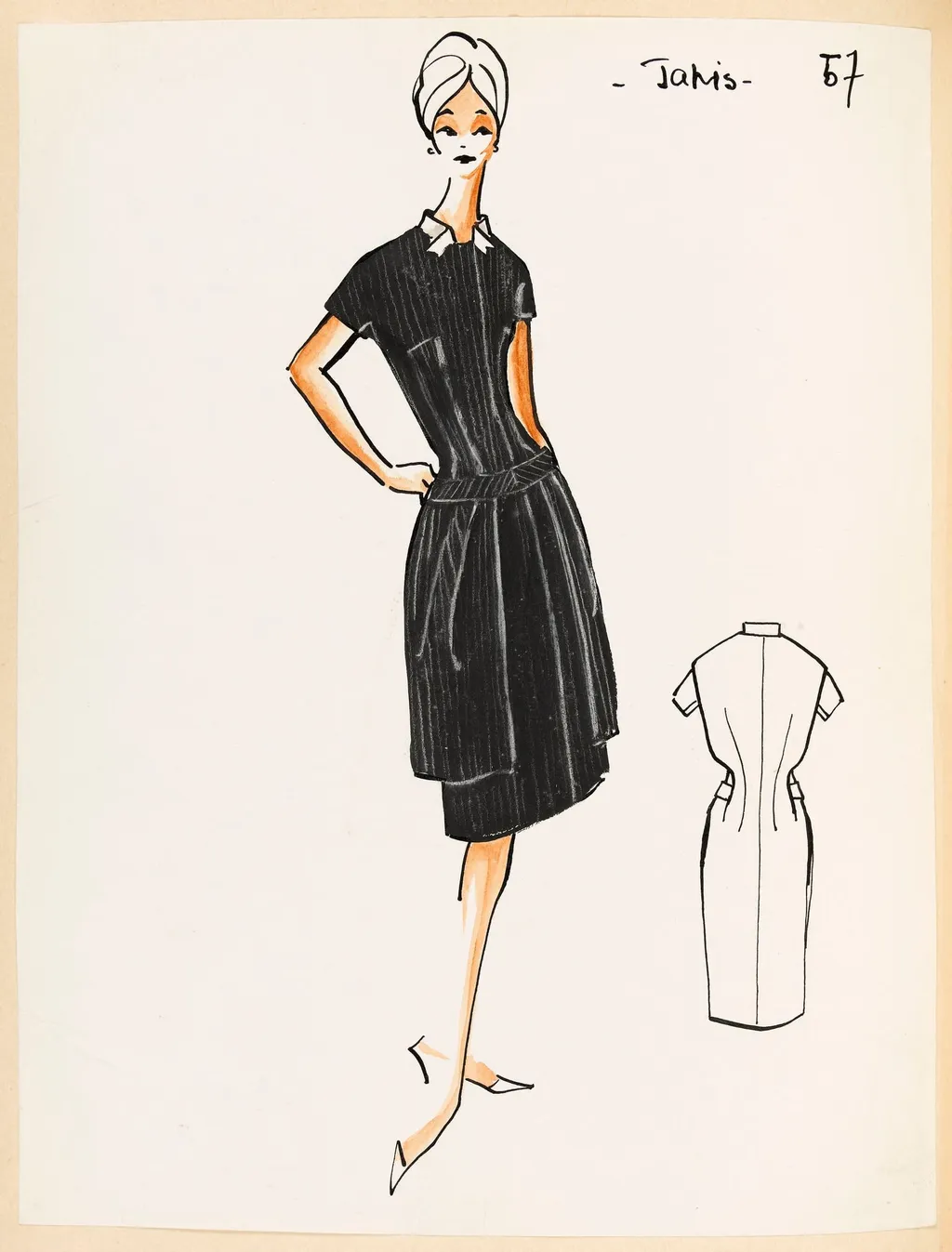
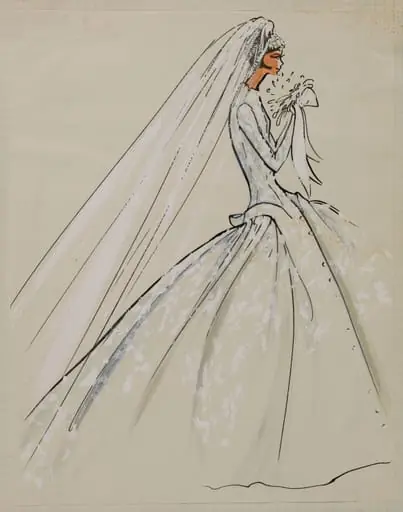
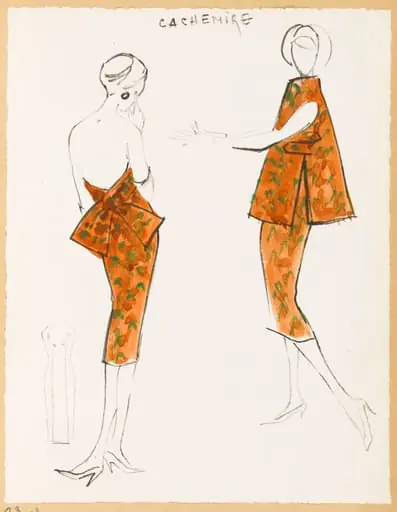
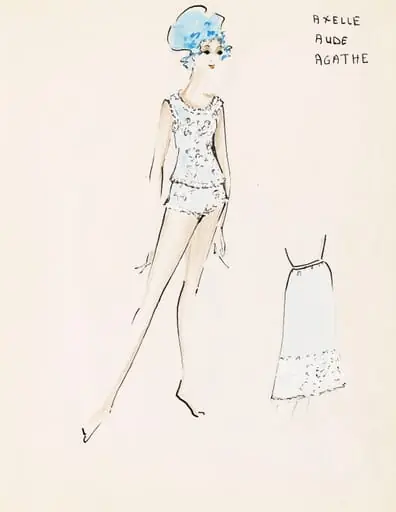
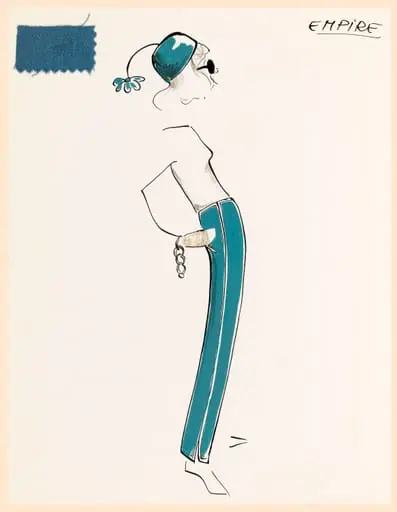
Tanis is a drawing by Carven. It dates from 1959 and is held in the collection of the Palais Galliera - Musée de la Mode de la Ville de Paris.
About this work
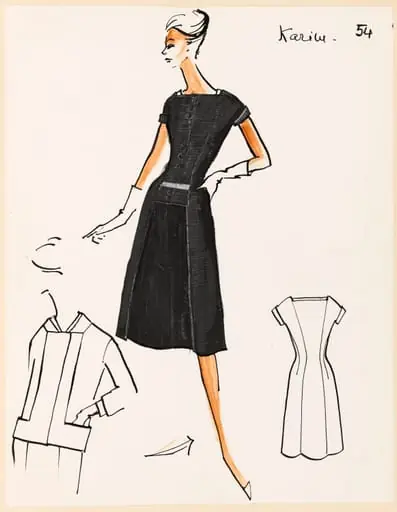
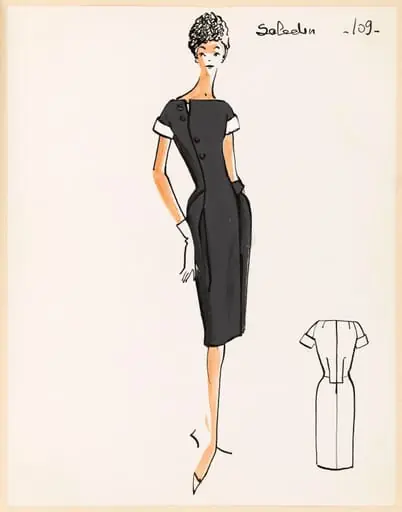
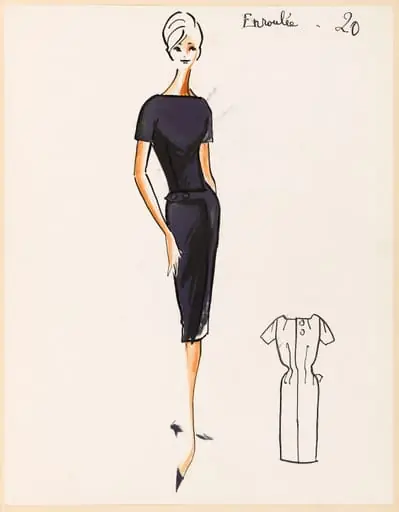
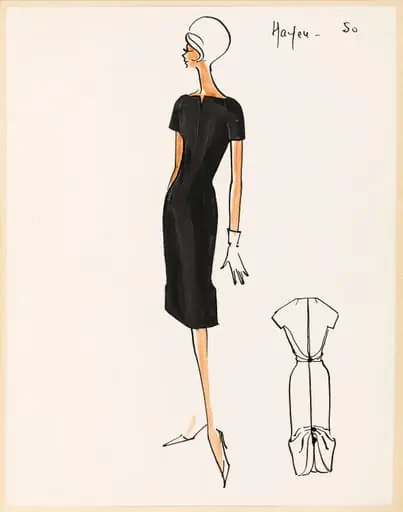
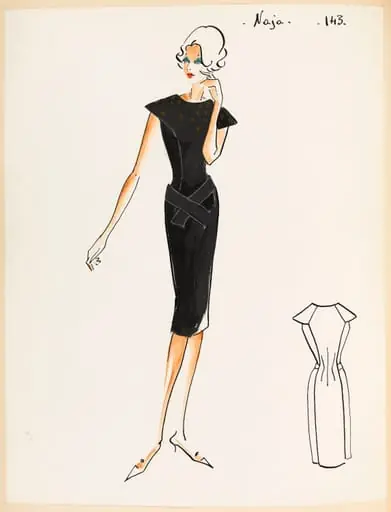
This sketch shows a woman in a simple black dress with short sleeves and a belted waist.
This sketch shows a woman in a simple black dress with short sleeves and a belted waist. Her hair is pulled back neatly, and she stands confidently with one hand on her hip. Next to her is a flat drawing of the same dress from behind, showing its clean lines.
The artist focused on the dress’s shape and fabric folds, using bold black lines. The style looks practical and stylish, like something from the mid-20th century.
Check out the Museum of Ethnography to see more of this artist’s work.
Overview
Created around 1959 by the designer Carven, this work is a preparatory sketch documenting a garment from the mid-century wardrobe. It resides in the collection of the Museum of Ethnography, where it serves as a record of fashion design practice rather than a finished garment. The piece combines figure study with technical illustration, reflecting the designer’s method of translating clothing into visual form.
Subject & Meaning
The sketch depicts a woman in a modest, tailored black dress with short sleeves and a defined waistline, her posture conveying quiet assurance. Adjacent to her is a rear view of the same dress, isolated to emphasize its silhouette. The absence of facial detail shifts focus entirely to the garment’s structure, suggesting an interest in utility and form over personal identity, typical of mid-century design documentation.
Technique & Style
Carven employed bold, unbroken black lines to define the dress’s contours and fabric folds, minimizing shading in favor of clarity. The figure is rendered with restrained detail, while the garment is rendered with precision, highlighting seam lines and drape. This approach prioritizes functional accuracy over artistic flourish, aligning with industrial design practices of the era where garments were documented for production.
History & Provenance
The sketch entered the Museum of Ethnography’s collection as part of a broader effort to preserve design artifacts that reflect everyday dress culture. Its origin lies in Carven’s studio practice during the late 1950s, a period when fashion houses increasingly documented designs for internal use and archival purposes. The work’s survival suggests it was deemed significant enough for institutional preservation.
Context
In the late 1950s, fashion design emphasized clean lines and structural integrity, responding to postwar demands for practical, long-lasting clothing. Carven’s sketch reflects this trend, aligning with the rise of ready-to-wear and the professionalization of fashion documentation. Unlike haute couture illustrations, this work lacks ornamentation, underscoring its role as a technical reference rather than a promotional image.
Legacy
This sketch contributes to the historical record of mid-century fashion design methodology, illustrating how garments were conceptualized and recorded before mass production. It remains a valuable resource for scholars studying the transition from artisanal tailoring to industrial fashion systems. Its preservation in an ethnographic museum underscores its significance as a cultural artifact of daily life.
Artist & collection
Artist
These delicate ink-on-paper drawings capture the quiet poetry of everyday things: pinecones, reeds, apples.
Museum
Palais Galliera - Musée de la Mode de la Ville de Paris
Continue through works from the same source collection.