Artwork
'Taraubant'
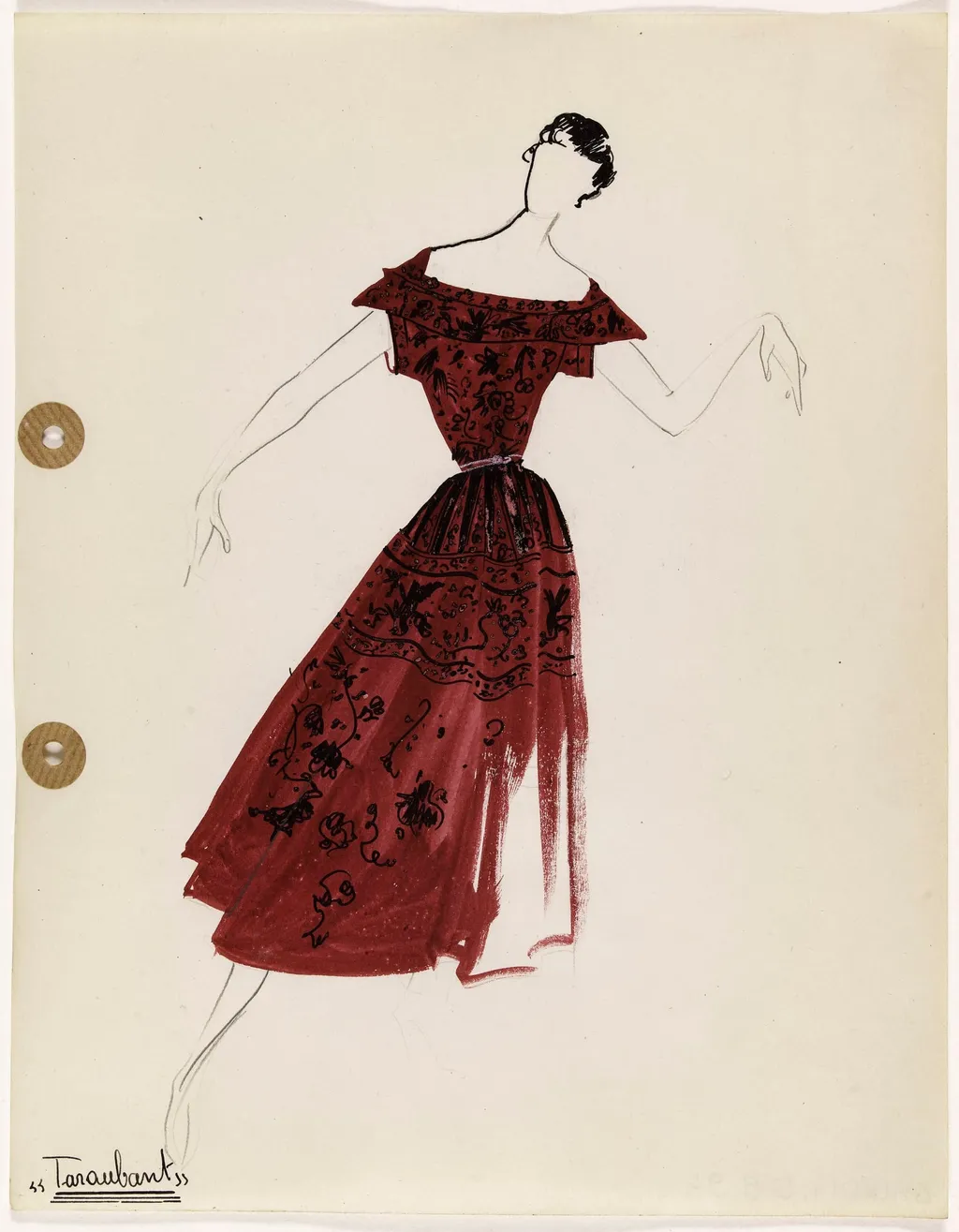
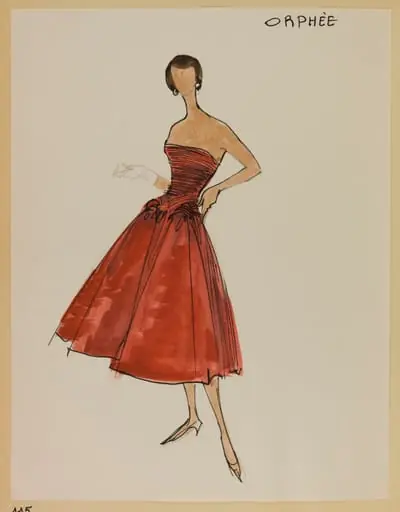
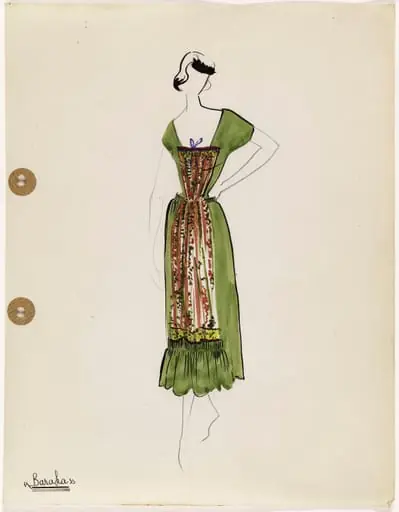
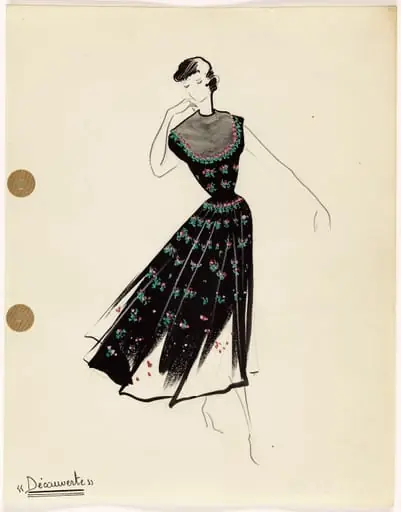
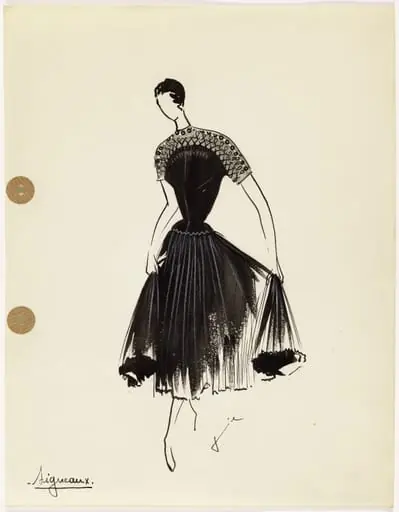
'Taraubant' is a drawing by Carven. It dates from 1949 and is held in the collection of the Palais Galliera - Musée de la Mode de la Ville de Paris.
About this work
Overview
It is held in the collection of the Museum of Ethnography, where it is preserved as part of a broader archive of 20th-century textile and fashion documentation.
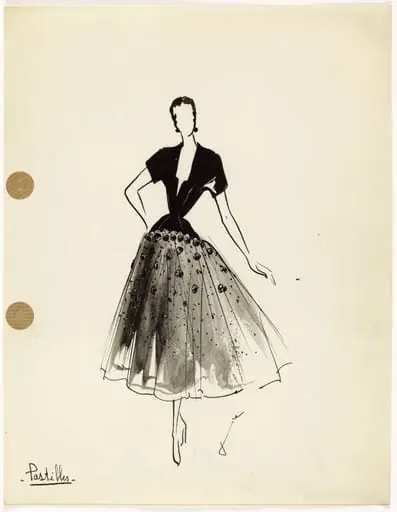
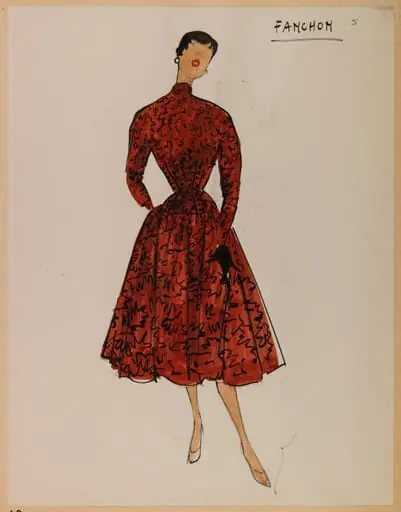
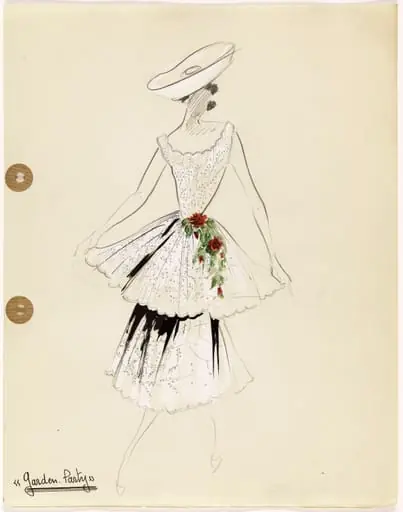
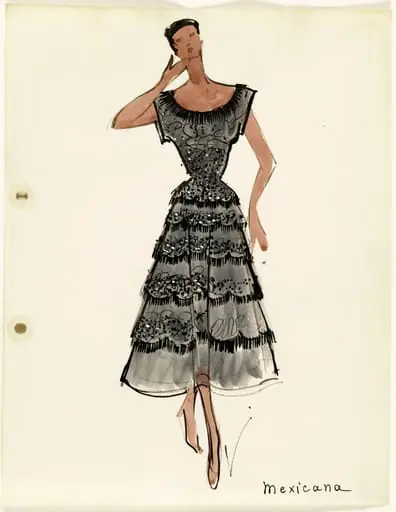
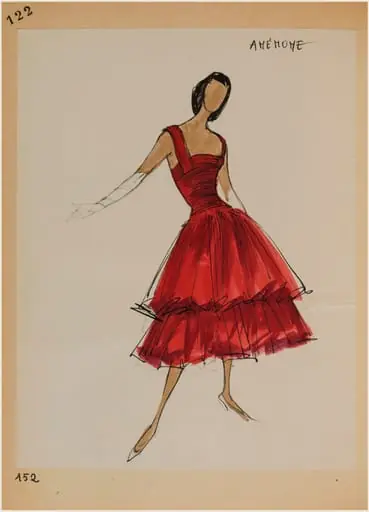
Taraubant is a pencil or ink sketch dated 1949, attributed to the fashion designer Carven. Executed with swift, minimal strokes, it depicts a female figure in a flowing red dress. The work lacks detailed rendering, suggesting it was made rapidly, likely as a design study. It is held in the collection of the Museum of Ethnography, where it is preserved as part of a broader archive of 20th-century textile and fashion documentation.
Subject & Meaning
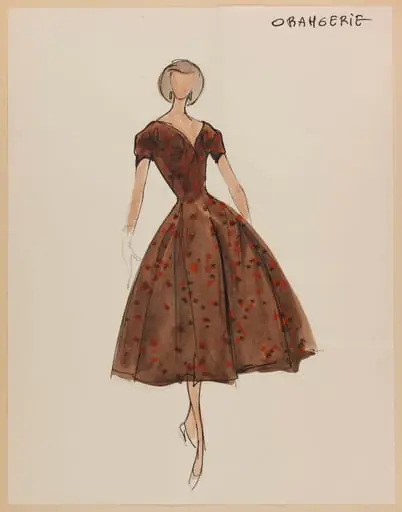
The figure wears a long, wide-skirted dress with subtle dark floral motifs near the hem and a plain neckline. The arms are suggested rather than defined, emphasizing movement over anatomy. The dress reflects mid-century silhouettes common in postwar European fashion, possibly indicating an early design concept. The sketch’s informality implies it was not intended as a finished illustration, but as a working idea for garment construction.
Technique & Style
Executed with loose, economical lines, the drawing uses minimal shading and no color beyond the implied red of the dress. The background is left blank, focusing attention on the form. The brush or pen work is fluid and unrefined, typical of quick fashion sketches made to capture silhouette and drape. The signature 'Carven' in the corner confirms authorship and aligns with the practice of designers marking preliminary designs.
History & Provenance
The work entered the Museum of Ethnography’s collection as part of a donation or acquisition related to mid-century fashion archives. Its origin as a personal design sketch by Carven suggests it was retained by the designer or studio before being cataloged as a cultural artifact. No public record of prior ownership exists, and its preservation reflects institutional interest in ephemeral design processes.
Context
Created in 1949, the sketch emerges from a period when European fashion was redefining itself after wartime austerity. Designers like Carven emphasized feminine silhouettes with full skirts and refined details, often sketching ideas by hand before production. This drawing aligns with the era’s aesthetic, where couture houses relied on rapid visual notation to communicate ideas to tailors and clients.
Legacy
Taraubant survives not as a finished garment but as a record of creative process. It offers insight into how fashion ideas were translated from concept to cloth in the mid-20th century. While not widely exhibited, its presence in an ethnographic museum underscores the value placed on design sketches as cultural documents, bridging art, craft, and daily life.
Artist & collection
Artist
These delicate ink-on-paper drawings capture the quiet poetry of everyday things: pinecones, reeds, apples.
Museum
Palais Galliera - Musée de la Mode de la Ville de Paris
Continue through works from the same source collection.