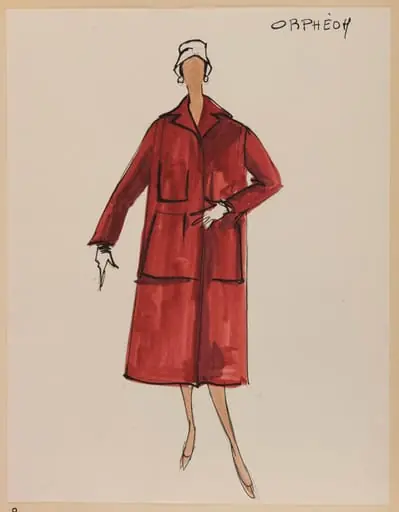
Artwork
Orphée
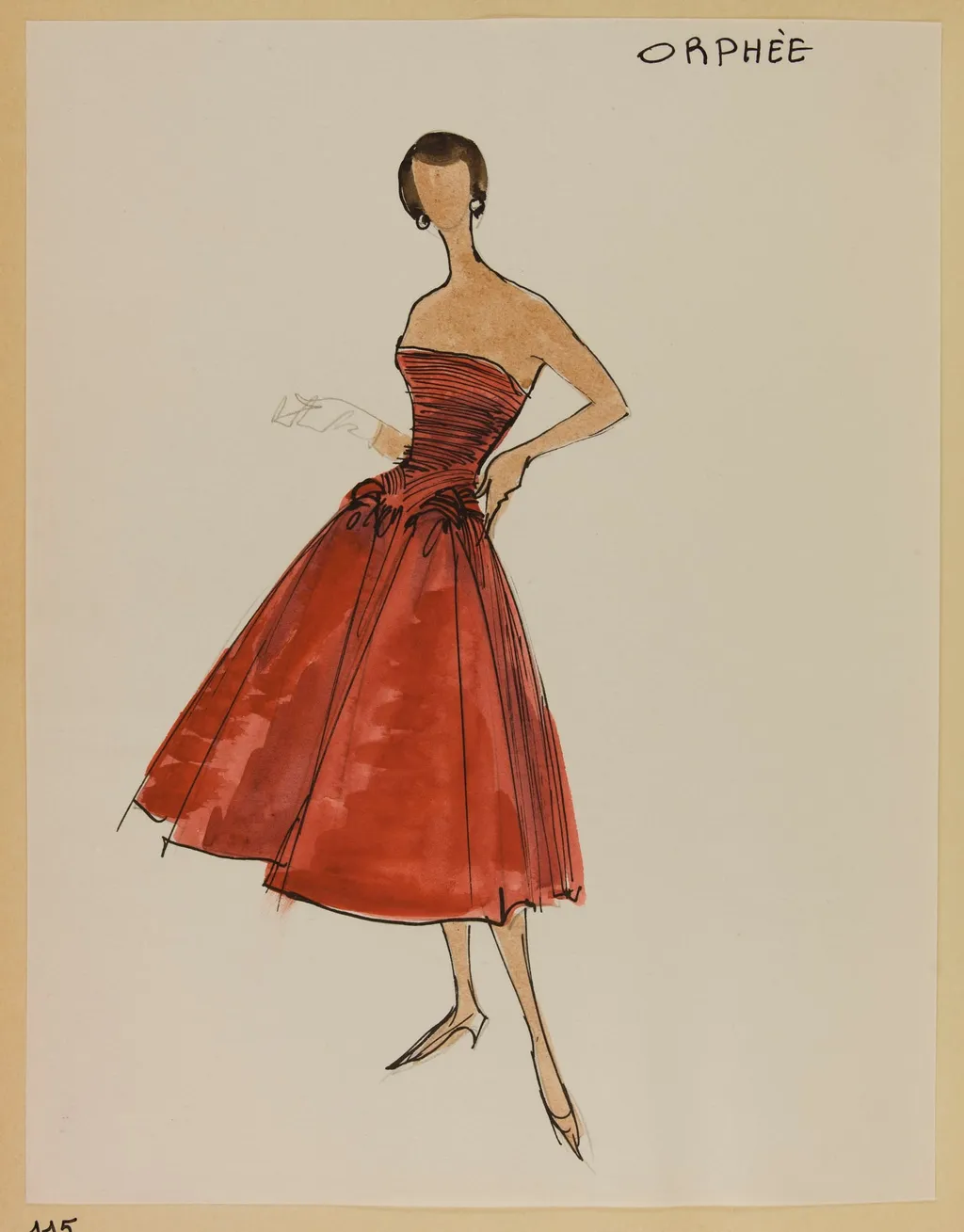
Orphée is a drawing by Marie-Louise Carven. It dates from 1955 and is held in the collection of the Palais Galliera - Musée de la Mode de la Ville de Paris.
About this work
Overview
The sketch is part of the Museum of Ethnography’s collection, reflecting its significance in mid-century design history.
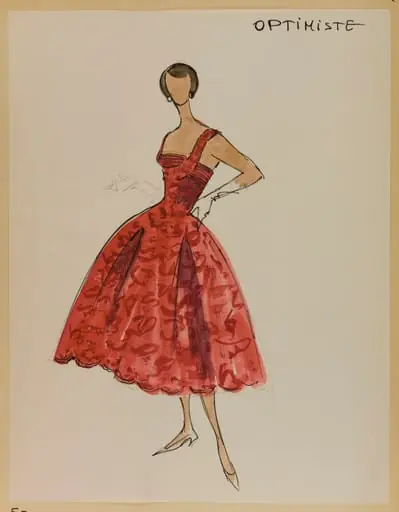
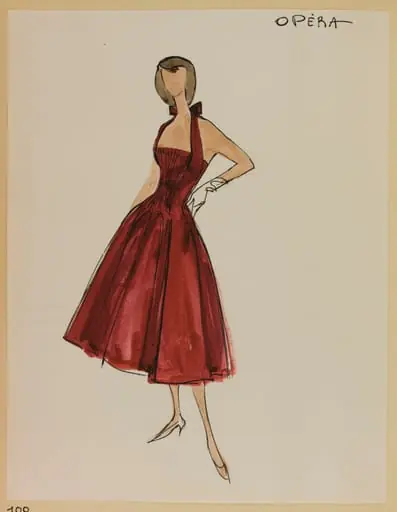
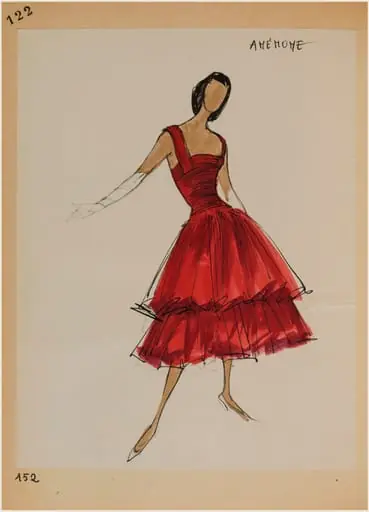
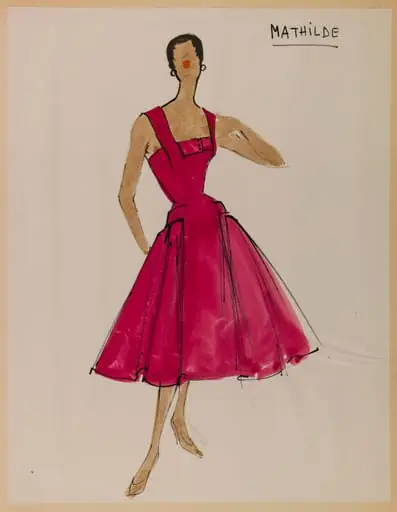
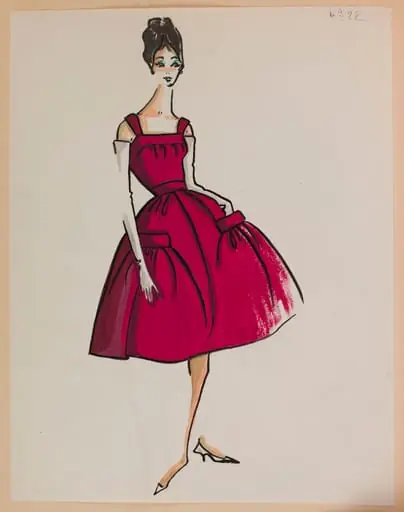
Created around 1955 by French designer Marie-Louise Carven, *Orphée* is a fashion sketch depicting a strapless red dress with a structured bodice and flared skirt. Executed in bold, fluid lines, the drawing emphasizes silhouette over detail. Though labeled with a mythological reference, the focus remains on the garment’s form. The sketch is part of the Museum of Ethnography’s collection, reflecting its significance in mid-century design history.
Subject & Meaning
The figure in the sketch stands with poised confidence, one hand on her hip, the other holding a clutch—suggesting elegance and self-assurance. While the title *Orphée* evokes the myth of Orpheus, the image offers no direct narrative elements. Instead, the name may allude to harmony, transformation, or the allure of music, subtly elevating the dress beyond mere clothing into a symbol of refined presence.
Technique & Style
Carven rendered the dress with swift, decisive strokes that define fabric volume and movement. The sheen of the material is implied through clean contours rather than shading, while cross-hatching suggests subtle texture in the folds. The neat, pulled-back hair and minimal facial features keep attention on the garment’s architecture. The style is economical, prioritizing clarity and structural integrity over ornamentation.
History & Provenance
Marie-Louise Carven founded her fashion house in 1945 and was an early advocate of ready-to-wear fashion. *Orphée* emerged during a period when couture designers began bridging high fashion with accessible design. The sketch entered the Museum of Ethnography’s collection as part of a broader effort to document fashion as cultural artifact, reflecting its role in shaping modern women’s dress.
Context
In mid-1950s France, fashion was shifting toward practicality without sacrificing elegance. Carven’s designs catered to petite figures, a demographic often overlooked by major houses. *Orphée* exemplifies this approach: a dress designed for movement and daily life, yet imbued with sophistication. Its creation coincided with postwar efforts to redefine femininity through functional, modern silhouettes.
Legacy
Carven’s work, including *Orphée*, helped normalize the idea that fashion could be both innovative and accessible. The sketch stands as a record of her design philosophy—clean lines, attention to proportion, and respect for the wearer’s body. Though not widely exhibited, it remains a quiet testament to her influence on the evolution of 20th-century women’s wear.
Artist & collection
Artist
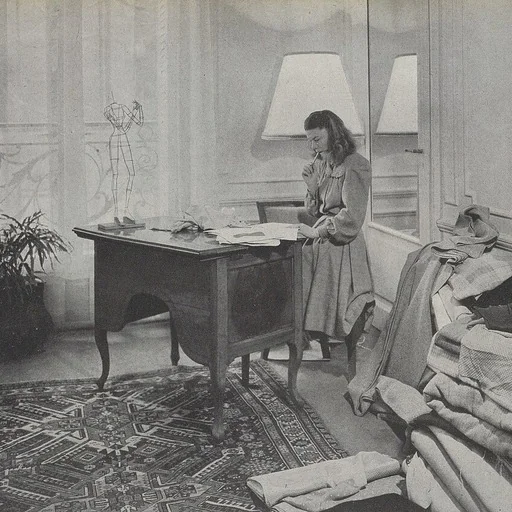
Marie-Louise Carven (31 August 1909 – 8 June 2015), born Carmen de Tommaso, was a French fashion designer who founded the house of Carven in 1945.
Museum
Palais Galliera - Musée de la Mode de la Ville de Paris
Continue through works from the same source collection.
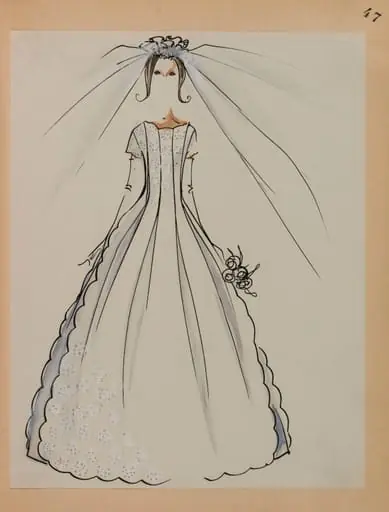 Robe de mariée festonnée et son voile
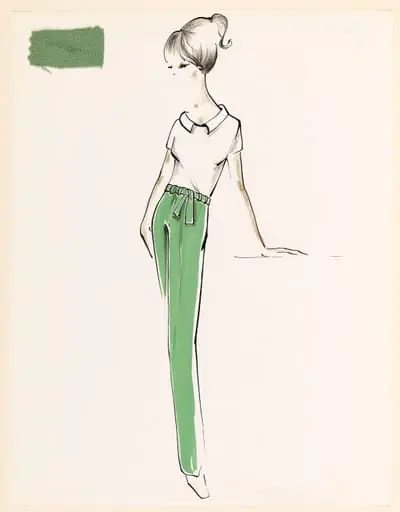 Haut blanc à manches courtes et pantalon vert à ceinture nouée
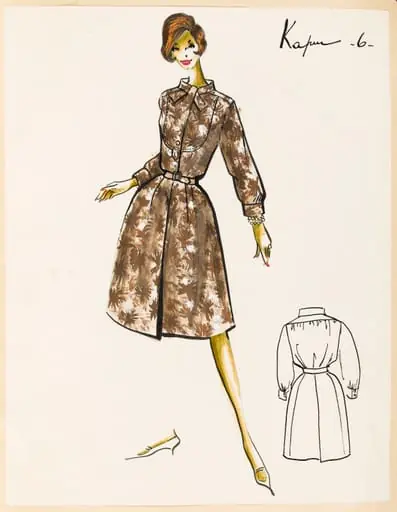 Kapur
Kapur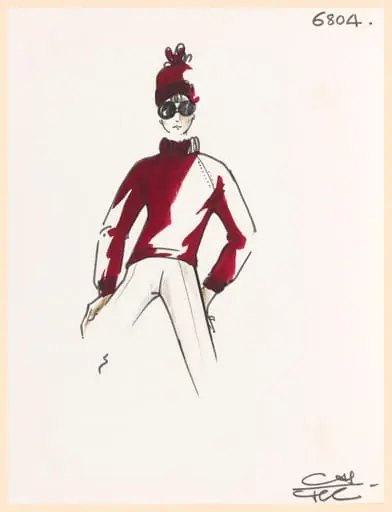 Pull-over à manches longues pourpre, bonnet assorti, pantalon et lunettes de soleil
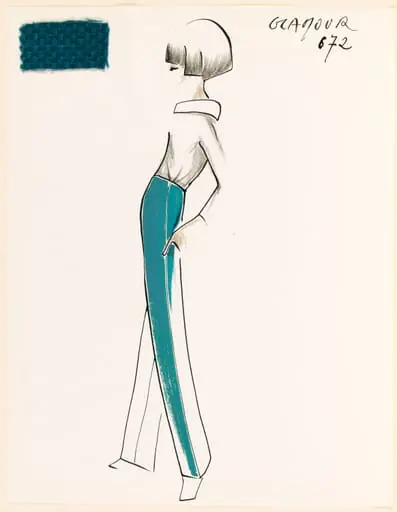 GLAMOUR
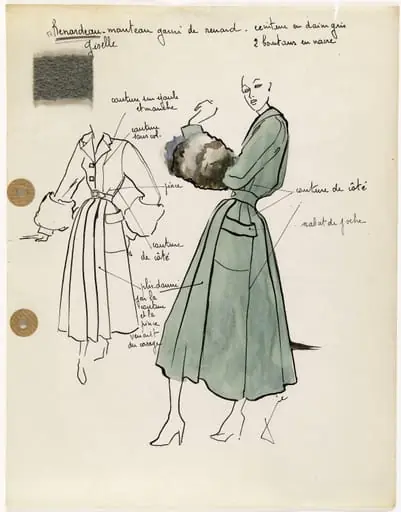 'Renardeau'
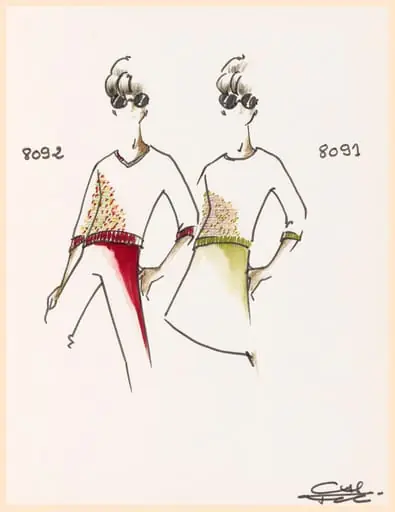 Pull-over à manches trois quarts et à encolure V à motifs multicolores, pantalon cerise et lunettes de soleil
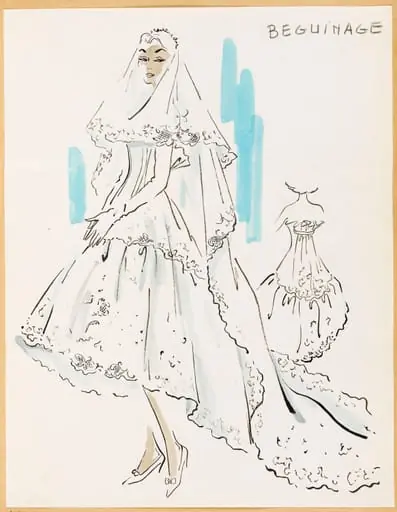 Béguinage