Artwork
Titania
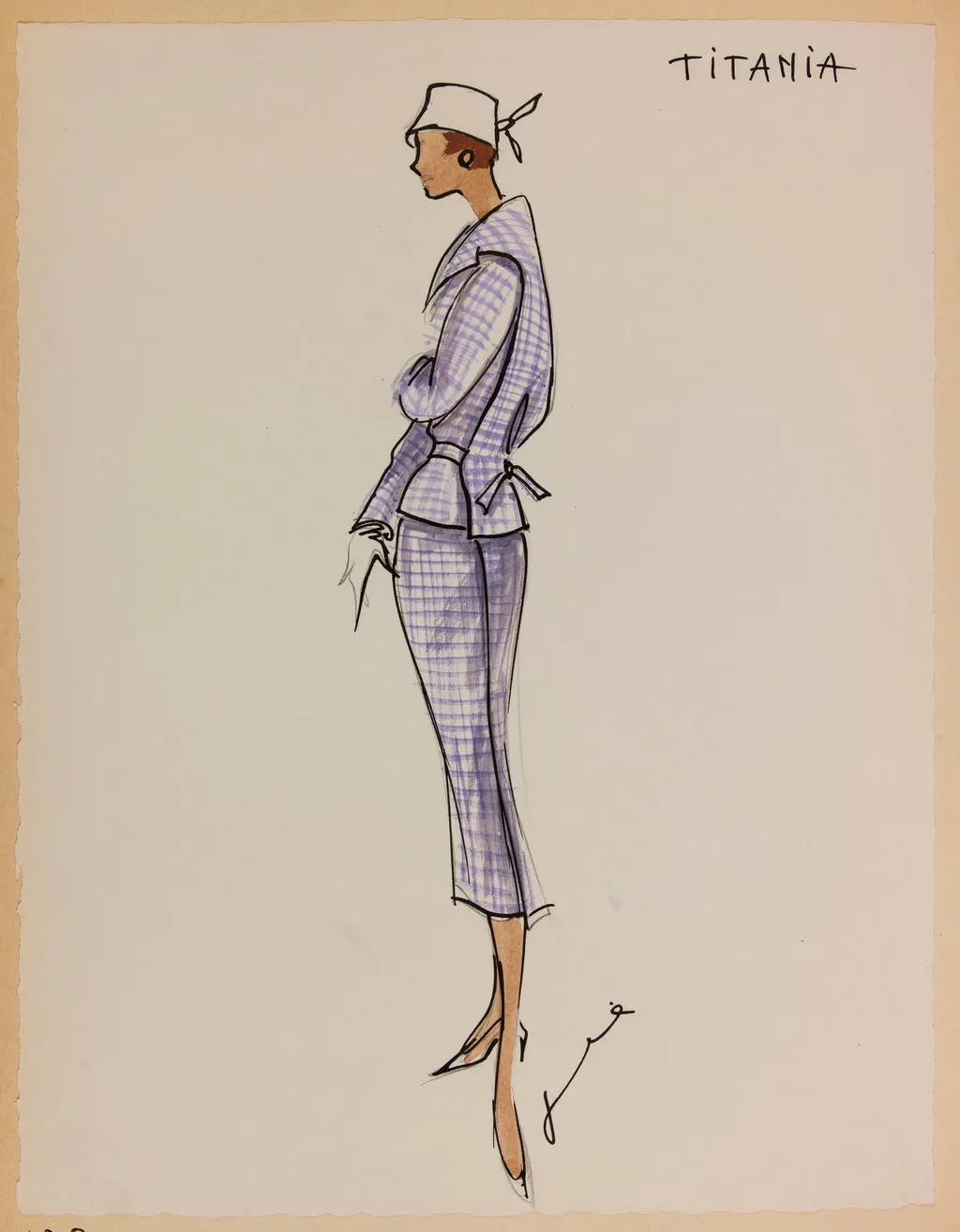
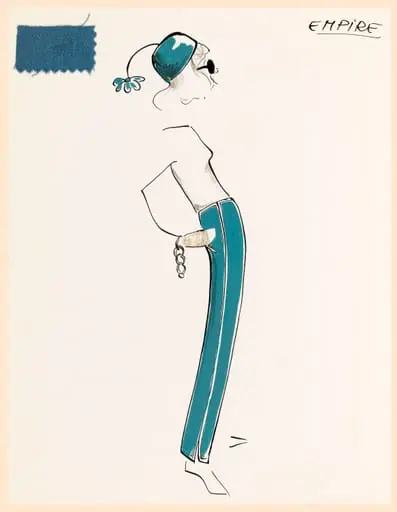
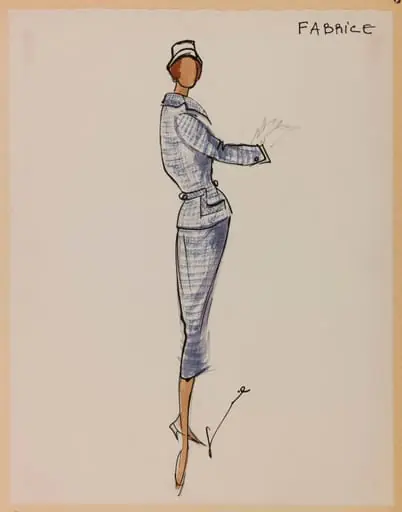
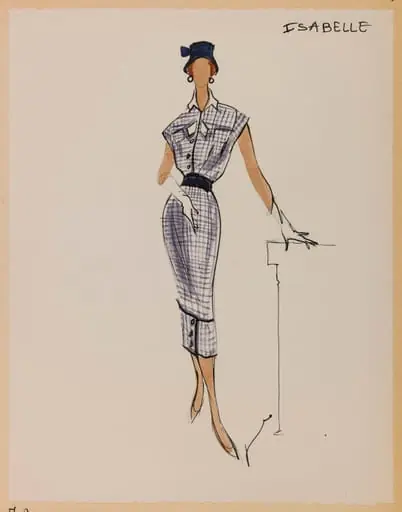
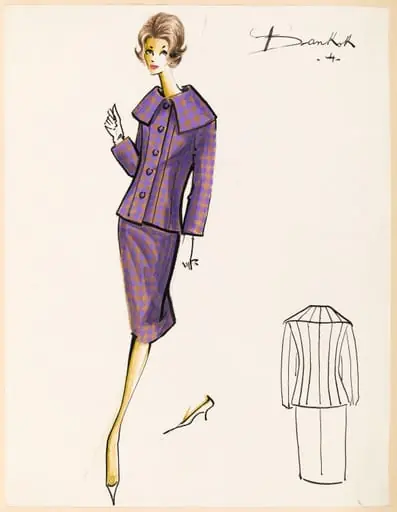
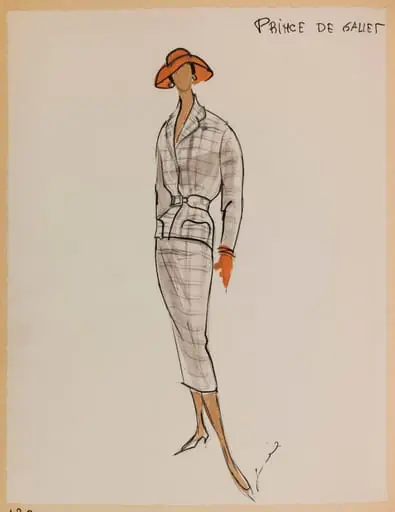
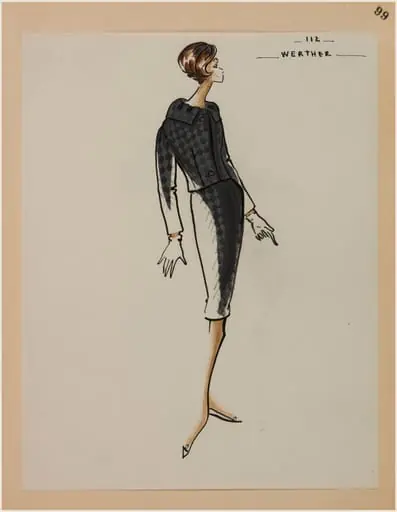
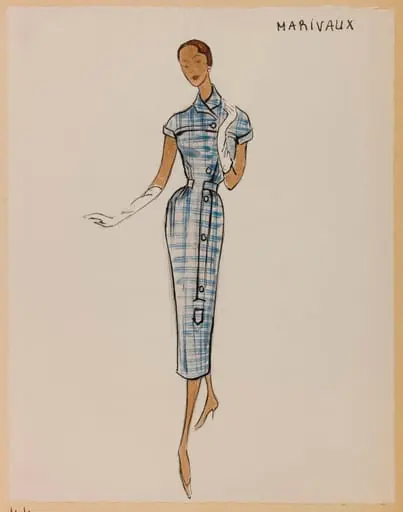
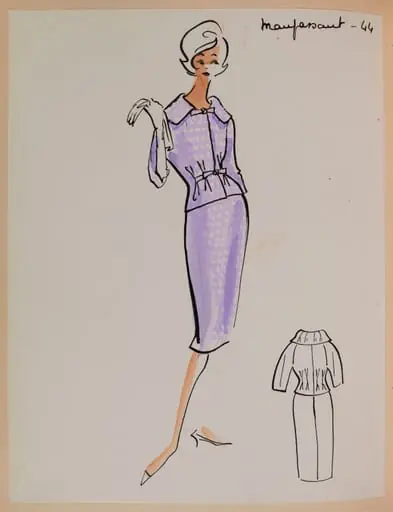
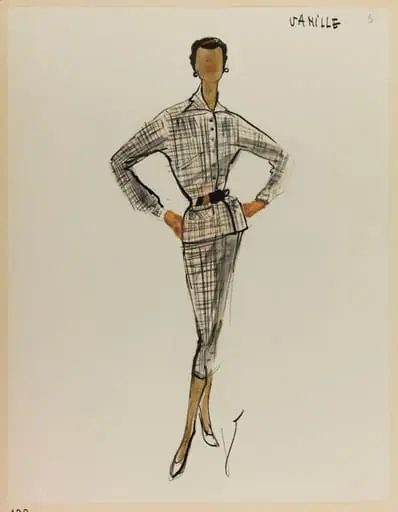
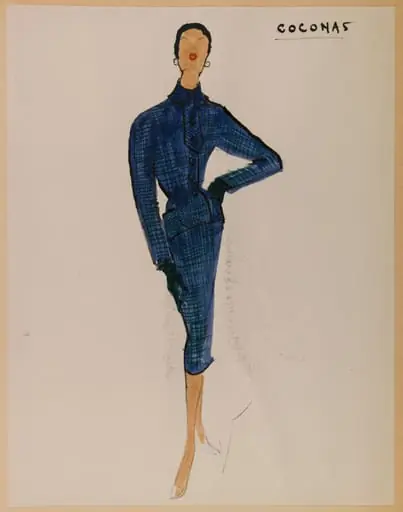
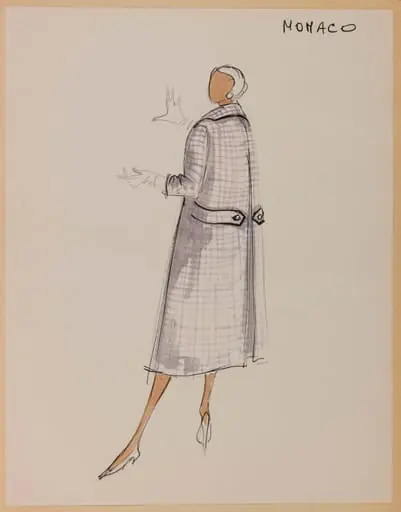
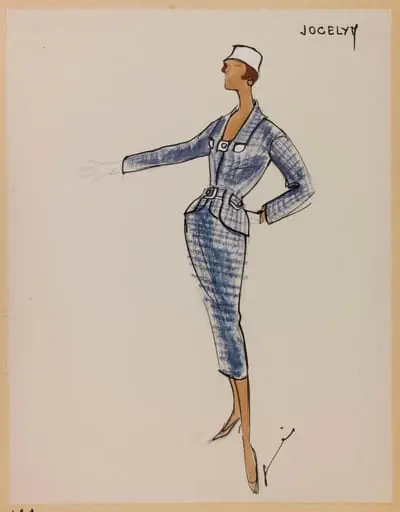
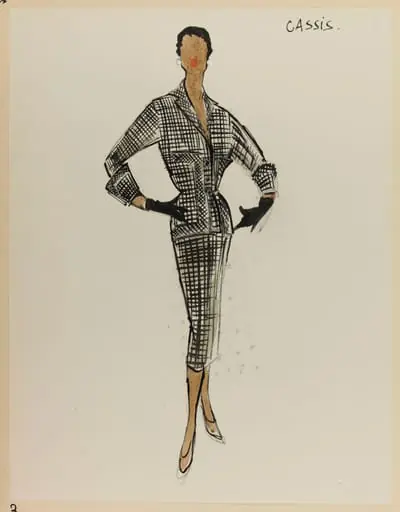
Titania is a drawing by Carven. It dates from 1956 and is held in the collection of the Palais Galliera - Musée de la Mode de la Ville de Paris.
About this work
Overview
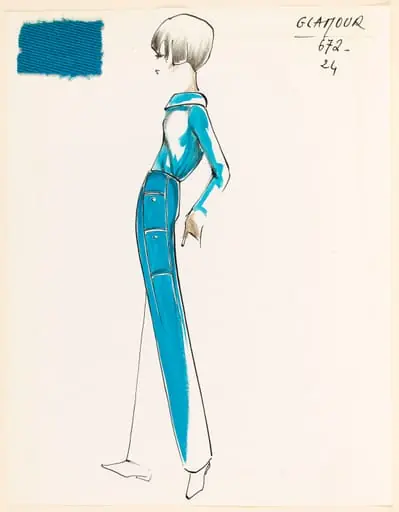
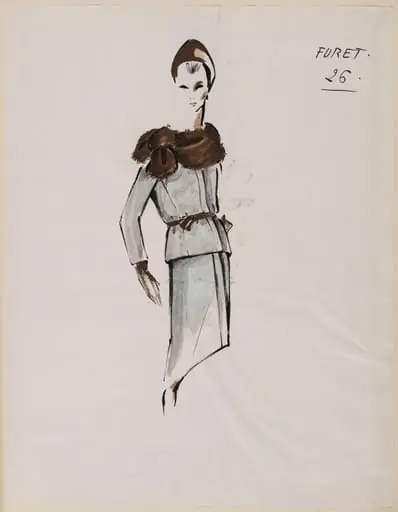
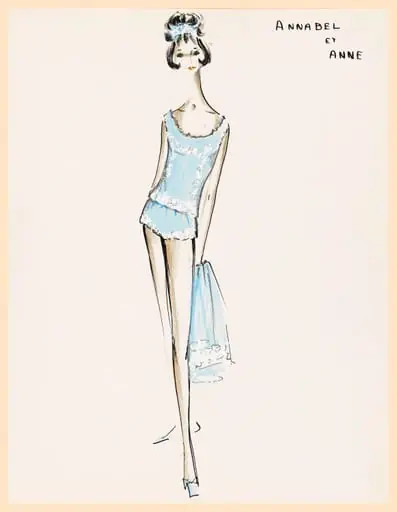
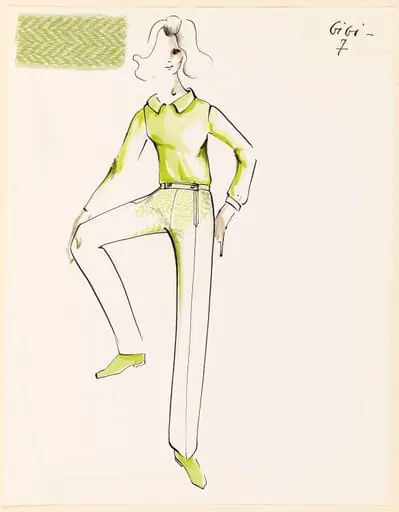
Created around 1956 by the designer Carven, this ink sketch depicts a figure labeled Titania. Executed with swift, assured lines, it resembles a fashion study rather than a formal portrait. The work is part of the Museum of Ethnography’s collection, suggesting its relevance to mid-century dress and cultural representation in design practice.
Subject & Meaning
The figure, identified as Titania, wears a distinctive purple-and-white checkered ensemble with a short jacket, wide-leg trousers, and a chin-tied cap.
The figure, identified as Titania, wears a distinctive purple-and-white checkered ensemble with a short jacket, wide-leg trousers, and a chin-tied cap. Her posture—sideways stance, one hand in pocket, the other on hip—conveys casual poise. The label may reference the model, a design code, or a literary allusion, though no definitive interpretation is recorded. The sketch prioritizes garment structure over psychological depth.
Technique & Style
Rendered in fluid ink, the drawing employs rapid, confident strokes typical of fashion drafting. Details are suggested rather than rendered meticulously, emphasizing silhouette and fabric flow. The absence of background or shading focuses attention on the costume’s geometry and the figure’s dynamic pose, characteristic of working sketches used in textile and garment development.
History & Provenance
The sketch entered the Museum of Ethnography’s holdings as part of Carven’s archival materials, likely acquired posthumously. Its origin as a design study implies it was produced during active fashion work in the mid-1950s. No documentation confirms the identity of Titania or the sketch’s original purpose, leaving its context partially obscured.
Context
In the mid-1950s, fashion houses increasingly relied on quick sketches to explore silhouettes and fabric combinations. Carven’s practice aligned with this trend, using such studies to communicate ideas to tailors and pattern-makers. The sketch reflects a moment when ready-to-wear design was evolving, blending practicality with emerging postwar aesthetics.
Legacy
Though not widely exhibited, the sketch contributes to understanding Carven’s design process and the role of informal drawings in fashion history. It stands as a quiet artifact of mid-century textile innovation, illustrating how clothing concepts were developed through gesture and economy of line rather than finished illustration.
Artist & collection
Artist
These delicate ink-on-paper drawings capture the quiet poetry of everyday things: pinecones, reeds, apples.
Museum
Palais Galliera - Musée de la Mode de la Ville de Paris
Continue through works from the same source collection.