Artwork
Toltèque
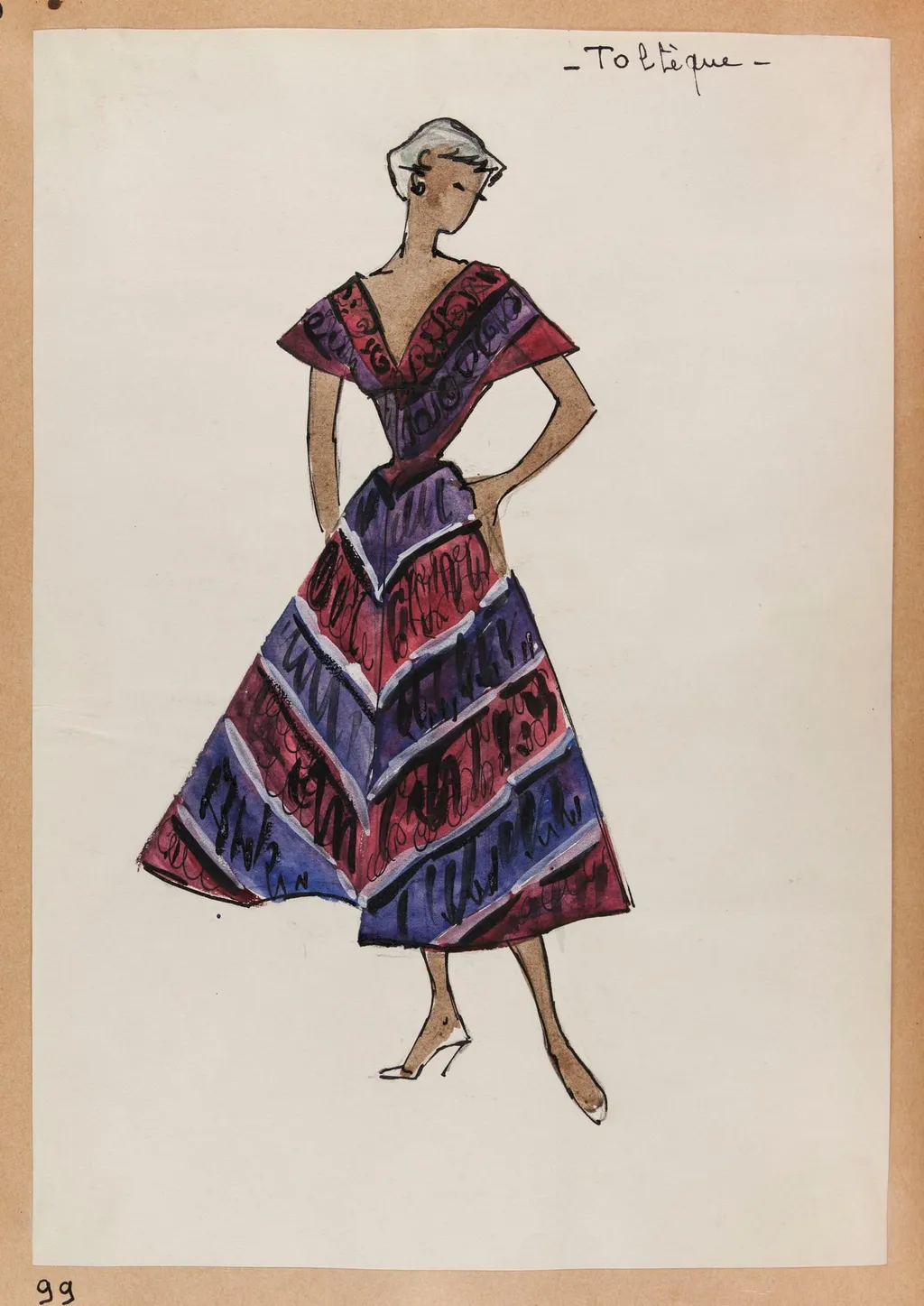
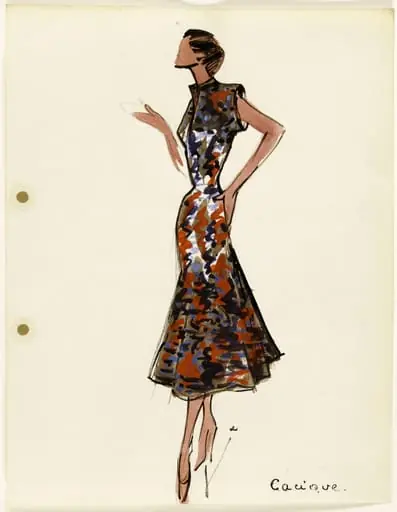
Toltèque is a drawing by Carven. It dates from 1951 and is held in the collection of the Palais Galliera - Musée de la Mode de la Ville de Paris.
About this work
Overview
Its minimalist aesthetic and clear contours reflect the designer’s background in fashion illustration, prioritizing elegance over ornamental detail.
Toltèque is a pencil and ink drawing created around 1951 by the French fashion designer Carven. It is part of the collection at the Museum of Ethnography. The work presents a stylized portrait of a woman in a striped dress, rendered with restrained precision. Its minimalist aesthetic and clear contours reflect the designer’s background in fashion illustration, prioritizing elegance over ornamental detail.
Subject & Meaning
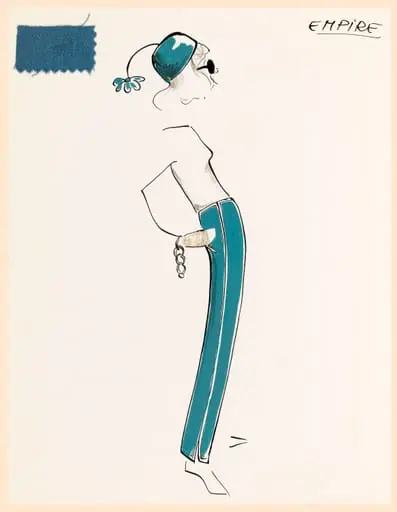
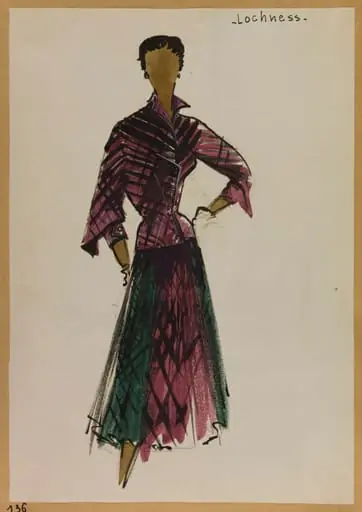
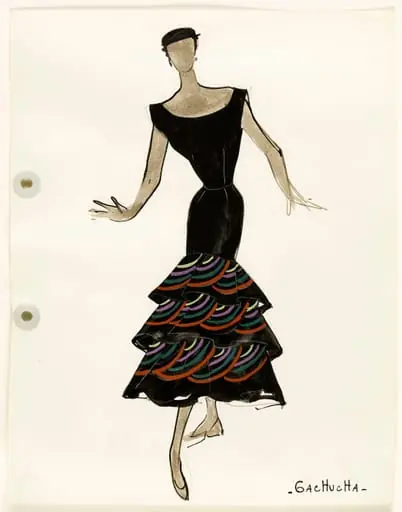
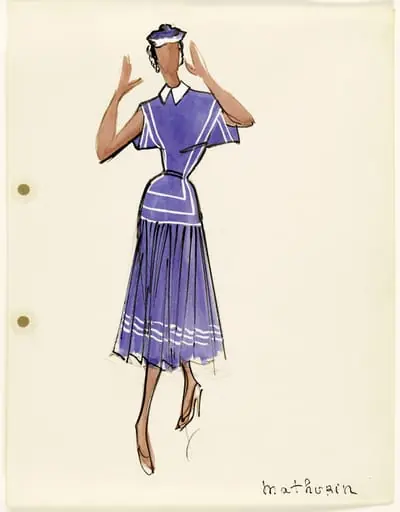
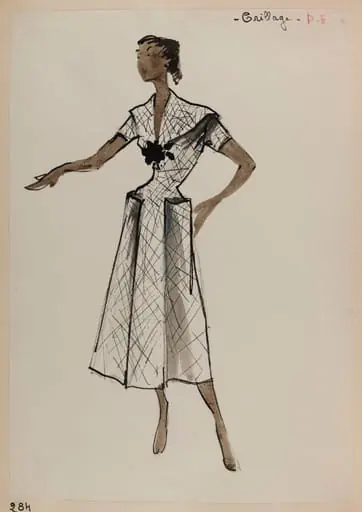
The figure is depicted standing confidently, hands on hips, with short hair and a V-necked dress. The pose conveys poise and self-assurance, aligning with mid-century ideals of feminine independence. The title 'Toltèque' evokes Mesoamerican cultural references, though the imagery is not ethnographically accurate. It suggests an imagined fusion of modernity and exoticism, typical of postwar fashion’s fascination with distant cultures.
Technique & Style
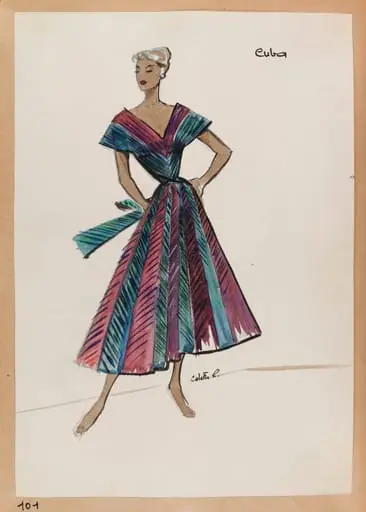
The drawing employs clean, unbroken lines and minimal shading, emphasizing form over texture. The dress features alternating bands of red, purple, and blue, rendered with geometric clarity. There is no background or contextual detail, focusing attention entirely on the figure. The style is characteristic of fashion sketches from the era—functional yet refined, balancing commercial intent with artistic restraint.
History & Provenance
Created circa 1951, the work originated as part of Carven’s personal archive of design studies. It entered the Museum of Ethnography’s collection in the late 20th century, likely through donation or acquisition of fashion-related materials. Its inclusion in an ethnographic institution reflects a broader institutional interest in fashion as cultural expression, rather than purely aesthetic object.
Context
In the early 1950s, Parisian fashion houses often drew inspiration from non-Western cultures, reinterpreting motifs through a European lens. Carven, known for her tailored silhouettes and subtle color palettes, used such references to elevate her brand’s identity. Toltèque fits within this trend, blending modernist simplicity with an exoticized title that appealed to contemporary tastes without direct cultural representation.
Legacy
Toltèque remains a quiet example of how fashion illustration bridged commercial design and cultural imagination in the postwar period. While not widely exhibited, it contributes to scholarly understanding of how designers encoded global references into everyday garments. Its preservation in an ethnographic museum underscores evolving perspectives on fashion as material culture.
Artist & collection
Artist
These delicate ink-on-paper drawings capture the quiet poetry of everyday things: pinecones, reeds, apples.
Museum
Palais Galliera - Musée de la Mode de la Ville de Paris
Continue through works from the same source collection.