Artwork
Abricot
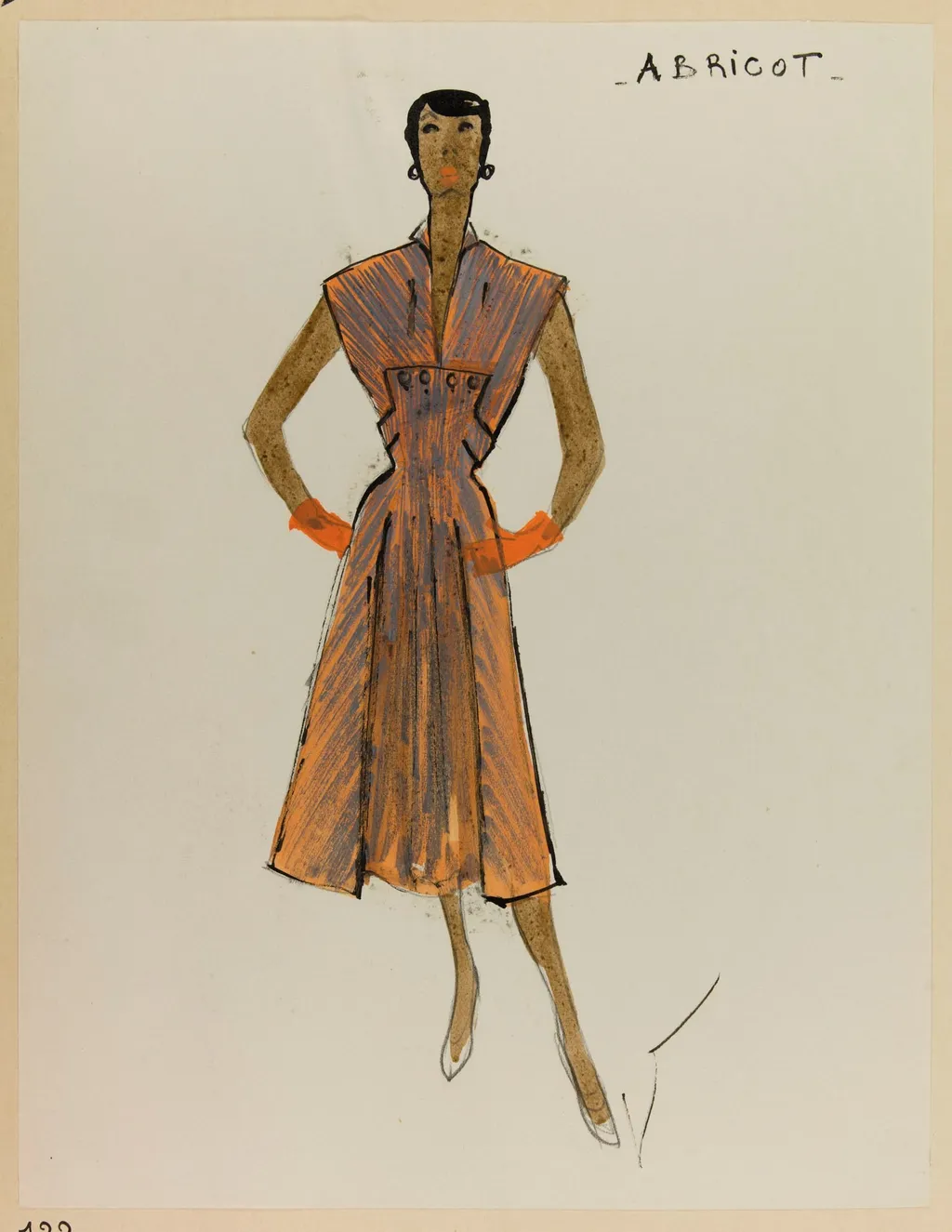
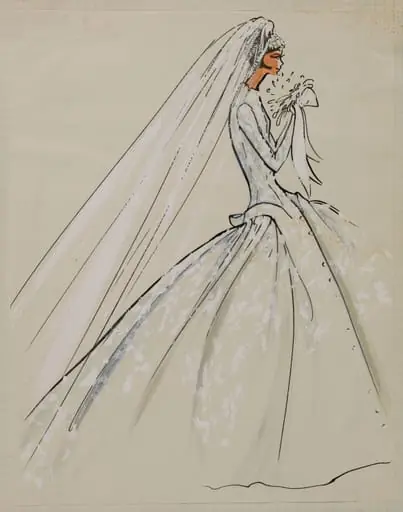
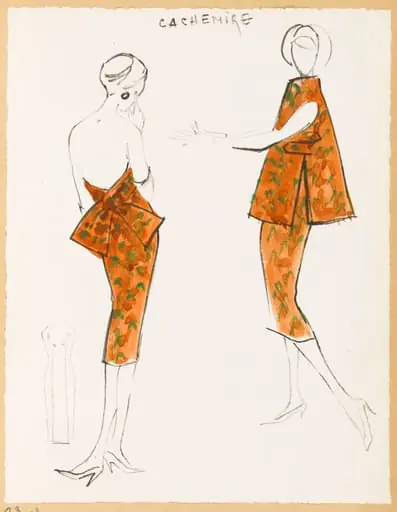
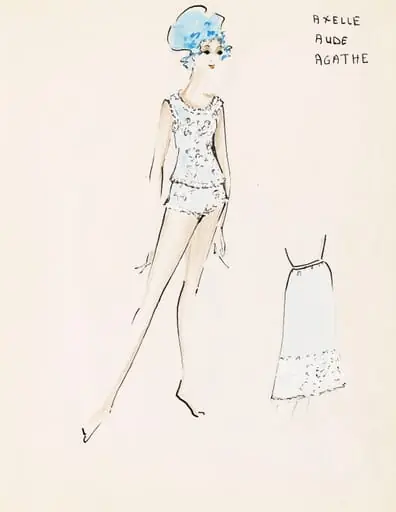
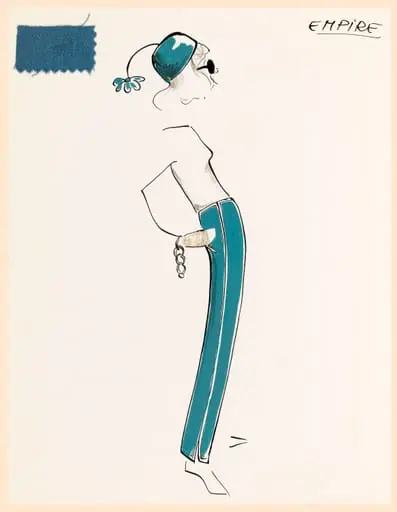
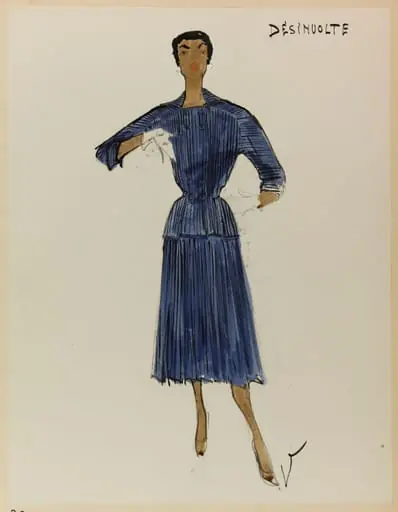
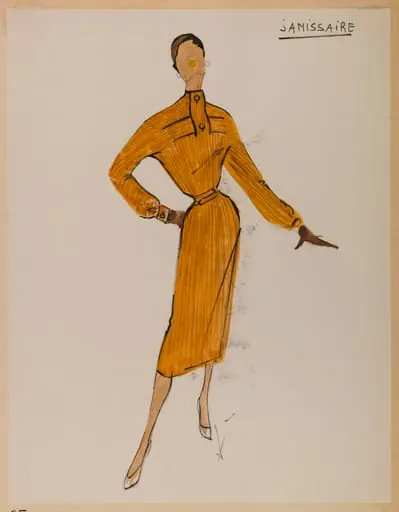
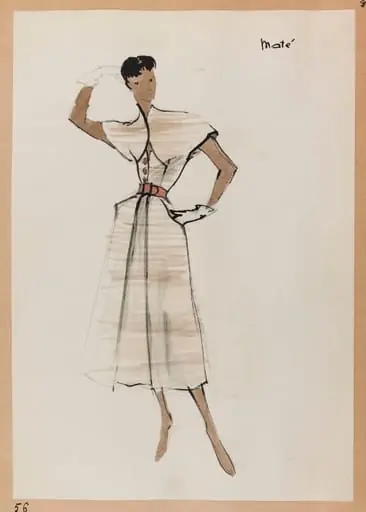
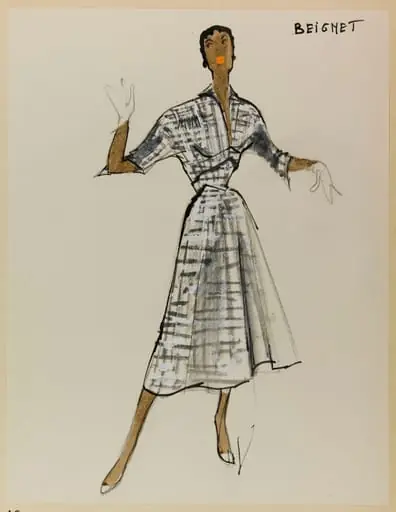
Abricot is a drawing by Carven. It dates from 1953 and is held in the collection of the Palais Galliera - Musée de la Mode de la Ville de Paris.
About this work
Overview
Abricot is a pencil sketch on paper, dated around 1953, attributed to the French fashion house Carven. It resides in the collection of the Museum of Ethnography. The work captures a single figure in a dynamic yet casual pose, rendered with swift, assured lines. Its modest scale and informal quality suggest it was made as a design study rather than a finished illustration.
Subject & Meaning
The figure is a woman wearing a dress in vivid orange and brown vertical stripes, with a tailored waist and flared hem. Her hands rest on her hips, conveying ease and self-possession. The title, meaning 'apricot' in French, alludes to the warm, peachy hue of the garment, linking the clothing to natural, organic tones. The image suggests a celebration of quiet elegance rather than overt glamour.
Technique & Style
The contours of the dress are defined with minimal shading, relying on line weight and rhythm to suggest volume.
Executed in loose, fluid pencil strokes, the drawing emphasizes movement and silhouette over detail. The contours of the dress are defined with minimal shading, relying on line weight and rhythm to suggest volume. The bold stripes are rendered with consistent pressure, giving structure to the flowing form. The style reflects the immediacy of fashion drafting, prioritizing clarity and expressiveness over refinement.
History & Provenance
The sketch entered the Museum of Ethnography’s collection in the late 20th century, likely as part of a broader acquisition of mid-century fashion materials. Its origin within Carven’s atelier is inferred from stylistic consistency with known designs from the period. No documentation of its original commission or use survives, but its condition suggests it was preserved as an archival record rather than a promotional item.
Context
Created in the early 1950s, Abricot reflects the postwar French fashion emphasis on wearable, feminine silhouettes. Designers like Carven favored clean lines and vibrant colors to distinguish their work from the austerity of wartime attire. This sketch aligns with a broader trend of fashion houses using quick drawings to explore color and form before committing to production, bridging artistic expression and commercial design.
Legacy
Abricot endures as a quiet example of mid-century fashion documentation, illustrating how designers translated aesthetic ideas into tangible garments. It contributes to scholarly understanding of Carven’s design philosophy and the role of sketching in couture practice. Though not widely exhibited, it remains a valuable artifact for studying the intersection of drawing, color, and identity in 1950s fashion.
Artist & collection
Artist
These delicate ink-on-paper drawings capture the quiet poetry of everyday things: pinecones, reeds, apples.
Museum
Palais Galliera - Musée de la Mode de la Ville de Paris
Continue through works from the same source collection.