Artwork
Trouville
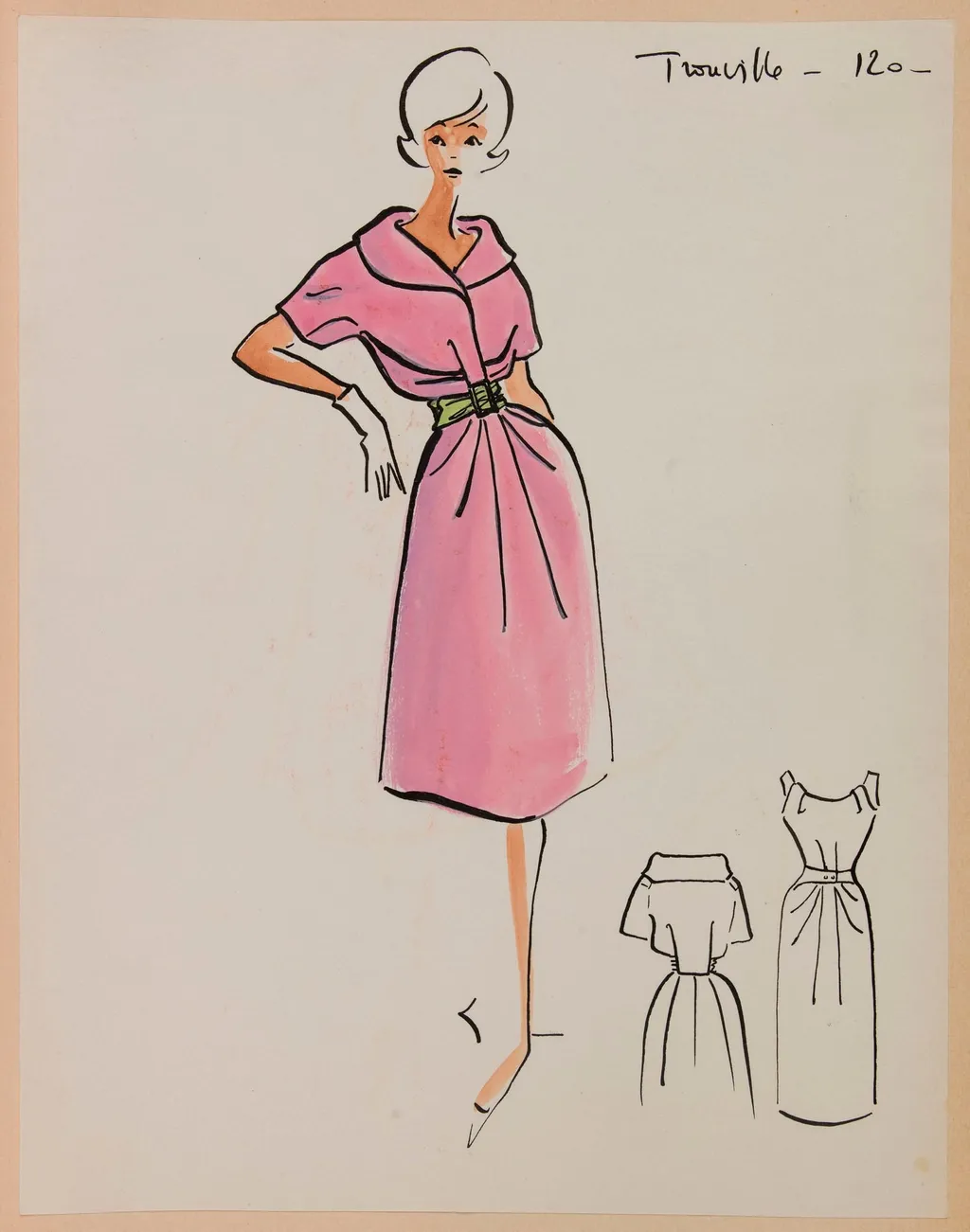
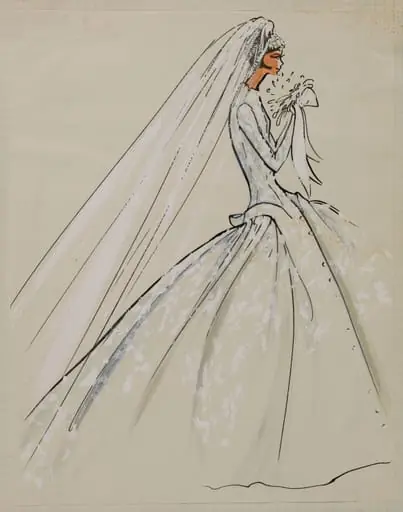
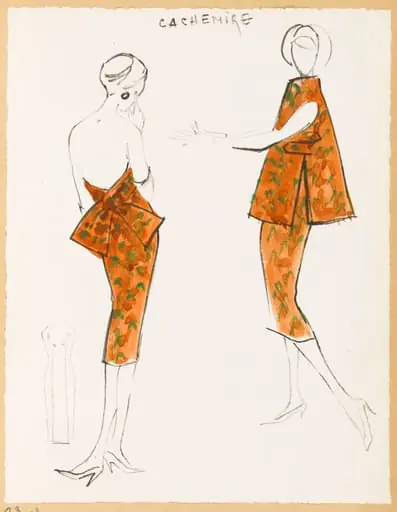
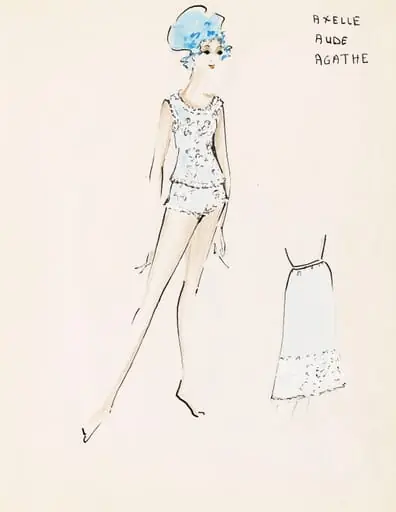
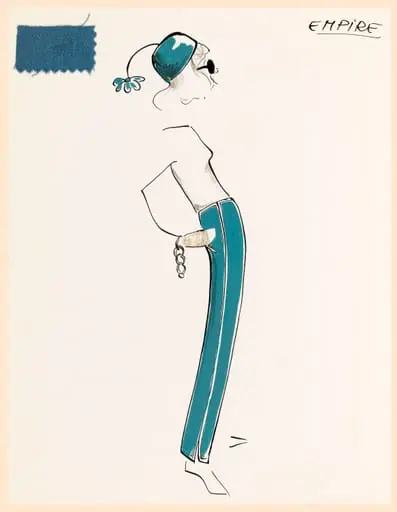
Trouville is a drawing by Carven. It dates from 1958 and is held in the collection of the Palais Galliera - Musée de la Mode de la Ville de Paris.
About this work
Overview
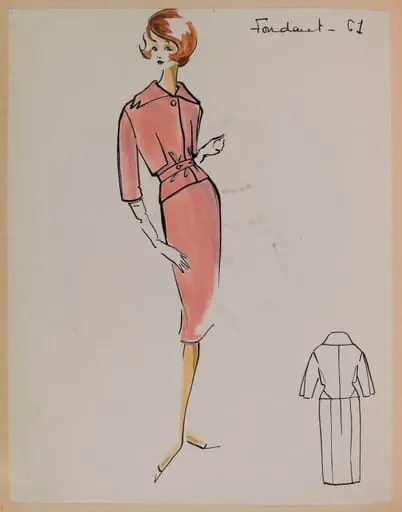
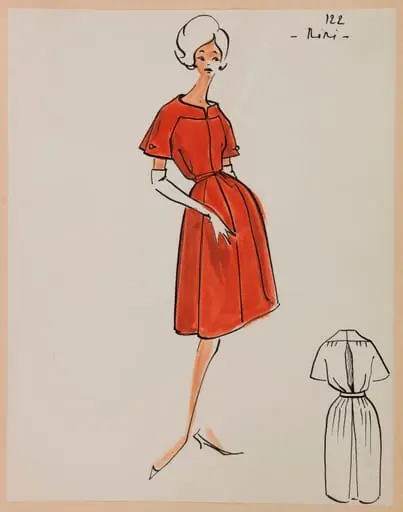
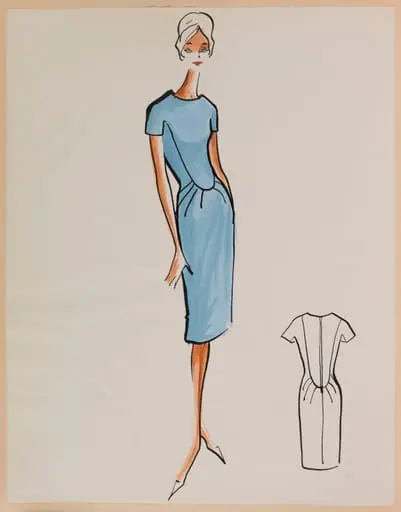
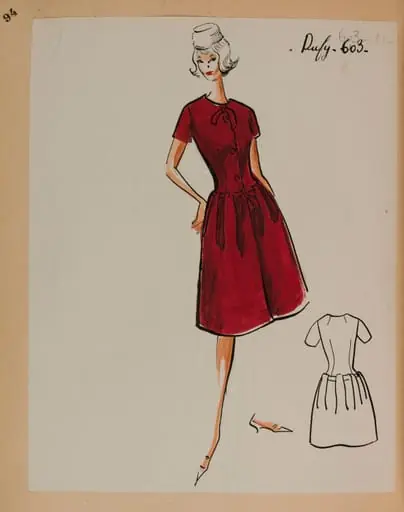
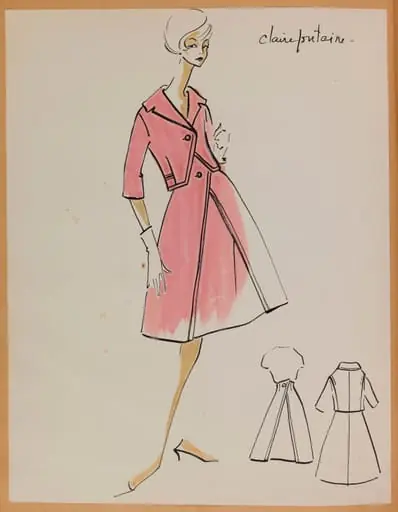
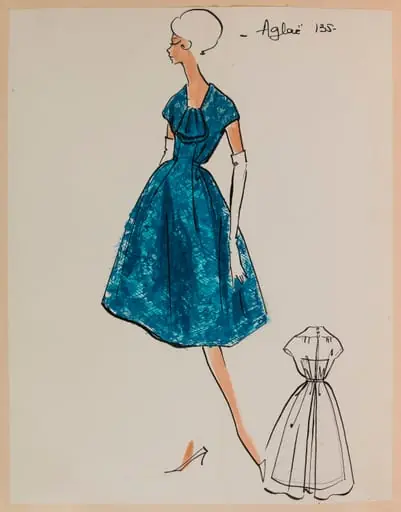
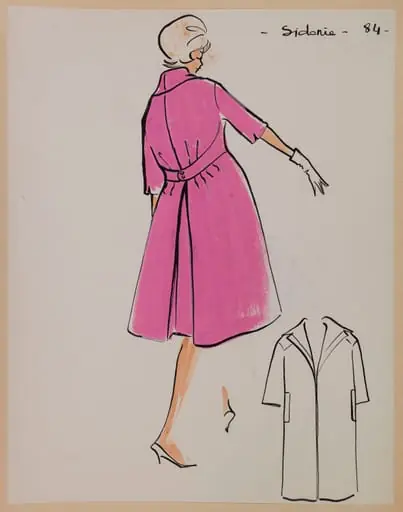
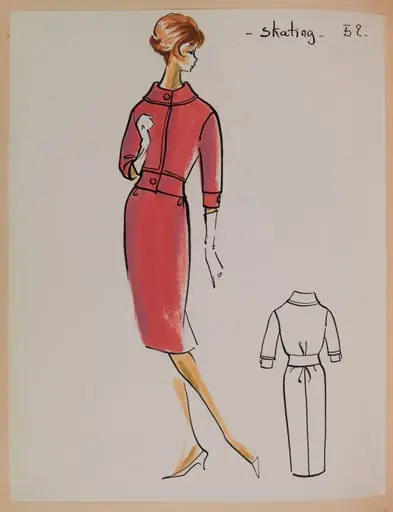
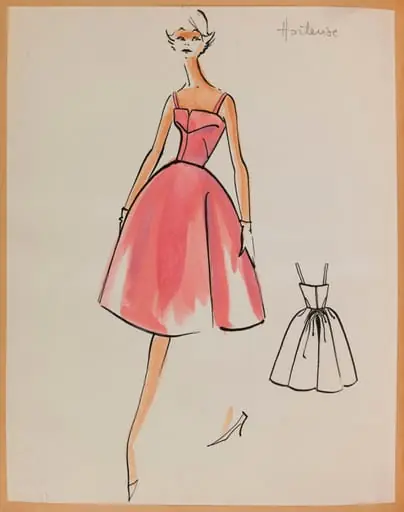
Created around 1958, Trouville is a pencil sketch attributed to the French designer Carven. It functions as a preparatory study for a garment, held in the collection of the Museum of Ethnography. The drawing captures a standing female figure in minimal detail, with annotated sections of the dress laid out beside her, suggesting its construction was the primary focus rather than portraiture.
Subject & Meaning
The figure represents a wearer of a simple, sleeveless pink dress with a defined waistline, rendered without facial features or contextual background. The emphasis lies in the garment’s silhouette and structure. The inclusion of separate pattern pieces—top and skirt—indicates the drawing served a practical design purpose, documenting form and fit rather than conveying narrative or identity.
Technique & Style
The two detached dress components are drawn with clean contours, revealing the designer’s method of visualizing garment parts independently before assembly.
The sketch employs loose, fluid lines with confident strokes, prioritizing the outline and proportion of the dress over anatomical precision. The woman’s pose is static, one hand resting on her hip, likely to stabilize the composition for pattern alignment. The two detached dress components are drawn with clean contours, revealing the designer’s method of visualizing garment parts independently before assembly.
History & Provenance
The work entered the Museum of Ethnography’s collection as part of a broader archive of mid-century fashion studies. Its origin traces to Carven’s design studio during the late 1950s, a period when the designer was refining ready-to-wear silhouettes for a modern clientele. The sketch’s survival suggests it was retained for its pedagogical or archival value within the atelier.
Context
In the late 1950s, Parisian fashion houses increasingly documented design processes through quick studies, bridging hand-drawn concepts and mass production. Trouville reflects this shift, where efficiency and clarity replaced ornate presentation. Its modest scale and functional intent align with industry practices that valued technical accuracy over artistic flourish.
Legacy
Trouville remains a quiet example of how fashion design was documented in its era—not as fine art, but as a working tool. It contributes to understanding the evolution of ready-to-wear design methods in postwar Europe, preserving the quiet labor behind garments that shaped everyday style.
Artist & collection
Artist
These delicate ink-on-paper drawings capture the quiet poetry of everyday things: pinecones, reeds, apples.
Museum
Palais Galliera - Musée de la Mode de la Ville de Paris
Continue through works from the same source collection.