Artwork
Uzbek
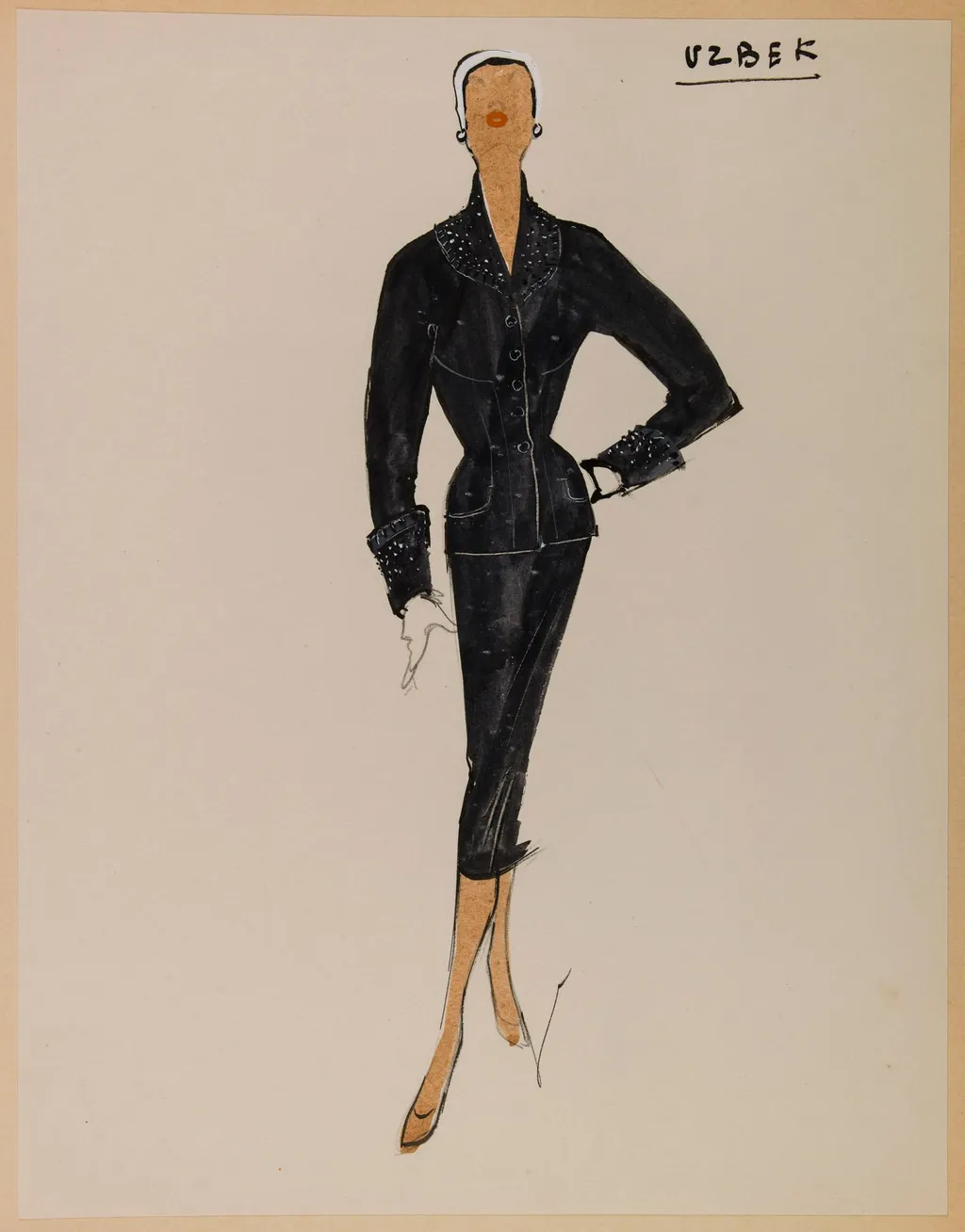
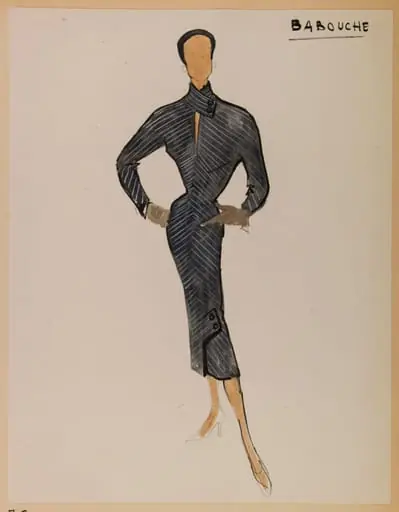
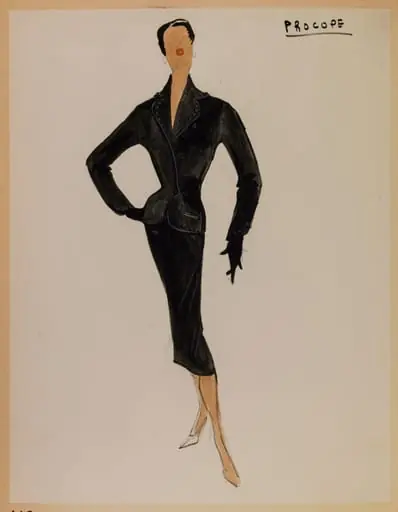
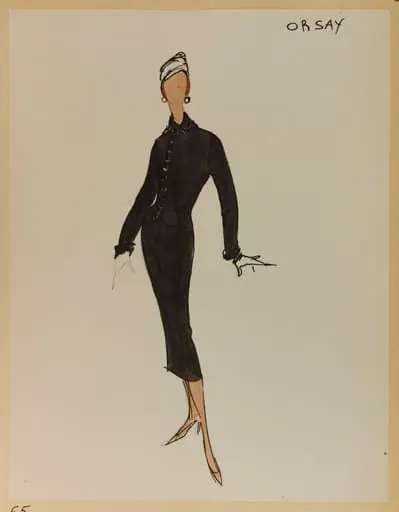
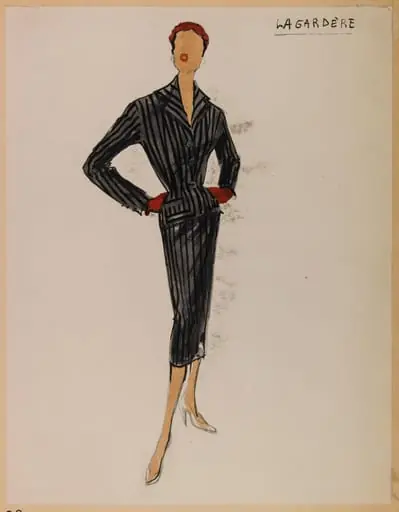
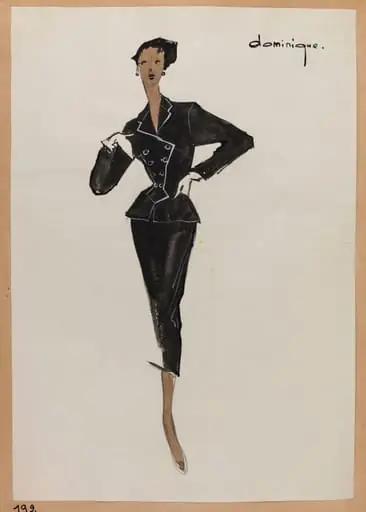
Uzbek is a drawing by Carven. It dates from 1953 and is held in the collection of the Palais Galliera - Musée de la Mode de la Ville de Paris.
About this work
Overview
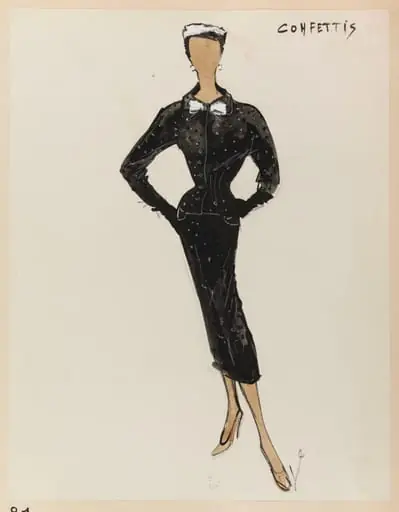
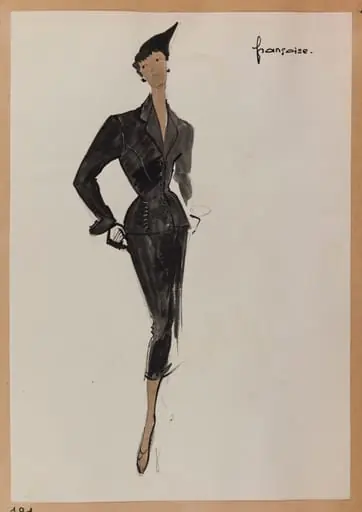
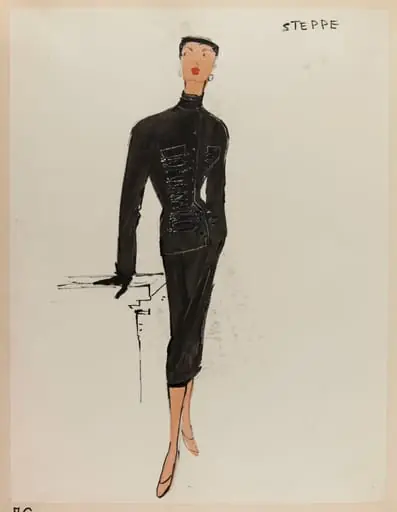
Created around 1953 by the French designer Jean Carven, this ink drawing captures a woman in formal attire, rendered with clean lines and restrained detail.
Created around 1953 by the French designer Jean Carven, this ink drawing captures a woman in formal attire, rendered with clean lines and restrained detail. The work resides in the collection of the Museum of Ethnography, where it functions as a record of mid-century fashion rather than a fine art portrait. Its simplicity and focus on garment structure reflect Carven’s background in couture design.
Subject & Meaning
The figure is depicted in a poised, self-assured stance—hand on hip, arm relaxed—conveying quiet authority. Her attire, consisting of a tailored black jacket and knee-length skirt, along with white gloves and headband, signals formal dress of the early 1950s. The absence of facial detail shifts emphasis to clothing as a cultural artifact, suggesting the drawing’s purpose is to document style rather than individual identity.
Technique & Style
Executed in precise ink lines, the drawing emphasizes silhouette and garment construction over texture or shading. The flat, unmodeled forms and minimal background reflect a design sketch tradition, prioritizing clarity of form. White accents—gloves, headband, earrings—are rendered as negative space, reinforcing the graphic quality and aligning with fashion illustration practices of the period.
History & Provenance
The drawing entered the Museum of Ethnography’s collection as part of a broader effort to archive contemporary dress as cultural material. While the exact circumstances of its acquisition are undocumented, its inclusion suggests institutional recognition of Carven’s influence in postwar European fashion. It remains one of few surviving graphic works by Carven held in a public ethnographic context.
Context
In the early 1950s, Parisian fashion houses like Carven’s were redefining postwar femininity through structured yet wearable designs. This drawing aligns with a trend among designers to document their creations through illustrative sketches, serving both as internal references and promotional tools. Ethnographic museums began collecting such materials to trace the evolution of everyday dress beyond haute couture.
Legacy
Though Carven is better known for her ready-to-wear collections, this drawing endures as a quiet testament to the precision of her design sensibility. It contributes to scholarly understanding of how fashion was recorded and valued in institutional settings during the mid-20th century, offering insight into the intersection of design practice and cultural documentation.
Artist & collection
Artist
These delicate ink-on-paper drawings capture the quiet poetry of everyday things: pinecones, reeds, apples.
Museum
Palais Galliera - Musée de la Mode de la Ville de Paris
Continue through works from the same source collection.