Artwork
Vuillard
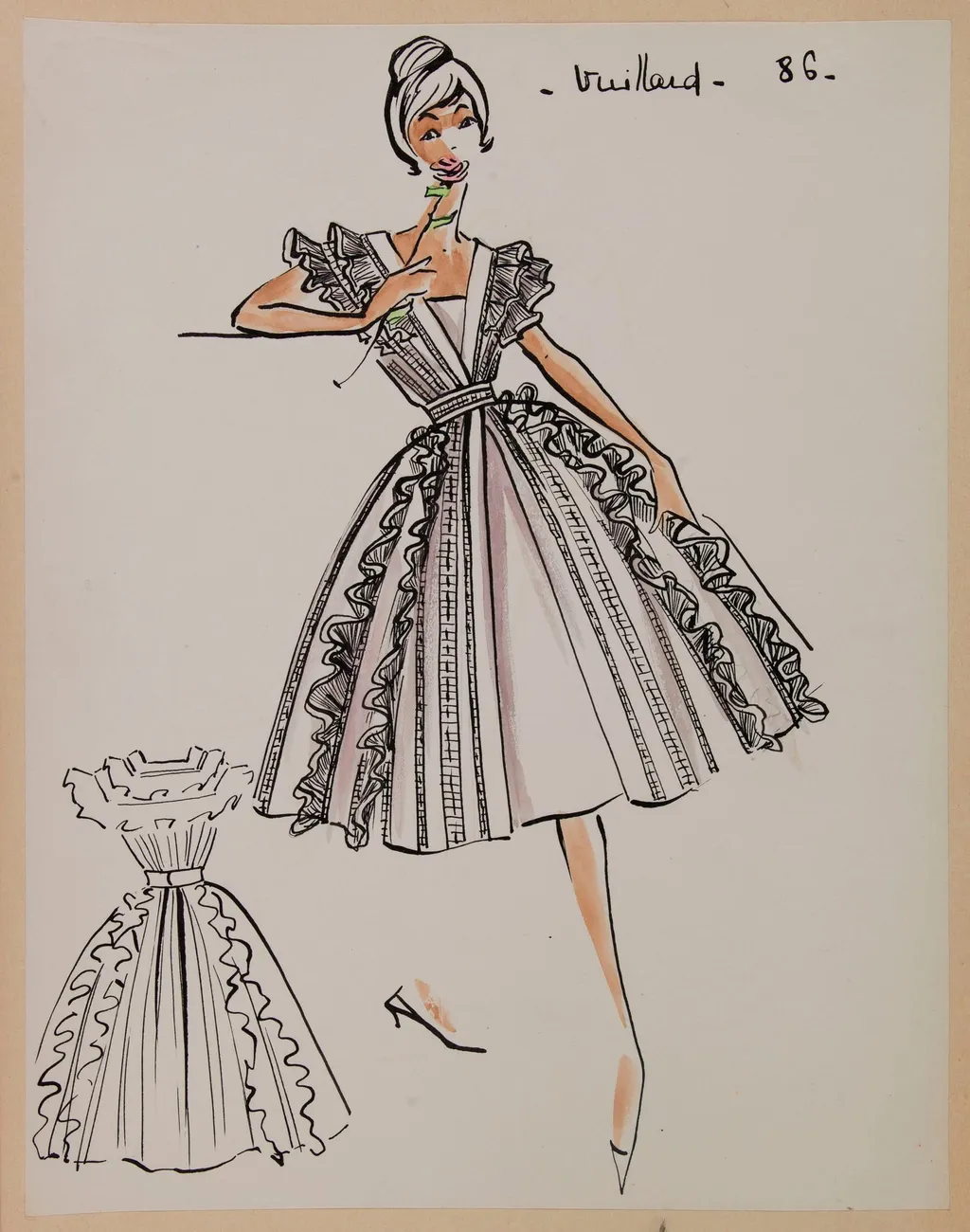
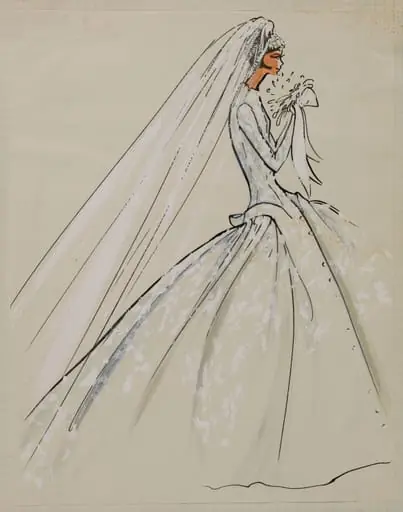
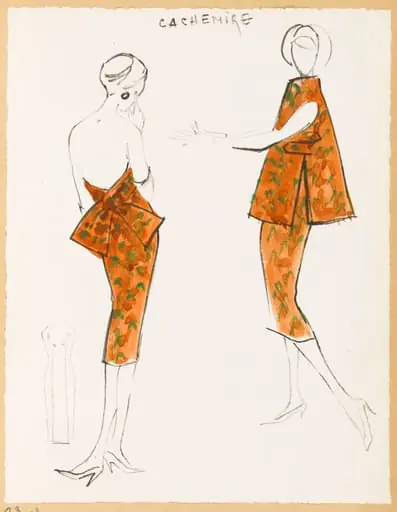
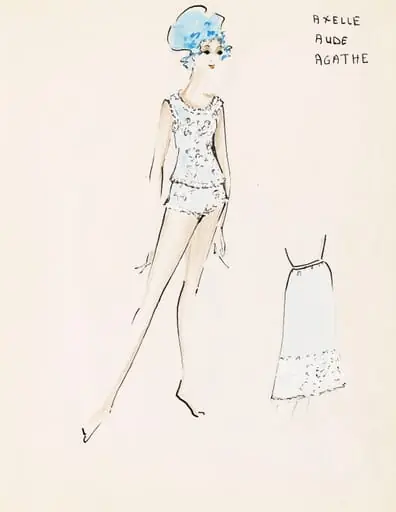
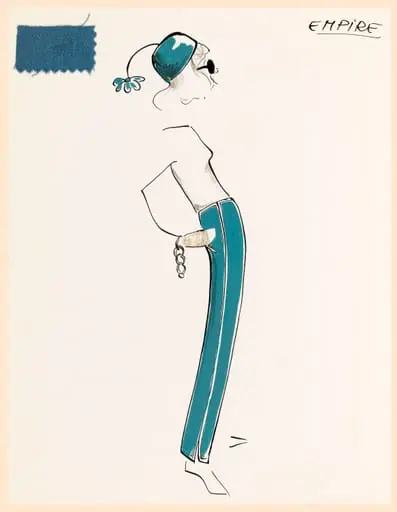
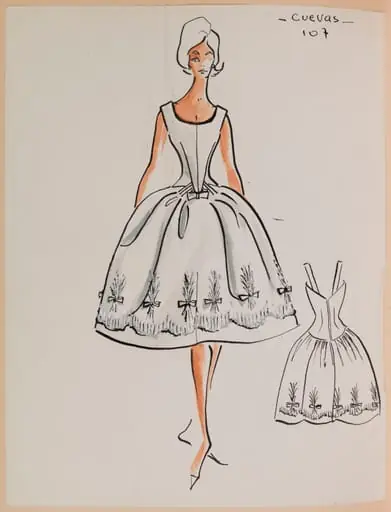
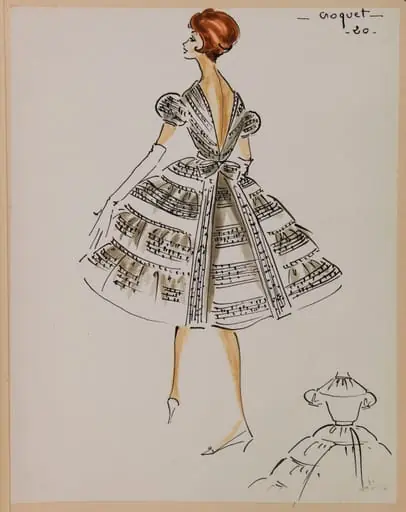
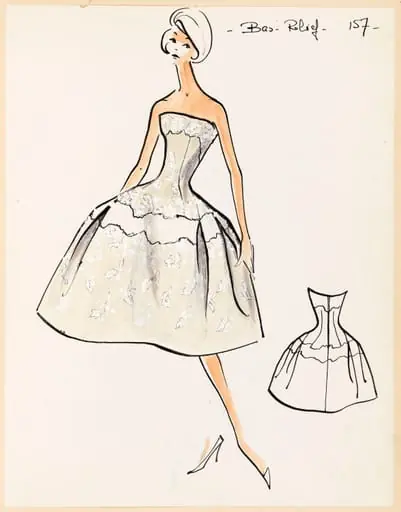
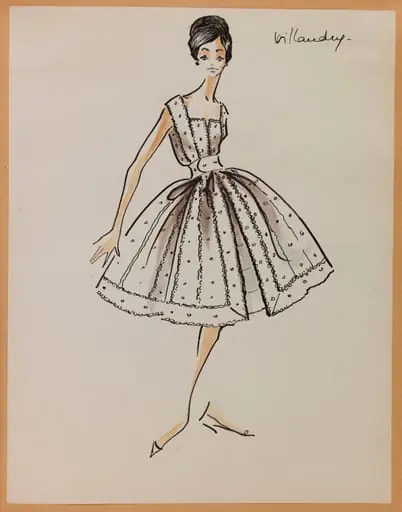
Vuillard is a drawing by Carven. It dates from 1958 and is held in the collection of the Palais Galliera - Musée de la Mode de la Ville de Paris.
About this work
Overview
The work is part of the Museum of Ethnography’s collection, where it is preserved as an example of mid-century fashion documentation.
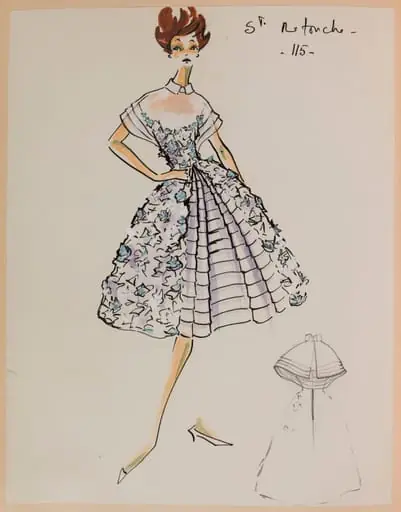
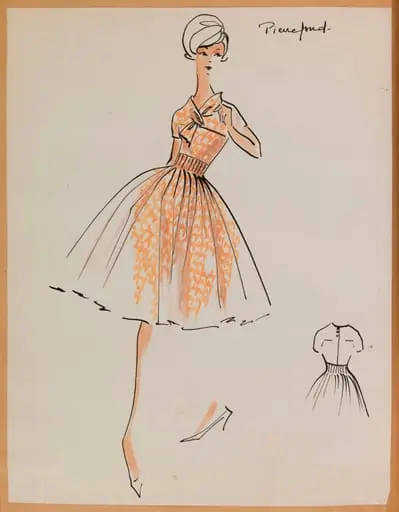
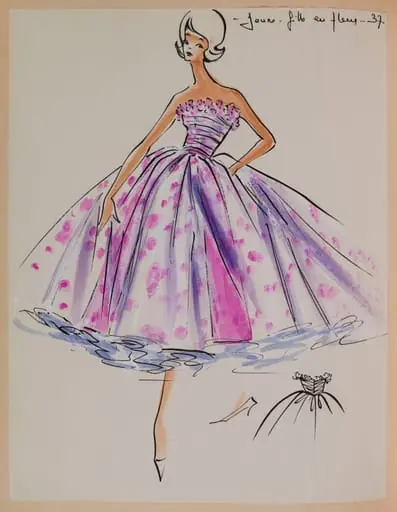
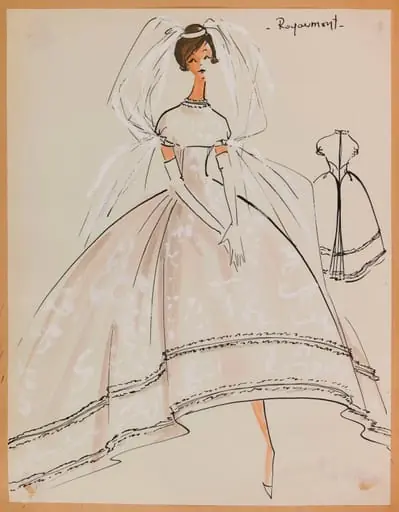
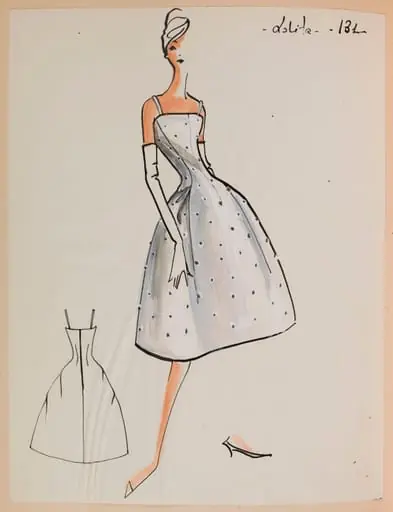
This drawing, attributed to the fashion house Carven and dated around 1958, depicts a woman in a detailed evening gown. Executed in ink and light wash, it serves as a design study rather than a finished portrait. The work is part of the Museum of Ethnography’s collection, where it is preserved as an example of mid-century fashion documentation. Its modest scale and functional intent reflect its role in garment development.
Subject & Meaning
The figure represents an idealized female form dressed in a formal gown characteristic of late 1950s haute couture. The posture—hand on hip—conveys poise and quiet confidence, aligning with contemporary ideals of feminine elegance. The dual views of the dress suggest an emphasis on structural clarity, prioritizing fit and silhouette over individual identity. The subject is less a person than a vehicle for showcasing design elements.
Technique & Style
The artist employs delicate contour lines and subtle cross-hatching to suggest the weight and texture of fabric. The skirt’s scalloped panels are rendered with rhythmic, repeating strokes, while the high neckline and puffed sleeves are defined with precision. Light shading avoids heavy modeling, maintaining a clean, illustrative quality. The smaller frontal sketch functions as a technical supplement, isolating key design features for construction reference.
History & Provenance
Created during Carven’s active period in Parisian fashion, the drawing likely originated in the house’s atelier as part of a design portfolio. It entered the Museum of Ethnography’s holdings through acquisition or donation, possibly as part of a broader collection of fashion ephemera. Its preservation reflects institutional interest in documenting the material culture of 20th-century dressmaking practices.
Context
In the late 1950s, fashion houses relied on hand-drawn sketches to communicate designs to tailors and clients before fabric selection or pattern-making. This drawing exemplifies that pre-industrial workflow, where artistry and technical precision converged. Unlike mass-produced illustrations, such studies were intimate, functional tools—valued for their clarity rather than aesthetic finish.
Legacy
Though not attributed to a named artist, the drawing endures as a representative artifact of mid-century couture design processes. It offers insight into how form and structure were prioritized in fashion development before digital tools. Its presence in an ethnographic museum underscores its value as cultural documentation, preserving the quiet labor behind fashion’s public face.
Artist & collection
Artist
These delicate ink-on-paper drawings capture the quiet poetry of everyday things: pinecones, reeds, apples.
Museum
Palais Galliera - Musée de la Mode de la Ville de Paris
Continue through works from the same source collection.