Artwork
Villandry
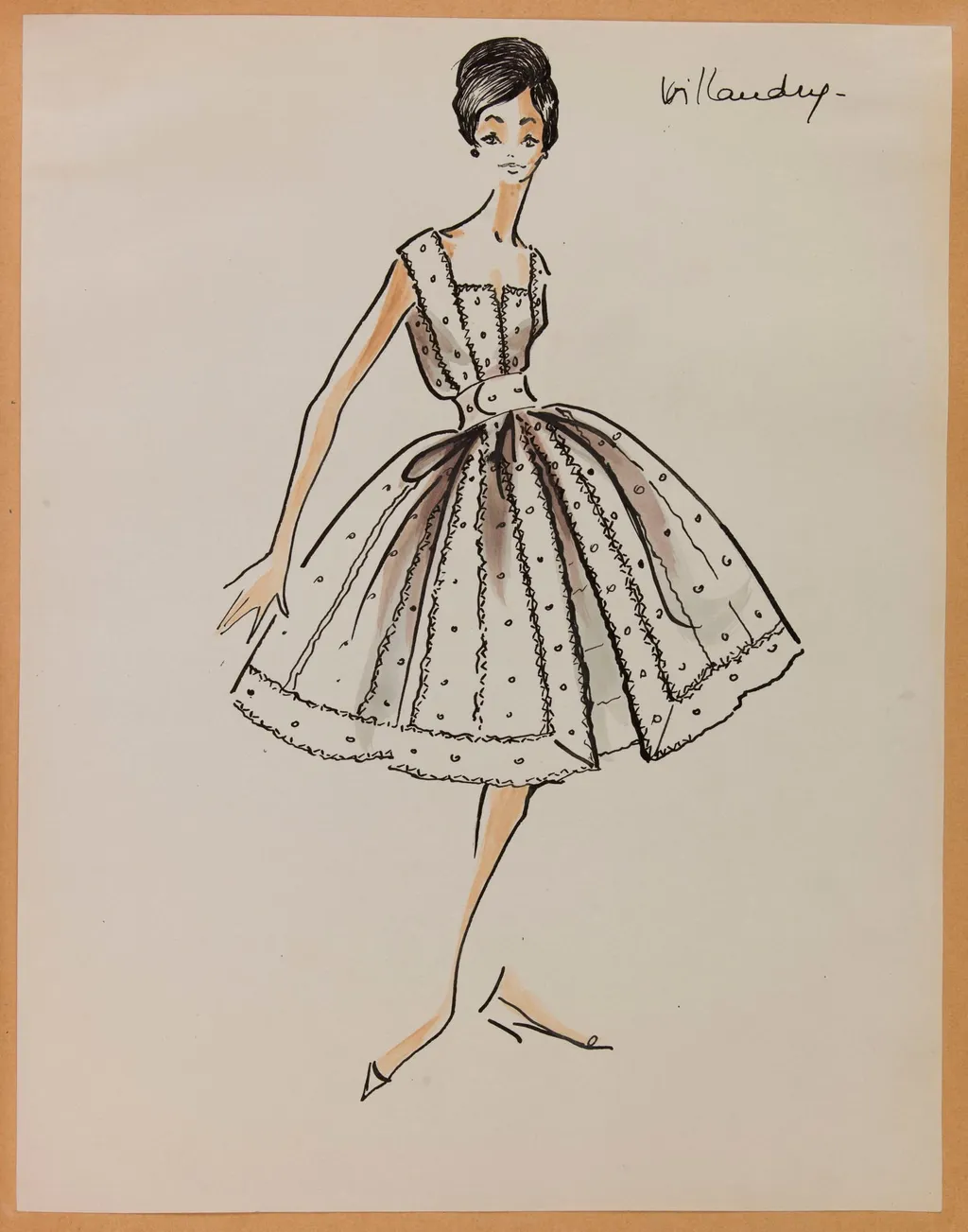
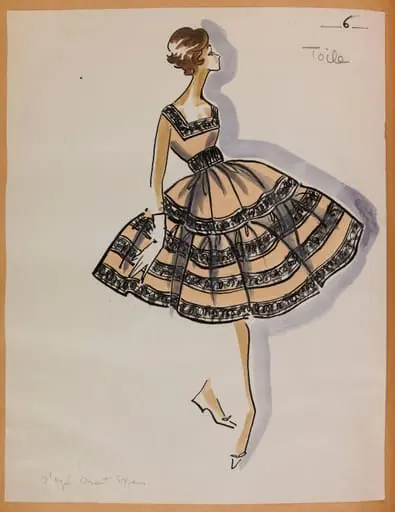
Villandry is a drawing by Carven. It dates from 1958 and is held in the collection of the Palais Galliera - Musée de la Mode de la Ville de Paris.
About this work
Overview
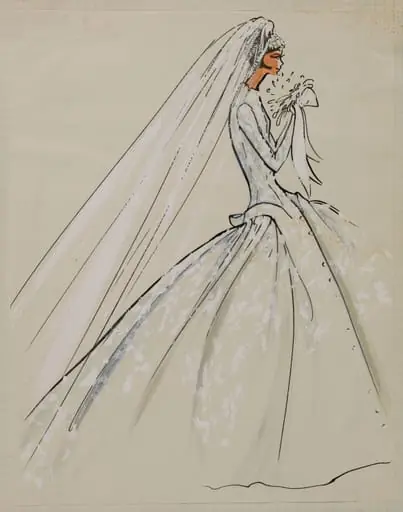
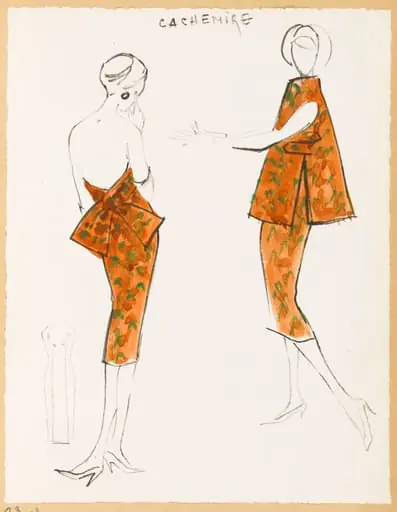
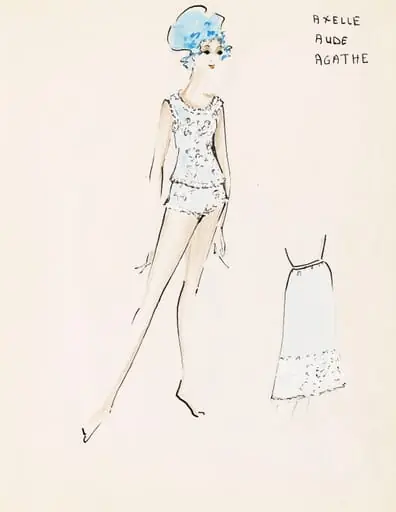
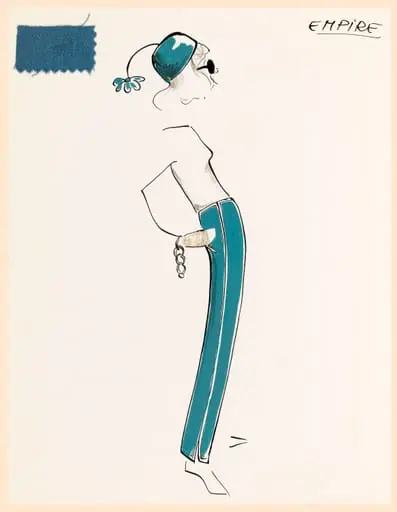
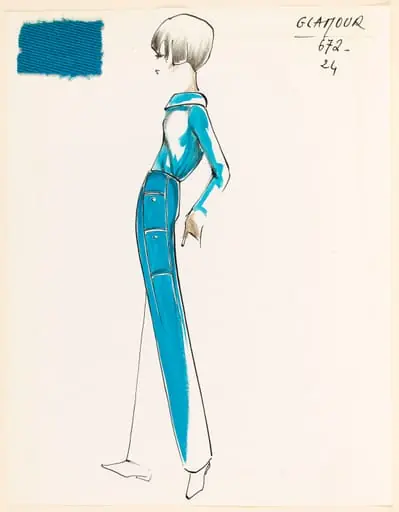
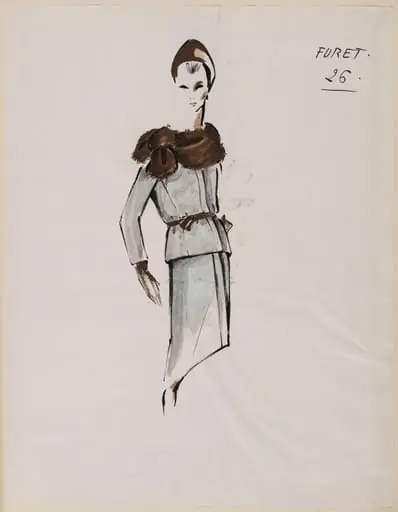
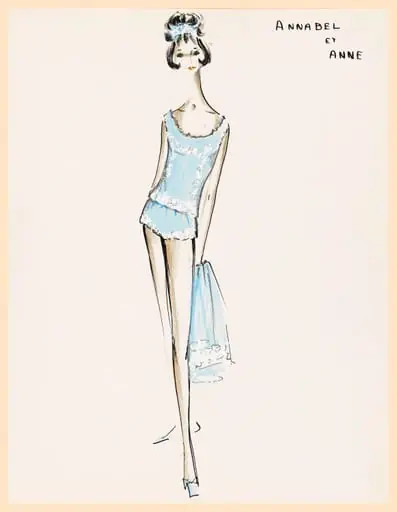
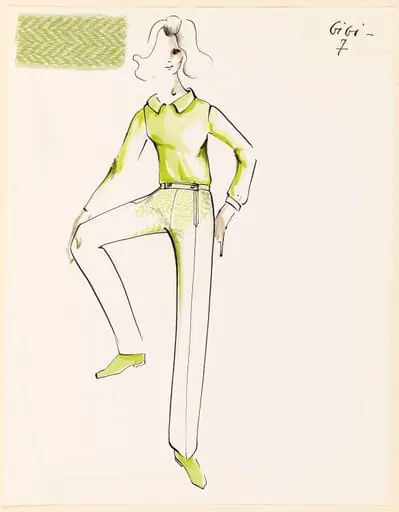
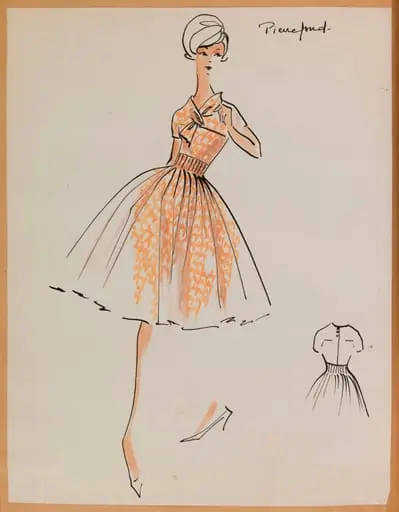
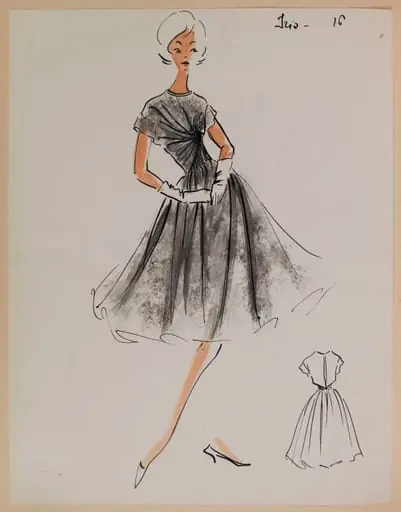
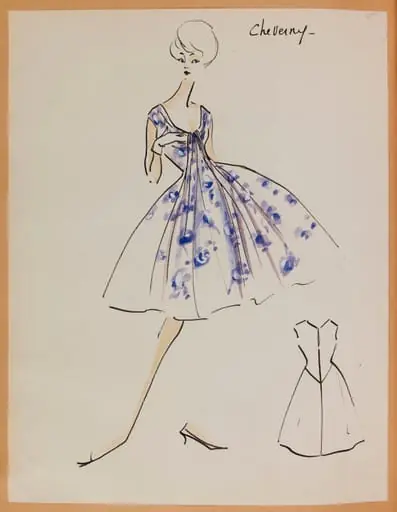
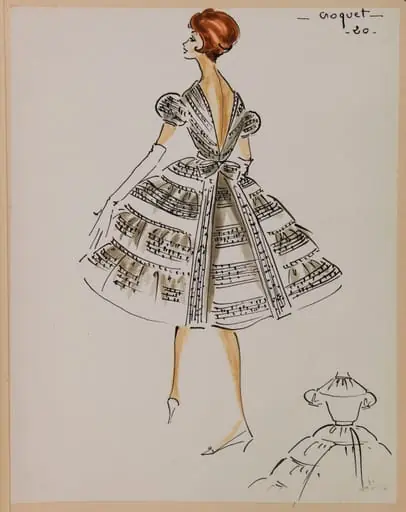
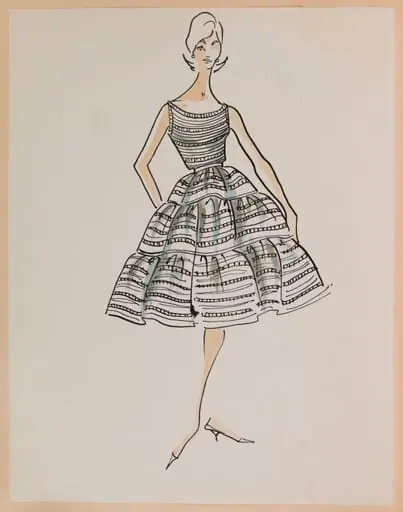
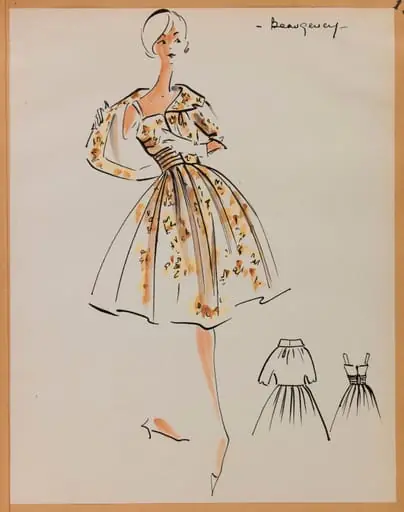
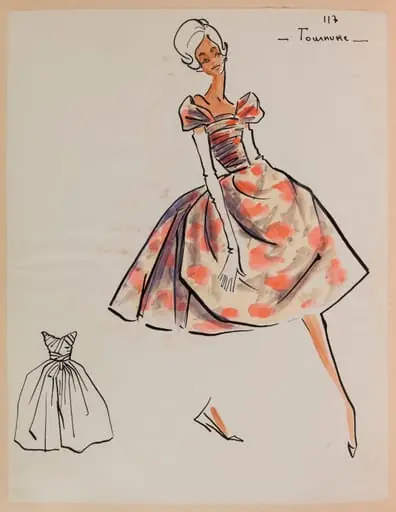
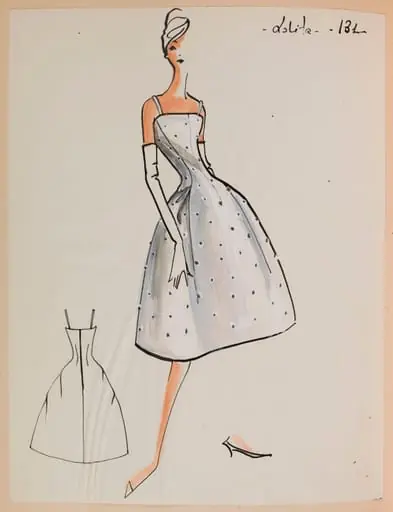
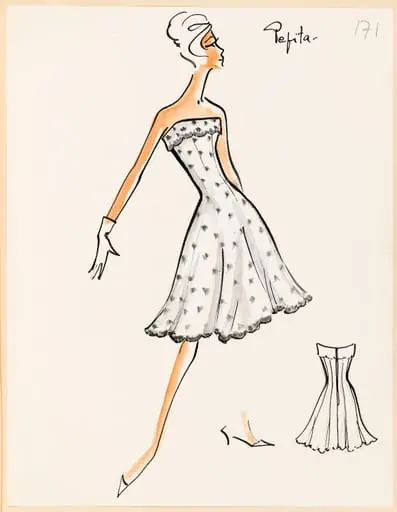
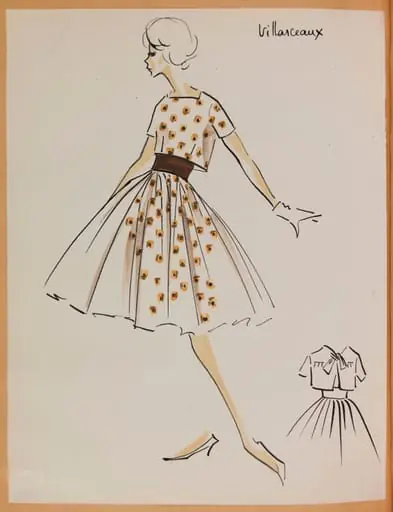
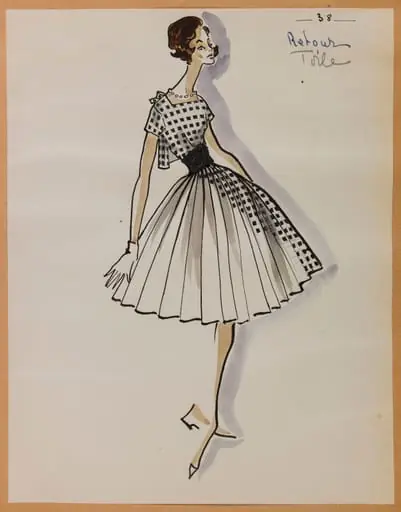
Created around 1958 by the designer Carven, this ink and watercolor sketch depicts a woman in a modest, refined ensemble. The work is part of the collection at the Museum of Ethnography, where it is preserved as a study in mid-century fashion illustration. Its delicate execution suggests it was made as a design reference rather than a finished artwork.
Subject & Meaning
The figure represents an idealized woman of the late 1950s, dressed in a tailored dress with subtle decorative details. Her poised stance and neatly gathered hair reflect contemporary ideals of grace and restraint. The absence of context or background focuses attention on the garment’s form, suggesting the sketch served to highlight design elements rather than narrative.
Technique & Style
The drawing employs swift, fluid ink lines to define the figure and dress, with soft watercolor washes adding subtle depth. The tiny dot patterns on the fabric are rendered with precision, mimicking embroidered embellishments. This contrast between loose gestural strokes and meticulous detail reveals a balance between spontaneity and technical control.
History & Provenance
The sketch entered the Museum of Ethnography’s collection as part of a broader acquisition of fashion-related materials from Carven’s studio. Its origins as a working drawing are evident in its unpolished quality. No record of public exhibition prior to its museum acquisition exists, indicating its primary function was internal to the design process.
Context
In the late 1950s, Parisian fashion houses relied on illustrators to translate designs into visual proposals for clients and ateliers. Carven, known for understated elegance, used such sketches to communicate subtle details like fabric texture and silhouette. This piece aligns with a tradition of fashion drawing that prioritized clarity and refinement over dramatic expression.
Legacy
The sketch remains a quiet example of mid-century fashion documentation, valued for its insight into design methodology rather than artistic innovation. It contributes to scholarly understanding of how couturiers like Carven translated textile and form ideas into visual language, preserving the quiet craftsmanship behind fashion production.
Artist & collection
Artist
These delicate ink-on-paper drawings capture the quiet poetry of everyday things: pinecones, reeds, apples.
Museum
Palais Galliera - Musée de la Mode de la Ville de Paris
Continue through works from the same source collection.