Artwork
Untitled
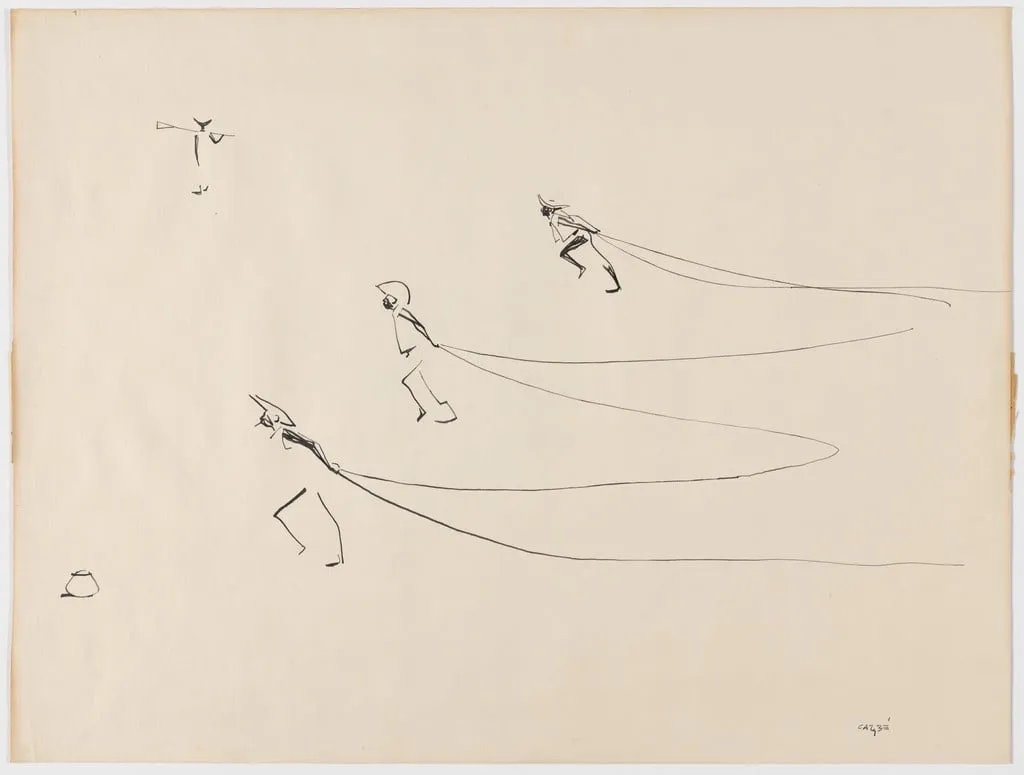
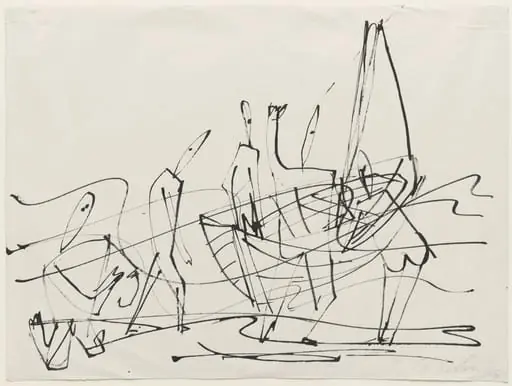
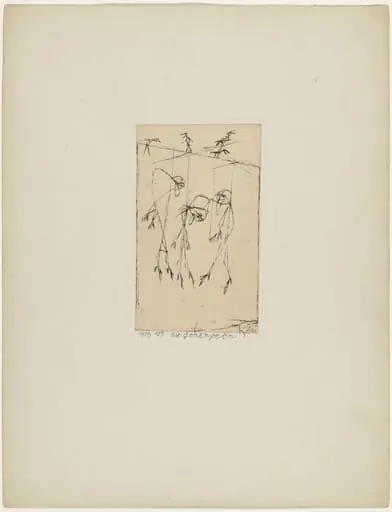
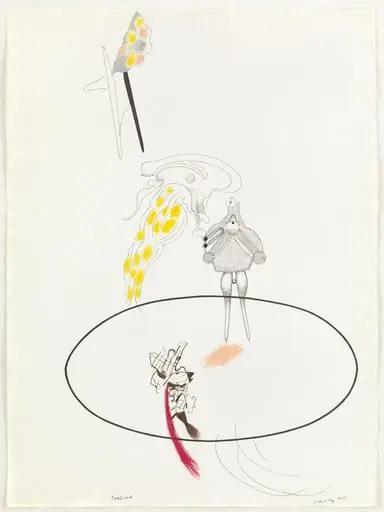
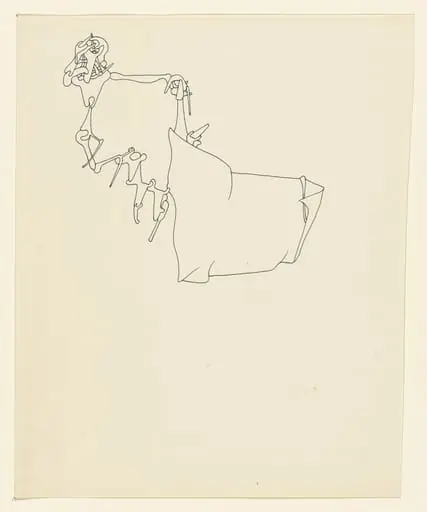
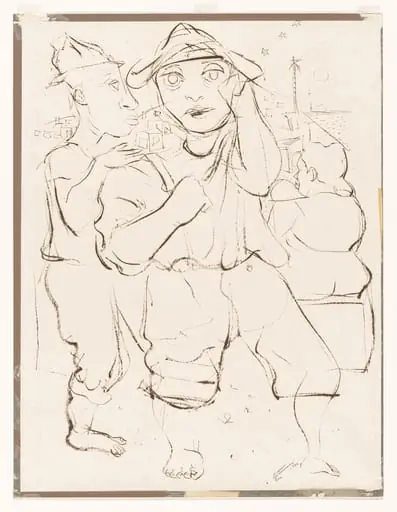
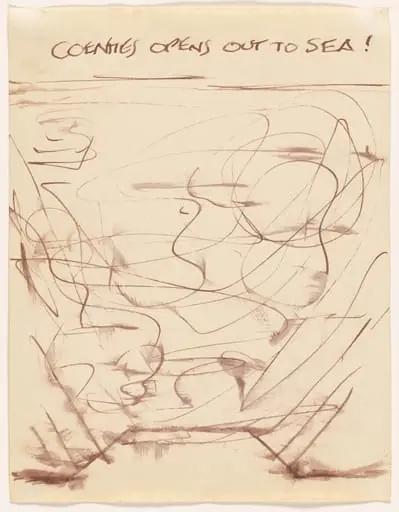
Untitled is an ink drawing by Carybé. It dates from 1957 and is held in the collection of the Museum of Modern Art.
About this work
Overview
The absence of a background focuses attention entirely on the figures and their interaction with the ropes, emphasizing labor and collective action.
Created in 1957, this ink drawing by Brazilian artist Carybé is part of The Museum of Modern Art’s collection. Executed on paper, it depicts three figures engaged in a shared physical effort, their forms rendered with minimal detail but clear dynamism. The absence of a background focuses attention entirely on the figures and their interaction with the ropes, emphasizing labor and collective action.
Subject & Meaning
The drawing portrays three individuals pulling on long, taut ropes, suggesting a communal task requiring synchronized strength. Their simple attire and hats imply everyday workers, possibly engaged in rural or coastal labor common in Brazilian life. The tension in the ropes and the forward lean of their bodies convey exertion, evoking themes of endurance and solidarity without narrative specificity.
Technique & Style
Carybé used fluid ink lines to define form and motion, relying on contour and gesture rather than shading or texture. The figures are simplified, with no facial features or intricate details, yet their postures communicate strain and momentum. Delicate, scattered marks in the upper left may indicate a signature or personal symbol, adding a subtle, handwritten quality to the composition.
History & Provenance
The work entered The Museum of Modern Art’s collection as part of its broader engagement with mid-20th-century Latin American art. While specific acquisition details are not widely documented, its inclusion reflects institutional interest in artists who captured everyday labor through expressive, non-illusionistic means. It remains one of several Carybé drawings held in the museum’s permanent holdings.
Context
Carybé, active in Brazil during the 1950s, often drew inspiration from Afro-Brazilian culture, folk traditions, and regional labor practices. This drawing aligns with a broader artistic trend in Latin America that prioritized social realism and visual economy. The work reflects a moment when artists sought to elevate ordinary life through direct, unadorned imagery.
Legacy
Though not among Carybé’s most widely reproduced works, this drawing contributes to the understanding of his approach to figuration and movement. Its presence in a major international museum underscores the significance of Brazilian modernists in global art discourse. The piece continues to be studied for its concise visual language and evocative depiction of collective effort.
Artist & collection

Artist
Héctor Julio Páride Bernabó was an Argentine-Brazilian artist, researcher, writer, historian and journalist.