Artwork
Hill and Ploughed Field near Dresden
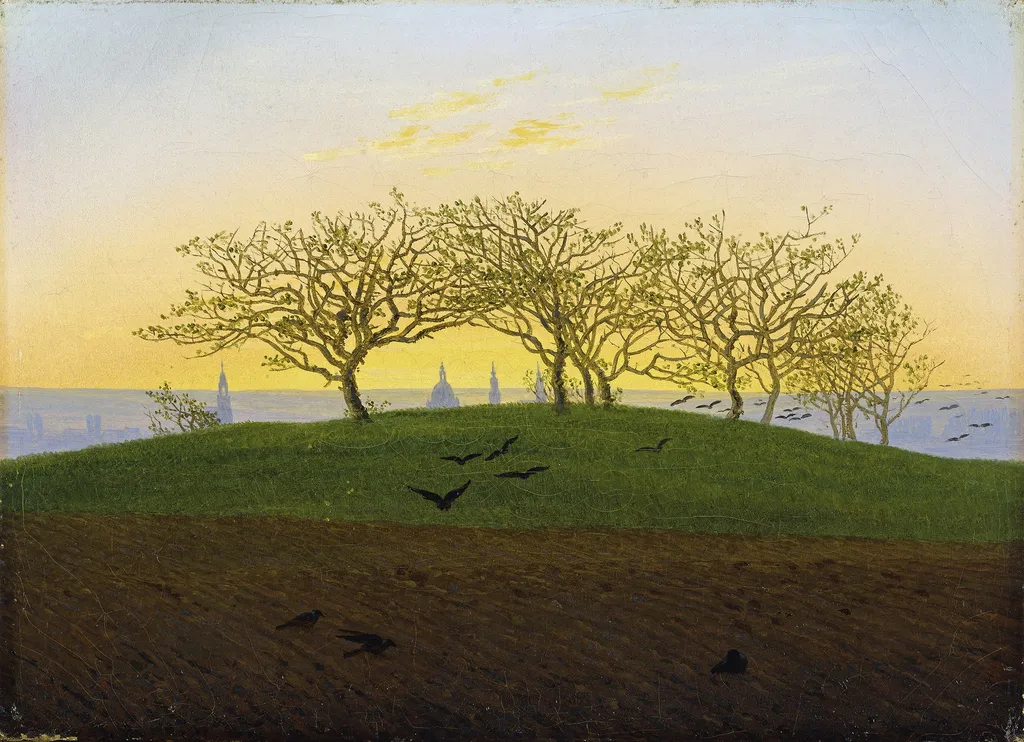
Hill and Ploughed Field near Dresden is an oil painting by the German Romanticist artist Caspar David Friedrich. It dates from 1825 and is held in the collection of the Hamburger Kunsthalle.
About this work
Overview
Painted in 1825, *Hill and Ploughed Field near Dresden* is an oil-on-canvas landscape by Caspar David Friedrich, a central figure in German Romanticism.
Painted in 1825, *Hill and Ploughed Field near Dresden* is an oil-on-canvas landscape by Caspar David Friedrich, a central figure in German Romanticism. The work captures a quiet rural scene just outside Dresden, reflecting Friedrich’s interest in nature as a vessel for contemplation. It resides today in the Hamburger Kunsthalle, part of a broader body of work that redefined landscape painting in early 19th-century Germany.
Subject & Meaning
The painting presents a gently rolling hill, its grassy slope dotted with leafless trees, descending into a freshly ploughed field. Above, a pale yellow sky holds scattered clouds, while birds trace faint arcs across the expanse. No human figures appear, yet the ploughed earth suggests labor and seasonal rhythm. The scene evokes stillness not as emptiness, but as a quiet harmony between land and time.
Technique & Style
Friedrich employed muted earth tones for the hill and field, contrasting with warmer, translucent hues in the sky to suggest atmospheric depth. Brushwork is restrained, favoring soft transitions over sharp detail. The composition draws the eye along the curve of the hill into the distance, a hallmark of his method to create spatial resonance. Light is diffused, enhancing the painting’s meditative mood without dramatic contrast.
History & Provenance
Created during Friedrich’s mature period, the painting remained in private hands until entering the Hamburger Kunsthalle’s collection in the 19th century. Its provenance reflects the growing institutional recognition of Romantic landscape art in northern Germany. Unlike some of Friedrich’s more symbolic works, this piece was likely painted from direct observation, grounding its emotional tone in tangible place.
Context
In 1825, Dresden was a cultural hub, and Friedrich was deeply embedded in its intellectual circles. While other artists pursued historical or mythological themes, Friedrich turned to ordinary landscapes to express spiritual and emotional states. This work aligns with a broader Romantic turn toward nature as a site of introspection, distinct from the idealized vistas of earlier traditions.
Legacy
Though less famous than Friedrich’s solitary figures on cliffs, this painting exemplifies his quiet mastery of mood through landscape. It influenced later generations of German painters who sought to convey inner feeling through natural forms. Its enduring presence in a major public collection underscores its role as a quiet but essential document of Romantic sensibility.
Own this work as a print
Artist & collection
Artist
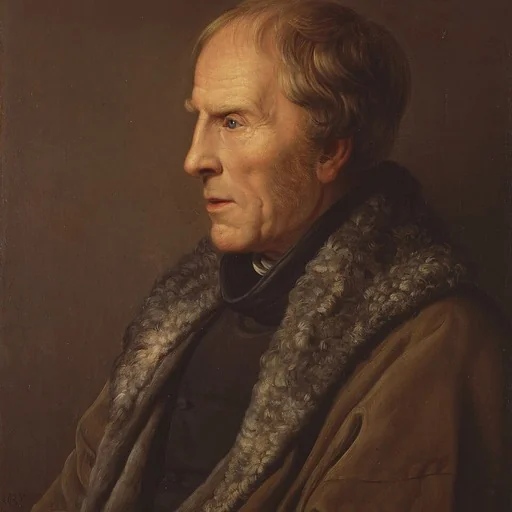
Caspar David Friedrich (German: ; 5 September 1774 – 7 May 1840) was a German Romantic landscape painter, generally considered the most important German artist of his generation, whose often symbolic, and anti-classical…

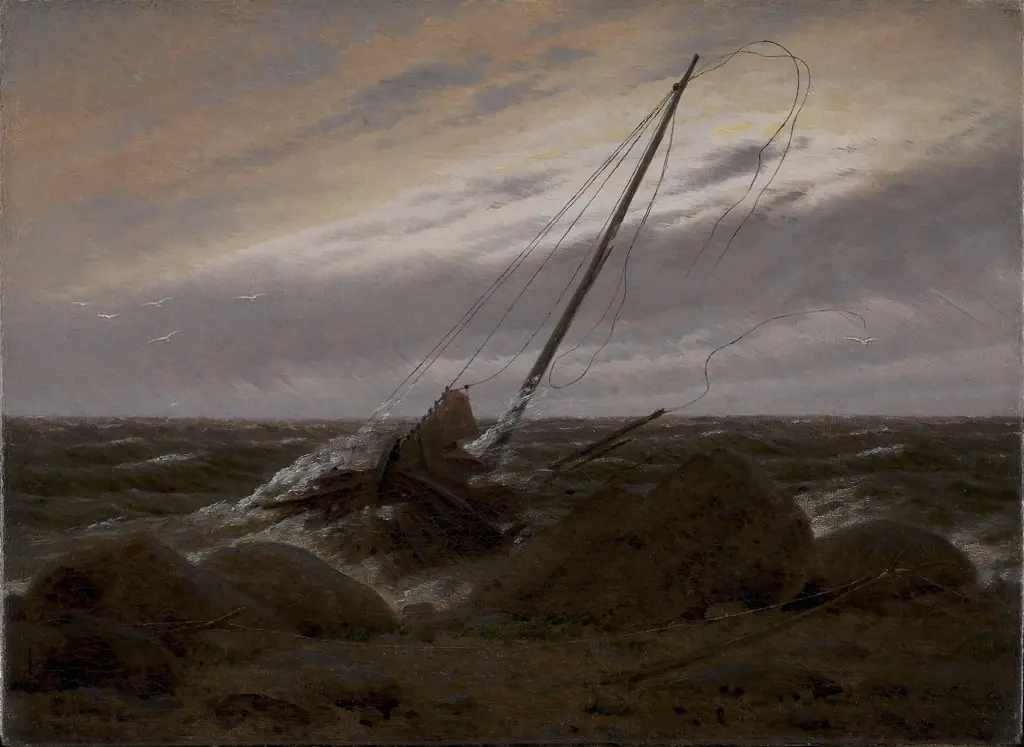
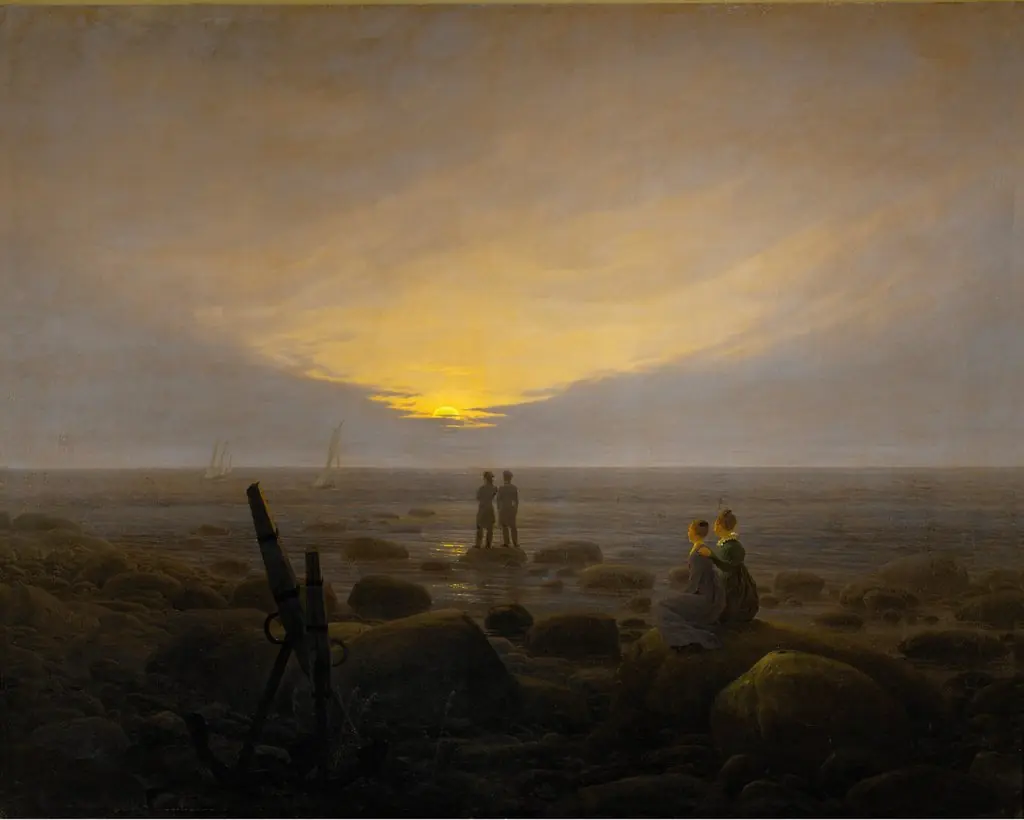
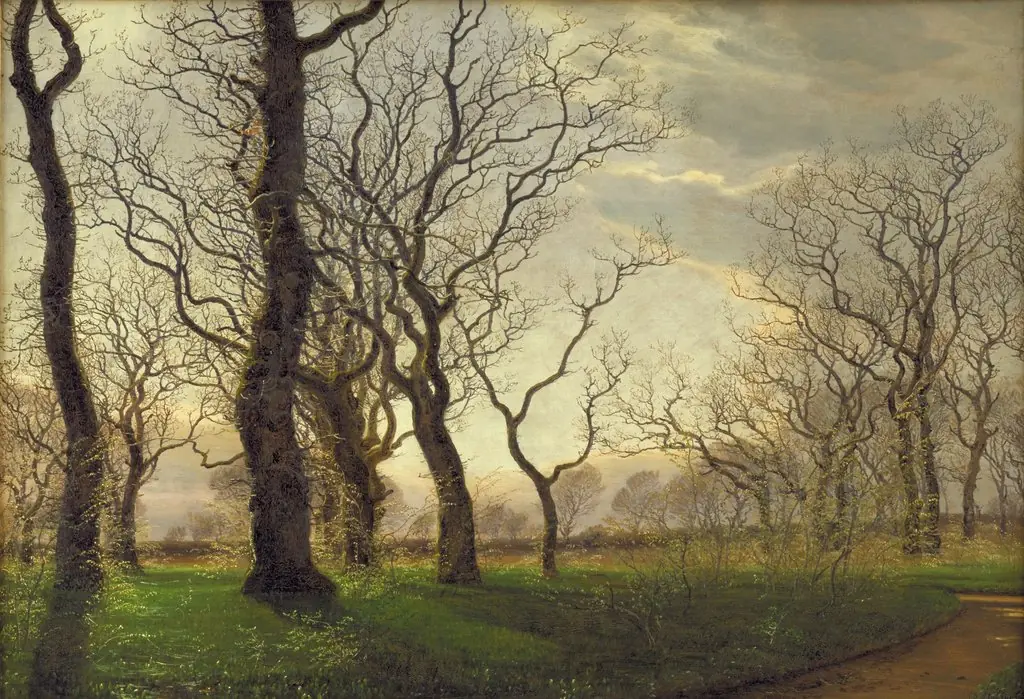 I udkanten af en egeskov en tidlig forårsmorgen
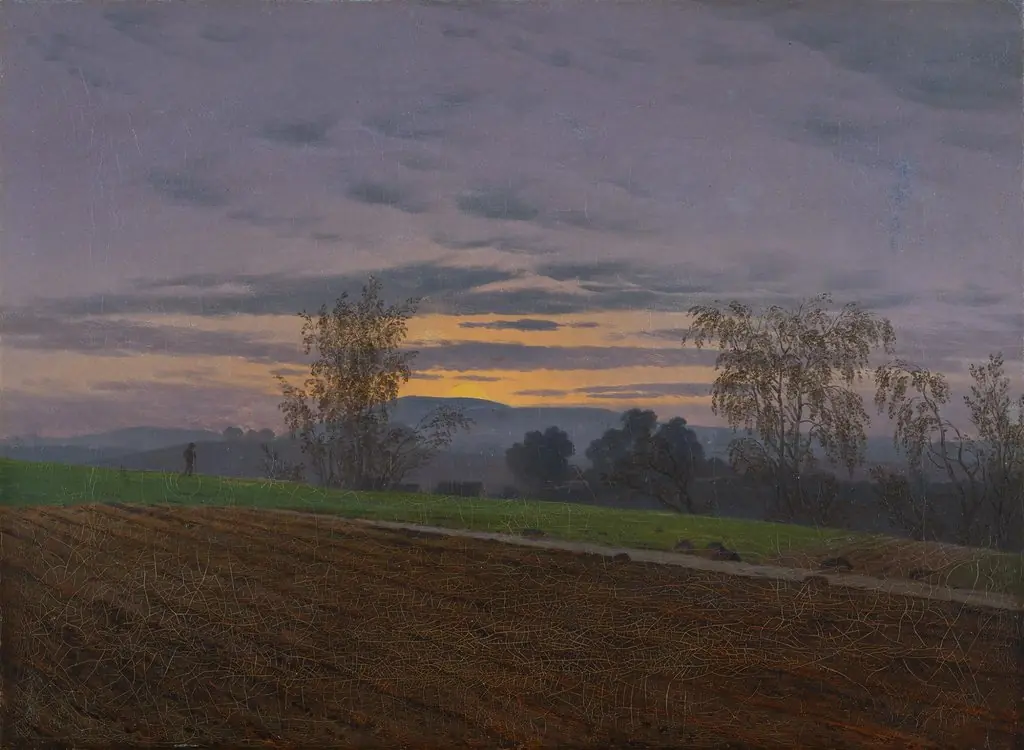 Sturzacker
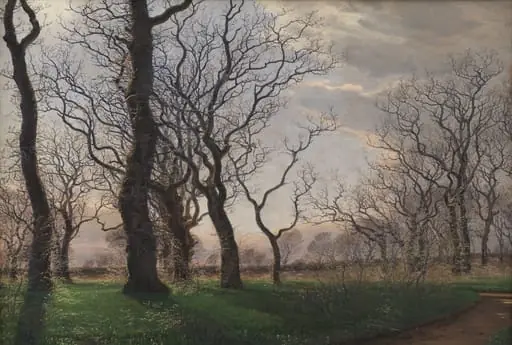 I udkanten af en egeskov en tidlig forårsmorgen
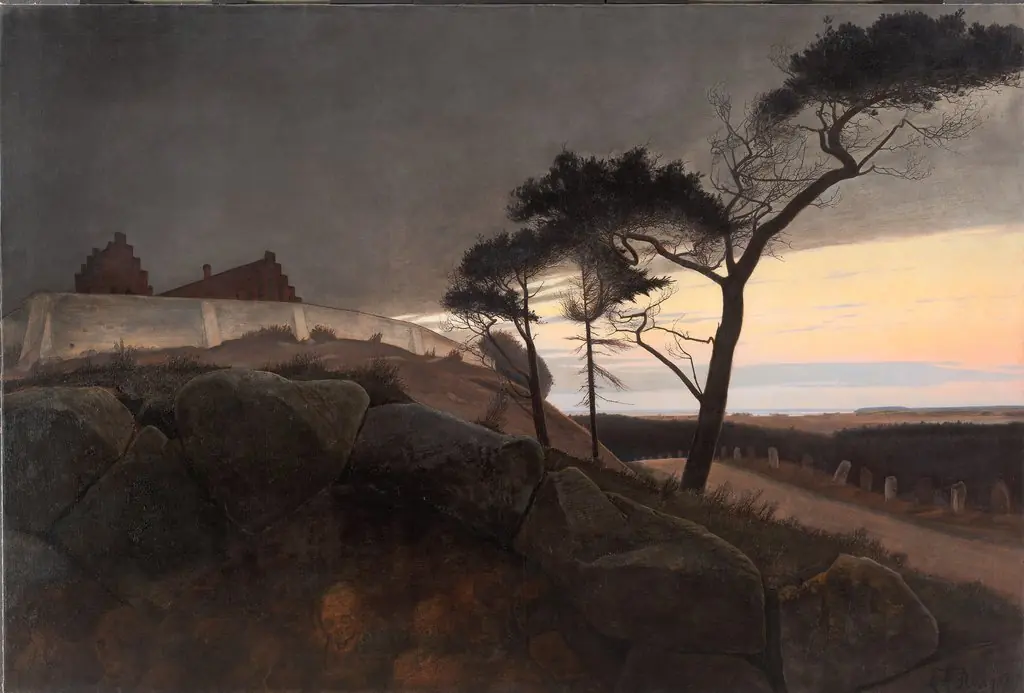 After Sunset
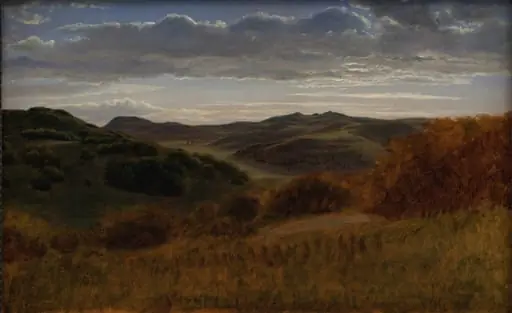 Hills behind the Møen Cliff
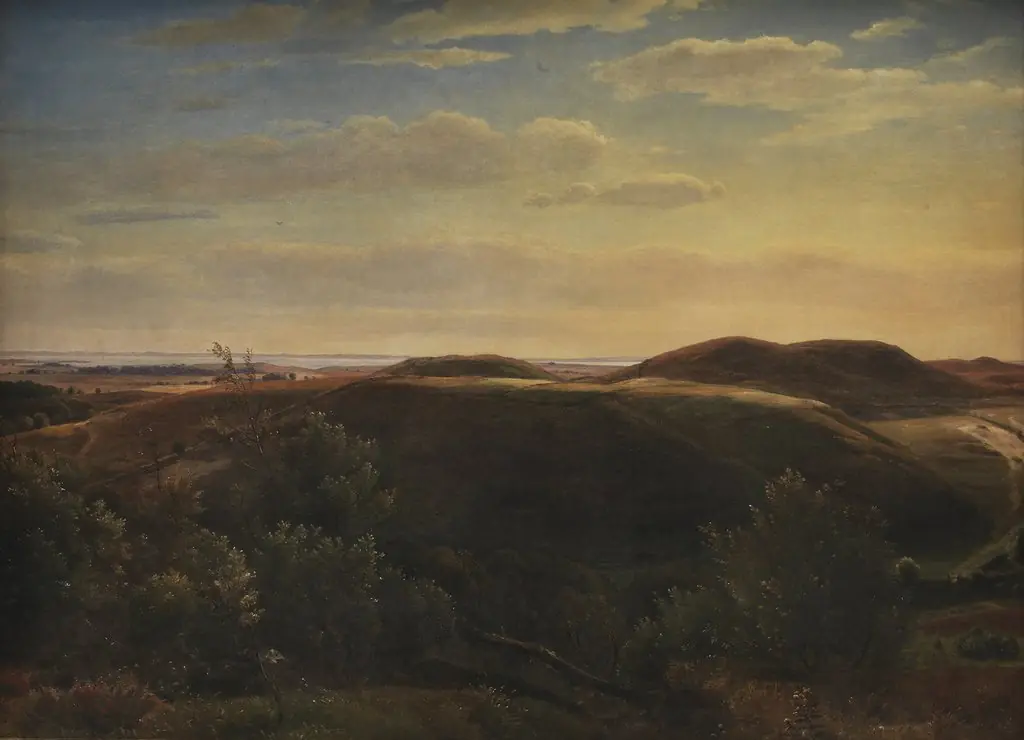 The Coast of Jutland Seen from Mølleknap Hills in Funen
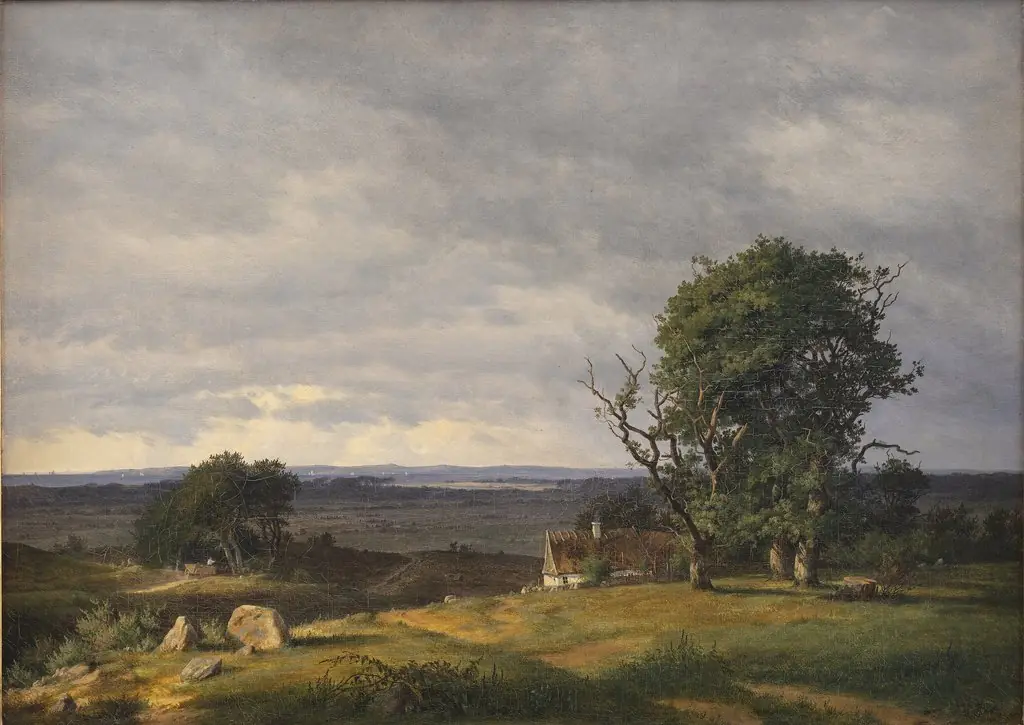 Landskab fra Esromegnen
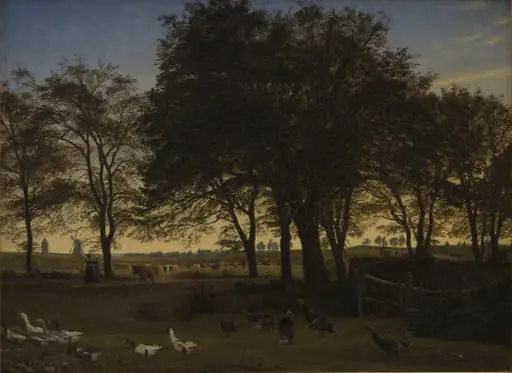 Parti ved Iselingen. I baggrunden Vordingborg Kirke og Gåsetårnet. Septemberaften
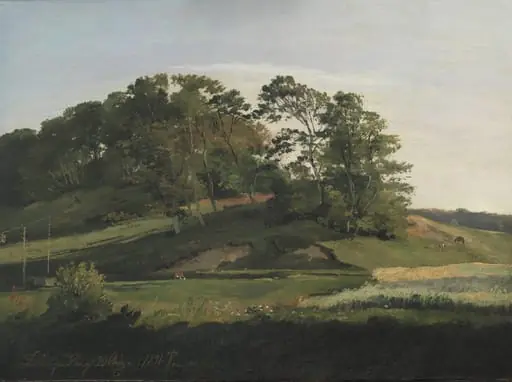 Wooded Hills at Sørupvang
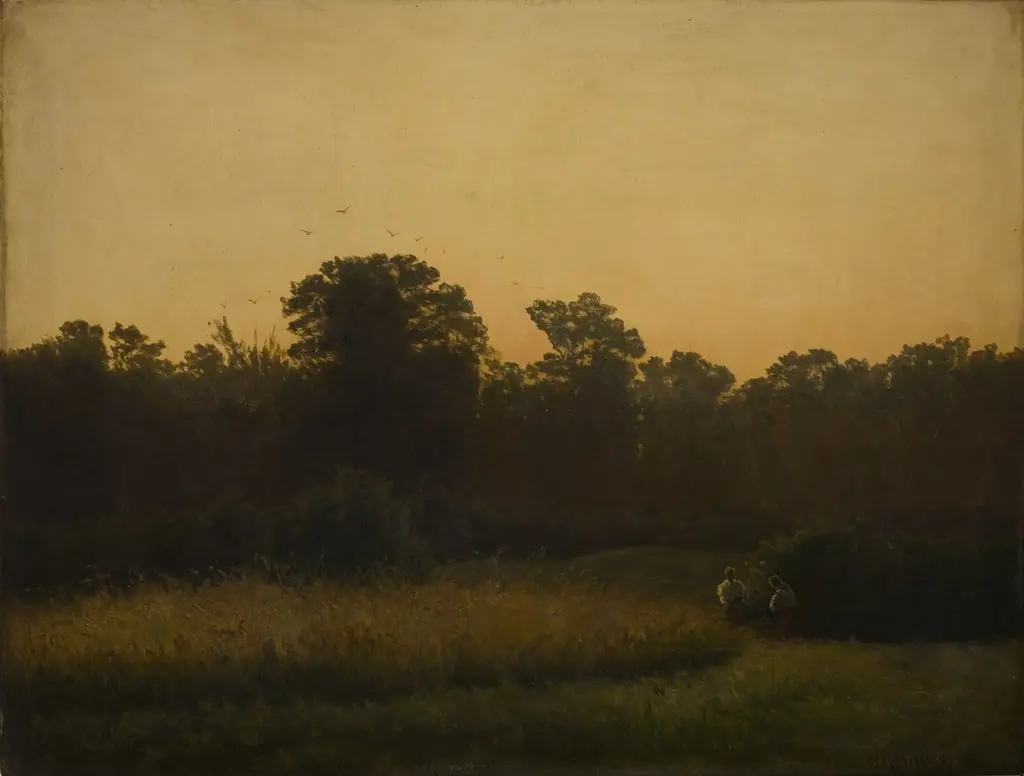 Harvest
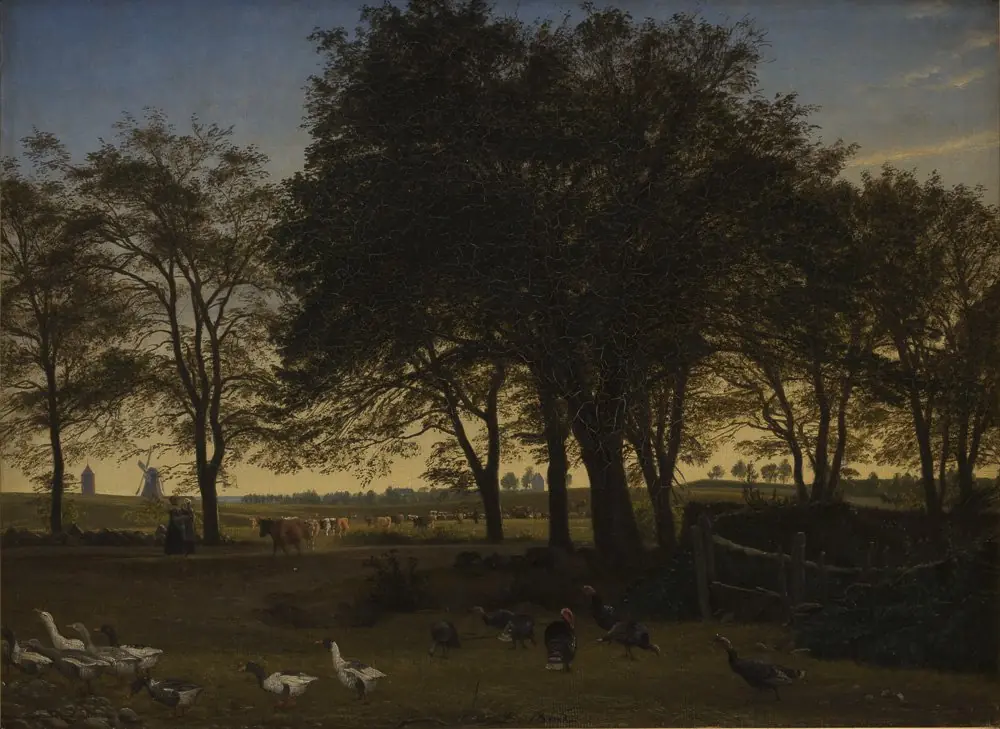 Parti ved Iselingen. I baggrunden Vordingborg Kirke og Gåsetårnet. Septemberaften
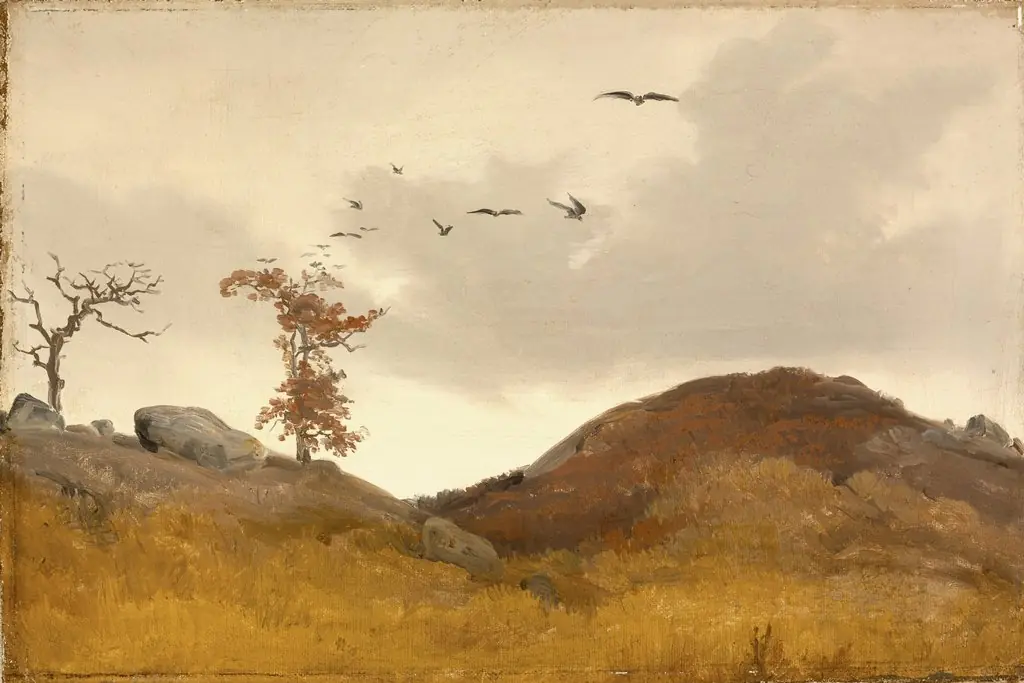 Landscape with Crows