Artwork
Tombs of the Fallen in the Fight for Independence
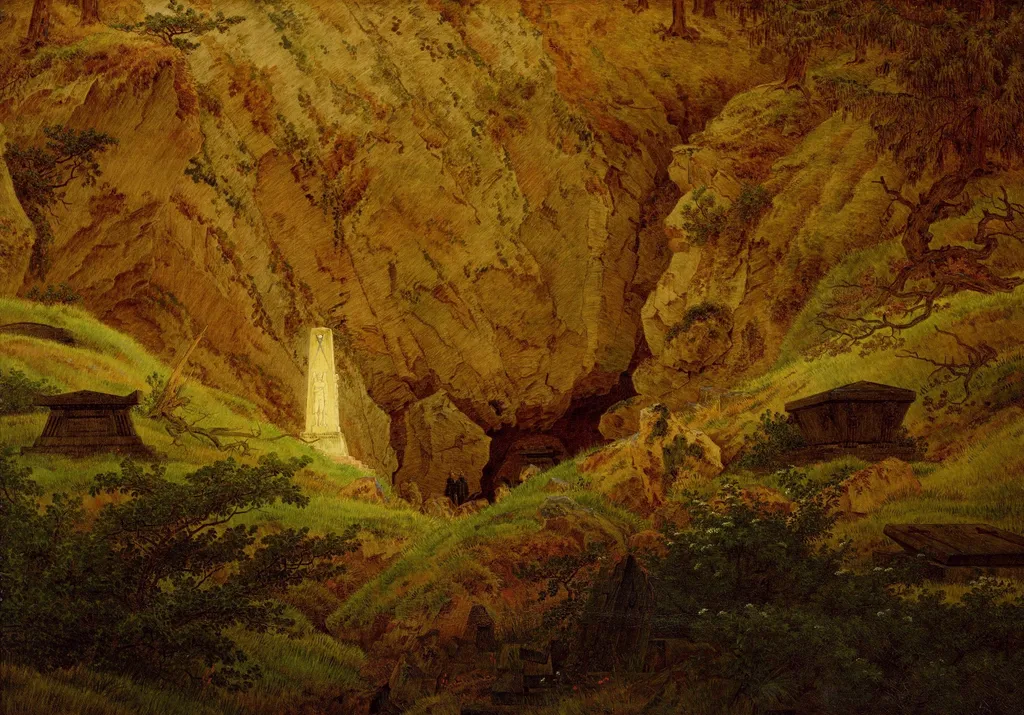
Tombs of the Fallen in the Fight for Independence is an oil painting by the German Romanticist artist Caspar David Friedrich. It dates from 1812 and is held in the collection of the Hamburger Kunsthalle.
About this work
“Tombs of the Fallen in the Fight for Independence” is an oil‑on‑canvas painting by Caspar David Friedrich.
“Tombs of the Fallen in the Fight for Independence” is an oil‑on‑canvas painting by Caspar David Friedrich. He painted it between April and August 1812.
The work is also known as The Graves of the Fallen Freedom Fighters or Arminius’s Grave. It reflects the German Romantic interest in history and heroism. The painting was made for a public exhibition in Hamburg.
You can view the work at the museum
Overview
Painted between April and August 1812, this oil-on-canvas work by Caspar David Friedrich depicts a somber landscape marked by ancient stone tombs under a muted sky. Created for a public exhibition in Hamburg, the painting carries alternative titles referencing fallen warriors and the Germanic leader Arminius, reflecting its thematic ties to collective memory and national identity during a period of rising political consciousness.
Subject & Meaning
The painting presents a cluster of weathered burial monuments in a desolate, twilight-lit terrain, evoking the graves of warriors who died resisting foreign domination. Though no figures are present, the arrangement suggests a communal memorial to those who fought for autonomy. The reference to Arminius, the ancient chieftain who defeated Roman legions, anchors the scene in a mythic past, resonating with contemporary German aspirations for unity and independence.
Technique & Style
Friedrich employs muted earth tones and soft atmospheric perspective to create a quiet, reverent mood. The tombs are rendered with precise, almost archaeological detail, contrasting with the hazy, indistinct horizon. Light fades gently across the scene, emphasizing solitude and time’s erosion. The composition is deliberately asymmetrical, drawing the viewer’s eye toward the central monument, reinforcing its symbolic weight.
History & Provenance
Commissioned for display in Hamburg in 1812, the painting entered the collection of the Hamburger Kunsthalle shortly after its completion. It was not widely exhibited beyond its initial showing, but its thematic resonance with early 19th-century German nationalism ensured its preservation. The work’s multiple titles reflect shifting interpretations over time, from historical tribute to political allegory.
Context
Created amid the Napoleonic Wars and the rise of German cultural nationalism, the painting tapped into a broader revival of interest in Arminius as a symbol of resistance. Sculptural monuments like the Hermannsdenkmal emerged around the same time, signaling a cultural movement that sought to unify German-speaking peoples through shared historical myth. Friedrich’s work contributed to this discourse not through overt propaganda, but through contemplative imagery.
Legacy
Though less known than Friedrich’s later landscapes, this painting remains a significant early example of Romanticism’s engagement with national identity. Its quiet solemnity influenced later artists who sought to convey historical memory through landscape rather than narrative. It stands as a quiet monument to the idea that collective grief and heroism can be expressed through absence and atmosphere.
Own this work as a print
Artist & collection

Artist
Caspar David Friedrich (German: ; 5 September 1774 – 7 May 1840) was a German Romantic landscape painter, generally considered the most important German artist of his generation, whose often symbolic, and anti-classical…

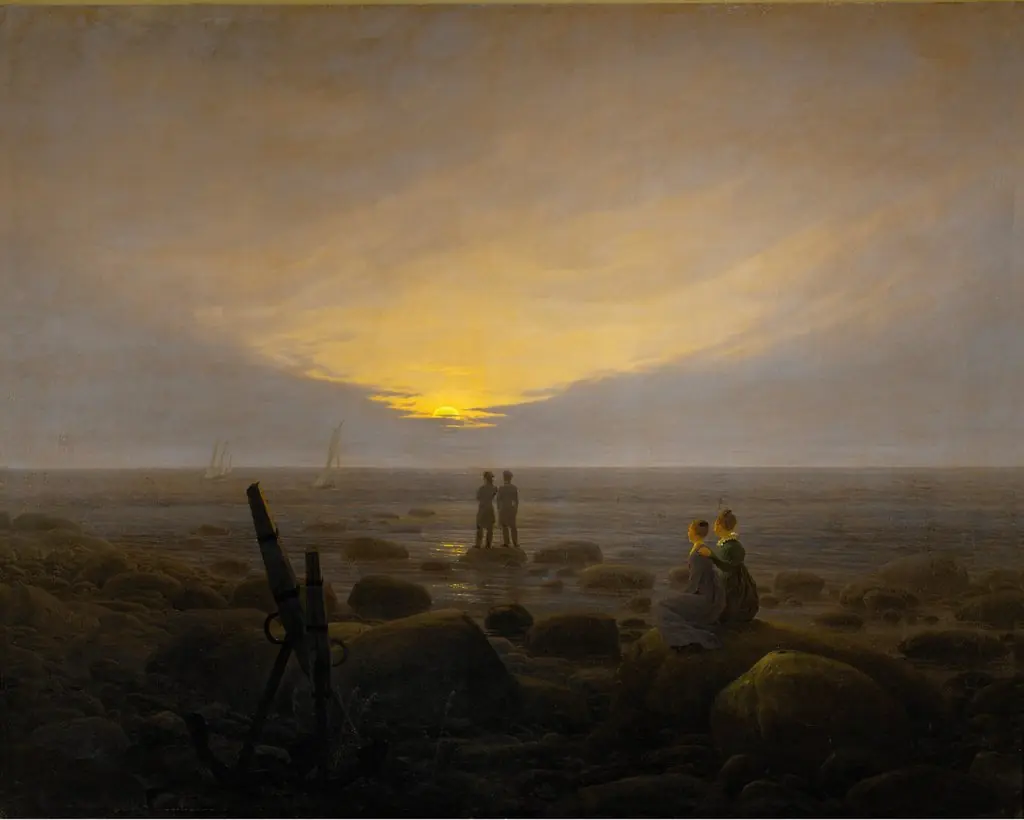
 Mountain Landscape with Rocks
 Devil's Coach-house, Fish River Caves
 A Cavern in the Campagna, Rome
 Peștera Dâmbovicioara
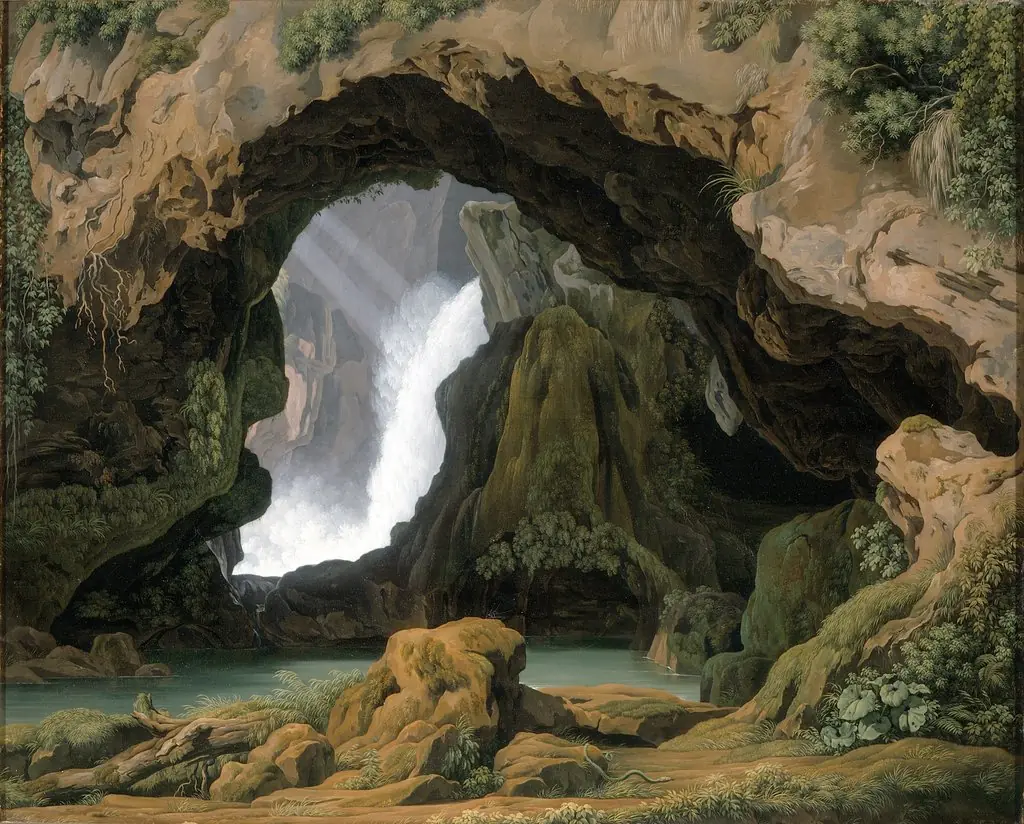 The Grotto of Neptune in Tivoli
 The Boulder and the Flume
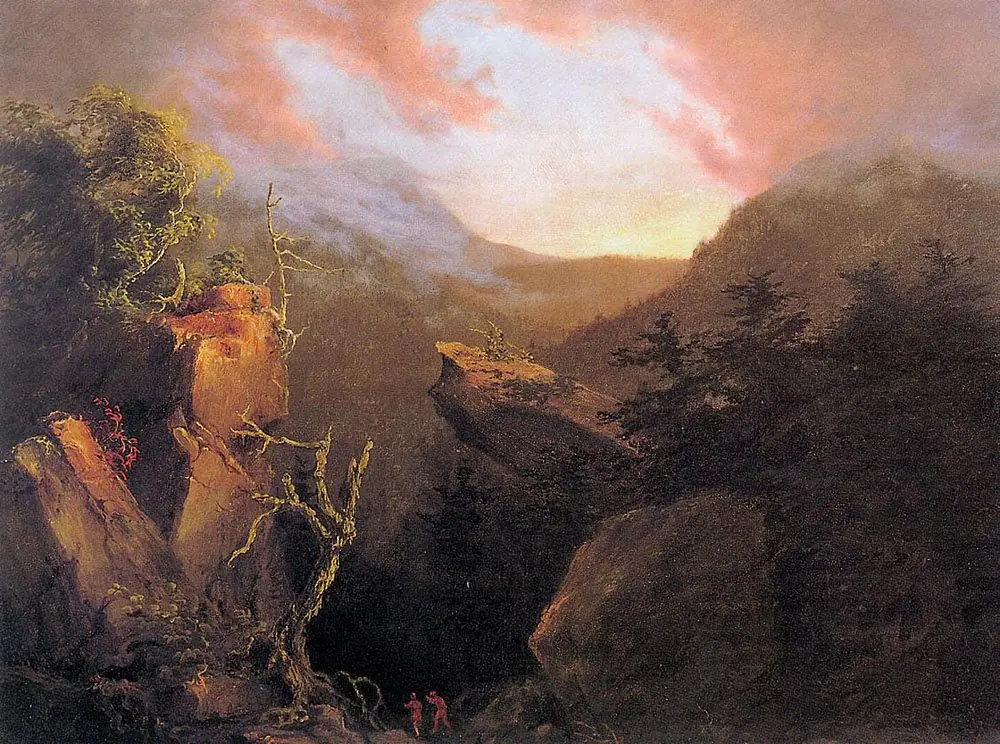 Mountain Sunrise, Catskill
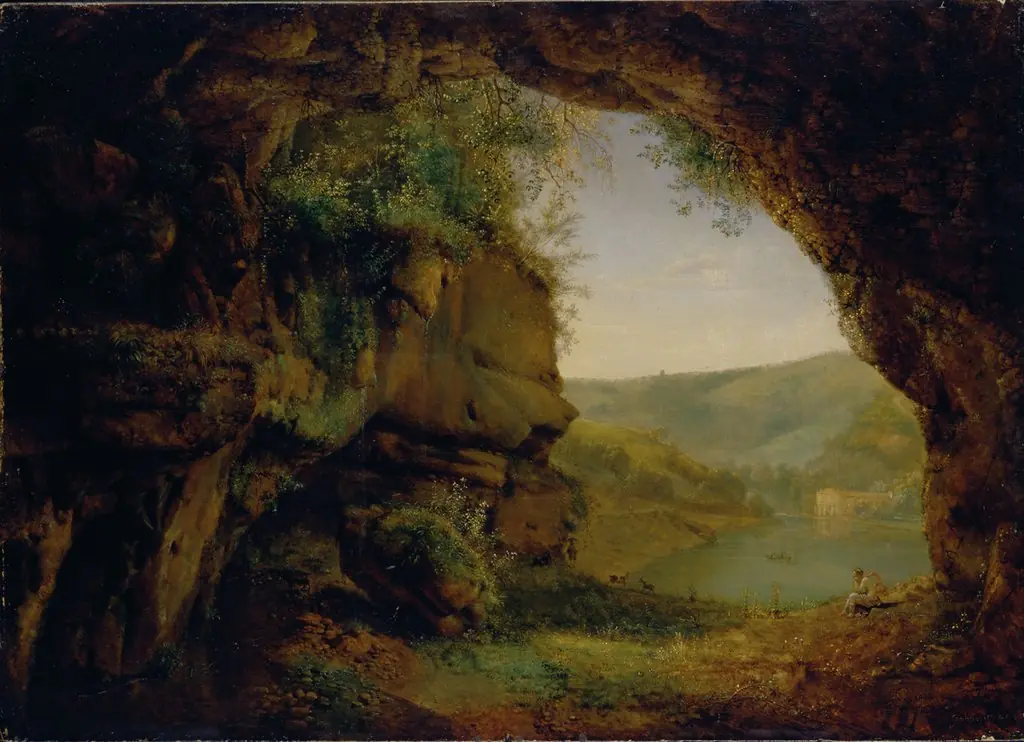 La Grotte des Étroits
 A Scottish waterfall
 Dante and Virgil Descending into Hell
 Trees on a Rocky Hillside
 Tivoli Waterfall