Artwork
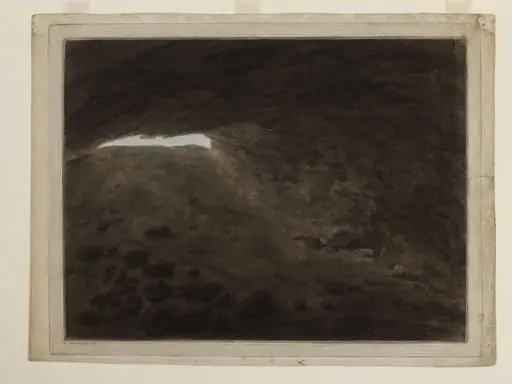
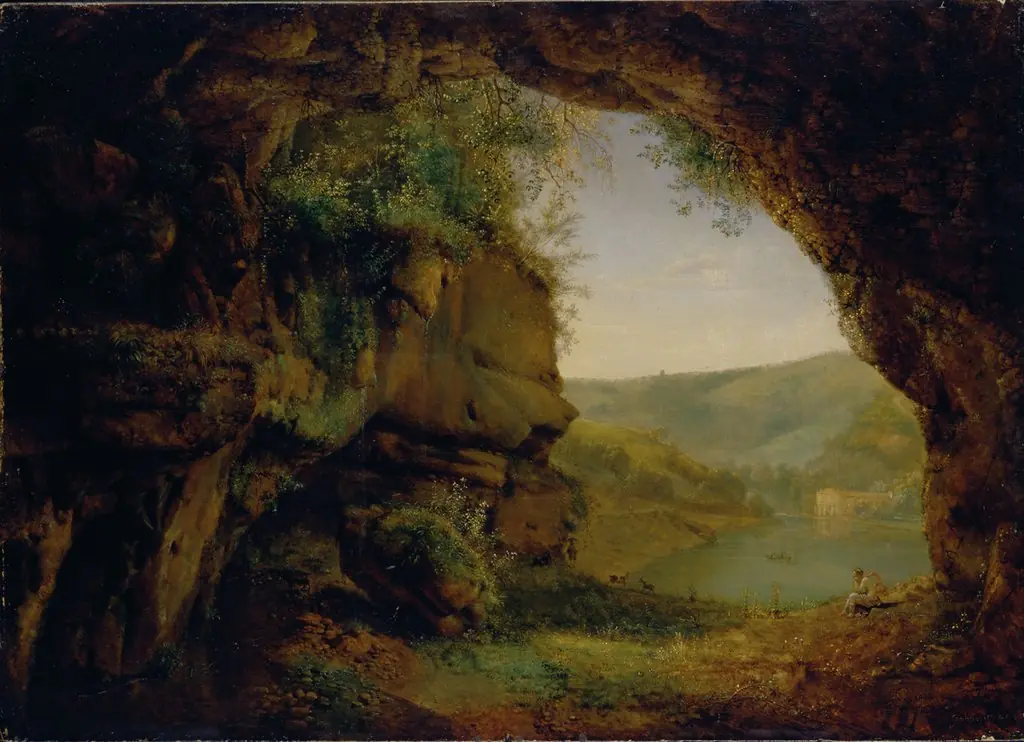
A Cavern in the Campagna, Rome
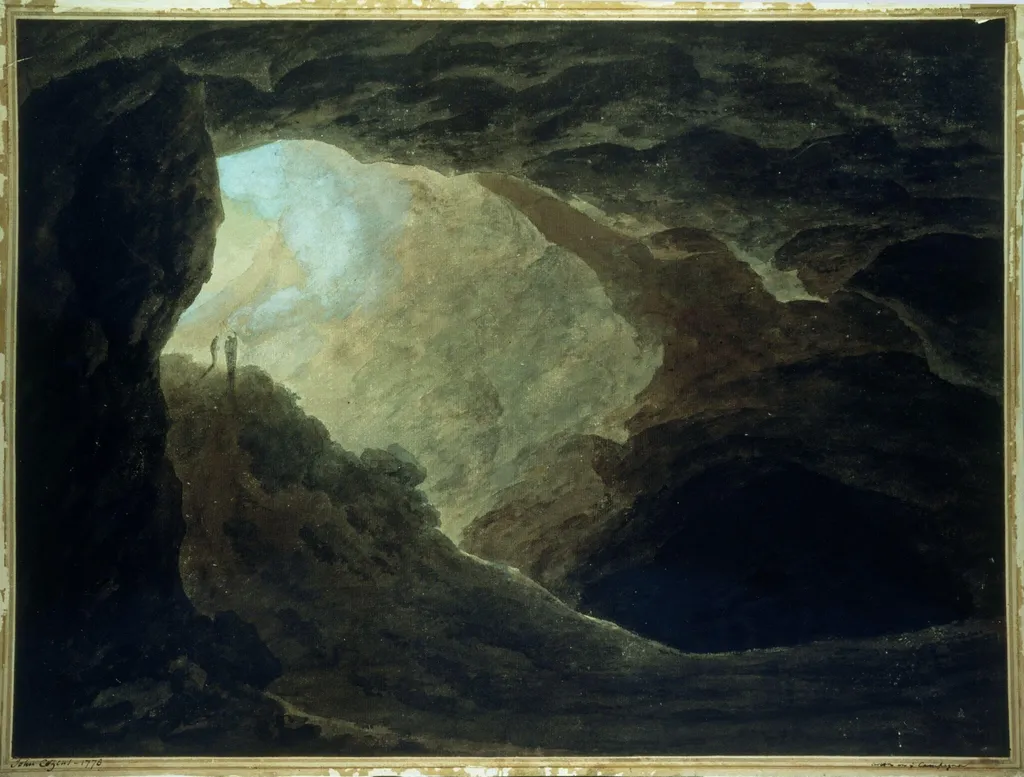
A Cavern in the Campagna, Rome is a watercolor work on paper by the Romanticist artist John Robert Cozens. It dates from 1778 and is held in the collection of the Victoria and Albert Museum.
About this work
Overview
John Robert Cozens’s watercolour, titled *A Cavern in the Campagna, Rome*, presents a stark, shadowed entrance to a cave set against a turbulent sky. Executed in the late 18th century, the work departs from the era’s typical bright, pastoral Italian scenes, opting instead for a composition that emphasizes darkness, depth, and an unsettling atmosphere.
Subject & Meaning
The painting focuses on the yawning mouth of a cavern, framed by twisted roots and a storm‑filled horizon. By foregrounding the ominous interior rather than picturesque ruins, Cozens engages the 18th‑century aesthetic of the sublime, inviting viewers to experience a mixture of awe and apprehension that suggests the natural world’s overwhelming power.
Technique & Style
Cozens employs a limited palette of ink and diluted watercolor to render the cavern’s inky depths, allowing the surrounding sky to retain a muted, cloudy tone. The contrast between the dense, almost tactile darkness of the interior and the lighter, atmospheric sky creates a visual tension that heightens the sense of mystery and scale.
History & Provenance
Created between 1752 and 1797, the work is part of Cozens’s broader oeuvre that explored dramatic landscapes. It is now held by the Victoria and Albert Museum, where it is catalogued among the institution’s collection of 18th‑century British watercolours, reflecting the artist’s influence on later Romantic landscape painters.
Artist & collection
Artist
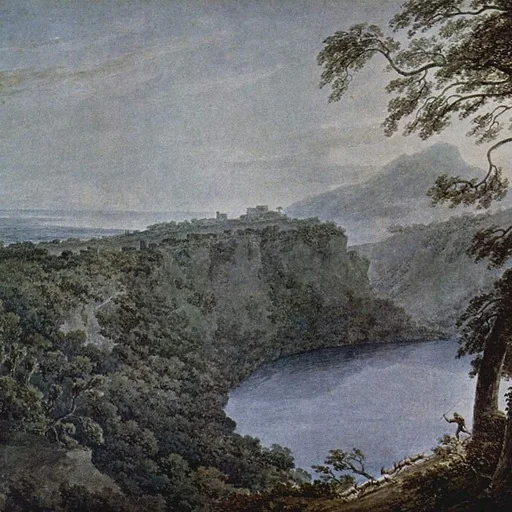
John Robert Cozens (1752 – 14 December 1797) was an English painter of romantic watercolour landscapes, nearly all of Continental scenes.

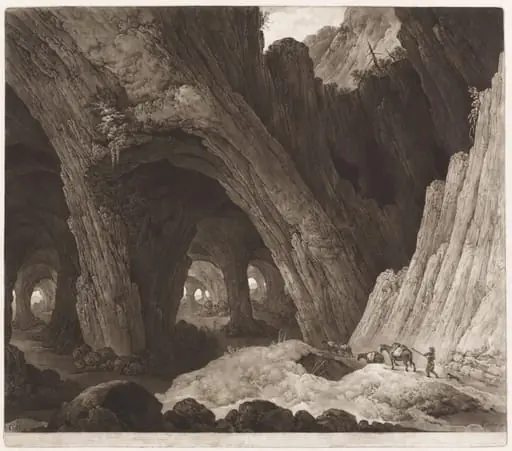 Travelers Resting in Gigantic Caverns
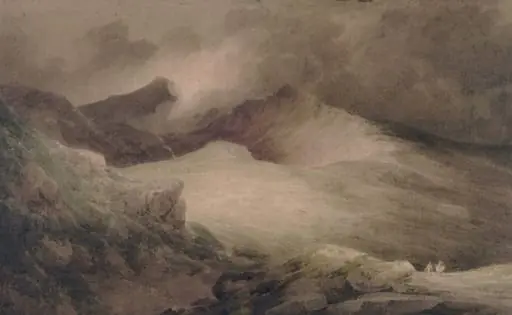 Snowdon
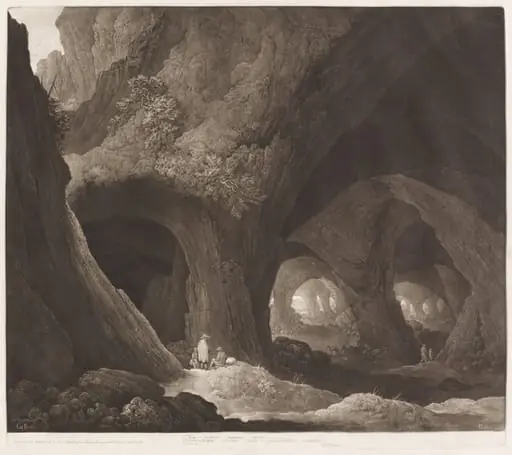 Travelers in Gigantic Caverns
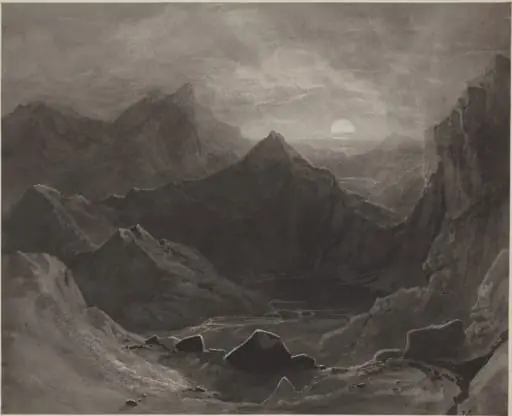 The Dawn of Creation
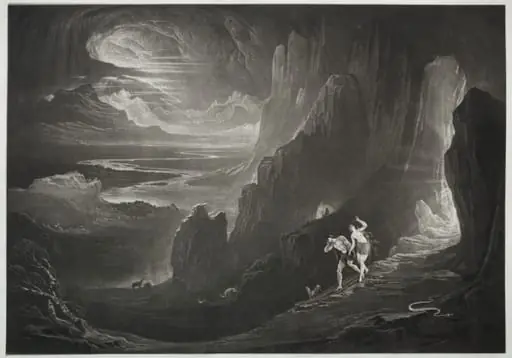 Paradise Lost: Adam and Eve Driven out of Paradise
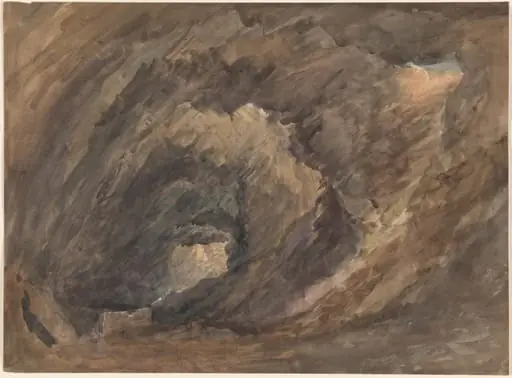 Grotto Interior
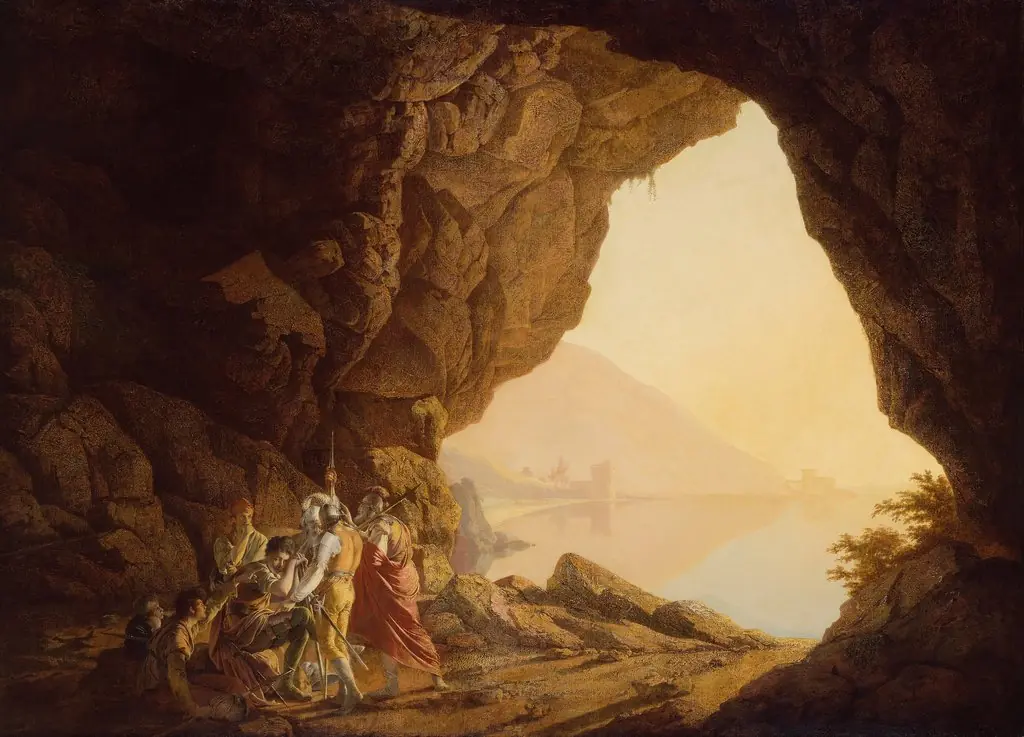 Grotto by the Seaside in the Kingdom of Naples with Banditti, Sunset
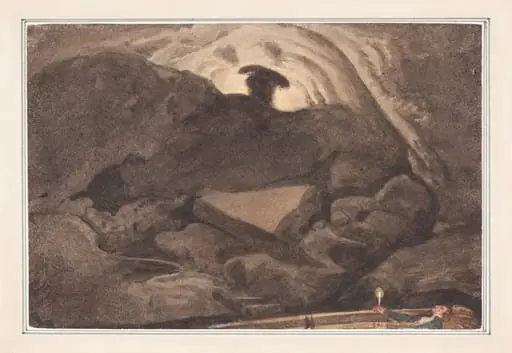 Scene in a Cave
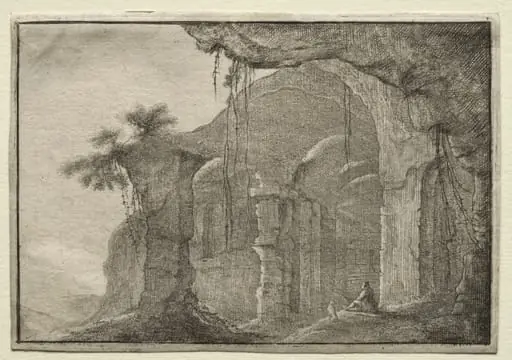 Ruins of an Amphitheatre
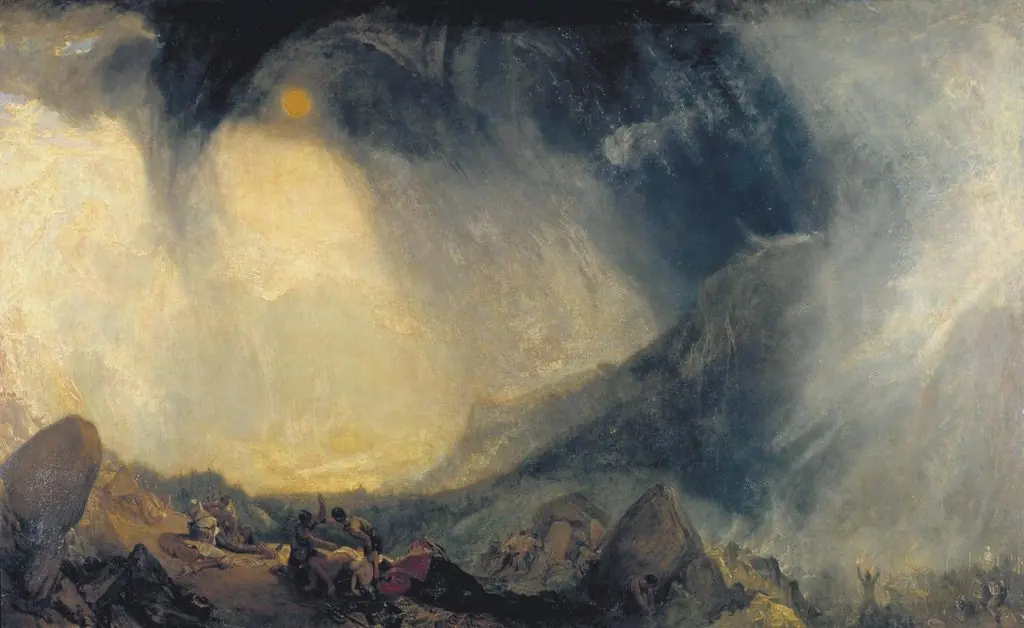 Snow Storm: Hannibal and his Army Crossing the Alps
 La Grotte des Étroits