Artwork
Bearded Man with Shadowed Face, Wearing a Scarf and a Plumed Hat
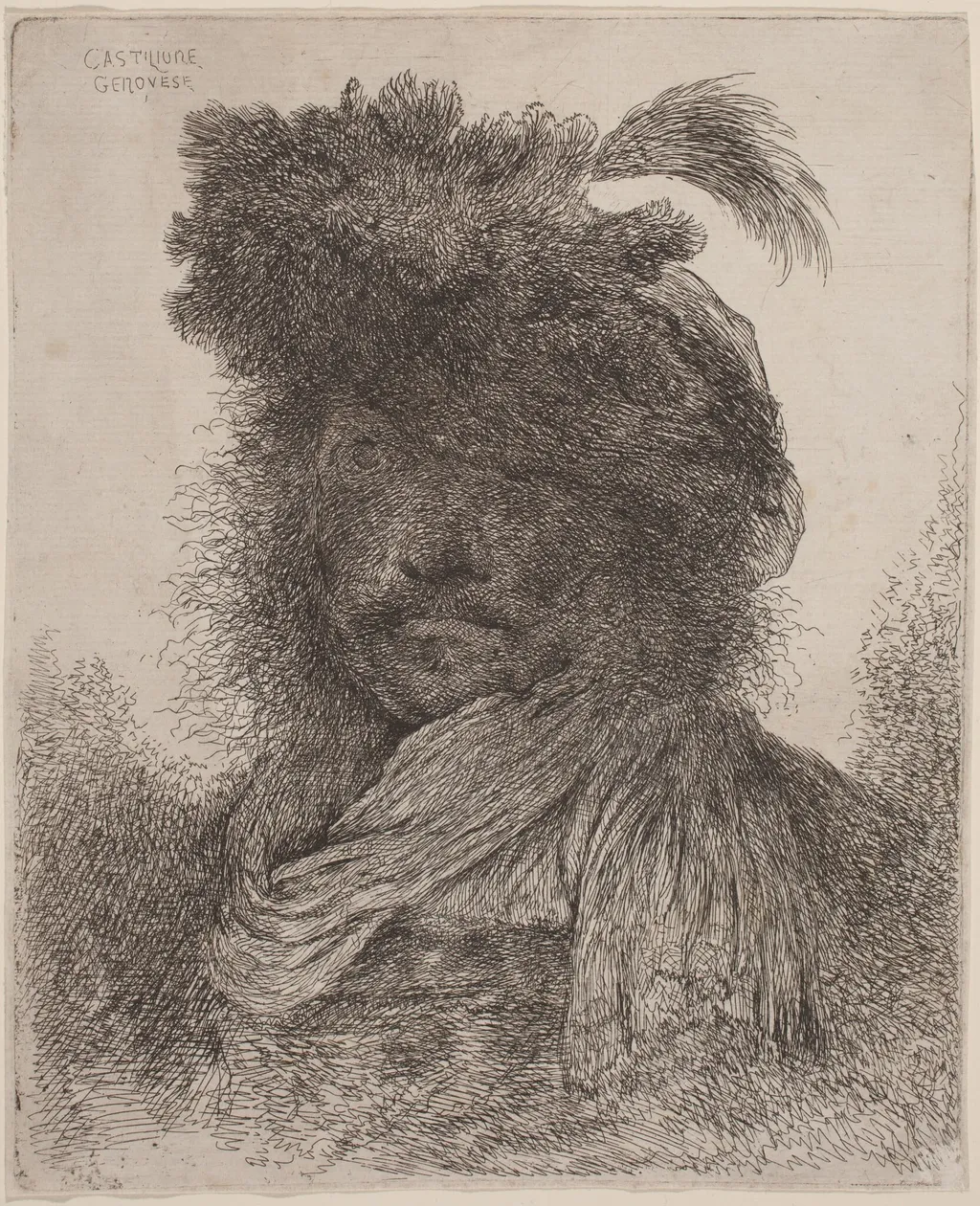
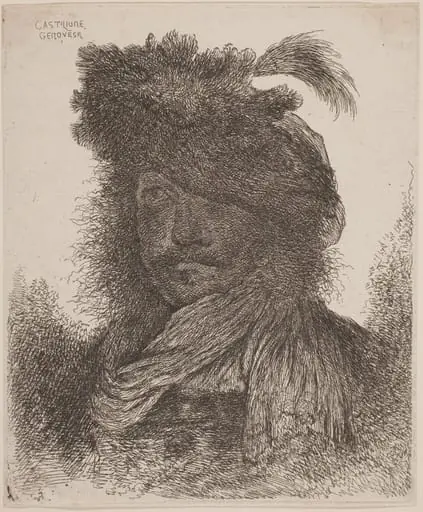
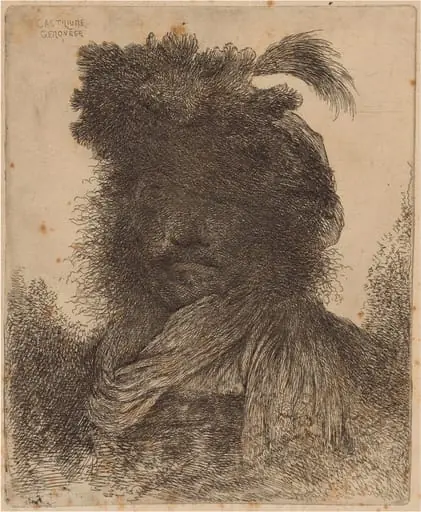
Bearded Man with Shadowed Face, Wearing a Scarf and a Plumed Hat is an ink print by the Baroque artist Giovanni Benedetto Castiglione. It dates from 1646 and is held in the collection of the National Gallery of Art.
About this work
Overview
Known also by the nickname Il Grechetto, Castiglione worked across painting, drawing, and printmaking, contributing to the evolution of graphic techniques.
This etching on laid paper, dated to approximately 1646, is attributed to Giovanni Benedetto Castiglione, a Genoese artist active during the Italian Baroque period. Known also by the nickname Il Grechetto, Castiglione worked across painting, drawing, and printmaking, contributing to the evolution of graphic techniques. The print exemplifies his engagement with portraiture and the interplay of light and shadow characteristic of the era.
Subject & Meaning
The composition centers on a male figure whose face is largely concealed by shadow, leaving only a beard, mustache, and fragments of expression visible. The subject wears a plumed hat and scarf, elements that suggest a figure of status or refinement. The deliberate obscuring of facial features introduces an element of ambiguity, inviting speculation about the subject’s identity or the artist’s intent to evoke mood over likeness.
Technique & Style
Castiglione’s etching demonstrates the Baroque preoccupation with dramatic contrast, employing deep shadows and selective illumination to shape the figure’s form. The medium of laid paper, with its subtle texture, enhances the fine lines and tonal variations of the print. This work reflects the artist’s skill in manipulating light to create depth, a hallmark of the period’s visual language, while also showcasing his draftsmanship.
History & Provenance
Produced in mid-17th-century Italy, the etching emerges from Castiglione’s broader body of work, which initially included history paintings and portraits before shifting toward rural and animal subjects. As a print, it circulated within the networks of collectors and connoisseurs who valued graphic works for their technical and aesthetic qualities. Its survival offers insight into the dissemination of Baroque imagery across Europe.
Context
During this period, Italian printmakers explored new methods to expand the expressive potential of etching. Castiglione himself experimented with monotyping, a technique that bridged drawing and printmaking. This work aligns with the Baroque era’s emphasis on emotional intensity and dynamic composition, while its portrait format reflects the era’s interest in individual character, even when rendered enigmatically.
Artist & collection
Artist
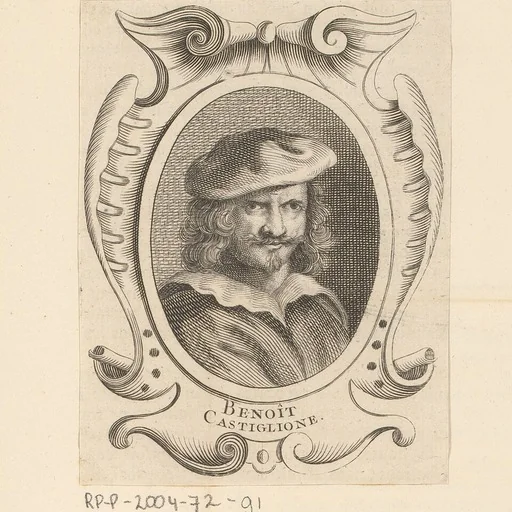
Giovanni Benedetto Castiglione
Giovanni Benedetto Castiglione (baptized 23 March 1609 – 5 May 1664) was an Italian Baroque painter, printmaker and draftsman, of the Genoese school.

 Bearded Man with Shadowed Face, Wearing a Scarf and a Plumed Hat
 Bearded Man with Shadowed Face, Wearing a Scarf and a Plumed Hat
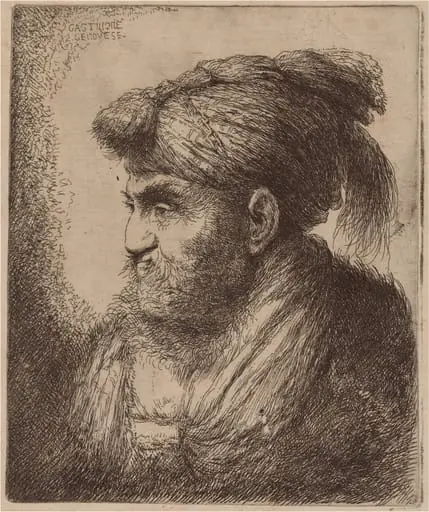 Man with a Beard and a Tassled Headdress, Facing Left
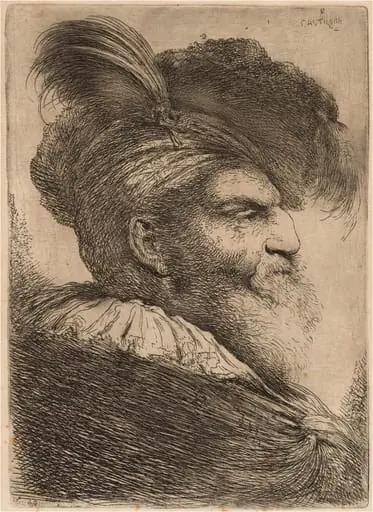 Man with a Long Beard and Headdress, Facing Right
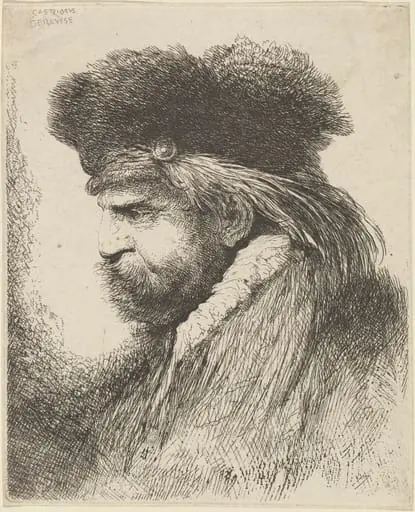 Bearded Man in a Fur Cap, Facing Left
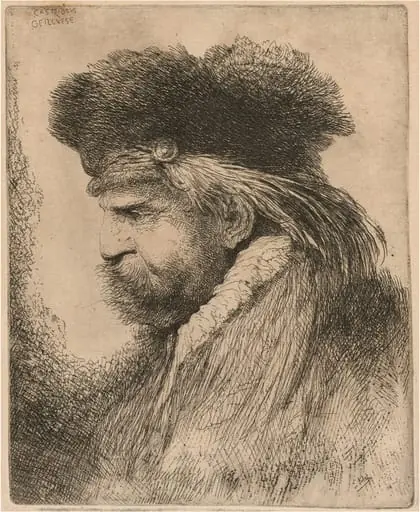 Bearded Man in a Fur Cap, Facing Left