Artwork
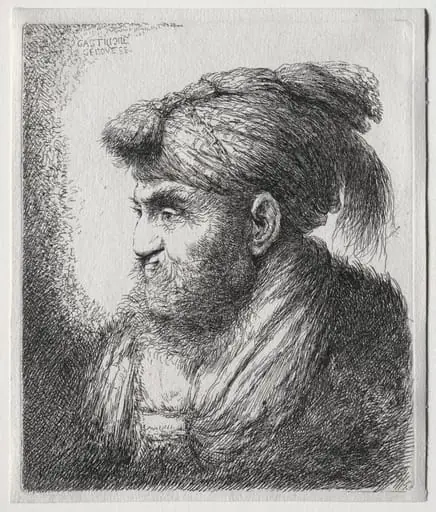
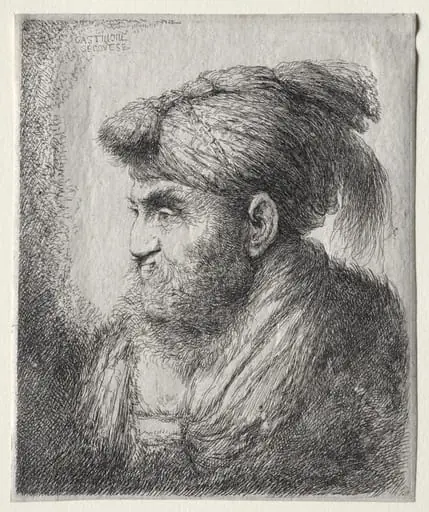
Man with a Beard and a Tassled Headdress, Facing Left
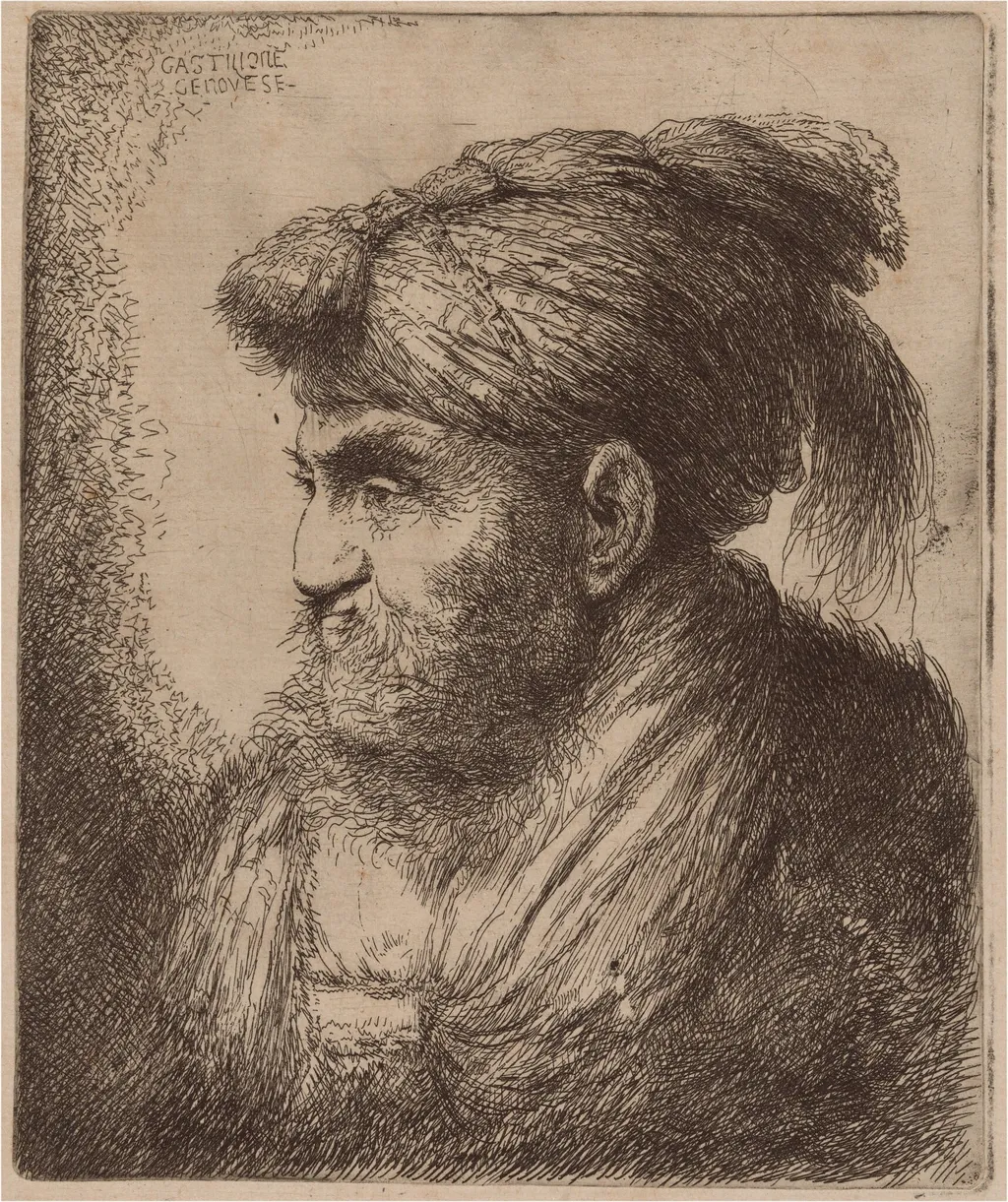
Man with a Beard and a Tassled Headdress, Facing Left is an ink print by the Baroque artist Giovanni Benedetto Castiglione. It dates from 1646 and is held in the collection of the National Gallery of Art.
About this work
Overview
Created around 1646, this etching by Giovanni Benedetto Castiglione depicts a bearded man turned to the left, wearing a tassled headdress.
Created around 1646, this etching by Giovanni Benedetto Castiglione depicts a bearded man turned to the left, wearing a tassled headdress. Executed on laid paper, the work exemplifies Castiglione’s mastery of printmaking during the Baroque era. His technical precision and expressive line work distinguish this portrait among his numerous figure studies, reflecting his deep engagement with the human form through the medium of ink and plate.
Subject & Meaning
The figure, rendered without clear identity, functions as a study of character and texture rather than a formal portrait. The thick, tangled lines of beard and hair suggest vitality and age, while the ornate headdress implies cultural or regional dress. Castiglione’s focus on the face and head, stripped of context, invites contemplation of individuality and presence, consistent with his interest in expressive portraiture.
Technique & Style
Castiglione employed etching to achieve deep, saturated lines by allowing ink to pool in the grooves of the copper plate. The laid paper’s subtle grid pattern enhances the tactile quality of the image, complementing the rough, energetic strokes that define the beard and hat. His handling of line is both spontaneous and controlled, balancing immediacy with structural clarity—a hallmark of his graphic style.
History & Provenance
Castiglione, known as Il Grechetto in Italy and Le Benédette in France, produced this print during a period of intense activity in his printmaking career. Though the specific early ownership of this impression is undocumented, it aligns with the broader circulation of his etchings among collectors and artists in 17th-century Europe, particularly in Genoa and France, where his work was widely admired.
Context
In mid-17th century Italy, etching was a favored medium for artists exploring intimate studies beyond large-scale painting. Castiglione’s portraits, like this one, responded to a growing appetite for personal, expressive imagery. His work stood apart from formal court portraiture, instead capturing the rawness of individual features, reflecting broader Baroque interests in emotion and physical presence.
Legacy
Though Castiglione is often noted for inventing monotype, his etchings like this one sustained his reputation as a draftsman of exceptional sensitivity. His ability to convey texture and character through line influenced later generations of printmakers, particularly in the development of expressive portraiture. This work remains a quiet but significant example of his contribution to the evolution of graphic art in the Baroque period.
Artist & collection
Artist
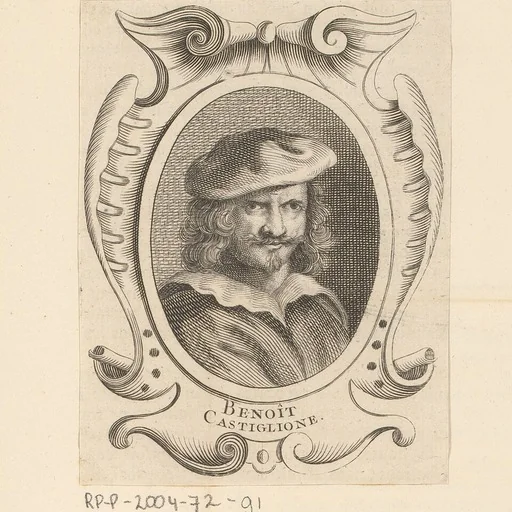
Giovanni Benedetto Castiglione
Giovanni Benedetto Castiglione (baptized 23 March 1609 – 5 May 1664) was an Italian Baroque painter, printmaker and draftsman, of the Genoese school.

 The Large Heads of Men in Oriental Headdress: A Man Nearly in Profile and Turned to Left
 Bust of a Man with a Turban Facing Left
 Head of a Man in Oriental Turban
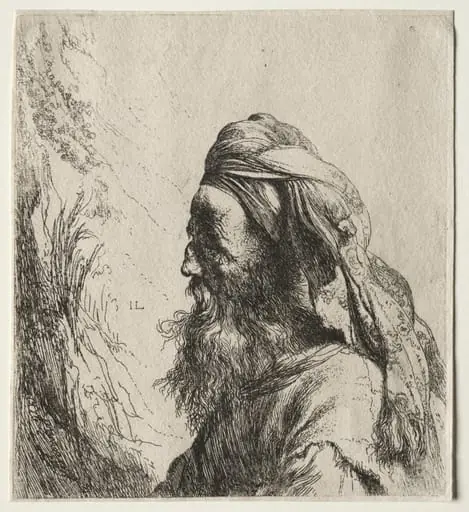 Head of an Oriental
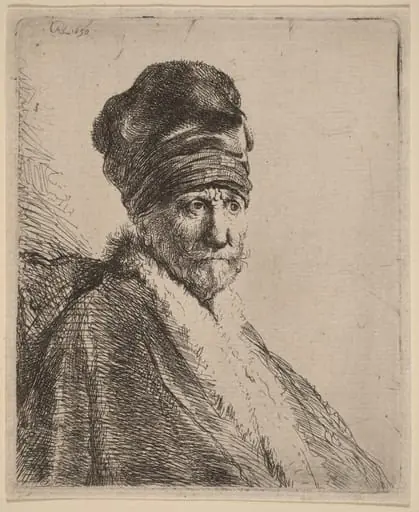 Bust of a Man Wearing a High Cap, Three-Quarters Right (The Artist's Father?)
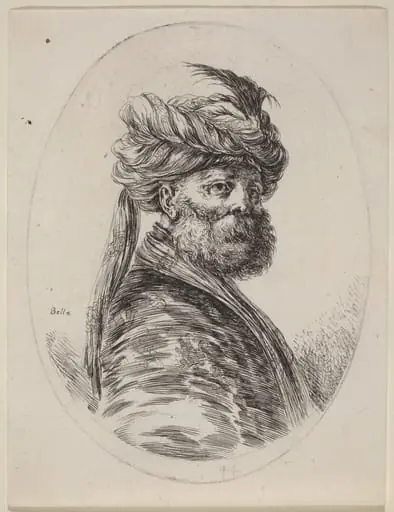 Bearded Moor in a Feathered Turban with a Veil, Turned to the Right
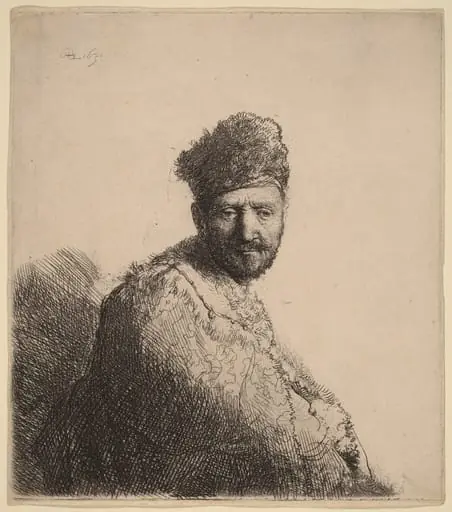 Bearded Man, in a Furred Oriental Cap and Robe: the Artist's Father
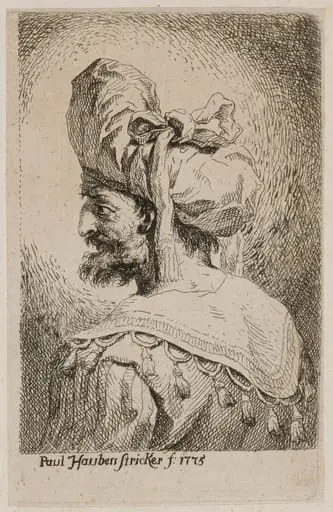 Oriental with a Soft Hat in Profile, Looking Left
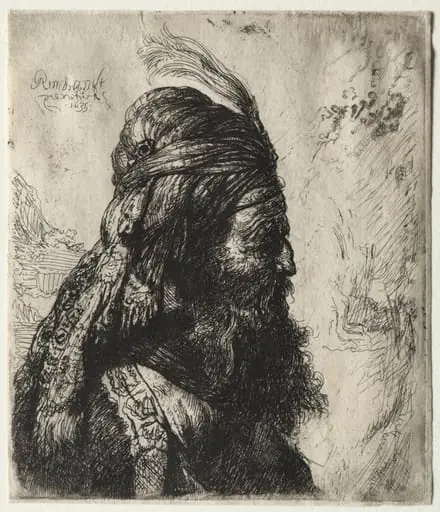 The Third Oriental Head