Artwork
Pan and Olympus
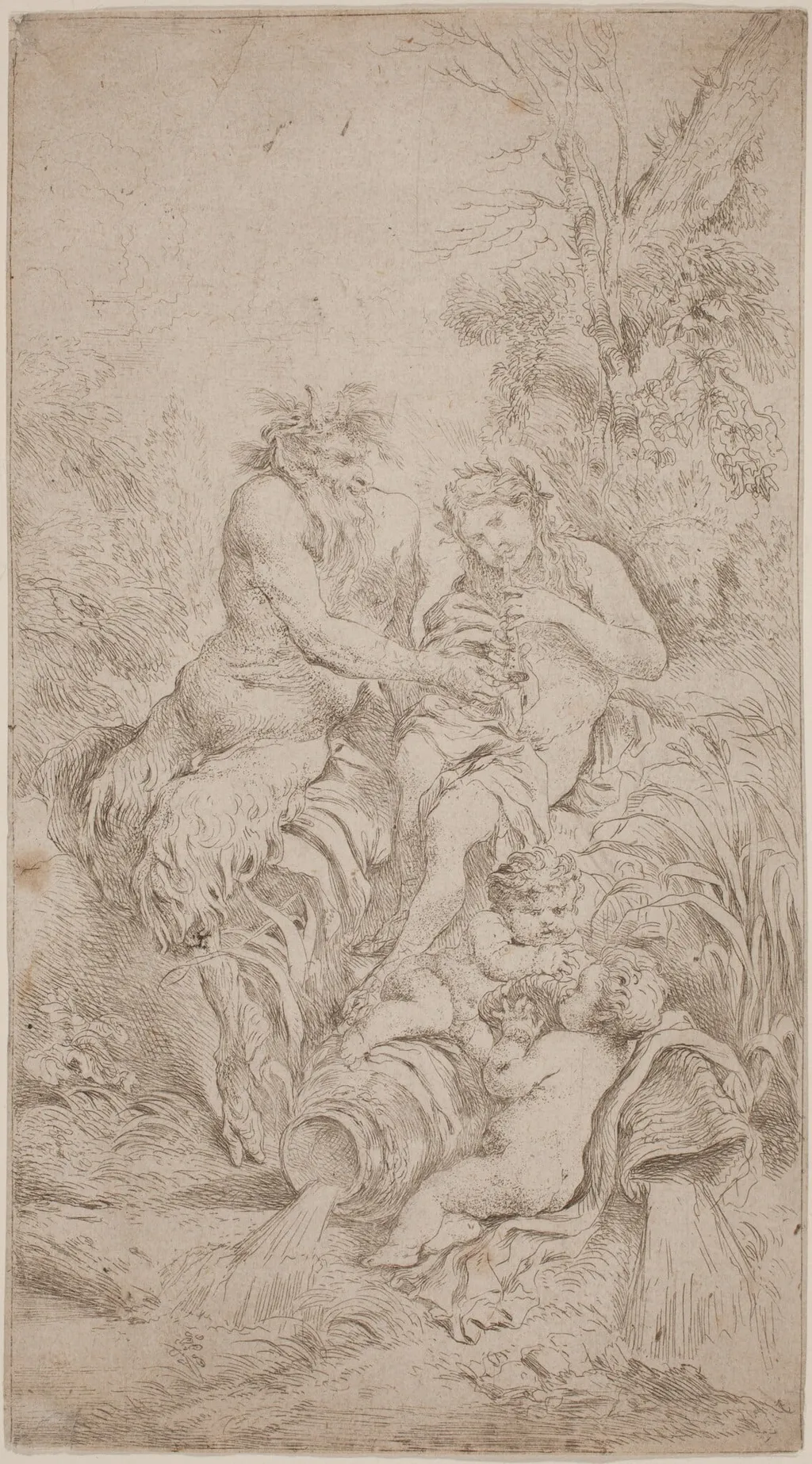
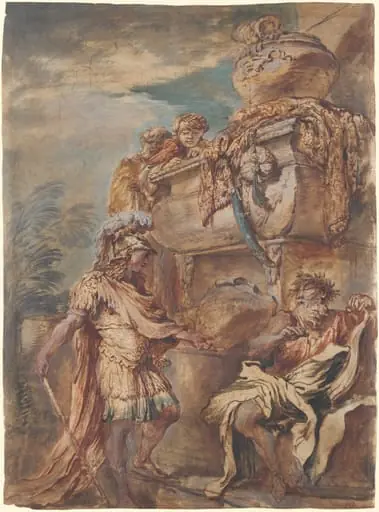
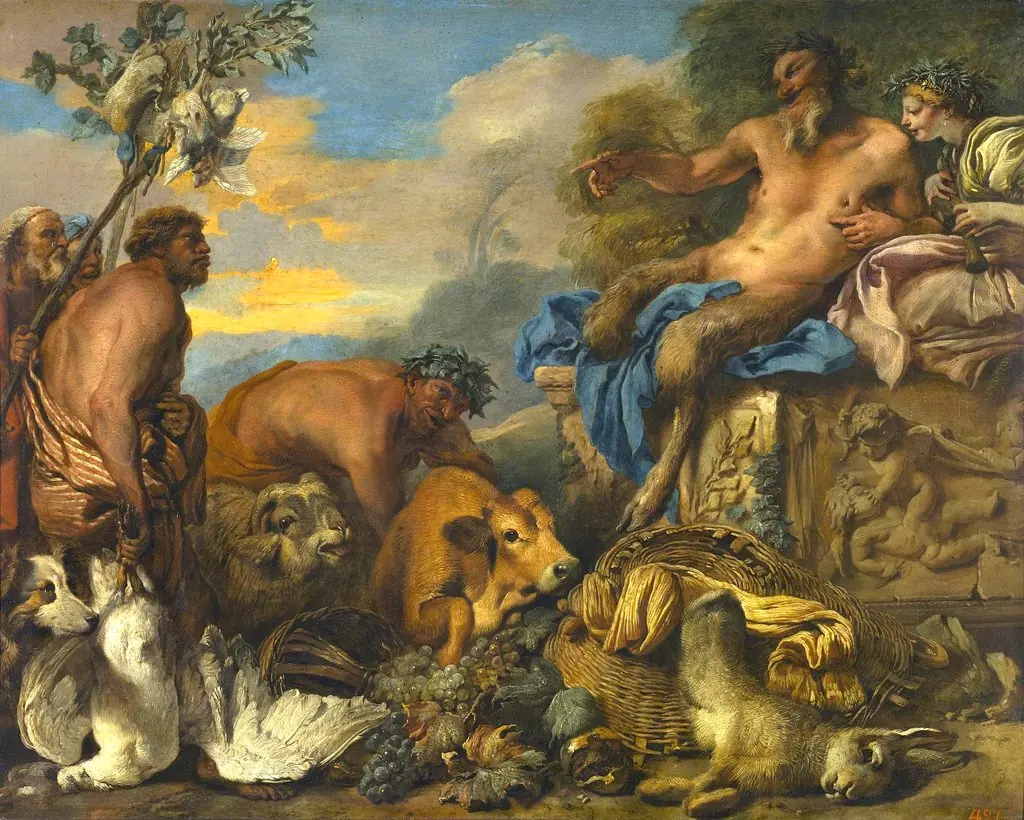
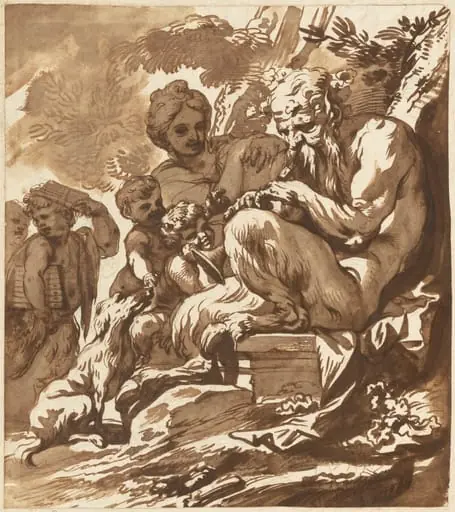
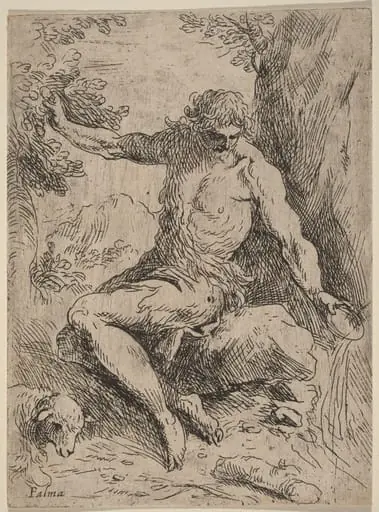
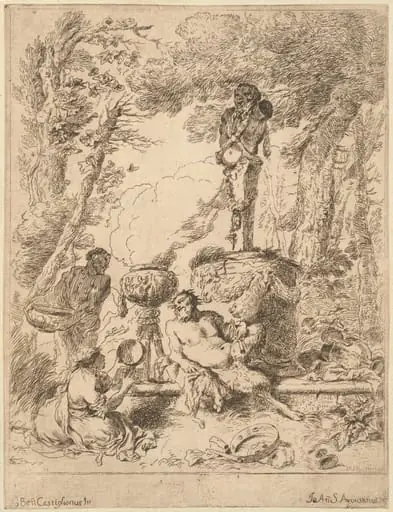
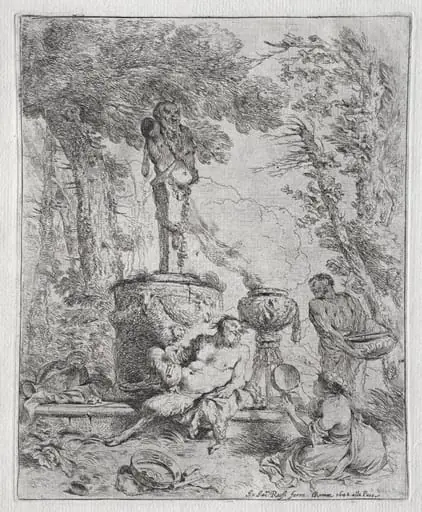
Pan and Olympus is an ink print by the Baroque artist Giovanni Benedetto Castiglione. It dates from 1646 and is held in the collection of the National Gallery of Art.
About this work
Overview
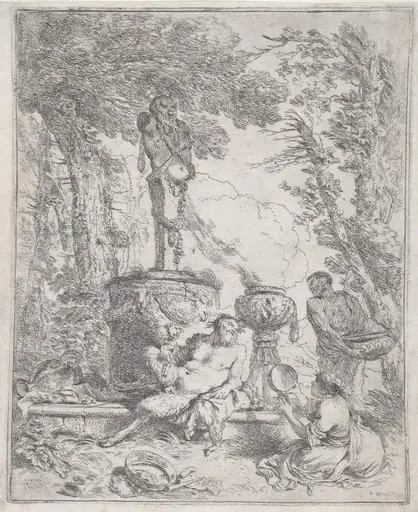
Created around 1646, *Pan and Olympus* is an etching on laid paper by Giovanni Benedetto Castiglione, a Genoese artist known for his experimental printmaking.
Created around 1646, *Pan and Olympus* is an etching on laid paper by Giovanni Benedetto Castiglione, a Genoese artist known for his experimental printmaking. Castiglione, also called Il Grechetto, was active across painting and print media, often blending pastoral themes with mythological subjects. This work exemplifies his technical innovation in etching, where fine lines and tonal contrasts evoke spatial depth and dynamic movement.
Subject & Meaning
The scene portrays Pan, the rustic god of shepherds and wild nature, within a landscape evoking Mount Olympus, the divine abode of the gods. Though not a literal depiction of the mountain, the composition suggests a convergence of the earthly and the sacred. The juxtaposition underscores themes of nature’s primal force against celestial order, a common tension in Baroque mythological imagery.
Technique & Style
Castiglione employed etching to achieve rich atmospheric effects, using varied line density and cross-hatching to model form and suggest distance. His handling of the plate allowed for spontaneous, energetic marks that convey movement through foliage and terrain. This approach reflects his broader interest in monotype-like immediacy, even within the structured medium of etching.
History & Provenance
The print emerged during Castiglione’s mature period in Genoa, when his prints gained recognition across Italy and France. While the exact early ownership is undocumented, the work’s survival in multiple institutional collections indicates its early circulation among collectors of prints. Its attribution has remained consistent since the 18th century, with no known replicas or variants.
Context
In mid-17th century Italy, printmaking was increasingly valued as an independent art form, not merely a reproductive tool. Castiglione’s work aligned with a broader trend of artists exploring expressive potential in etching. His rural mythologies stood apart from classical rigidity, offering instead a visceral, almost theatrical interpretation of ancient stories rooted in observed naturalism.
Legacy
Castiglione’s innovations in etching influenced later generations of printmakers, particularly in their use of tonal variation and expressive line. *Pan and Olympus* remains a key example of how Baroque artists expanded the emotional range of print media. It is studied today for its synthesis of myth, landscape, and technical experimentation, reflecting a shift toward individual artistic voice in print.
Artist & collection
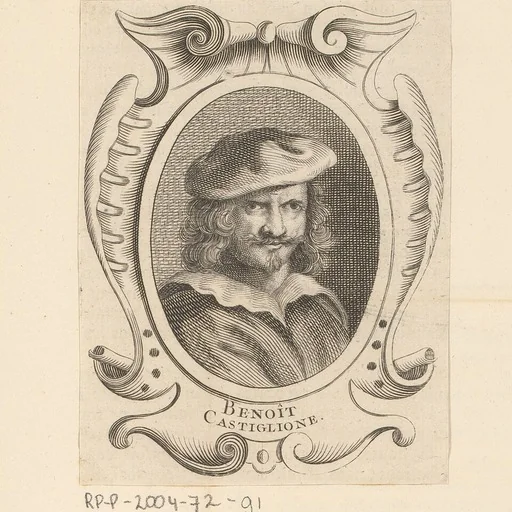
Artist
Giovanni Benedetto Castiglione
Giovanni Benedetto Castiglione (baptized 23 March 1609 – 5 May 1664) was an Italian Baroque painter, printmaker and draftsman, of the Genoese school.