Artwork
Saint Jerome
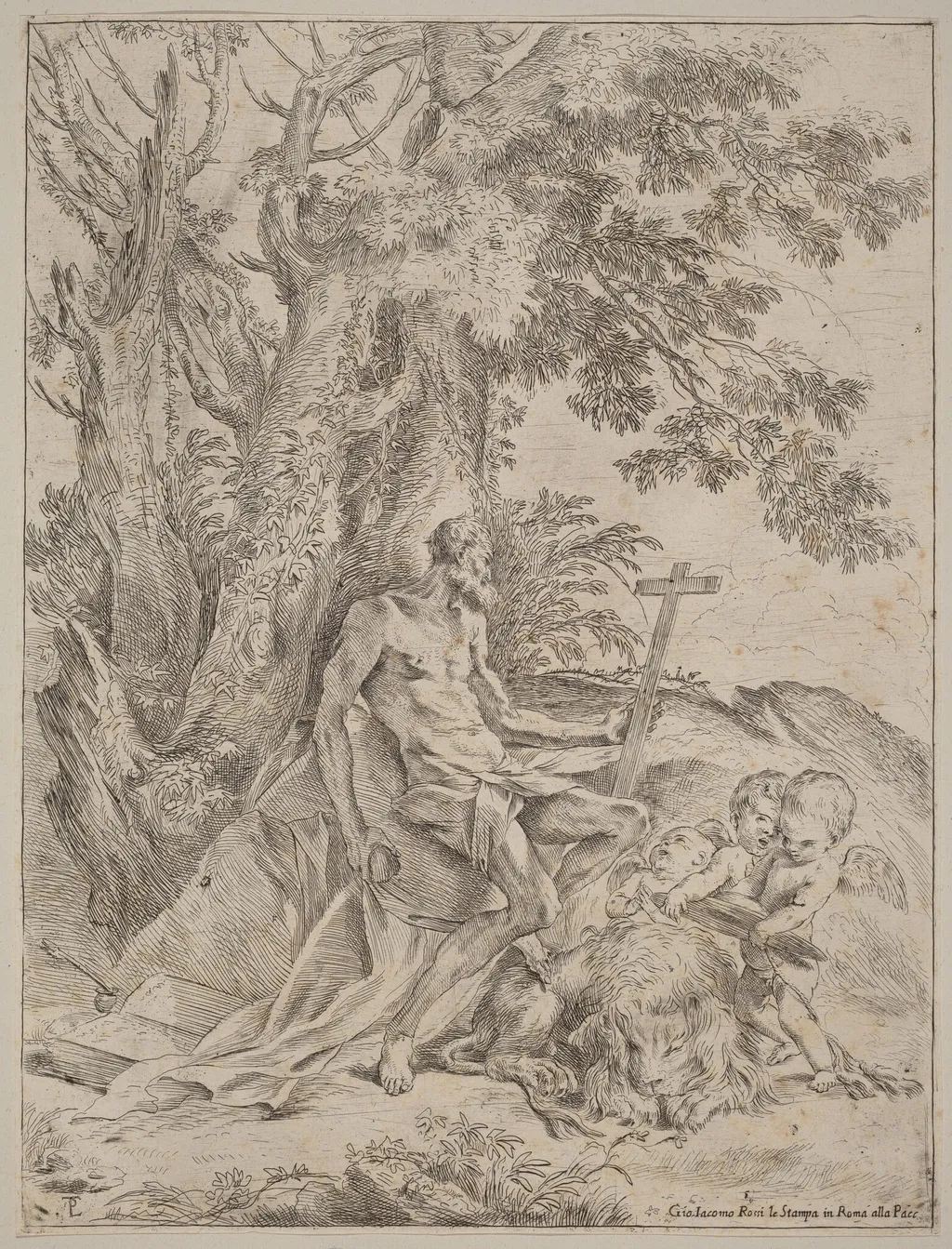
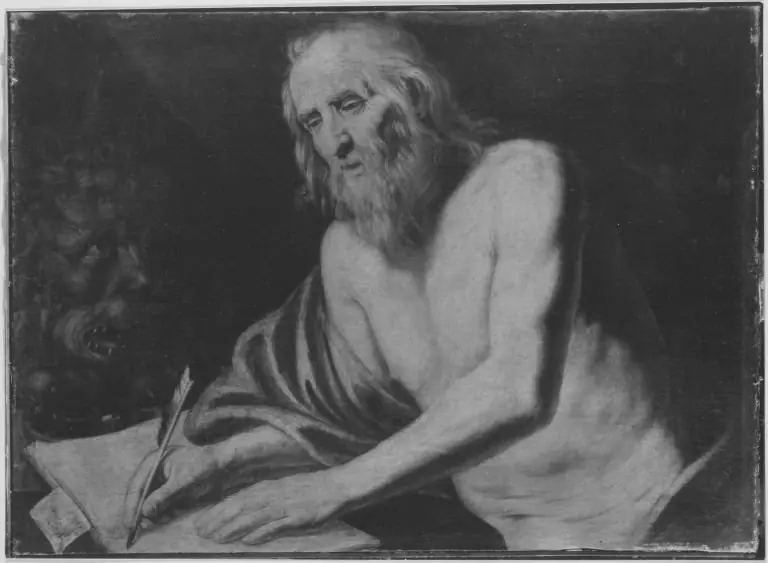
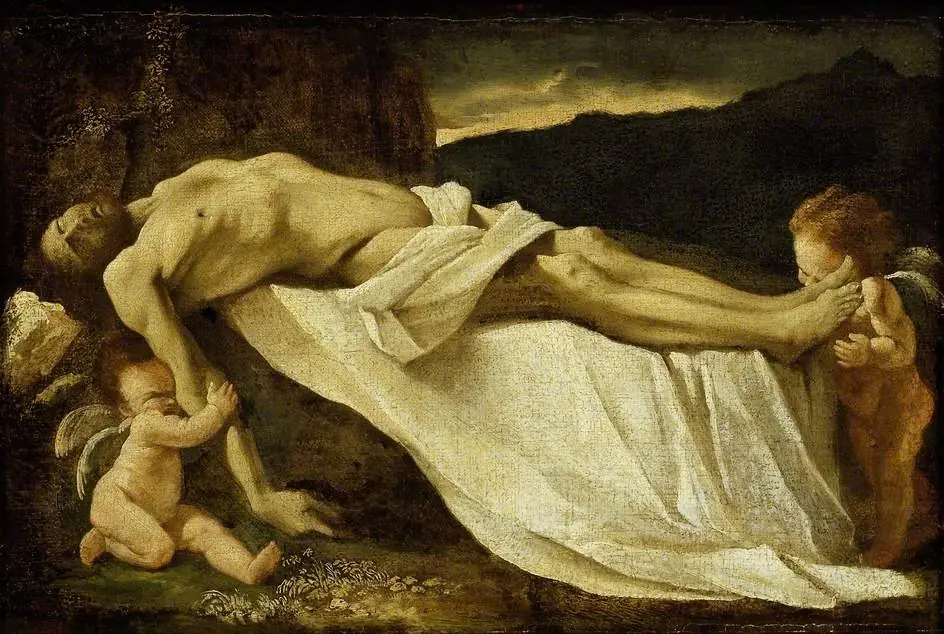
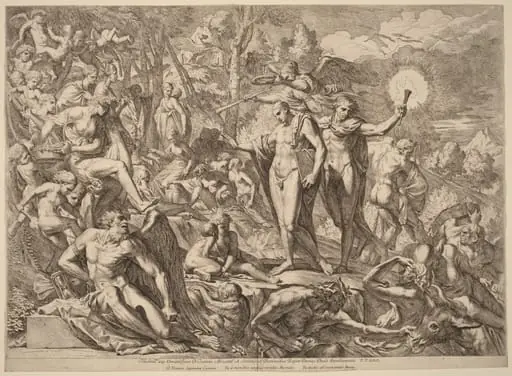
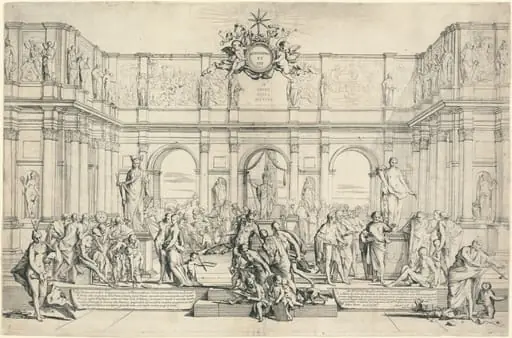
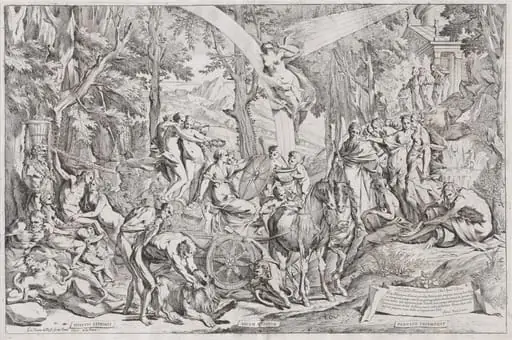
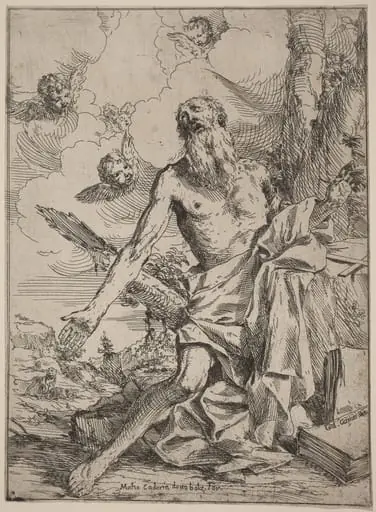
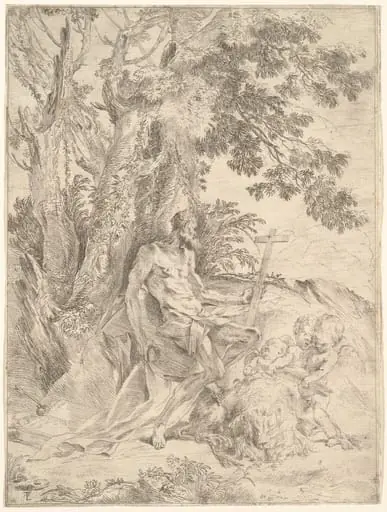
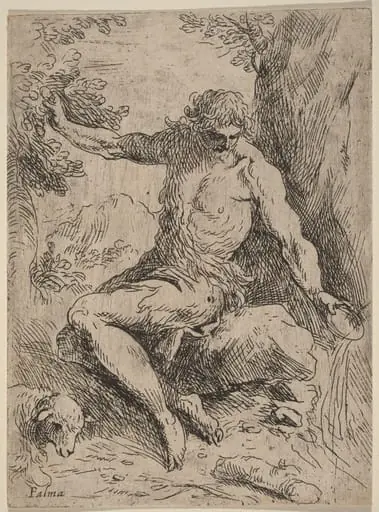
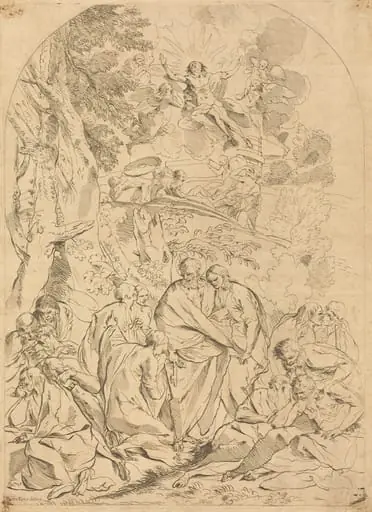
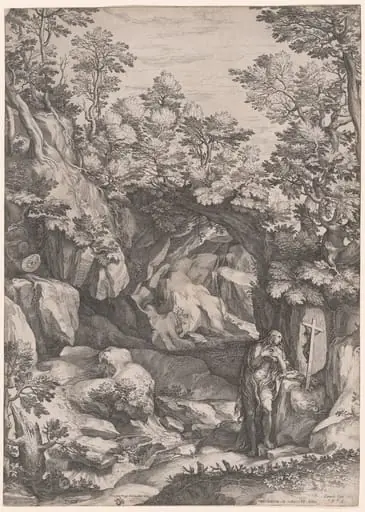
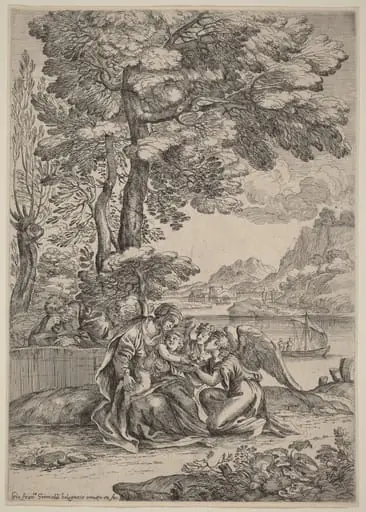
Saint Jerome is an ink print by the Baroque artist Pietro Testa. It dates from 1634 and is held in the collection of the National Gallery of Art.
About this work
Overview
Saint Jerome is a 1634 etching on laid paper by Pietro Testa, an Italian High Baroque artist primarily known for his printmaking and drawing skills, active within a Rome-based circle of Classical idealists.
Subject & Meaning
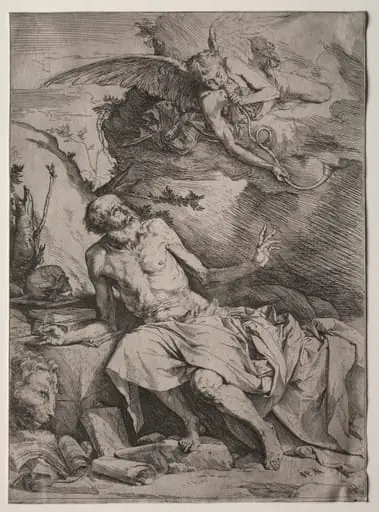
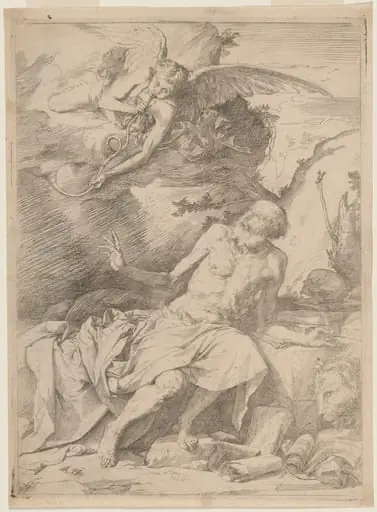
The etching depicts Saint Jerome in a state of contemplation, kneeling in a rugged landscape with a lion, symbolizing his association with solitude, scholarship, and faith. The composition conveys an atmosphere of quiet intensity, emphasizing the saint’s deep engagement in thought or prayer.
Technique & Style
Testa employed fine etching lines to achieve detailed, near-three-dimensional textures, particularly in the rocky terrain and foliage, characteristic of the High Baroque’s attention to expressive detail.
History & Provenance
Created in 1634, the work reflects Testa’s involvement with the Roman artistic and scholarly community centered around Cassiano dal Pozzo, which emphasized Classical and religious themes.
Context
Saint Jerome situates itself within the 17th-century European artistic preoccupation with merging classical influences with religious subjects, common among Testa’s contemporaries in Rome.
Legacy
While specific lasting impacts of *Saint Jerome* on subsequent art movements are not broadly documented, it remains representative of High Baroque printmaking and the enduring depiction of saintly contemplation in Early Modern European art.
Artist & collection
Artist
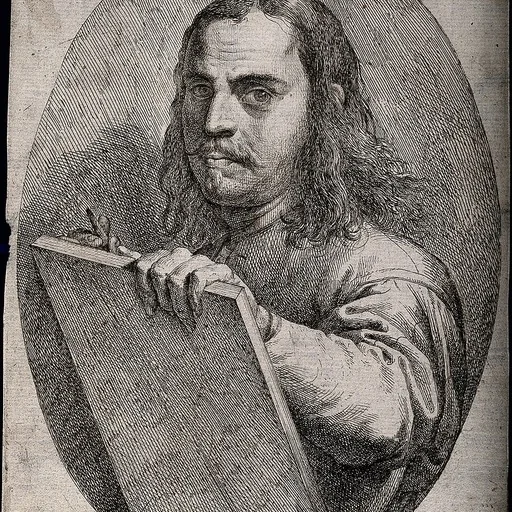
Pietro Testa (1612 – 1 March 1650) was an Italian High Baroque artist active in Rome.