Artwork
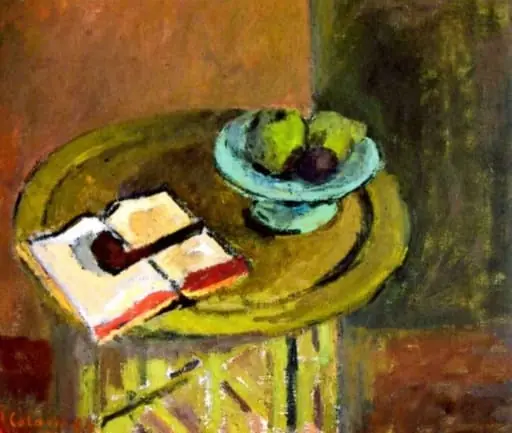
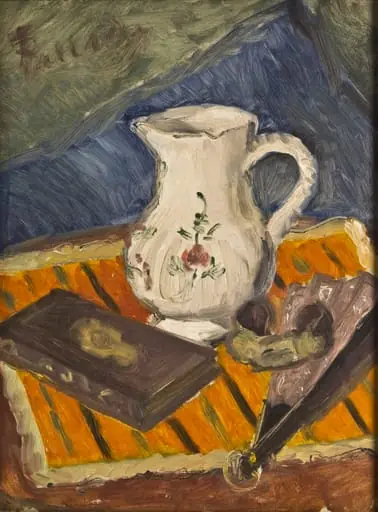
Natură statică cu pipă
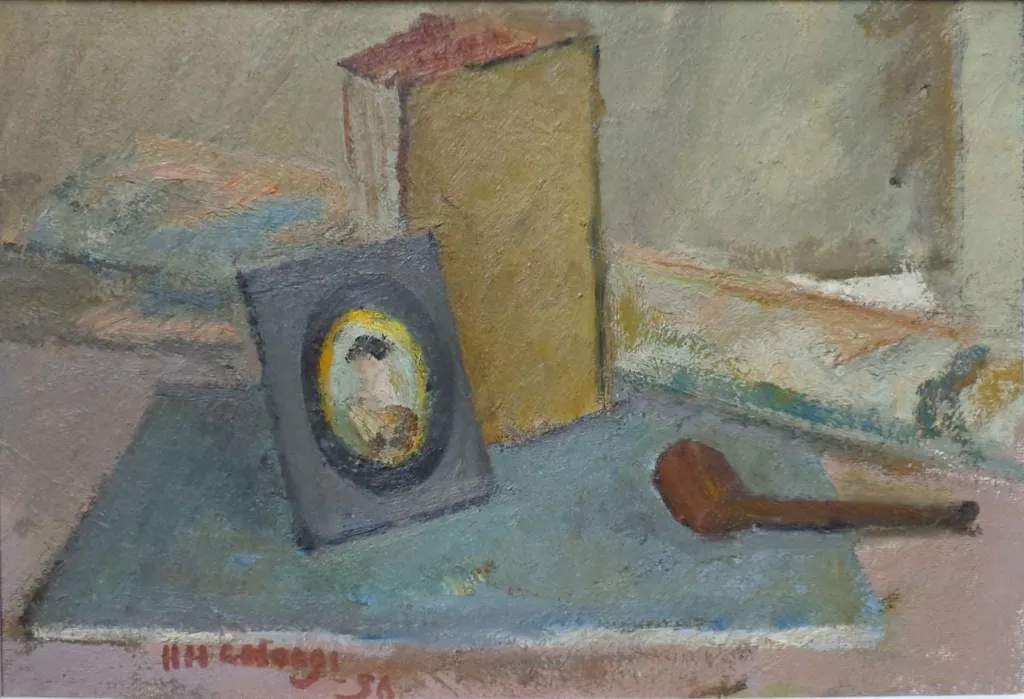
Natură statică cu pipă is a print by Henri H. Catargi. It dates from 1944 and is held in the collection of the Bucharest Municipality Museum.
About this work
Overview
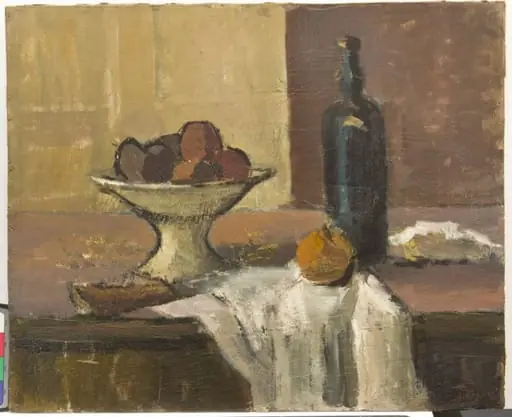
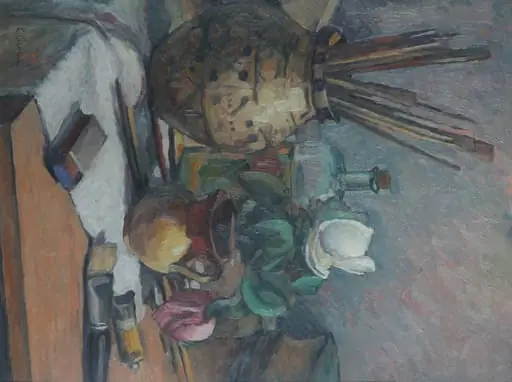
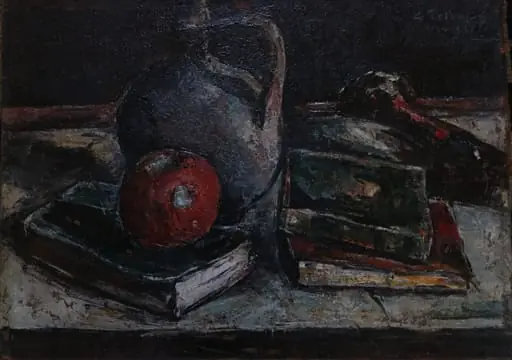
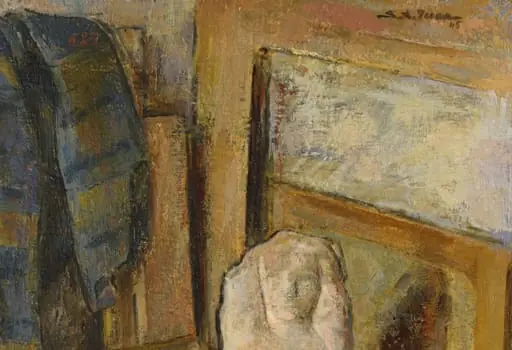
Executed with loose, unrefined brushwork, the composition avoids elaborate detail, favoring a quiet, almost improvised arrangement.
Painted around 1944 by Romanian artist Henri Catargi, *Natură statică cu pipă* is a modest still life featuring a pipe, a small mirror, and indistinct forms on a dark surface. Executed with loose, unrefined brushwork, the composition avoids elaborate detail, favoring a quiet, almost improvised arrangement. The work resides in the collection of the Museum of Ethnography, reflecting Catargi’s sustained interest in domestic objects rendered with emotional restraint rather than decorative precision.
Subject & Meaning
The painting centers on a pipe and a mirror, the latter faintly reflecting a blurred human face—an elusive presence amid otherwise inert objects. This subtle inclusion of a reflection introduces an implied observer without depicting a figure directly. The absence of narrative or symbolism suggests a meditation on solitude and the quiet dignity of everyday items, grounding the work in personal, introspective observation rather than allegory.
Technique & Style
Catargi employed rapid, uneven brushstrokes and a restrained palette of muted blues, yellows, and browns to construct the scene. Forms are suggested rather than defined, with no attempt at realistic depth or texture. The surface appears deliberately unfinished, emphasizing the act of painting over polished representation. This approach aligns with a modernist tendency to prioritize gesture and mood over conventional realism.
History & Provenance
Created during World War II, the painting emerged from a period when Catargi focused on still-life subjects as a means of personal expression amid broader social upheaval. It entered the Museum of Ethnography’s collection following its completion, likely through direct acquisition or donation. Its preservation in this institution underscores its value as a document of mid-20th-century Romanian artistic practice beyond official state-sanctioned styles.
Context
In 1940s Romania, still-life painting offered artists a space for quiet experimentation outside the pressures of monumental or propagandistic art. Catargi’s work fits within this trend, drawing from both local traditions and European modernism. His preference for humble objects and unpolished technique distinguishes him from contemporaries who pursued idealized forms, positioning him as a quiet voice in a turbulent artistic landscape.
Legacy
Though not widely exhibited, *Natură statică cu pipă* remains a representative example of Catargi’s intimate approach to still life. Its unadorned aesthetic and psychological subtlety have influenced later Romanian artists seeking alternatives to academic or socialist realism. The painting endures not for its technical mastery, but for its honest, unembellished engagement with ordinary things and the solitude they can evoke.
Artist & collection
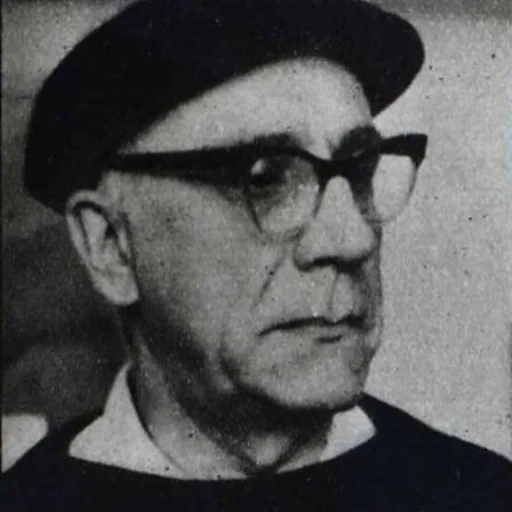
Artist
Henri Catargi (December 6, 1894, Bucharest, Romania – July 19, 1976, Bucharest) was a renowned Romanian painter from Braşov.