Artwork
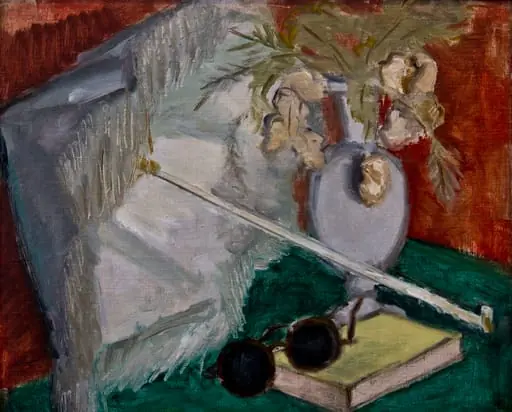
Natură statică cu cană și evantai
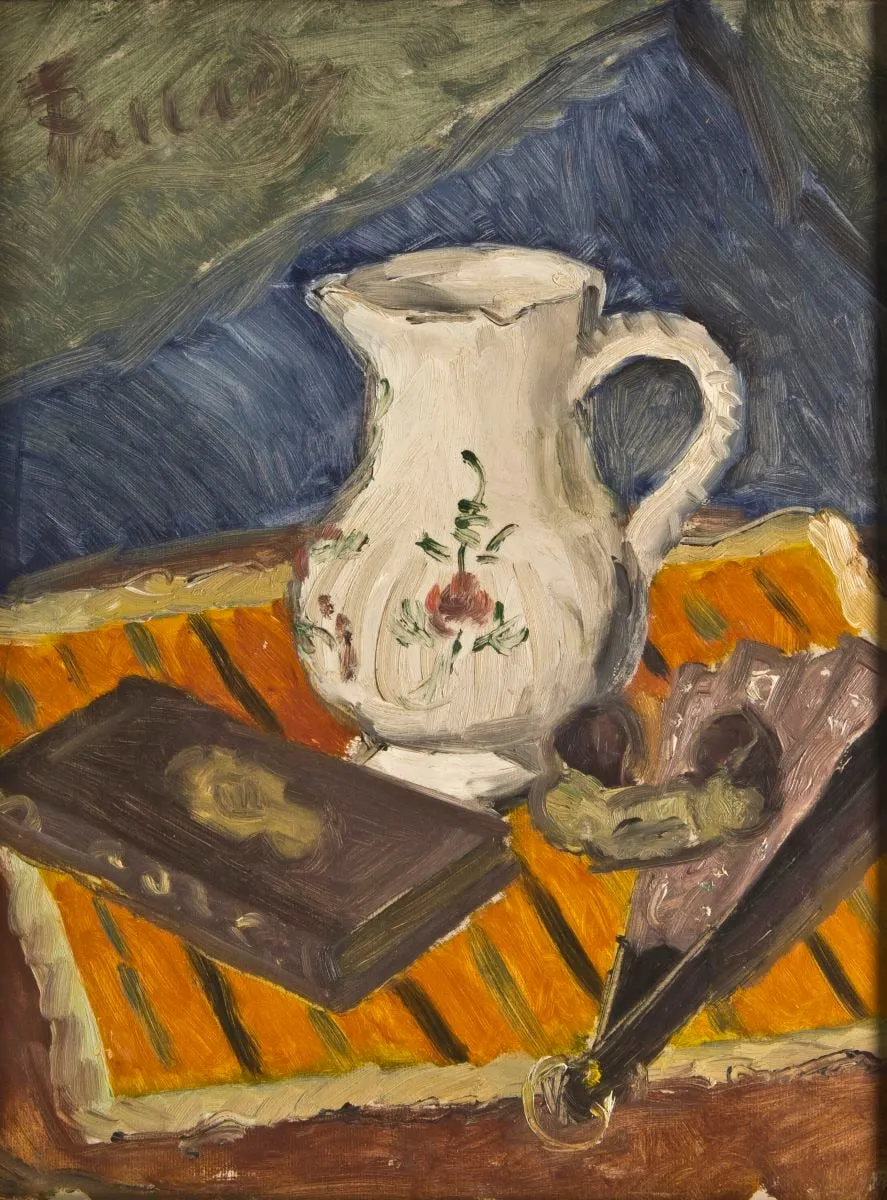
Natură statică cu cană și evantai is an unspecified painting by Theodor Pallady. It is held in the collection of the National Museum of Art of Romania.
About this work
Overview
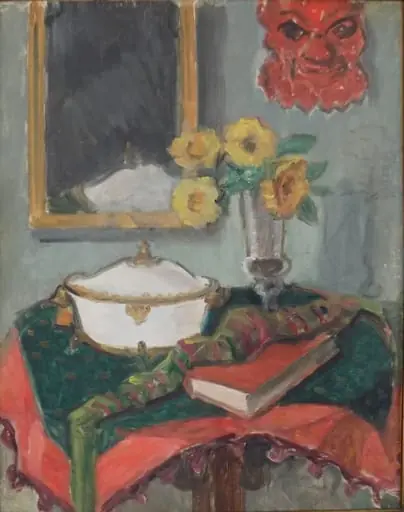
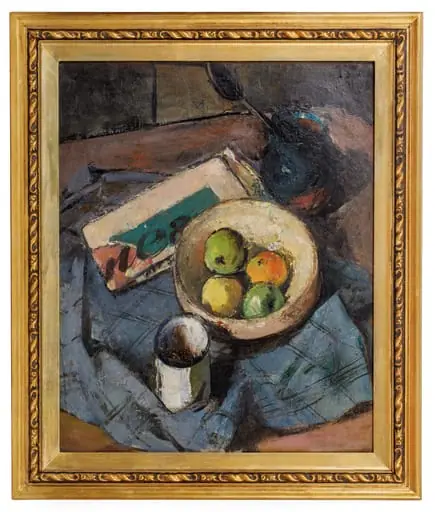
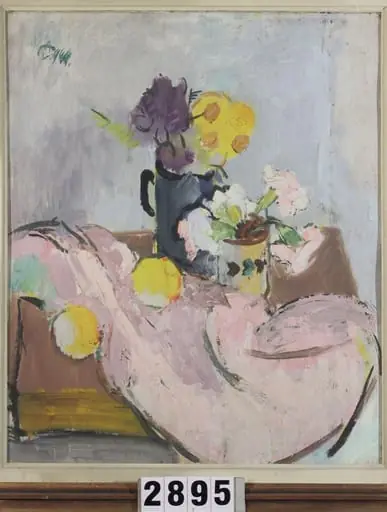
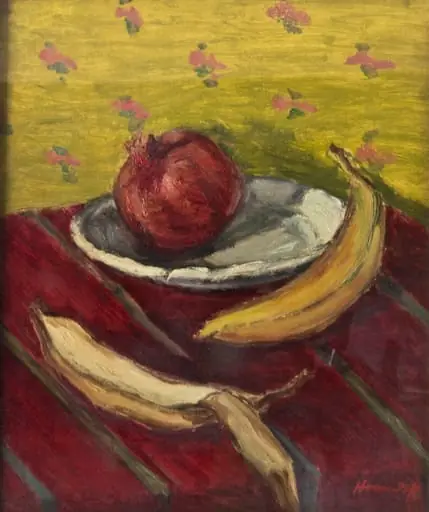
This still life presents a modest arrangement of everyday objects: a white pitcher adorned with a small floral motif, an open fan, and a paintbrush with traces of dried pigment. The composition is deliberately unrefined, with bold color contrasts and visible, uneven brushwork that rejects smooth finish in favor of tactile immediacy.
Subject & Meaning
The objects—pitcher, fan, and brush—suggest the quiet tools of domestic or artistic life. Their placement, slightly off-center and unadorned, avoids symbolism or narrative. Instead, the focus lies in their physical presence, inviting attention to ordinary things through their materiality rather than their function.
Technique & Style
Thick, irregular brushstrokes define each surface, creating a rough texture that emphasizes the hand of the artist. The bright orange cloth and deep blue background heighten contrast, while the pitcher’s subtle painted flower adds a quiet detail. The style favors raw expression over polish, grounding the scene in physical reality rather than idealized form.
History & Provenance
No documented ownership or exhibition history is available. The work appears to be an unattributed study or independent piece, likely created in a context where still-life painting served as a direct observation exercise rather than a commissioned work.
Context
This work aligns with late 19th- to early 20th-century tendencies in still life that rejected academic refinement. Artists across Europe and America were turning toward direct, unembellished depictions of ordinary objects, often using bold color and expressive brushwork to convey presence over perfection.
Legacy
The painting contributes to a broader shift in modern art toward valuing process and materiality over idealized representation. Its unpolished aesthetic anticipates later movements that embraced the physicality of paint and the dignity of the mundane, influencing how everyday objects are rendered in 20th-century painting.
Artist & collection
Artist
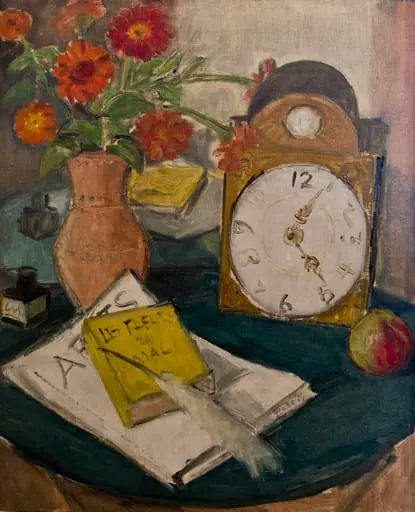
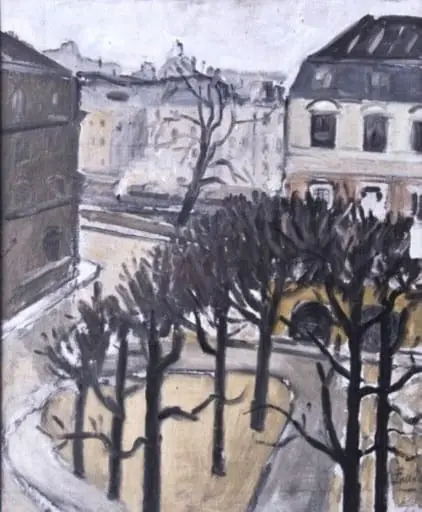
Theodor Pallady made still lifes and interiors in early 20th-century Bucharest. His Place Dauphine shows a quiet Parisian square, while Natură moartă (Ulcică cu flori și chibrituri) piles everyday objects on a table.…